Welcome!

Welcome! There are more than 900 Inspirational Quotes For Writers, Artists and Other Creative Leaders on this site.
Spend a few minutes exploring. And come back again and again for other inspirational quotes.

Wednesday, February 16, 2011

Nikos Kazantzakis

"I fear nothing, I hope for nothing, I am free."


Greek Novelist
1883 - 1957


Years ago I read the fascinating novel, The Last Temptation of Christ, by Nikos Kazantzakis.   The novel is an attempt to put a human face on Jesus Christ and take him out of the spiritual world where he is God.  The book has since been made into a movie.  I don't recall if this quote is from the book, but it could be given the storyline.

What kind of person would make this kind of statement?  Who among us is not afraid of something?   Who hopes for nothing?  And does freedom really mean having no fear and no hope?  Should the creative leader fear nothing?  Should the artist hope for nothing?  Can a novelist ever be free?  And what is freedom, anyway?  Every society places constraints on its citizens.  Society by its very nature has rules and regulations to govern interaction between people.  Artists often attempt to step outside the boundaries laid down by society.  Some are successful and others are destroyed in the process.

Is Nikos saying that if we have hopes and fears that we are not free?  How can a creative leader function if he does not have hope?  Wouldn't he stop living?  While many of us wish that we did not have fears, there is a positive aspect of fear.  It can protect us from real danger.  Would you want to live without fear?

Tuesday, February 15, 2011

Linus Pauling

"Satisfaction of one's curiosity is one of the greatest sources of happiness in life."


American Scientist
1901 - 1994


Are you curious about the world around you?  Are you searching for new information and ideas?  Are you asking questions and looking for answers?  Creative leaders seek out new ideas and new ways of seeing the world.  We want answers to our questions.  Part of our thrill in life is learning something new — figuring out something we didn't know.

Creative leaders need a strong sense of curiosity about the world they inhabit.  They are not satisfied with the pat answers of the past.  The challenge is in finding new answers to the age old questions.

Monday, February 14, 2011

Alan Alda


"Be brave enough to live creatively.  The creative is the place where no one else has ever been.  You have to leave the city of your comfort and go into the wilderness of your intuition.  You cannot get there by bus, only by hard work, risking and by not quite knowing what you are doing.  What you will discover will be wonderful: yourself."


— Alan Alda
American Actor, Director, Screenwriter
1936 - 


Have you visited the wilderness of your intuition?  Have you listened to the voice within your spirit?  Have you descended into the depths of your soul?  Have you discovered the nature of your existence?  Creativity is a journey of the spirit to realms not seen by the ordinary eye.  If you have been blessed with the opportunity to travel this road, then you understand the healing power within your soul.  God walks with each of us.  We must learn to decipher his voice from the chaotic noise so we may enjoy the majesty of beauty.


Sunday, February 13, 2011

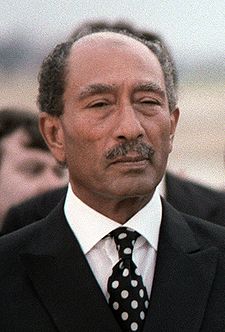
Anwar el-Sadat


". . . the gravest injustice done to the Egyptian people was the cultivation of fear . . . rather than trying to build up the inner man, we did everything we could to make him feel frightened.  Fear is, I believe, a most effective tool in destroying the soul of an individual — and the soul of a people."


— Anwar el-Sadat
Egyptian President
1918 - 1981


Many years ago I read these words in In Search of An Identity, the autobiography of Anwar el Sadat, President of Egypt from 1970 to 1981, and since then I have been sharing his words with my audiences in my motivational speeches on leadership.

Fear is a powerful tool for destroying the soul of a person and the spirit of a creative artist.  Rulers have used it for centuries and so have parents.  "You better behave or the bogeyman will get you."

Ask yourself what you are afraid of?  What fears control your actions?  What fears are holding you back?  Are you afraid of snakes?  Heights?  Success?  Math?  A blank piece of paper?  Silence?  A blank canvas?  The neighbor's dog?

Creative leaders must learn to shake off the chains of fear.  Fear can prevent us from taking risks, trying new ideas, exploring new ways of thinking.  Each of us must find the courage to do what we desire to do despite our fears.

In 2010 my daughter and her husband moved to Minneapolis, Minnesota without jobs.  This is something I have never had the courage to do — to simply pick up and leave.  It took them six months to find jobs, but they did it.  I am sure there were many moments of fear, but they had the courage to keep going.


Anwar el-Sadat, Jimmy Carter
and Menachem Begin
at the signing of the treaty
at the White House.

During these days when Egypt is all over the news, it is important that we also remember history.  Anwar el-Sadat was one of 13 children born to poor Egyptian parents.  Sadat participated in the military coup that launched the Egyptian Revolution of 1952.  He served under Gamal Abdel Nasser who was President until 1970.  He became President when Nasser died and served for eleven years until he was assassinated in 1981 by military officers.  His vice-president, Hosni Mubarak, became president.

Sadat signed the Egyptian-Israeli Peace Treaty with Israeli Prime Minister Menachem Begin in 1979 and was awarded the Nobel Peace Prize.  He said at the time: "Let us put an end to wars, let us reshape life on the solid basis of equity and truth."


Saturday, February 12, 2011

Robert Henri

Self-Portrait
(1903)

"Let a student enter the school with this advice:  No matter how good the school is, his education is in his own hands.  All education must be self-education."


American Painter
1865 - 1929


I believe that each of us is in charge of our own education.  We choose what we want to learn and what we don't want to learn.  Even in the best of schools, students fail because they don't apply themselves.  And in the worst of schools, students still graduate and go on to accomplish great things.  Yes, a teacher can inspire you and mentor you, but in the end you are responsible for your own education.

And I believe learning is a life-long process.  When a person stops learning, he stops living.  What are you doing to further your education in your chosen field?  What are you exploring outside your field of expertise?  When was the last time your read a new book?  Or talked to a stranger?  Or developed a new habit?

Tam Gan
(1914)
This week while traveling, I met a minister who had lived for fifteen years in Japan.  I learned about his life as a minister and living in Japan.  He shared how he had witnessed the cremation of a dead person.  The Japanese custom is to wash the body and then have it cremated.  The family gathers at the crematory to witness the burning of the body.  Then the family is given a portion of the ashes and bones in a small box and the remainder are buried in the ground.  I learned something new by listening and asking questions.  And who knows, maybe some day the material will appear in a short story. 

Creative leaders need to be constantly learning new things.  What have you learned recently that you can incorporate into your writing or painting or acting?  

Friday, February 11, 2011

Marquis de Vauvenargues

"Great thoughts always come from the heart."


French Writer
1715 - 1747


The heart is powerful, intelligent and intuitive.  Most of us have been taught that our intelligence resides in our brain, but this is only partially true.  Logical and analytical thinking occurs in the brain.  Intuitive, sensitive and compassionate thinking occurs in the heart.  Often, though, we let our brain override our heart.  We need to learn to listen to voice of our heart as it reveals a deeper truth.  Reason may dominate our thinking, but compassion should govern our actions.  While the brain is busy analyzing the options, the heart knows intuitively what road to take. 

Years of experience have taught me that my heart knows the answer often before the brain has finished its analysis.   I have learned that it is better to trust the small voice inside my heart then the loud voice inside my head.  Do you trust your intuition?  Are you listening to the voice within your heart?

Thursday, February 10, 2011

Walter Inglis Anderson

Self-Portrait
"Our lives improve only when we take chances . . . and the first and most difficult risk we can take is to be honest with ourselves."


American Artist, Writer
1903 - 1965


Life is about taking chances.  Risk is a key part of success.  And, I think, most creative leaders understand this.  The very nature of creativity is risk taking.  In order to create something new, we have to break down old patterns and rebuild in a different way.  But if we are being honest with ourselves, we must admit that we do not take risks in every area of our lives.  I for one will not risk my financial stability and security.  I am an intellectual risk taker.  I will explore new ideas and new ways of thinking.  I will question my beliefs and those of others, but I am not an entrepreneur.  I will not gamble the financial security of my family and myself.   I will take risks with my writing and my art, but I won't risk my relationships with my family and friends.

Where do you draw the line?  What are you not willing to risk?  I am not willing to risk my money.  If I gamble at a casino, I am only willing to lose five dollars.  I work too hard for my money to throw it way. 

Anderson is right.  The most difficult risk is being honest with ourselves, admitting our failures and our weaknesses.  What are your blind spots?  What are you not willing to admit to yourself or to others?  What do you want to keep hidden from the world?  It takes courage to be honest with yourself.  To face your fears and failures and honestly assess your weaknesses.

Wednesday, February 9, 2011

George Washington Carver


"How far you go in life depends on your being tender with the young, compassionate with the aged, sympathetic with the striving, and tolerant of the weak and strong.  Because someday in life you will have been all of these."


— George Washington Carver
American Scientist
1864 - 1943


One of challenges we all face is accepting people who are different than ourselves.  And I am not talking here about race or culture or religon or nationality.  I'm talking about the little things that separate people.  Is there someone in your life who talks  too much or too little?  Are there people who you perceive to be stuck-up?  Do you dislikefat people or sloppy people?  Is there someone in your life who is too organized or too thin?  Do you think all poets are crazy and should get a real job?  Do you not like the way someone combs his hair or the clothes he wears?

As George Washington Carver points out, we are all human.  We have all been young and if we live long enough we will all grow old.  What people who complain about growing old don't realize is that the alternative is dying young.  Now the interesting idea in this quote is that we need to be tolerant of both the strong and the weak.  And it is easy to see being tolerant of the weak, but why the strong?  I think the reason we need to be tolerant of the strong is because they also make mistakes.  We have a tendency to put people on a pedestal and then knock them off.  We don't like it when our heroes are too perfect.  We prefer them to have clay feet so we can knock them down.

As writers, artists and actors, we sometimes put other actors, writers and artists on a pedestal and become disappointed when they don't live up to our expectations.  We need to become more accepting and tolerant of our peers, mentors and teachers.  We are all human and we all make mistakes.  The message is simple: judge not others.

Tuesday, February 8, 2011

Louise Nevelson


"Another thing about creation is that every day it is like it gave birth, and it's always kind of innocent and refreshing.  So it's always virginal to me, and it's always a surprise."


American Artist
1899 - 1988


Sky Cathedral
(1958)

Does your creative work surprise you?  Do you find yourself full of joy when you are working?  Are you excited about the possible outcome?  Creative work should be fun and bring us moments of happiness.  If it is a struggle for you to create, then you need to work on freeing the creative juices.  These days I can sit down at my desk and write without hesitation.  I just start writing and don't worry about the outcome.  And most times I have no idea where the story will go or what the characters will say.  The same with art.  I pick up the pen and start drawing.  I have muzzled that voice inside that always wants to criticize and tell me how terrible I am.  I don't give him a chance to scream at me.  I am learning to enjoy the moment.


Monday, February 7, 2011

Sara Teasdale

"It is my heart that makes my songs . . . ."


American Poet
1884 - 1933


Our most original creative work comes from the heart.  The heart produces work that is more authentic than work produced by the analytical brain.  Analytical stories and poems fail to connect with the hearts of the readers and leave them wanting more.  Creative work that does not come from the heart can be cold and uncaring.  You will do your best work if it comes from the heart.  


Debt

by Sara Teasdale

What do I owe to you
     Who loved me deep and long?
You never gave my spirit wings
     Nor gave my heart a song.

But, oh, to him I loved,
     Who loved me not at all,
I owe the little open gate
     That led through heaven's wall.

(Originally published in Poetry, March 1914.)

Sunday, February 6, 2011

Henry Moore

"The observation of nature is part of an artist's life."


English Sculptor
1898 - 1986


How much is your art connected to nature?  Do you spend time observing the shapes and patterns within nature?  Do you study nature and learn from it?  

When I spent seven years writing and studying haiku, I spent time connecting with the physical world around me — listening to nature.  I would take walks and write haiku.  Even those of us who live in cities are a part of nature.  Here is a haiku that I wrote while walking around Chicago.

downtown Chicago
     a squirrel buries apples —
          warm autumn sun

As creative leaders, we must look for inspiration in nature whether we write novels, paint abstract paintings or compose music.  Nature has much to teach us about ourselves and the world in which we live.  Watch the rabbits playing in your backyard.  Enjoy the beauty of a sunset.  Take a walk and feel the snowflakes on your cheeks.

Oval With Points
(1968 - 1970)

Saturday, February 5, 2011

Wendell Phillips

"Revolutions are not made: they come.  A revolution is as natural a growth as an oak.  It comes out of the past.  Its foundations are laid far back."


American Abolitionist, Orator, Lawyer, Author
1811- 1884


What, you might ask, do revolutions have to do with creativity?  Revolutions are a creative response to the status quo and happen at all levels of society.  Revolutions are happening in literature and art as each generation rejects the styles of previous generations.  Consider how Impressionism, Cubism and Abstract Expressionism started out as movements outside the mainstream.  


Revolutionaries have to think outside the box.  They have to be willing to see the world through new eyes.  The abolitionists stood up against slavery.  The civil rights activists stood up against segregation.  Wendell Phillips also said:  "Physical bravery is an animal instinct, moral bravery is a much higher and truer courage."  

What risks are you taking in your art?  Your writing?  Are you challenging the status quo?  Are you standing up for what is right?  Are you looking at the world with fresh eyes?  Creative leaders have to think outside the box.  They need to risk trying new techniques — new ways of thinking.

Wendell Phillips was born in Boston, Massachusetts and graduated from Harvard Law School.  He was a powerful speaker and became a voice of the anti-slavery movement.

Friday, February 4, 2011

Bebe Moore Campbell

"As I grow older part of my emotional survival plan must be to actively seek inspiration instead of passively waiting for it to find me."


American Novelist
1950 - 2006


Where do you find inspiration?  Do you wait for inspiration to hit you like a lightening bolt or are you actively looking for events, people, places and objects to inspire you?  I believe we need to constantly be stoking the fires of creativity.  And we can do this by exploring places we have never been, immersing ourselves in new cultures and meeting new and unusual people.  We can also stoke the fires by reading books on history, biographies and memoirs.  If we wait for inspiration to strike, we may be along time in waiting.  What do you do to stoke the fires of creativity in your life?

Elizabeth Bebe Moore was born and raised in Philadelphia, Pennsylvania.  She graduated from the University of Pittsburgh with a degree in elementary education and taught school in Atlanta, GA.  Her first book was a work of nonfiction, Successful Women, Angry Men: Backlash in the Two-Career Marriage.  She was the author of three New York Times bestsellers:  Brothers and Sisters, Singing in the Comeback Choir and What You Owe Me, as well as two picture books for children.  Elizabeth Bebe Moore Campbell died on November 27, 2006 from brain cancer.

Thursday, February 3, 2011

Carol Emshwiller

"Stories do not change the world.  I've learned that.  But perhaps in some secret, subtle way . . . . I mean it's not the world I want to change."


American Novelist
1921 -


Sometimes as creative leaders, we hope we can change the world — to make it a better place for everyone.  Unfortunately, our vision of what we want the world to be and what it actually is rarely match.  And even the most powerful of people can not change the world to fit their vision.  We can have an impact on the lives of some people and can alter the small corner of the universe where we eat and sleep.  Maybe as Emshwiller says, we need to lower our sights.  If I touch one heart, changed one life, I have made a powerful difference.


If I want to change the world that I inhabit, I must first change myself.  As creative leaders, we must first work on becoming who we need to become before we change those around us.  It is very difficult to change someone else.  Husbands and wives understand this.  Those who learn to accept their spouses for who they are will be happily married.  Those who spend all their time trying to change the behavior of those they love, often end up bitter and angry.

Change is something that we enjoy when we are the ones who initiate it.  If someone else tries to change us, we put our foot down and refuse.  As creative leaders, our art, writing and music can touch people's lives and inspire them when they are ready to hear and see.  We all plant seeds and yet, may never hear if the seeds grow and bear fruit.  So we must hope that we have changed a few.

Wednesday, February 2, 2011

William Baziotes

"Each painting has its own way of evolving . . . When the painting is finished, the subject reveals itself."


American Painter
1912 - 1963


I know this is the way a poem happens for me.  I don't know what the poem is about until I'm finished writing.  The poem evolves as I write.  I know there are writers who outline everything they do.  They know what they are going to write every step of the way.  For me, it does not work.  I like not knowing.  The excitement is in the writing.  The same thing happens when I write a story.  Only at the end do I know what I was writing about.

Cyclops
(1947)
My drawing of masks is the same way.  I never know what a mask will look like until I am finished.  Art for me is also about discovery.  The joy is in the process of creation.  The joy is in not knowing where you are going.  

When I travel I am the same way.  I want to discover new places.  My wife and I once were on a trip with another couple.  They had everything planned down to the minute and became upset if we deviated from the plan because it put them behind schedule.  I can't travel that way.  The joy is in the discovery.

One of the things I have learned over the years is that writers have many different ways of working.  What works for one person does not work for another.  How do you work?  Do you map out your story in advance of writing it?  Do you know what your painting will look like before you start painting it?

Tuesday, February 1, 2011

Eugene Delacroix

Self-Portrait (1837)
"What moves men of genius, or rather what inspires their work, is not new ideas but their obsession with the idea that what has already been said is still not enough."


French Artist
1798 - 1863


Orphan Girl at the Cemetery
(1923)
Why do you write?  Why do you paint?  What inspires your creative work?  Do you have something new to say to the world?  Are you obsessed with telling the world what you know?  We each create for different reasons — some we are conscious of and others that are hidden even from us.  

I personally believe that there is little in the universe of humanity that has not been thought, said or written by someone somewhere, but fortunately, we have forgotten much of what has been learned by previous generations and each generation has to learn anew.  It is in the relearning of the forgotten that we have the inspiration to create what has not been created — to reshape the myths of the world.


I challenge each creative leader to study history — to understand what happened before you were born.  It is in the knowing of the past that you can begin to reshape the future — to create anew that which is ancient, to find the thread that ties us together.


Liberty Leading the People
(1830) The Louvre

Monday, January 31, 2011

Tom Robbins

"Success can eliminate as many options as failure."


American Novelist
1936 -


When you are an unknown writer or artist, you are free to explore new genres or avenues of thinking without anyone criticizing you.  When you are successful, you can become boxed in by the expectations of others and your options to explore new genres becomes limited.  One of my favorite mystery writers, Walter Mosley, has tried on occasion to write novels outside of the genre of mysteries and these novels have never been as successful as his Easy Rawlins novels.  I once talked with Denver Pyle, a Hollywood character actor for most of his career.  He said that his role as Uncle Jessie on the Dukes of Hazard negatively impacted his ability to be cast in any other roles.  He was typecast as Uncle Jessie.  Sometimes we as creative leaders become trapped by our own success and are unable to reinvent ourselves.  Ricky Nelson speaks of this trap in his song, The Garden Party.


Sunday, January 30, 2011

Carl Rogers

"The curious paradox is that when I accept myself just as I am, then I can change."


American Author / Psychologist
1902 - 1987


Have you ever had a desire to change who you are?  Have you ever dreamed of waking up and being somebody different?  That is one of the fun things about being a novelist or an actor.  Novelists and short story writers can become the characters inside the stories they tell.  I once wrote a short story, Bath Day, in which I inserted my real self as a minor, minor character seen through the eyes of the main character.  Actors take on the character of others.  They play heroes and villains.  They experience death, love, sorrow and laughter in the skin of imaginary characters.

Most of us have struggled with our self-identity.  We may not like our physical looks or the bill-paying work that we do.  We may think that we are poor husbands, wives or parents.  And yet, if we learn to accept who we are and what we have done, then we can begin to change into who we want to be.

Have you ever tried to change your habits?  Stop smoking?  Lose weight?  Start exercising?  Learn another language?  Leave the toilet seat down?  Some people say it takes 21 days to form a new habit.  Personal change is never easy.  We need to learn to be more forgiving of ourselves and those with whom we share our lives.  None of us are perfect.  And if change is difficult for us, don't you think it is just as difficult for those you love.  Learn to be gentle with yourself and those you love.

Saturday, January 29, 2011

Alice Neel

"I thought you had to give up a lot for art, and you did.  It required complete concentration.  It also required that whatever money you had had to be put into art materials."


American Artist
1900 - 1984


The Spanish Family (1943)
What have you had to give up in order to be able to paint, or write or play music?  Our muses can be demanding — asking us to give up relationships, friendships and even family.  And sometimes our muses will drain our spirit and leave us battered and lifeless.  Art requires the artist to be faithful and loyal.   Art demands that we work hard, often with little or no respect, money or fame.  We labor on day and night hoping that one day someone will discover us.  Sometimes we hurt those we love.  We sacrifice our family on the altar of creativity.  And for what?  The hope that maybe one day someone will notice.  It takes a lot of courage to be an artist.  To be willing to sacrifice so much.  For some of us, we sacrifice our sanity or even our lives.  

And yet, I think there is another way.  We can find balance in our lives.  We don't have to sacrifice everything.  We can maintain our sanity without falling off the cliff.  Don't let the creative impulse destroy you.  Be strong.  Find a way to balance the wild and crazy spirit with the routines of daily living.  Maybe you can knit, take up yoga, play golf or simply take a walk.  Embrace the whole you, not just the creative side.  Anything taken to the extreme is destructive.