Welcome!

Welcome! There are more than 900 Inspirational Quotes For Writers, Artists and Other Creative Leaders on this site.
Spend a few minutes exploring. And come back again and again for other inspirational quotes.

Tuesday, May 3, 2011

Ella Winter

"Choose well: your choice is brief and yet endless."


Australian Journalist, Author 
1898 - 1980


I believe everything we do in life is a choice and that we need to take responsibility for our actions and not blame others.  The challenge is to make the right choices or at least to make choices.  When I graduated from college I was afraid to choose a direction to my life.  I didn't know what I wanted to do.  If I went down the wrong path it would be a disaster.  What I have learned is that the choices I made have led me where I need to be.  The challenge is to choose.  If you keep choosing you will eventually end up where you are supposed to be.  If you don't choose and let life happen, you may end up where you don't want to be.

Many people blame others for the circumstances in which they find themselves.  They are what I call "IF ONLY THINKERS."  They preface everything with the phrase: if only.  If only I had more money.  If only I had a college education.  If only my boss liked me.  If only I had better parents.  If only....If only....If only....

Usually we only have a short time to make a decision before the door closes and the opportunity passes.  Sometimes the opportunity will come around again and other times it won't.  I once had an opportunity to work for a trade magazine but I turned it down because I was happy with the job I had.  And the opportunity to work for a trade journal never came around again.  I sent out resumes, but noone responded.  I don't know how my life would have been different if I had accepted the position, but I have no regrets.  I am satisfied with the life I have lived.

The choices we make often send us in directions we never imagined.  New opportunities arise for us to seize.  Each choice we make leads us closer to where we are supposed to be.  We make a life by making choices.  What choices are you making today that will open up new doors for you tomorrow?

Monday, May 2, 2011

Ralph Steadman

"What I used to do with a passion, foolishly and vainly imagining I would change the world for the better, I no longer tolerate in myself or anyone else.  But draw, always draw — and WRITE."


British Artist, Writer
1936 -


Have you ever dreamed of changing the world — making it a better place?  Unfortunately, most people have very little influence on the world at large.  And with the one person that we do have influence over — ourselves — we usually lack the discipline for long-term change.  Have you ever tried to change a spouse or a significant other?  It rarely works.  I have often heard of wrecked marriages resulting from one person trying to change the other.

The Sheriff
1995
Revolution is often said to be the passion of youth.  And if one does not die in the revolution, one grows wiser with age.  If you study history, you will realize that even when the evil empire is overthrown, it is usually replaced by another empire that eventually becomes evil itself.  And the cycle continues.  The young want power and the old are unwilling to relinquish it.

And what you might add does all this have to do with art and writing?  Every generation or two there are revolutions in artistic taste and style.  The younger generation of artists challenges the older generation.  Today abstract expressionism is giving way to a resurgence of realism.  And tomorrow?  I won't even begin to predict.

I think Ralph Steadman has hit the nail on the head.  Stop worrying about changing the world, your spouse or even yourself.  Just create:  draw, paint and write. 

Sunday, May 1, 2011

Fernando Del Paso

Venus de Milo
Ancient Greek Statue
"Literature and music exist in time: they have a beginning and an end.  Painting and sculpture exist in space. . . . Where does the Venus de Milo begin: in her navel, in her breasts, or in her head?  Where does an abstract painting begin: in the lower left corner, or in the center?"


Mexican Novelist, Painter and Poet
1935 -


Back of
Venus de Milo
De Paso has raised a very interesting question:  where does a painting or a sculpture begin?  When analyzing a painting, people often identify at what point the eye is drawn into the painting.  At what point do we the viewer enter into the picture?  But that point of entry is not the beginning of the painting.  In fact, paintings and sculptures have no beginning.  They just are here and now.

The flip side of this question is:  where does the novel exist?  In the head of the writer?  On the pages of the book it is printed in?  In cyberspace somewhere?  Or in the head of the reader?  And what novel are we talking about?  Is the novel that is in the writer's head the same as the novel on the page?  Is the novel that is in the reader's head the same as what is in the writer's imagination?  

Fernando Del Paso
How many times have you as a reader altered the novel on the page by changing the looks of a character or the physical location of the story.  Unlike the painting which is concrete and visual, the novel is nebulous and changing.  Yes, we can impose our stories upon the painting, but the painting still exists outside of us.  We change the novel as soon as it enters our brain.  We have altered the story as imagined by the novelist.

Have you ever wished that a novel would not end?  You may even have slowed down your reading so that the ending would be delayed?  Novels exist in time and have a beginning and a ending, but we can continue to revisit them through our memory. 

Saturday, April 30, 2011

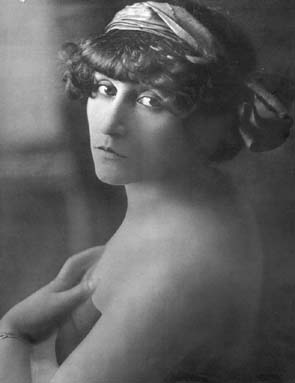
Colette

"You will do foolish things, but do them with enthusiasm."


French Novelist
1873 - 1954


Humans are not perfect.  We make foolish mistakes.  We behave in ways that we know we shouldn't.  We make choices that we later question.  We take the wrong turn in the road and find ourselves at a dead end.  We run out of gas and find ourselves stranded at the edge of the road.  We trust someone when we should have been wary.  Even the most rational of beings can make foolish decisions.  And creative leaders are not immune from this disease of foolishness.  Read the biography of any writer, artist or musician and you will find story after story of mistakes.  

Are you enthusiastic about your mistakes or do you try to sweep them under a carpet so no one finds out?  Do you celebrate your foolishness with a toast?  Are you able to laugh at your foolish mistakes?  Do you find humor in your imperfections?  Do you learn from your mistakes or are you doomed to repeat them again and again?

Friday, April 29, 2011

Eric Fischl

"What experience has shown me is that it takes your life to become an artist."


American Artist
1948 -


Becoming a painter, a poet, or a novelist takes a lifetime.  We are always in a state of becoming.  If we stop growing and changing, if we plateau, we die as artists.  We are on a journey.  The work we leave behind is the record of our journey.

Where are you on your artistic journey?  What challenges are you facing today?  What challenges have you learned to overcome?  What are your dreams for tomorrow?  What paths have you taken?  What roads have you avoided?

Don't despair if you feel you have lost your way.  Maybe you have just taken a detour and you will soon find your way again.  What we sometimes feel are the wrong roads turn out to be the right roads in the end.  We often cannot see the forest because of the trees.  Climb up the nearest tree and your world will change.  

I often hear people complaining about the weather.  It's too cloudy.  Too rainy.  Too cold.  Too hot.  Can't see the sun.  Yet if we get in an airplane and fly above the clouds, the sun is there.  It is always there.  So don't become discouraged.  Instead change your perspective.

Here is Eric Fischl talking about one of his paintings.


Thursday, April 28, 2011

Matsuo Basho

"Seek not to follow in the footsteps of men of old; seek what they sought."


Japanese Haiku Poet
1644 - 1694


Poems by Basho on Tanzaku paper
Yamagata Museum of Art


Sometimes we seek to copy the masters.  We need instead to look deeper than the surface technique and understand what they were attempting to accomplish — what was the passion in their lives.  We need to connect with their souls.  What was their moment of enlightenment?

I believe we have a spiritual connection with those artists and writers who have gone before us.  We need to explore this connection and learn from it.  We should not simply copy what we like.  We should connect with the meaning in their work.

What are you seeking to accomplish in your art?  What do you want others to perceive in your writing?  What is your understanding of the universe?  Have you achieved enlightenment?


Wednesday, April 27, 2011

Walt Disney


"We keep moving forward, opening new doors, and doing new things, because we're curious and curiosity leads us down new paths."


American Film Director, Producer
1901 - 1966


Are you curious about the world around you?  Curiosity fuels our creative thinking.  Curiosity provides the sparks for new ideas.  Disney was the creative genius who changed the world of filmmaking and animation.  What are you doing to change your world?  How are you challenging yourself to try new ideas?  How are you stepping outside your comfort zone?

It is easy to get caught in a rut — to do what is safe and secure.  Creative leaders need to keep moving and growing.  They need to walk down new paths and open new doors.  They need to be curious.

Tuesday, April 26, 2011

Henry Wadsworth Longfellow

"Music is the universal language of mankind."


American Poet
1807 - 1882


Music is a special art form in that it touches the soul at a deeper level than most of the other arts.  Music can cross language barriers often without translation.  Music connects people in ways that the other arts don't.  When we are happy, we all have a desire to sing with a joyful voice.  When we are sad, our singing gives voice to our melancholy.

In college when I was blue, I would walk along the railroad tracks and sing to myself.  I cannot carry a tune, but when alone I will sing to myself.  Music moves me at a deep level.  

During the last 24 years, I have seen the impact of music on my training classes.  I have the participants of my classes sing and dance as part of the class.  I am amazed at the power of music to break down barriers and cause people to open up and share their thoughts and feelings.

Many writers and artists listen to music when they are creating.  What kind of music do you listen to when you are creating?  What music gets your creative juices flowing?

Here is a video of Carrie Underwood inspiring an audience of country and western singers with her rendition of How Great Thou Art.


Monday, April 25, 2011

Grace Hartigan

Frank O'Hara
"I cannot expect even my own art to provide all the answers — only to hope to it keeps asking the right questions."


American Painter
1922 - 2008


What questions are you asking with your art?  One of the roles of a creative leader is to challenge the status quo?  To ask questions that others are afraid to ask.  Seldom do artists provide the answers.  Then we would be preaching.  Our job is to question and to question our questions?  To ask what others won't ask.

What questions are you raising with your art?  Your writing?  Your music?  In recent years my poems are questioning what God is.  I have had other writers tell me you can't write about God or the soul — that these words are too limited and vague.  And yet I know it is what I must write about.  I must raise the questions.  I must challenge our understanding of God.  I know I don't have the answers — that I will probably never have the answers, but I must keep asking.

Here is a fabulous video of Grace Hartigan talking about her art.  Be patient because the movie is slow to start.


Sunday, April 24, 2011

Alan Watts

"Faith is, above all, openness; an act of trust in the unknown."


British Philosopher, Writer, Speaker
1915 - 1973


Creative leaders need faith in their talent and in their ability to find the answers to the problems they face in their artistic endeavors.  This requires being open to new ways of viewing the world — to believing the answer lies within the psychic.  Creative leaders must also trust the unknown.  

When you find yourself staring at a blank piece of paper or a blank canvas have the faith that you will fill it and complete your story, your poem or your painting.  You must have faith in yourself and trust that you have the skill and the talent to complete the work.  If you lose faith,  you will fail.

Do you have faith in yourself?  In your talent?  In your skill?  In your artistic vision?  Do you trust that you will produce the creative work that you are meant to produce?  Do you trust the unknown?

Listen to Alan Watts in this animation video.


Saturday, April 23, 2011

Kimon Nicolaides

"Learning to draw is really a matter of learning to see — to see correctly — and that means a good deal more than merely looking with the eye."


American Artist, Teacher, Author
1891 - 1938


The arts involve the five senses of seeing, hearing, touch, taste and smell.  We understand the world in which we live through these five senses.  How we see the world impacts our ability to draw, paint and write.  

When I arrived home yesterday, my wife asked if I had noticed a hat hanging on one of my favorite wood statues.  I had not.  She said the hat had been there for several weeks.  My visual intake of the world around me is very selective.  I never notice the clothes people wear and I could not tell you what you were wearing yesterday.  Yet, if I visit a place I have not seen in five years, I will recognize the buildings.  

I put very little description of places and people in my writing.  And when I am reading a book with a lot of description, I tend to skip over it.

On the other hand, I am very auditory.  I can hear the slightest change in the tone of a voice.  I can hear the softest of sounds.  I cannot sleep with the radio or TV playing.  But I cannot sing worth a lick.  In fact, some people would say I am tone deaf.

How do the five senses impact your painting or writing?  Are you a visual person?  An auditory person?  How about the senses of touch, taste and smell?

Friday, April 22, 2011

James Baldwin

"One can give nothing whatever without giving oneself — that is to say, risking oneself.  If one cannot risk oneself then one is simply incapable of giving."


American Novelist
1924 - 1987


All art is risk.  As creative leaders we risk being vulnerable to criticism and ridicule.  We risk doubt and failure.  We risk being misunderstood.  Yet, there is no creation without risk.  There is no art without giving of oneself.

Taking a risk requires that we step out of our comfort zone and try something new.  Taking risk helps us to grow and progress as artists.  Taking a risk means that we might fail.  Taking a risk requires courage.

What risks are you not taking because you are afraid?  What risks do you want to take but you don't have the courage?  If you knew that you would die in a year, what risks would you take today?  What truth have you not told because you are afraid of what others might say?

Thursday, April 21, 2011

Robin Moore

"To truly own a story, you must fashion it and shape it, as you would a garment, to fit your frame."


American Storyteller, Writer
1950 - 


Do you own the stories you tell with your art?  Do the stories you tell touch your heart?  Do they bring tears to your eyes?  Art is about communicating emotion through the stories we tell.  Reach deep inside your soul and touch the power of who you are.  Show us the love you feel.

During the last thirty years there has been a rebirth of oral storytelling in the United States.  Robin Moore has been one of the leaders of this storytelling movement.  For me, there is a lot to be said about the oral tradition.  Prior to the invention of the printing press, storytelling was how people shared information and entertained each other.  And while I love the printed word and average reading about two books a month, I find something exciting about listening to a well told story that makes me laugh and cry.

In the final analysis when we look back across our lives all we have are our memories and our stories.  The jobs we hold and the money we make have little value when our days on the planet are coming to a close.  As a creative leader, you should mine your experiences for stories to share in your paintings, your poetry and your novels. 

Here is Robin Moore talking about story and community.


Wednesday, April 20, 2011

Salvador Dali

"Have no fear of perfection — you'll never reach it."


Spanish Artist
1904 - 1989


Are you a perfectionist when it comes to your art?  Are you obsessed with crossing every T and dotting every I?  During much of my life I have been a perfectionist and there are still moments when perfectionism will raise its ugly head.  The older I get the more mellow I become.  I don't have as much need to be sure that everything is perfect. 

Where does perfectionism come from?  I think it comes from the need and desire to please others.  We don't want to disappoint those we love.  We fear if we make a mistake we might lose the love of others.  

Learn to let go of your desire to be perfect, because as Salvador Dali says: "you'll never reach it."  Learn to accept imperfection.  Imperfection has its own beauty.  Everything in this world is flawed.  Nothing is perfect or permanent.  Mistakes are okay.  Failure is a chance to begin again.  

Tuesday, April 19, 2011

Weldon Kees


"Modern society pushes people in the groove.  Although I was always interested in music and painting as well as poetry, at first I thought I had to concentrate on writing. . . one thing only.  But then the urge to paint was so strong I just went ahead and started oils.  And I didn't give up my writing — one did not exclude the other."


American Poet, Painter, Composer, Short Story Writer
1914 - 1955


As a creative leader, do you limit you creative expression to one type of art?  The common myth is that people can only do one thing.  Write poetry?  Paint portraits?  Compose music?  Write novels?  The myth is that we should focus on only one form of expression; otherwise, we will dilute our creativity not not do anything well.  We have become a society of specialists.  Painters should not write.  Writers should not play a musical instrument.  Actors should not write.

Kees believed that he could both paint and write.  "He said, "Shifting from one to the other I don't get into periods of absolute sterility that are often experienced by writers who just write, or painters who just paint."

Are you suffering from writer's block?  Pick up a paint brush and explore the world of color. Are you bored with painting?  Pick up a pen and write about your feelings.  Flipping back and forth between various art forms will keep you and your ideas fresh.

Here is a poem by Weldon Kees.

The Upstairs Room

It must have been in March the rug wore through.
Now the day passes and I stare
At warped pine boards my father's father nailed,
At the twisted grain.  Exposed, where emptiness allows,
Are the wormholes of eighty years; four generations' shoes
Stumble and scrape and fall
To the floor my father stained,
The new blood streaming from his head.  The drift
Of autumn fires and a century's cigars, that gun's
Magnanimous and brutal smoke, endure.
In March the rug was ragged as the past.  The thread
Rots like the lives we fasten on.  Now it is August,
And the floor is blank, worn smooth,
And, for my life, imperishable.

Monday, April 18, 2011

Sidney Nolan

"Painting is an extension of man's means of communication.  As such, it's pure, difficult, and wonderful."


Australian Artist
1917 - 1992


All the arts are about communication.  Whether you paint, write, sing or act, you are involved in the process of communicating.  And communication is one of the most difficult aspects of being human.  We never seem to get it right.  Marriages break up over the inability to communicate.  Children don't speak to their parents.  Bosses fail to inspire their employees.

Painting, poetry and novels are highly specialized forms of communication — an attempt by the artist to tell the world what he is feeling.  And sometimes he is successful and sometimes he is not.  Take this painting, Death of Sergeant Kennedy at Stringbark Creek, by Sidney Nolan.  What does it communicate to you?  If I asked 10 different people the same question, I bet I would get 10 different answers.  Communication is very difficult.  If it was easy, we probably would not have a need for creative leaders who work hard at communicating.


Even artists and writers don't always know what they are communicating with their creative work.  Paintings, poetry and novels are often communicating on multiple levels with multiple messages.  The painter, poet and novelist are aware of some of these messages but not all of them.  That is what makes art so fascinating.


If you are interested in feedback from your audience, don't ask whether they liked the work or if it was any good.  Ask: "What does my painting, poem or story communicate to you?"  Then listen with your heart and soul.  You may be amazed at what others see in your work.

Sunday, April 17, 2011

Edgar Degas

Self-Portrait
(1855)
"Only when he no longer knows what he is doing does the painter do good things."


French Artist
1834 - 1917


Dancers
(1978)
Have you ever become so lost in your creativity that you don't know what you are doing?  I sometimes become so caught up in the writing of the moment that I don't realize what I am saying.  I read my writing a day or two later and am surprised by what I said.  The more I can quiet the conscious mind and let the subconscious mind take charge, the more creative the writing becomes.  

The difference between the conscious mind and subconscious mind is one of control.  The subconscious is more wild, free and metaphoric.  The conscious mind is more analytical, linear and controlling.  Creativity requires entering the subconscious and exploring the world through its eyes.  The more we try to control our art the less creative and original it becomes.  The more we relinquish control, the stronger the creative impulse.

Saturday, April 16, 2011

Ernest Hemingway

"We are all apprentices in a craft where no one ever becomes a master."


— Ernest Hemingway
American Novelist
1899 - 1961


This is an amazing statement from a writer whom many would call a master.  I think what Hemingway is saying is that we should never stop learning about our craft.  Even the best of the best can learn something new — can improve their craft.  The task of becoming good never ends.  We are all apprentices — beginners.  We must come to the task of creating each work of art as a beginner would.

Those who believe there is nothing left to learn have stopped growing and will soon be spiritually dead and doomed to a life of repetition.  Life is in the learning.  Life is in the growing.  So don't despair if you don't know everything because you never will.  Don't despair if you haven't perfected your craft.  The joy is in the learning.  The joy is in the discovery of ways to improve your craft.

Friday, April 15, 2011

Rita Dove

"Poetry is language at its most distilled and most powerful."


American Poet
1952 - 


If you stripped your art down to the bare bones, what would be left?  A line? A word?  An emotion?  If you look at the history of the arts, you will notice that artists vacillate between extravagance and simplicity, between embellishment and bare bones.  My style has been one of simple speech, with few big words or large flourishes.  If you distilled your art down to its essence, what would you find?  What is at the core of your art?

April is poetry month.  Here is a poem by Rita Dove.


"Teach Us To Number Our Days"

In  the old neighborhood, each funeral parlor
is more elaborate than the last.
The alleys smell of cops, pistols bumping their thighs,
each chamber steeled with a slim blue bullet.

Low-rent balconies stacked to the sky.
A boy plays tic-tac-toe on a moon
crossed by TV antennae, dreams

he has swallowed a blue bean.
It takes root in his gut, sprouts
and twines upward, the vines curling
around the sockets and locking them shut.

And this sky, knotting like a dark tie?
The patroller, disinterested, holds all the beans.

August.  The mums nod past, each prickly heart on a sleeve.


(By Rita Dove from Yellow House on the Corner, Carnegie Mellon University Press, 1989)

Here is Rita Dove reading another of her poems.