Welcome!

Welcome! There are more than 900 Inspirational Quotes For Writers, Artists and Other Creative Leaders on this site.
Spend a few minutes exploring. And come back again and again for other inspirational quotes.

Monday, April 13, 2015

Harley King

Maya Pyramids - Mexico       

My most memorable class in high school was American History my junior year, not because of the subject but because of the teacher.  He encouraged me to think.  In college, I took only required history classes and I could not tell you anything about them today.  History was not something that inspired me.  I came from the generation that spouted such slogans as "Don't Trust anyone over 30."

I did not discover the value of history until I was in my early forties.  I was taking a trip to Mexico with my family and decided to read something about the history of Mexico.  I read the book, The Conquest of New Spain, by Bernal Diaz del Castillo.  Diaz was a soldier with Hernan Cortez when he conquered the Aztecs.  He wrote this first hand account years later.  I was hooked.  I was soon reading other books of history as well as biographies and memoirs.

Buddha - Asia
History at its heart is about storytelling, not dates and names.  And history like all good stories has many lessons to teach if we are paying attention.  Nations and their leaders, unfortunately, have a tendency to repeat the mistakes of the past.  We never seem to be able to learn from history.  By the second or third generation after a key historical event, the lessons are being forgotten.

But history goes beyond nations and their leaders.  Artistic disciplines also have a history.  Beginning artists study past artists.  Beginning writers study great writers.  Beginning musicians study previous musicians.  Failure to know the historical roots of one's artistic profession will often lead to mediocre artistic endeavors.  As creative leaders we need to know from where we came.

The same is true in business.  If business leaders do not know the history their organization and their industry, they will make the same mistakes that their predecessors did.  History has so much to teach.  We need to pay attention.

And we also have personal histories.  Where were you born?  What was your childhood like? Do you know the history of your family? What mistakes did you make?  Have you learned from your mistakes?  Or have you repeated your mistakes again and again?

May you learn the lessons that history has to teach and pass them onto others.

Machu-pichu, Peru, Inca

Monday, April 6, 2015

Harley King


There are hundreds of reasons that we should believe in our talents.  As creative leaders, we should celebrate our unique visions of the worlds we inhabit.  We should be proud of our accomplishments and our victories.

Yet, many of us are plagued by self-doubt and a lack of confidence.  We feel we are not good enough.  Even when we are successful, we are afraid that others will discover that we are frauds.  We race through life hoping that the truth will not be revealed and that we can escape embarrassment and shame.

We fail to realize that we have many reasons to love ourselves.  We are so busy focusing on our mistakes and weaknesses that we don't ever discover the truth.  We see only our faults and failures.

Open your eyes and see beyond your mistakes.  Take a moment and give thanks for who you are and what you have been able to accomplish.  Count all the reasons you should love yourself.  Then accept the gift of talent that you have been given and appreciate your strengths.  Be confident.  Be strong.  Love yourself.


Monday, March 30, 2015

Harley King


Sometimes we as creative leaders are our own worst critics.  We often don't appreciate the talent we have been given or the skill we have mastered.  We have a difficult time accepting praise from others.  Sometimes we don't even want to let others see our work.  We are afraid of what they may say.

We need to learn not to beat ourselves up over every minor mistake or perceived mistake.  Mistakes actually are good things because they often lead to new creative ideas.  Don't let your mistakes knock you down.  Find the opportunity in the mistake.  

The Japanese have a concept called kintsugi which is the art of repairing broken pottery with lacquer mixed with gold, silver or platinum.  The artist treats the breakage and repair as part of the history of the object, not as something to be thrown out or hidden.  The artist embraces the flaws and imperfections. 

As creative leaders, we need to stop trying to be perfect and, instead, embrace our flaws and imperfections.  We need to incorporate our flaws into our work.  We need to find the beauty within the ugly.  We need to enjoy what our flaws have to teach us.


Monday, March 23, 2015

Harley King


Have you ever listened to silence? These days it is hard to find silence because there is so much white noise. Even in nature there is little silence. We hear the wind, the insects, the birds and the animals. We fill our days with noise from the moment we wake until the moment we sleep. We turn on the television, plug in our iPods, and turn on our computers. 

And some of us are afraid of silence. If silence appears in a conversation, we become nervous. Many of us can't be home by ourselves without turning on the TV or the radio so we have noise. And cell phones allow us to stay connected to human voices so we don't feel alone even if we are deep in the woods. 

I believe silence is a good thing and that we need to find ways to enjoy it more. As an artist and writer I need silence to hear the voice of my muse. Too much chaotic noise blocks the sweet voice of my muse. Do you run from silence or have you learned to appreciate it?

Words can not always communicate what I feel. Sometimes silence is the best response to what happens.  As a writer and speaker I live and breathe by the word. In the beginning was the word and I felt whole. But I have also learned that there is power in silence. Too many words can confuse the communication. I need to allow time for silence. 

Silence allows me to process the tons of information that enters my brain. Silence allows creativity to take root and grow beautiful flowers. Silence allows for reason to prevail over ignorance. Silence helps me find my way through the maze of life. Silence opens my heart like a flower in the morning. 

Take time to enjoy the silences of your life.  Learn to appreciate and love silence.

Monday, March 16, 2015

Harley King


Conversation is becoming a lost art.  People pass each other like shadows in the night, absorbed in their small worlds.  We seldom listen to the stories that people have to share about their lives.  We have little time for family and friends and rarely do we risk speaking to strangers.

Growing up in a small midwestern farming community, we left our doors unlocked and our cars running when we went to the post office.  Everybody knew everyone else and rarely did we meet a stranger.  Our conversations were filled with stories, gossip and laughter.

Yet, today I live in a much different world.  I lock the doors of my car even when it sits in my driveway and I always lock the doors of my house even when I am home.  And most of the people I meet are strangers and rarely do we speak.

Life is about the relationships we develop with family, friends and even strangers on the paths that we choose to travel.  Some of the best conversations that I have had in my life have happened on an airplane with someone I had never met and will never encounter again.  

With strangers, we often open up and share our stories in ways that we do not with family and friends.  We know that the strangers are passing through our lives and that it is unlikely that we will meet again.  When we listen to stories of strangers, there is so much we can learn about the world and the people that inhabit it.  We will often find that we are alike and have much in common.

Listening to the stories of others can spark our creativity and make us better writers and artists.  Something they say may plant a seed that will grow and bear fruit.  Something they say may free us from the chains that bind our thinking.  Listening to the stories of strangers will give us small moments of pleasure and joy.


Monday, March 9, 2015

Harley King


When I was a child growing up in the Mennonite church, I was taught the importance of serving others.  We are to help others in their time of need.  When hurricane Celia hit Corpus Christi in 1970, my father along with others from the church traveled south from Illinois to help rebuild homes.  

Service to others is a privilege and a sacred honor.  We are to give of ourselves to help others in need.  In college, I spent 13 weeks in Jamaica as part of a Study-Service Term abroad.  Six weeks of the trimester was to be spent in service.  I spent those six weeks helping out at a boys' camp in the mountains.

Only in giving to others do you find your true value.  Success is not to be found in making more money or in a promotion.  Success is found in giving back.  Often the rewards one receives from giving far outweigh the price of the gift.  Helping others is the best gift you will ever receive.

Another tradition we practiced in the Mennonite church that I attended as a child was that of feet washing.  As part of communion, people would pair up, remove their shoes and socks, and wash each other's feet.  Washing someone's feet was a sign of humility.  None of us are too good to be above washing someone's feet.  Washing the feet of someone puts people on the same level.  The boss is no better than the employee.  The rich are no better than the poor.

As creative leaders, what are you giving back?  How are you serving others?  How are you helping other people achieve their dreams?  Whose feet are you washing?


Monday, March 2, 2015

Harley King


Believe in your dreams and don't let your fears become obstacles that prevent you from flying.  You were not given dreams because God wanted to crush your spirit and destroy your hopes.  You were given dreams because God wanted you to fly.

Your dreams are one of the greatest gifts you have been given.  Honor the gift by struggling to achieve it.  Honor the gift by believing that you have the talent to achieve it.  Honor the gift by not giving up or giving in.  Honor the gift by being thankful for the opportunity you have been given.

Your dreams are the wings that your spirit needs to fly farther than you have ever flown.  Your dreams are the wings that will carry you to greatness.  Cherish your dreams for without them life has no meaning.  Cherish your dreams that you may discover new worlds. Cherish your dreams for they will bring you laughter and tears.  Cherish your dreams so that you may be of service to others.


Monday, February 23, 2015

Harley King


One of the easiest things to be in this world is a pessimist.  It is much easier to be negative and discouraging than it is to be positive and enthusiastic.  It is much easier to find fault than it is to find the good.  Pessimists are the enemies of optimism.  They think they are being realistic, but their negative view of the world is no more realistic than the optimist.

We must learn to say goodbye to the pessimists in our lives.  Their negativity is harmful to our mental and emotional health.  Their negativity is destructive to our creative impulse.  No matter how painful it may be, we must let them go.

Many of us become trapped by the chains of our own fears because we don't want to make a mistake — we want what we create to be perfect.  The truth is perfection does not exist. Even nature is not perfect.  We can find plenty of mistakes in nature.  

We must learn to accept and live with imperfection.  We  must not let the chains of our fears destroy us.  Despite our fears, we must keep creating — we must keep growing and developing.  We must believe in ourselves and our talents.


Monday, February 16, 2015

Harley King


Are you bored with your life?  Do you wish you could become someone other than who you are?  A 2007 survey of high school students found that two-thirds admitted to being bored in class every day.  Even creative people, unfortunately, allow themselves to be bored.

Many people feel that their lives are boring.  My hope is that your life can be like a bowl of chili — hot, spicy and full of flavor.  I believe boredom is a state of mind that can be overcome by looking at life new ways.  The fact that you are reading this means that you are still above ground and have not been buried.  The world we live in is very exciting and full of hope if we spend a few minutes every day celebrating life.

For creative leaders like you and me, creativity is a crucial antidote for our survival.  Find joy in your creative energy and your creations.  Creativity overcomes the dull, boring and uninteresting.

Every year people in the northern climates grow tired of the cold.  Cabin fever sets in and our rational minds go on vacation.  Hiding indoors during the winter months can be very boring.  We miss moving about in the outdoors.  We keep looking for something to divert our attention from the cold and snow.  

Have you ever been chilled to the bone and the warmth of a bowl of soup or cup of hot chocolate picked you up and made your whole spirit feel better?  The temperature last night where I live dropped to a minus eight degrees so I thought it was only appropriate to make chili today.  Hot and spicy chili to warm up the body and the spirit.

May your life be like a bowl of chili — 
hot, spicy and full of flavor.


Monday, February 9, 2015

Harley King


Have you ever felt pulled in opposite directions and thought you were going to break?  At one time or another most of us have probably felt that way.  As creative leaders, living the lives we lead in today's world can be very stressful and challenging.  We have multiple priorities vying for our attention and time.  

The demands of a job can be stressful in and of themselves.  We have multiple people pulling and pushing us.  We have deadlines that we have to meet.  Quotas that we have to deliver. Goals we have to achieve.

On top of work, the home life can add additional stress.  We have children to raise, chores to do and spouses who require our time.  We have friends who call and text and want to have coffee so they can chat about the stress in their lives.

Some days it is amazing that we have anytime for ourselves.  Some days we can't find time to do any of our creative work like writing or painting.  When I go too long without writing, I feel out of sorts.  A happy, successful life depends on taking care of oneself — of finding a release for our creative energies.  Too often, we are so busy meeting the needs and demands of others that we forget about our needs and expectations.

Negative people also creative stress in our lives.  They put us down.  They tell us we will never be successful.  They are always finding something to criticize.  They suggest we give up on our dreams because they have given up on theirs.  They are very destructive to our spirits.


Five Ways to Care for Yourself

1.  Discover what restores your spirit.  For example: 

  • A walk in the woods
  • Exercise
  • Meditation
  • Prayer
  • Reading
  • Writing
  • Singing
  • Drawing/Painting
  • Massage
2.  Build time for yourself into your calendar even if it is five minutes a day.
3.  Learn to say "no" to the requests of others if you don't have the time.
4.  Avoid negative people who put you down and make you feel bad about yourself.
5.  Associate with positive people who are supportive and caring.


Monday, February 2, 2015

Harley King


Humor does not come easy for me.  I rarely find the jokes that people tell as funny.  I often don't find standup comedians to be very funny either.  As a child, I was very serious.  My wife, on the other hand, has always been a comedian.  Growing up, she would have her family in stitches with her ability to make people laugh.  She has taught me through our more than forty years of marriage that laughter is one of the most powerful instruments of healing that we have at our disposal.  These days I look for ways to bring humor into my life.

Whether I am one on one with a person or in a small group of people, I do not tell jokes.  As a professional speaker for over 25 years, I did not tell jokes.  Yet, there have been moments in my workshops that we laughed so hard that we had tears in our eyes.  For me, some of the best humor is what I call spontaneous humor.  It is humor that is unplanned and rises out of a comment that one of the participants makes.  What I have learned over the years is to play off the comments of others.  I have learned to use spontaneous humor to create laughter in the class.

I also think some of the best humor in my personal life is spontaneous humor.  We can be sitting around the kitchen table and someone says something that makes us giggle and soon we are laughing so hard that my belly is shaking like a bowl of jello and I can barely catch my breath.  I usually don't remember what triggered the laughter, but it feels good and it has shaken up my insides.


Five Ways to Add Laughter To Your Life

  1. Don't take yourself so seriously.  Learn to laugh at your mistakes.
  2. Find a friend or spouse who makes you laugh.
  3. Watch and listen to humorous speakers and comedians whom you find funny.
  4. Read books that make you laugh.
  5. Look for the absurd situations in your life.

Jeanne Robertson

One of the funniest speakers I have ever heard is Jeanne Robertson.  Jeanne grew up in Graham, NC and represented the state as Miss North Carolina.  She was voted Miss Congeniality in the Miss America Pageant. After college, she coached basketball for nine years before becoming a professional speaker.  She stands 6'2" in her stocking feet.  For years she told funny stories about the beauty pageant.  Today she tells funny stories about growing old.  Here is a video of her sharing one of her stories, Don't Bungee Jump Naked.


Monday, January 26, 2015

Harley King


Sometimes we become so lost in the rain of pain and suffering that we fail to see the rainbow of greatness within our souls.  A perfect world does not exist despite how much our hearts wish that it did.  Humans often create their own pain and suffering.  We remember the slights and hurts years after they occur.  We repeat the same bad decisions expecting different results.  Human pain and suffering is a part of the natural order of physical world within which we live.  

Violence and disruption are also a part of the planet.  The civilized world often pretends that the physical world does not exist.  We hide within our buildings safe from the elements.  And we are shocked and surprised when a volcano erupts spilling lava over the land or an earthquake opens up and swallows people and buildings.  Thousands die every years as a result of natural disasters creating more pain and suffering.

Yet within each of us is something greater than the pain and suffering we experience.  If we allow it, the rain of pain and suffering can nourish and water these seeds of greatness.  The pain and suffering can help us grow emotionally and spiritually.  If we learn to harness the pain and suffering, we will be able to transform it into creative works of art.  We can find that pot of gold at the end of the rainbow.

How To Nourish the Seeds of Greatness

  1. Choose to let go of the slights and pain that others have caused you.
  2. Choose to forgive those who have harmed you.
  3. Believe that you have been give artistic talents to share with the world.
  4. Trust that you can transform the pain into creative works.
  5. Believe that you are destined for greatness.

Monday, January 19, 2015

Harley King


We are all faced with important and not so important decisions.  Sometimes we make decisions quickly with little or no forethought.  And sometimes we spend days, weeks and even months trying to make up our minds.  Often once we have made our decision we begin to have second thoughts.  Did we make the right decision?  Maybe we should have chosen the other direction.  We begin to vacillate and question ourselves.  We doubt ourselves.

As creative leaders, we must learn to trust our instincts.  We need to train our hearts to listen to the little voice inside.  This voice is often overshadowed by its big brother — analysis.  And yes, there is a time and place for analysis, but not after the decision has been made.  You need to believe in your ability to make the right decision.  You need to accept the decisions that you make.

While we may make bad decisions, we should never regret the decisions that we make.  We should not dwell in the past.  Learn from your mistakes.  And if possible, change your decision.  If you find that new job that you accepted was not as promoted, you can always find another one.  Don't live regretting bad decisions.  Change them.  And learn to trust that soft inner voice that knows the right answer.

Five Ways to Make Better Decisions

  1. Research and analyze the various options prior to making a decision.  Make a list of pros and cons.
  2. Find a quiet place, relax, and meditate on the decision.
  3. Never make a decision when tired.  Sleep on the decision and make it in the morning when you are fresh.
  4. Cultivate your ability to hear that soft voice inside your heart.
  5. Accept that you made the right decision.  Don't doubt yourself.  Don't regret your decision.
May you trust yourself enough 
to accept the decisions you make.


Monday, January 12, 2015

Harley King


Many people in our society are afraid of growing old.  The slogan when I was a teenager was "Don't trust anyone over thirty."  Researchers project that almost 300 billion dollars will be spent world wide in 2015 on anti-aging products and surgical procedures to remain young.  Over a third of that will be spent by Americans.  

People often fear the loss of their youth.  The physical changes to our bodies and our minds can be very challenging.  One of my favorite quotes is: "Age is not for sissies."  The elderly face memory challenges and chronic pain.  Even creative leaders worry about losing their creative abilities as they age. 

Yet age can bring something that is rarely found in youth — wisdom and peace.  If we have paid attention to the lessons that life has bestowed, we will have earned a measure of wisdom and peace.  Yet, some fail to learn these lessons and are doomed to repeating the same mistakes.

Are you unhappy with your life?  Disappointed with the path your life has taken?  Do you have regrets and keep living in the past?  My brother-in-law was like that.  He was never happy with what life had tossed his way.  He was always looking for the next opportunity, the next pot of gold.  He died just short of his 51st birthday still seeking success.  He failed to see what he had in front of him — people who loved him.  

From time to time we all need to pause and reflect on what the challenges we have faced have to teach us.  What did I learn this week or this month that will make me a better person?  Why do I keep making the same mistakes?  How can I better serve the people I love?  What am I thankful for?

Part of the wisdom of age is learning to accept our lives and to appreciate the gifts we have been given.  We need to find peace with our desires and to accept what we can not change.

Here are five actions that you can take immediately to help you find peace in your life and to develop the the wisdom of age.

  1. Create a gratitude journal.  Every day write down something that you are thankful for.  My six-year-old daughter and I do this verbally every night at bedtime.
  2. Find ways to say thank you to the people who have made a difference in your life.  This could include family, friends, teachers, and colleagues.
  3. Remember people's birthdays.  I once met a woman who every year sends birthday cards to the more than 1500 people she knows.  For most of us, our birthdays are a special day.
  4. Volunteer to help someone in need.  The opportunities are endless.  Service to others in their time of need is a privilege.
  5. Write down the stories of your life.  Our lives are best understood through the stories we tell ourselves and others.
May the wrinkles of time 
create wisdom and peace 
within your soul.


Monday, January 5, 2015

Harley King


The Ten Best Books I Read in 2014

In 2014, I read 48 books, five more than I read in each of the previous two years. Now, I must admit tha
t 6 of these books were chapter books for kids that I read with my daughter. Some people would not count these, but I do. Taking those books out of the equation, I read almost the same number of books as last year.

Forty eight percent of the books were e-books. Twenty-nine percent were traditionally printed books and twenty-three percent were audio books. Fiction dominated my reading this year with 58% of books being works of fiction. Twenty-three precent of the books were poetry and 19 percent were non-fiction.

Here is my list of the top 10 books that I read in 2014.


The Complete Collected Poems10. The Complete Collected Poems by Maya Angelou.  With the passing of Maya Angelou, I decided to read some of her work which somehow I had missed previously. I read both I Know Why a Caged Bird Sings and The Complete Collected Poems. Like any collection of poems, there are some that I like better than others. While Angelou will not be on my list of favorite poets, I have a lot of respect for anyone who writes poetry. This book is definitely worth reading.


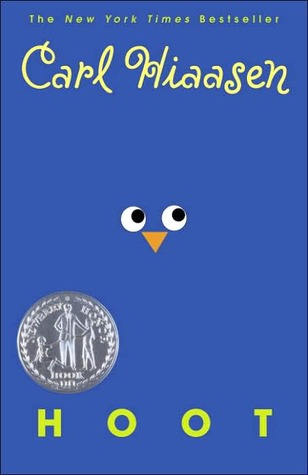
Hoot9. Hoot by Carl Hiaasen. This chapter book is targeted at middle school children. I read it to my six year old daughter and she enjoyed it. Younger children can appreciate these stories more than most people think. Since Carl Hiaasen is also a writer of adult mystery books, he held my attention and had me on the edge of chair wanting more.


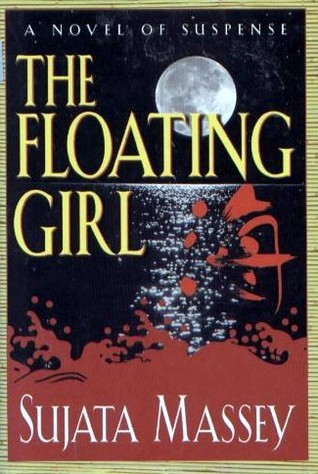
The Floating Girl8. The Floating Girl by Sujata Massey. I read mystery novels not so much for the plot as for the unique voice of the main character. I want to enter their world as they see it. Rei Shimura is one of those voices. Rei was born in America of a Japanese father and American mother. She is living in modern Japan but is not accepted as Japanese. I read three Rei Shimura mysteries this and I found them enjoyable. Besides The Floating Girl, I read The Flower Master and The Bride's Kimono.

Sujata Massey was born in Sussex, England to parents from India and Germany and grew up in St. Paul, Minn
esota. She attended John Hopkins University and worked as a reporter for the Baltimore Evening Sun. She moved to Japan, taught English and began writing her first novel.


Life Class7. Life Class by Pat Barker.  I discovered the writer, Pat Barker, while listening to the World Book Club podcast. She was being interviewed about her World War I novels. Barker is a historical novelist and her area of expertise is World War I. Life Class is about a small group of art students who become caught up in World War I. The main character is a young man named Paul Tarrant who is struggling to find out if he has the skills to be an artist. His love interest is a fellow art student, Elinor Brooke. Another art student, Kit Neville, also is pursuing Elinor and she enjoys the attentions of both men. The war disrupts their idyllic life and changes them forever. Barker details life in England in the early part of the 20th century. I found the novel to be a great read.


Saving Fish from Drowning6. Saving Fish From Drowning by Amy Tan. A fantastic story that is not for everyone. If you are looking for storytelling in a straight line with lots of action this book is not for you. In telling a great story, Amy Tan travels down many paths and bunny trails providing us with fascinating information on various minor characters and history. I would also recommend that you listen to the audio version instead of reading it yourself. Tan does a superb job of narrating the book herself. 

The story is told in the first person narration of a ghost, a woman who has recently died under strange circumstances. Just before she is to lead of a group of her friends on a tour of Burma, she dies with her throat slit. But she wakes to find herself a ghost so she accompanies her friends who decide to continue the trip even though their leader is dead. The ghost reports on the trials and tribulations of the group as they travel through China and Burma (now known as Myanmar) including being kidnapped by a tribal group.

I read the Joy Luck Club when it first came out many years ago, but have not read anything by Amy Tan since then. I think I will need to go back and read some of her other books to see what I have missed.


Sleeping Preacher 5. Sleeping Preacher by Julia Kadorf. When I was a child, I was fascinated by the story my mother told about the sleeping preacher, John Kaufman. After graduating college, I set out to write a historical novel about his life. Unfortunately, I ran into some obstacles and never finished the novel. In the early 1900's he had visited the church my grandmother attended. During the late 1800's until the first decade of the 20th century, a number of sleeping preachers arose around the world. The preachers, both men and women, would enter into a trance and preach a coherent sermon. People would stick needles in their legs to see if they were faking.

I was immediately interested in Sleeping Preacher by Julia Kasdorf as soon as I read a review of the book. The poet, Julia Kasdorf, also attended the same college I did, a decade later, but I have never met her. While many of these poems address growing up Mennonite, some do not. Kasdorf writes of herself as well as family. The opening lines of A Family History about her mother read:

"At dusk the girl who would become my mom
must trudge through the snow, her legs
cold under skirts, a bandanna tight on her braids."

Each poem is a story packed with description of a world that many of us have never encountered. The opening lines of the poem, August, read:

"Dad's mother was coming home
from picking huckleberries on the mountain
when sunlight spooked the horse, and it tore
through a pasture fence, dragging the buggy
until it broke lose, hurling the children,
killing their mother, spilling
those silver pails of sweet, black fruit."

While the poem goes on to tell of other women who died in the month of August, these opening seven lines encapsulate a powerful story in their own right. The attention to detail builds the story image by image.

In the poem Friendschaft, Kasdorf captures Mennonite genealogy.

"As I grow up, the great aunts click their tongues.
They are looking for signs of their lives
in my limbs. It's the Hartzler blood that makes you
dark and thin. It's just like Aunt Toot to love
olives and pickles and fuss like a hen.
Your Yoder nose...."

I can't even begin the number of times I heard the same type of remarks growing up. Kasdorf was six when her family bought their first television and she captures that moment in a poem. I was seventeen when my family bought our first TV. I found in these poems much that I have heard and remember.

The first poem of Kasdorf that I read before buying the book was What I Learned from My Mother. The poem discusses what to do when someone dies. She closes the poem with these lines:

"To every house you must enter, you must offer
healing: a chocolate cake you baked yourself,
the blessing of your voice, your chaste touch."

The title poem, The Sleeping Preacher, tells the story of church reform through the eyes of her great-grandmother. The closing lines read:

"She did not think of us,
only to save us, leaving nothing
for us to touch or see
except this stubborn will to believe."

I highly recommend this book to poets and other readers, especially those interested in learning more about the Mennonite culture and way of life.


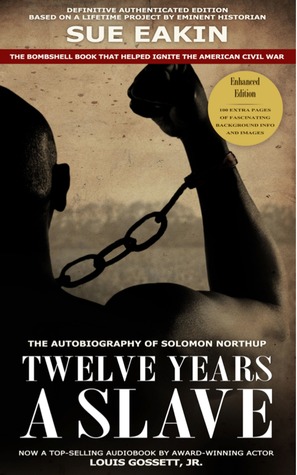
Twelve Years a Slave4. Twelve Years a Slave by Solomon Northup. If you have watched the movie, Twelve Years a Slave, then you should read this book. If you have not watched the movie,Twelve Years a Slave, then you definitely need to read this book. The book is an as-told-to story by Solomon Northup, a man who was born, raised and living as a free person in New York state. As Northup tells the story, he was conned into traveling to Washington D.C. where he was drugged, kidnapped and sold into slavery in the deep South in 1840. He spent 12 years as a slave before he was able to send information of his whereabouts to friends who traveled south and freed him. .

The book shares the experience of one man as a slave and all the horrors that he faced. Married with children before the kidnapping, Northup suffered as no person should be made to suffer. He was whipped, beaten and almost hung. His skills as a violin player and his intelligence kept him alive through these difficult, almost unbearable times. He was also forced to whip other slaves.

The book was written by David Wilson who served as Northup's ghost writer. It followed in the footsteps of the publishing success of Uncle Tom's Cabin and was used by the abolition forces to further their cause. After Northup's release from slavery, he traveled around the north giving anti-slavery speeches and may have been involved in the Underground Railroad, though, there is no evidence to support this. Published in 1853, the book was an instant success with 8,000 copies being sold in the first month. The book went out of print in 1856 and remained out of print until 1968.

Along side the amazing story of Solomon Northup is the fascinating story of Sue Lyles Eakin and the work she did to bring the book to the attention of American readers in the 20th and 21st centuries. Sue Eakin discovered an original copy of the book in a plantation home near where Northup was a slave when she was 12 years old. Northup's story became her life's passion. Dr. Eakin wrote her master's thesis about Northup's story and after decades of research produced the first authenticated edition in 1968. She continued to spend her life verifying, validating and substantiating the story through thousands of hours of research. In 2007, at the age of 88, she completed her final definitive edition with over 100 pages of new information, images and maps. In her spare time, she authored over a dozen other history books and was a history professor.

One of the fascinating facts that I learned in this book was that in 1840 New York state passed a law authorizing the governor the authority to seek the release of free people who were sold into slavery. This law is what the friends of Solomon Northup used to travel to Louisiana and secure his release.

Amazon lists more than 30 different editions of this book. I would recommend you purchase this edition by Dr. Sue Eakin which contains all her documentation and verification of the facts in the story.

Out Stealing Horses3. Out Stealing Horses by Per Petterson. A fantastic novel. I heard an interview with Petterson on the BBC World Book Club and decided to read the novel. The book is about the relationship of a father and son set in Norway. A 67 year old man reflects back on his life and the summer of 1948 which he spent with his father. I highly recommend this book to all fathers, sons and daughters.


Words Under the Words: Selected Poems2. Words Under the Words by Naomi Shihab Nye.  With this book, Naomi Shihab Nye has become one of my favorite contemporary poets. The book is filled with phenomenal lines and images. In my first reading of the 104 poems, I marked 30 poems that I wanted to read again.  Here are the beautiful opening three lines of Biography of an Armenian Schoolgirl.

"I have lived in the room of stone where voices become
bones buried under us long ago. Where you could dig
for centuries uncovering the same sweet dust."

In the poem, At Otto's Place, Naomi writes:

"Could I live like this? I ask myself
and I know, somehow, I must.
More and more my life is peeling paint,
straight horizons.
More and more my name dissolves in the air,
salt, something invisible I taste,
and forget."

I love the phrase, "my life is peeling paint." What a powerful image!

In the poem, The House in the Heart, Nye writes:

"This body we thought so important,
it's a porch, that's all.
I know this, but I don't know
what to do about it."

Our bodies are a resting place — a place from which we look out at the world. We know many things but knowledge alone is not enough. We need to learn what to do to change things. Nye packs so much into these four lines.

In the poem, Jerusalem, Nye writes:

"To live without roads seemed one way
not to get lost. To make maps
of stone and grass, to rub stars together
and find a spark."

It is only because we have roads that we get lost. If we did not have roads to follow, we would not lose our way. So often we get so focused on where we want to go that we forget where we are. Maybe our goals and dreams are not as important as we think.

I highly recommend this book to anyone who loves to read poetry as well as anyone who loves words.

1. H
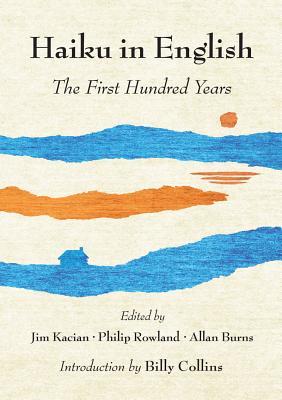
aiku in English: The First Hundred Years edited by Philip Rowland, James Kacian, and Allan Burns.  The value of this collection of haiku is that it tells the story of haiku written in English over the last one hundred years. If you are a haiku poet and have read and studied haiku then I recommend that you first read the essay by Jim Kacian at the end of the book. It is superb! 

Haiku in English: The First Hundred YearsThis anthology of English-language haiku is edited by Jim Kacian, Philip Rowland and Allan Burns. To put the book together, they obviously have read thousands of haiku published in the haiku magazines in the the last 60 years. They document the growth and changes in haiku through the work they have selected.

The anthology begins with some of the shorter poems of Ezra Pound and includes some well-known poets and writers like Wallace Stevens, Amy Lowell, Langston Hughes, e. e. cummings, Allen Ginsberg, Gary Snyder, and Jack Kerouac. Most of these poets dabbled in haiku but their real work was elsewhere. Then the anthology shifts to early haiku poets like Cor van den Heuvel who is best known for his anthology called The Haiku Anthology. The book is still the best collection of haiku written in English. It is the book that I would recommend to anyone interested in reading haiku.

For a period of 7 years between 1975 to 1982, I wrote and published more than 100 haiku in more than 20 haiku magazines. I also read the haiku of many of the poets in these pages. One of my favorites is James W. Hackett. I own several of his small books. Others who I read include: Nick Virgilio and Robert Spiess. Spiess was the editor of Modern Haiku, one of the best haiku magazines and one of the oldest that is still published. I was fortunate to have dinner with the man one evening in Madison, WI where he lived. 

I also remember reading the haiku of John Wills, Rod Willmot, Virginia Brady Young, Michael McClintock, Geraldine Clinton Little, Janice Bostok, Alan Pizzarelli, Elizabeth Searle Lamb, Marlene Mountain, George Swede, Ruth Yarrow, Gunther Klinge, Peggy Willis Lyles, Alexis Rotella, James Kirkup, and Lee Gurga. I own two hardback collections of Raymond Roseliep, the Iowa priest who wrote haiku: Rabbit in the Moon and Listen to Light. Lorraine Ellis Harr, who has three haiku in this anthology, published my first haiku in her magazine, Dragonfly. I also met Randy Brooks who published several of my haiku in his magazine, High/Coo. So reading this book for me was like taking a trip down memory lane. A special thanks to Jim Kacian, Philip Rowland and Allan Burns.


You may also want to read:

Ten Best Books I Read in 2012
The Best Fifteen Books I Read in 2013
The List of All the Books I Read in 2014

Monday, December 29, 2014

Brianna King


What the world needs now is more imagination and creativity.  Every day we face problems and challenges in our personal as well as our professional lives.  Too often we continue to respond to these problems in the same way that we have always responded.  We keep doing what we have always done and keep getting the same result.  Instead, we should be searching for new ways of solving the problems.

What challenges do you face as a creative leader?  What obstacles stand in your way of achieving the success you dream about?  Are you so focused on the problems that you fail to see the opportunities around the corner?  Shift your focus to the possibilities.  Choose a new path into the future.  Imagine a better world.

Albert Einstein once said, "Imagination is more important than knowledge. Knowledge is limited. Imagination encircles the world.”  

What are you doing to expand your imagination — to open the doors of creative thinking? What are you doing to escape of the black hole of negative thinking?  Here are five ways to increase your imaginative thinking.
  1. Develop an attitude of curiosity.  Be curious about everything.  Look for connections that others do not see.
  2. Question and challenge accepted beliefs, assumptions and practices.  Just because you have always done it a certain way does not mean you should continue to do it that way.
  3. Explore the world.  Travel to places you have never been.  Read books in fields of learning that you normally don't read.  Engage people outside your field of expertise in conversations and learn from them.
  4. Conduct daily doodling practice.  Doodle for 5 - 10 minutes.  Doodling helps to relax your mind and start your creative juices flowing.  Drawing can free your mind of entrenched ways of seeing. Create new ways of seeing by doodling.  Focus your attention on the doodling.  Don't worry about being artistic.
  5. Conduct daily writing practice.  Write everyday for 10 minutes.  Don't worry about grammar, spelling or punctuation.  Start with the phrase, "In the future, I".  Keep writing for the full 10 minutes.  When you run out of things to write, start again with the phrase, "In the future, I".
Remember that your imagination and creativity will help you solve most of your problems and help you build a better world.  Begin now to cultivate your imagination.  

Sunday, December 28, 2014

Harley's Book Review — Words Under the Words


Words Under the Words

by Naomi Shihad Nye


With this book, Naomi Shihab Nye has become one of my favorite contemporary poets. The book is filled with phenomenal lines and images. In my first reading of the 104 poems, I marked 30 poems that I wanted to read again. 

Here are the beautiful opening three lines of Biography of an Armenian Schoolgirl.

"I have lived in the room of stone where voices become
bones buried under us long ago. Where you could dig
for centuries uncovering the same sweet dust."

In the poem, At Otto's Place, Naomi writes:

"Could I live like this? I ask myself
and I know, somehow, I must.
More and more my life is peeling paint,
straight horizons.
More and more my name dissolves in the air,
salt, something invisible I taste,
and forget."

I love the phrase, "my life is peeling paint." What a powerful image!

In the poem, The House in the Heart, Nye writes:

"This body we thought so important,
it's a porch, that's all.
I know this, but I don't know
what to do about it."

Our bodies are a resting place — a place from which we look out at the world. We know many things but knowledge alone is not enough. We need to learn what to do to change things. Nye packs so much into these four lines.

In the poem, Jerusalem, Nye writes:

"To live without roads seemed one way
not to get lost. To make maps
of stone and grass, to rub stars together
and find a spark."

It is only because we have roads that we get lost. If we did not have roads to follow, we would not lose our way. So often we get so focused on where we want to go that we forget where we are. Maybe our goals and dreams are not as important as we think.

I highly recommend this book to anyone who loves to read poetry as well as anyone who loves words.

Monday, December 22, 2014

Harley King


Memories are the stories that we tell ourselves and others to remind us of the experiences in our lives.  Rarely are these stories entirely true.  The stories have been altered by time and our ability to forget.  We have the ability to change our stories and yet believe them to be true.  

Cherish your ability to forget what has happened to you because it helps you live a productive and happy life.  If we remembered every detail of our lives, we would suffer from boredom.  Be wary of the negative stories you tell yourself because some portion of each story we tell is false.  You have recreated the experience to fit your beliefs.  Don't live in a past that causes you pain and heartache.  

Celebrate your ability to recreate your experiences into stories that shape who you want to be, not who you are.  Our creative spirits provide us with a rich tapestry of memory.  We change our stories to give us hope.  Memory is a creative gift.  Alter your story to honor your life.

May your memories grow in proportion to the richness of your creative spirit.


Monday, December 15, 2014

Harley King


Commentary
Life's journey is full of experiences from which we can and should learn wisdom. Sometimes these experiences will knock us to the ground and force us to reconsider our beliefs and values. Sometimes we will have to learn the lesson multiple times before we gain the wisdom to move on to better opportunities and new lessons.  Sometimes we fail to gain the wisdom and will repeat the same mistakes again and again.

Wisdom comes not from simply living in the moment, but from deep reflection and introspection.  Wisdom comes from questioning what we do and analyzing why we behave in the manner in which we do.  Life gives us many opportunities to grow in wisdom and understanding.  Each life lesson teaches us to become better individuals and to open our hearts to the wisdom that is given.

Sometimes the lessons that life throws our way will force us to lose our faith and push us toward giving up.  We become discouraged and depressed.  We enter a world of darkness and unhappiness.  We must keep to the path and not lose sight of the goal.  We must not let the pessimism of others defeat us.  We must keep going despite how we feel.  Keep in mind that on cloudy days the sun still shines.  We must learn to fly above the clouds and experience the joy of the sun's rays.

May you seek the wisdom that comes from experience and the faith that restores the heart.