Welcome!

Welcome! There are more than 900 Inspirational Quotes For Writers, Artists and Other Creative Leaders on this site.
Spend a few minutes exploring. And come back again and again for other inspirational quotes.

Friday, November 11, 2011

Eleanor Roosevelt

"You must do the thing you think you cannot do."


American Speaker, Author
1884 - 1962


Is there something that you have wanted to do but were afraid to do it because you might fail? Then that is the one thing you were meant to do.  We are not given dreams that we can not achieve.  We must work hard to achieve those dreams and not let fear overcome us.  Take the step today to do that which you want to do.  Have the faith that you can do it.

Thursday, November 10, 2011

Rene Magritte

"Art evokes the mystery without which the world would not exist."


Belgian Artist
1898 - 1967


Is there mystery in your creative work?  Are people curious after reading your stories or viewing your paintings?  Do you evoke the spirit of mystery?  Do you raise questions that have no answers?  Do you open doors to the unknown and the forbidden?  


The False Mirror
(1928)


Castle in the Pyrenees
(Quote source:  Goodreads.com)


Wednesday, November 9, 2011

Edouard Manet

"I need to work to feel well."


— Edouard Manet
French Artist
1832 - 1883


A Bar at the Folies-Bergere
(1982)
If I go too long without writing, I feel it in my soul, not my body.  I feel something is missing — that my life is out of whack.  And the only way to bring everything back into balance is to put pen to paper.  I have been writing for 36 years and I know I will continue to write as long as I can breathe and my mind is sound.  I met a man once who was writing his first book at 101.  When I saw him two years later, he was working on his second book.  Creative people have a need to produce creative works.  A number of actors have turned to painting in their later years.  Some current actors are writing novels.  Writers turn to painting and painters turn to poetry.

What happens when you stop painting or writing?  Can you feel the change in your soul?  In your bones?  Do you feel yourself drawn back to work?

Tuesday, November 8, 2011

Truman Capote

(1959)
"Failure is the condiment that gives success its flavor."


American Writer
1924 - 1984


People, unfortunately, strive to be perfect and not make any mistakes.  For creative leaders, perfection creates paralysis and immobility.  Painters who seek perfection stay with the tried and true because they don't want to risk failure.  Writer won't step outside their comfort zone because of the fear of failure.  We are a society driven to be perfect and we don't tolerate mistakes.  Yet, without failure there is no success.  Failure provides the flavor to life.  

For a society that dwells on perfection, we crave seeing others fail.  We love to watch the mighty fall.  We cling to our entertainment shows to see which celebrity screwed up.  Who is going through a divorce.  Who is sleeping with who.  Who is fighting with who.  If I began naming names, the list would never end.  Every moment of every day someone stumbles and falls.  

Yet, it is in the moments of failure that some of the greatest novels have been written and some of the greatest paintings have been painted.  Without the pain of failure, there would be no joy in success.  So I challenge you to step outside your comfort zone and try something new.

(Source of quote: Goodreads.com)

Monday, November 7, 2011

John Steinbeck

"The story was gradually taking shape.  It ruined a story to have it all come out quickly.  The good story lay in half-told things which must be filled in out of the hearer's own experience."


— John Steinbeck
American Novelist
1902 - 1968


The painter and writer are only half the equation.  The people who make up the audience are the other half.  They bring their own experiences to the story and interpret what they read and see based on past experiences.  If a reader doesn't like your writing, more than likely it is because of something in his past experience.  I am sure that you have read a book that you loved and most of your friends did not or visa versa.  I read a discussion recently on Goodreads.com by some people who did not like Crime and Punishment by Dostoyevsky which is one of my all time favorite books.  I also know people who love Moby Dick by Melville which I tried to read on four occasions and I could never finish it.  The audience and readers play a role in their enjoyment of a work of art.

Have you ever loved a book that you read, but hated the movie when you saw it?  Most readers have had that experience.  The movie does not live up to how we experienced the book.  And the reason is that we brought our own experiences to the reading, just as the screenwriter brought his experiences to the book and the movie.

Would you still write if you did not have any readers?  Would you still paint if no one saw your paintings?  I would and have.  Yes, I would love to have readers but I don't stop writing because they are few and far between.  My writing is driven by more than the need for readers.  It is driven by the need to express myself.  Why do you write or paint?  What drives you?

(Quote source: Tortilla Flat by John Steinbeck)

Sunday, November 6, 2011

Harley King

(Photo by Harley King)


Are you inspired by the changing colors 
to write a poem, paint a picture 
tell a story or take a walk?
May you find hope in 
the changing of the seasons.

Saturday, November 5, 2011

Peter Drucker

"Here I am, fifty-eight, and I still don't know what I'm going to be when I grow up."


Austrian Writer/Management Consultant
1909 - 2005


We have all been asked the question:  "What do you want to be when you grow up?"  And we usually give the simple answers like teacher, nurse or fireman.  The first response that I remember making was architect.  My father was a general contractor and I was in the seventh grade.  

When I was a sophomore in high school I dedicated my life to the ministry.  By the time I was senior I had lost my faith.  While in college I decided I wanted to be a writer and I have spent more than thirty-five years writing.  And since life has a way of coming full circle, I also became a speaker.  Sometimes an audience member will tell me that I missed my calling — that I should have been a preacher.  I smile and in my heart I know that I have been a preacher, although I have no church and no gospel.

When I turned fifty, I wrote an article for my college alumni magazine entitled: What Do I Want To Be When I Grow Up? Or How I Found Myself!  I realized that I had grown up to be what I had wanted to be.  I had lived the life that I desired.  I had done what I wanted to do.  Here is a link to the article.


Have you become the person you wanted to be?  Or are you still wandering through the forest of uncertainty, not knowing what you want to do with your life?

Friday, November 4, 2011

Joseph Joubert

"All gardeners live in beautiful places because they make them so."


French Writer
1754 - 1824


During the past year my wife on two occasions hired a cleaning service to do some deep cleaning in our house.  The surprising thing has been the compliments she has received from these housekeepers who visit lots of houses.  They compliment her on how artistic and beautiful the house looks.  To paraphrase Joubert, people live in beautiful places because they make them so.

We create the environment in which we live — the space we occupy — from the yard to the closets.  What are you doing to make your abode a place you enjoy.  How about your office?  Or your studio?  Is it a place that encourages you to do your best work?  Or do you have to push things aside to work today?  Does your work place depress you?  What are you doing to change it?

Thursday, November 3, 2011

James Stephens

"What the heart knows today, the head will understand tomorrow."


— James Stephens
Irish Novelist
1882 - 1850


Take a break, my friend, from your thoughts and listen to your heart.

Wednesday, November 2, 2011

Dietrich Bonhoffer

"In the whole of world history there is only one really significant hour — the present." 


— Dietrich Bonhoeffer
German Theologian/Writer
1906 - 1945


We are often told to live in the moment, but few of us are able to achieve this for long.  We either disappear into memories of the past or become lost in dreams of the future.  The challenge is to spend more and more time in the present, because only in the present can we take action and accomplish something.  Only in the present can we paint, sculpt, write, draw, or create.  Cultivate the present.  Learn to live in the moment.  Learn to love where you are now.  Some people inhabit the past because they think life was better then.  Other inhabit the future because they hope the future will be better.  Only those who learn to spend most of their time in the present will achieve their dreams.

Tuesday, November 1, 2011

Charles Dickens

"Have a heart that never hardens, a temper that never tires, a touch that never hurts." 


English Novelist
1812 - 1870


It is easy in today's world to be a cynic.  No matter where you look you can find something wrong and someone to blame.  And creative leaders often see the disconnect between the ideal and reality a lot quicker than most.  It is easy to fall into a sarcastic, negative view of the world.  Every day we hear about corrupt politicians, false religious leaders, greedy business executives and rude arrogant sports figures.  

It takes a strong person not to have a hard heart — to keep the love flowing.  As creative leaders we need to keep our hearts open and giving.  We need an attitude of gratitude.  So cultivate the love in your heart.  Give thanks daily for what you have been given.

Creative leaders often are more sensitive than other people.  It is easy to have our feelings hurt.  We cannot let the negative attitudes and comments of others bring us down.  We must hold fast to what is best in the human race.  We must hold ourselves to high standards.

Monday, October 31, 2011

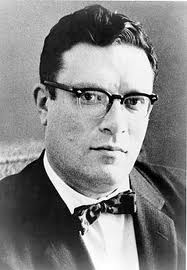
Isaac Asimov

"The saddest aspect of life right now is that science gathers knowledge faster than society gathers wisdom."


American Writer/Novelist
1920 - 1992


Man's knowledge of the world around him has grown rapidly in the last 150 years, but man's understanding of his heart has not changed in thousands of years.  The more we learn; the less we know.  Our understanding of technology and science has moved so quickly that our emotional lives have failed to keep up.  We lack the wisdom to function in this crazy technological world.  So some people reject technology and try to return to earlier times.  Others find refuge in fundamental religions.  A few seek to find a path that leads to wisdom.  

Seeking and communicating wisdom should be a goal of all creative leaders.  With our paintings, poems and stories, we need to help people find the wisdom to live in these challenging times.  Through our novels, plays and film we can show people the best way to find  a path out of the maze.

Sunday, October 30, 2011

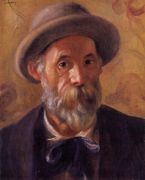
Pierre Auguste Renoir

Self-Portrait
"You come to nature with your own theories, and she knocks them all flat."


French Artist
1841 - 1919


Human beings develop a lot of theories, but often those theories fall flat.  We are not as intelligent as we sometimes thing we are.  We don't know as much as we think we know.  We need to be more humble and less arrogant.  Humility is an important characteristic for a creative leader to develop.  Too much egotism leads to arrogance and intolerance.  Even the masters make mistakes and have flaws in their characters.  No one is perfect.  We all have room for growth and change.  Cultivate humility.  Cultivate forgiveness.

Dance at the Moulin De La Galette
(1876)

Saturday, October 29, 2011

David Hockney

"No matter what the illusion created, it is a flat canvas and it has to be organized in shape."


English Painter
1937 - 


All art is illusionary.  Whether we are talking about a painting, a novel or a film, we are talking about the art of creating reality out of nothing.  For the painter, the canvas is blank.  For the writer, the page is blank.  For the actor, the character is blank.  Out of nothing the artist creates the illusion of reality.  The better the illusion, the more likely we are to believe that we are experiencing reality.  Creative leaders are masters of illusion, magicians of mystery.


Friday, October 28, 2011

Tomas Transtromer


"Fantastic to feel how my poem is growing
while I myself am shrinking.
It's getting bigger, it's taking my place,
it's pressing against me.
It has shoved me out of the nest.
The poem is finished."


Swedish Poet
1931 - 


Every writer and painter knows when the work takes control and pushes the artist out of the picture.  We are simply vessels through which creativity flows.  The muses are in charge and are dictating their visions.  Have you learned how to give up control and let the creative spirit flow through you?

Here is a poem by Tomas Transtromer, the 2011 Nobel Prize winner for Literature.


Track

2 A.M.: moonlight. The train has stopped
out in a field. Far off sparks of light from town,
flickering coldly on the horizon.

As when a man goes deep into his dream
he will never remember that he was there
when he returns again to his room.

Or when a person goes so deep into a sickness
that his days all become some flickering sparks, a swarm,
feeble and cold on the horizon.

The train is entirely motionless.
2 o'clock:  strong moonlight, few stars.


(by Tomas Transtromer
Translated by Robert Bly)


Thursday, October 27, 2011

John O'Hara

"They say great themes make great novels, but what these young writers don't understand is that there is no greater theme than men and women."


— John O'Hara
American Novelist
1905 - 1970


I just finished Andrea, a short novel, by John O'Hara.  It is the tragic story of a 20 year love affair between a man and a woman.  I also recently finished the Good Earth by Pearl Buck.  The key relationship in the novel is between a man and his wife — a relationship the man did not appreciate as much as he should have.

The best stories are about relationships.  And the best of the best stories are about the relationships between men and women.  What makes those relationships work?  Why do the relationships fail?  Think about your own life.  What relationships are the most important to you?  What relationships are you exploring in your writing?  What relationships are you exploring in your paintings?  

Wednesday, October 26, 2011

Jackson Pollack

"Painting is self-discovery."


— Jackson Pollack
American Painter
1912 - 1956


I believe all arts are about self-discovery whether we are talking about painting or literature or theater.  In the process of creating we discover who we are and whom we may want to be.  Maybe we learn something about ourselves in how a character in a story behaves.  Or we see ourselves through the lens of a photographer or painter.  Or we play a character on stage who is are alter ego.

What have you learned about yourself today?  Last week?  Last month?  Last year?  Life is a journey of self-discovery and change.  Are you growing and developing as you age?


The Key(1946)

Tuesday, October 25, 2011

Jane Goodall

"What you do makes a difference, and you have to decide what kind of difference you want to make."


British Primatologist/Anthropologist/Author
World's Foremost Expert on Chimpanzees
1934 - 


Are you making a difference?  Are you leaving your small corner of the world a better place than when you found it?  More than 25 years ago, I was fired from a job and immediately put my house up for sale because I knew I would have to move in order to find another job in my field.  A couple weeks later, my wife and I stopped at a nursery and purchased a cherry tree that we planted in the backyard.  Now, we were never going to see this tree grow, but we did it anyway.  I have strong belief that you need to leave a place better than you found it.  You need to give back and that is what I was doing.  On a couple of occasions, I had a chance to revisit this house and I saw that the tree had grown into a beautiful tree. 

In the moments before I speak, I motivate myself by repeating over and over to myself:  "I will touch the life of at least one person.  I will make a difference in the life of one person."  I know I won't touch everyone, but if I am able to motivate one person to be better than he is, then I know I have done my job.  As writers and artists we have the same opportunity to make a difference in people's lives.

I had an opportunity to hear Jane Goodall speak about her work about ten years ago.  My wife, daughter and I drove three hours to hear her speak.  Then we stood in a long line so she could sign a book for my daughter.  We did not arrive home until about 2 am.  Jane Goodall was an inspiration for my daughter.  She made a difference in my daughter's life.  

How are you touching the lives of the people who view your paintings or read your books?  Are you leaving your corner of the world better than you found it?

Watch this video of Jane Goodall and her research.


Monday, October 24, 2011

Lionel Shriver

"Change is like that: you are no longer where you were; you are not yet where you will get; you are nowhere exactly."


American Novelist
1957 -


Creative leaders must live in a state of change.  Each new painting, each new story, each new poem brings about change.  You are no longer where you were.  You finished your last project and now you are on to the next.  You are filled with the excitement of beginning something new but you don't know where it will take you.  You are in between.  You are nowhere.  And as you create, the change continues.  You think you are going one direction and suddenly a new character appears and takes you into another.  Change is constant and as creative leaders we must learn to appreciate it, encourage it, embrace it and enjoy it.

Sunday, October 23, 2011

Jane Rule


"It's not the length but the quality of life that matters to me.  It has always been important to me to write one sentence at a time, to live every day as if it were my last and judge it in those terms, often badly, not because it lacked grand gesture or grand passion but because it failed in the daily virtues of self-discipline, kindness and laughter."


1931 - 2006
Canadian Writer


Are you focused on the big picture or do you live each day as if it was your last?  The challenge is to balance both.  You need the big picture of where you are going, but you need to live as if each day is your last.  And by that I don't mean spending all day with family and doing nothing.  Living each day as your last has to do with your passion, purpose, desire, priorities and commitment.  Are you focused on the right priorities?  Are you focused on the passion in your life?  Are you committed to doing your best each and every day.  Are you focused on the virtues of self-discipline, kindness and laughter?