Welcome!

Welcome! There are more than 900 Inspirational Quotes For Writers, Artists and Other Creative Leaders on this site.
Spend a few minutes exploring. And come back again and again for other inspirational quotes.
Showing posts with label Discipline. Show all posts

Monday, June 27, 2016

Jim Rohn — Discipline


We all have dreams and most of us never act on our dreams.  We find excuses and reasons why we can't do something.  We focus on all the obstacles we see in front of us.  Dreams may inspire us to act for a day or two, but it takes discipline to keep writing and painting.  And this goes for successful writers and painters as well as beginners.  

I have read stories of successful writers and painters who stop working.  The first book or two made them a celebrity and they never finish the next book.  They get caught up in the celebrity of being a writer.  Being a creative leader requires discipline to sit down at the computer, to stand at that easel, or to sit at the piano.  

Do you have the discipline to accomplish your dreams?  Do you rise before everyone in your family so that you can spend an hour or two working on your art?  Or do you stay up after everyone else has gone to bed?  Do you do what many others only dream about?  

Creative leaders can become easily sidetracked by the next creative thought or the next creative idea. We are attracted to the energy within new creative ideas. It is a emotional high and can be addictive. If we are not careful we will jump from one idea to the next and never finish what we have started. Creative leaders must master the art of self-discipline if they are to be successful.

Are you struggling with your dreams or have you mastered the art of self-discipline? Do you procrastinate and never finish what you start or do you bring your projects in on time? Do you let the pleasure of the moment keep you from doing the work you were meant to do? Do you let the joy of new ideas get in the way of completing your work? Remember self-discipline is the key to your success.

Monday, November 2, 2015

Wilma Rudolph


We all have dreams, things that we want to accomplish in our lives, but many of us give up too soon. We don't have the commitment to achieve what we dream of achieving. To be an artist in a world where you have to have a 9 - 5 job in order to pay the bills requires commitment. You have to get up earlier than everyone else or go to bed later than everyone else in your family. You have to steal minutes wherever you can to write, to draw, to paint, to dance. 

Sometimes we have to create in isolation, without contact with other creative souls. We have to force ourselves to write even when our body and mind is finding ways to procrastinate. Many of us don't have people in our lives encouraging us to create. In fact, we may have people telling us to get a real job. We have to be our own coach and cheerleader. We have to be willing to do what unsuccessful people are not willing to do? Have you the commitment to be a creative leader?

Discipline is one of the keys to being an artist or a writer. One needs to work every day. People often say: "I work when I am inspired." If you wait until you are inspired, you will be waiting a long time. If you work whether you are inspired or not, you will find that soon inspiration will become a constant companion. Work opens up the creative spirit and the inspiration flows. So my message is simple: work every day even if it is for only 15 minutes.

Success comes from work. Work when you are sad. Work when you are happy. Work when you don't feel like it. Work when you want to go to a movie. Our minds are very good at finding excuses for not working. "I have to do the dishes." "I have to wash the clothes." And the list goes on. Work takes discipline and will power. 

Since you have no boss but yourself, you have to hold yourself accountable. Schedule your hours when you are most creative and stick to your schedule. Maybe you write between 5 am and 6 am. Or if you have the luxury, schedule your work hours from 8 am to 5 pm with an hour off for lunch. Some writers write in the morning and do their research and marketing in the afternoon. You have to find the schedule that best fits your temperament.

Creative leaders sometimes struggle with discipline. They procrastinate. They know they should pick up the pen and write or pick up the paint brush and paint, but they find excuses. When you find yourself procrastinating, remember what you want. What is your dream? What is it you want to accomplish? Why are you here? Focus on your goals and you will have the discipline to do what you need to do.

We all have dreams and goals but many of us never achieve them because we have not mastered the art of self-discipline. I define self-discipline as sacrificing short-term pleasure for the achievement of long-term goals. If you want to be a novelist but you never seem to find the time to write, you will never write your novel. If you want to be a painter but spend your time partying with friends and not painting, you may never produce any great paintings. The arts require a lot of self-discipline. We need to be able to sacrifice the pleasure of the moment for the achievement of long-term success.

What are you willing to sacrifice for your creative work? What are you willing to give up? Life is never easy. There are many days when you will take one step forward and three backwards. Do you have the stubbornness to keep going even when you see very little light at the end of the tunnel?

The creative arts are not for the weak of will. The creative arts require commitment, persistence and self-discipline in the face of cold-hearted rejection. Do you have the self-discipline to stay focused when the world is screaming that you should quit and find a normal line of work? Do you have the strength to keep going when you have received 250 rejection letters? How long are you willing to wait for success? Two years? Five years? Ten? Twenty?


Monday, October 29, 2012

Theodore Roosevelt

"With self-discipline most anything is possible."


— Theodore Roosevelt
American Writer, 26th President
1858 - 1919


Commentary:
One of the weaknesses of some writers and artists is the lack of self-discipline which is the key to their long-term success.  One of the hardest things for me to do in college was to sit and study.  There were many activities vying for my attention.  The same is true of many creative leaders.  Thousands of activities are vying for our attention.  We have to be willing to forego short-term pleasure for long-term success.  We have to sit down at the keyboard and write or stand at the easel and paint.  If we don't develop self-discipline, we will never be more than a wanna-be.

Creative Practice:
Is there some creative project that you have been putting off.  Take the time this week to work on that project.  Find a half-hour every day to work without stop.

Biography:
Theodore Roosevelt was born in New York city as the second child of Theodore Roosevelt Sr. and Martha Bulloch.  He was a sickly child, suffering from asthma.  He took up boxing and exercising to overcome his health problems.  Roosevelt had a photographic memory and spent a lifetime reading books.  He graduated from Harvard.  After graduation, a doctor advised him that he had a serious heart condition and that he should avoid strenuous activity.  He did the opposite.

Roosevelt married Alice Hathaway in 1880.  She died of kidney failure two days after giving birth to their daughter, Alice.  He married Edith Carow, a childhood sweetheart, in 1886.

Roosevelt wrote and published 3 books between 1885 - 1893 while on his ranches in the Dakotas:  Hunting Trips of a Ranchman, Ranch Life and the Hunting-Trail, and the Wilderness Hunter.  

In 1995 Roosevelt became president of the board of New York City Police Commissioners in 1995 and radically reformed the police department.  In 1897, Roosevelt became Assistant Secretary of the Navy under William McKinley.  In 1898, Roosevelt formed the Rough Riders and invaded Cuba.  The Rough Riders became famous for the charge up San Juan Hill on July 1, 1898.  In 1898, Roosevelt was elected governor of New York.  He was nominated as Vice-President in 1900 under William McKinley.  When McKinley was assassinated in 1901, Roosevelt became the 26th President of the United States.

Monday, April 23, 2012

Margaret Thatcher

"Disciplining yourself to do what you know is right and important, although difficult, is the highroad to pride, self-esteem, and personal satisfaction."


British Prime Minister
1925 -


Self-discipline is the key to success in anything one attempts.  As creative leaders we need to nurture and practice self-discipline.  Self-discipline requires sacrifice in the short-term in order to achieve long-term goals.  Yet many do not have the patience to wait.  They want it all and they want it now.

I watched the movie, The Iron Lady, about the life of Margaret Thatcher this past weekend.  Whether or not you are a fan of Thatcher and her politics, this is a movie that you need to see.  It tells the story of Thatcher's rise to power from a grocer's daughter to a powerful world leader.  She lived a life of self-discipline and personal sacrifice that allowed her to accomplish many things on the world stage.

Meryl Streep, who won an Oscar for best actress in this movie, does a fantastic job in playing Margaret Thatcher.  Thatcher like President Reagan before her suffers  from dementia.  The story is told through flashbacks between present day and the past.  Watch the movie trailer.


Sunday, March 25, 2012

Frederick Franck

"Drawing is the discipline by which I constantly rediscover the world."


1909 - 2006
Dutch Artist & Writer


Are you rediscovering the world?  Is your art teaching you to see the world in new ways?  Creativity is a tool to help us better understand the world in which we live.  Through our creativity we are able to explore and find new answers to old problems.  Creativity is a discipline that changes the way we see.  Are you practicing the discipline of creativity?


Thursday, February 2, 2012

Romare Bearden

"Painting and art cannot be taught.  You can save time if someone tells you to put blue and yellow together to make green, but the essence of painting is a self-disciplined activity that you have to learn by yourself."


American Artist
1911 - 1978


The Train
Collage (1974)
People often say that painting and writing cannot be taught by others.  The best way to learn to write and paint is through painting and writing.  We discover who we are as creative leaders   by doing.  And while there is a lot of truth to this, I believe one can learn from others.  Not that one needs formal training, but rather the observation and interaction with others.  Those who have been painting or writing for years have much to teach the young if they are willing to listen.  But when the teaching is over, the student must still paint or write what is in his heart. He must create what his heart sees.


See some more art work by Romare Bearden.


Friday, December 16, 2011

Jim Rohn

"Discipline is the bridge between goals and accomplishment."


American Author, Motivational Speaker
1930 - 2009


We all have dreams and goals but many of us never achieve them because we have not mastered the art of self-discipline.  I define self-discipline as sacrificing short-term pleasure for the achievement of long-term goals.  If you want to be a novelist but you never seem to find the time to write, you will never write your novel.  If you want to be a painter but spend your time partying with friends and not painting, you may never produce any great paintings.  The arts require a lot of self-discipline.  We need to be able to sacrifice the pleasure of the moment for the achievement of long-term success.

Monday, October 10, 2011

Lisa Alther

"It had been fourteen years and I hadn't had anything published.  I had 250 rejection slips.  I got my first novel published and it was called Kinflicks.  It turned out to be a best seller."


American Novelist
1944 -


The creative arts are not for the weak of will.  The creative arts require commitment, persistence and self-discipline in the face of cold-hearted rejection.  Do you have the self-discipline to stay focused when the world is screaming that you should quit and find a normal line of work?  Do you have the strength to keep going when you have received 250 rejection letters?  How long are you willing to wait for success?  Two years?  Five years?  Ten?  Twenty?

Listen to Lisa talk about the gravel road that eventually led to her success.


Wednesday, August 17, 2011

George Sand


"The ease (of writing) increases with age, and thus I do not allow myself to work at this more than two or three months of each year. . . . Indeed I only write two or three hours per day, and the interior work is done while I scribble away at my watercolors."


French Novelist
1804 - 1876


Some writers struggle to write after early success.  The second and third novel are difficult to write.  Other writers are prolific.  They adopt a pseudonym so they can publish more.  Some writers face writer's block and struggle to write.

Like Sand, I have found it easier to write the older I become.  When I was young, everything had to be perfect.  So I struggled to find the right word, the right metaphor.  Perfection is not my goal today.  I just want to get the story down on paper.  I can sit anywhere and I write — even in a noisy mall or a quiet art museum.

What about you?  Is writing easy?  Or do you struggle to put words on paper?  Do artists struggle to paint?  I have come to art later in life so I am not trying for the perfect painting.  I enjoy the process of creating a painting or a sculpture.  And I don't worry about others because I am not looking to sell the piece.  I am painting to relax my spirit — to make me feel good.

Monday, July 18, 2011

Frederick Franck

"I have learned that what I have not drawn, I have not really seen, and that when I start drawing an ordinary thing, I realize how extraordinary it is, sheer miracle."


Dutch Painter, Sculptor, Author
1909 - 2006


What we know of the world we know through our senses.  Yet, we often spend so much time in our head with our thoughts that we don't experience the world around us.  Have you ever walked past a flower, a tree or a stream a hundred times and yet know nothing of the stream, or tree or flower.  What have you missed in the world around you because you are so busy thinking about your life, your problems or your family?  When you begin to see the tree as it is, will you paint it in a different way.  Franck also said, "Drawing is the discipline by which I constantly rediscover the world."  Are you rediscovering the world around you through your drawing?

Do you hear the conversations of your friends and family members or are you so busy thinking about what you are going to say that you fail to listen to them.  A writer of dialogue must listen to the language used by the people around him.  Do you see how the people around you dress?  The way they carry themselves?  How they move about the room?  It is through the behavior we see that we find the clues to who the person is.  And it is through the behavior we describe that our readers know our characters.

Tuesday, June 21, 2011

Robert Bly


"When anyone seriously pursues an art — painting, poetry, sculpture, composing — over twenty or thirty years, the sustained discipline carries the artist down to the countryside of grief, and that descent, resisted so long proves invigorating. . . . As I've gotten older, I find I am able to be nourished more by sorrow and to distinguish it from depression."


American Poet
1926 - 


I first heard Robert Bly read poetry in 1969 while I was in college and I still own a copy of his very first book of poetry, Silence in the Snowy Fields, which I bought when he was in town and is autographed by him.  He was majestic, expansive and seemed to blow the roof off the auditorium.  I fell in love with the poetry I read in that small sixty-page book, published by Wesleyan University Press, full of images of the midwest where I was born and raised.  Years later I had another opportunity to hear Bly read and I bought a collection of his prose poems, Morning Glory.  I own a number of his poetry books and his books of translated poems.  I even bought the book that made him rich and famous, Iron John, a non-fiction book I have never been able to finish reading.  

Here is a short poem that I love.  The last two lines have the feel of Japanese haiku.

Watering the Horse

How strange to think of giving up all ambition!
Suddenly I see with such clear eyes
The white flake of snow
That has just fallen in the horse's mane!

Here is another favorite poem of mine from his first collection.  This poem evokes the feeling of the rural countryside in which I grew up.  Anyone who grew up in the rural midwest will immediately feel at home.

Three Kinds of Pleasure
        
                   I
Sometimes, riding in a car, in Wisconsin
Or Illinois, you notice those dark telephone poles
One by one lift themselves out of the fence line
And slowly leap on the gray sky —
And past them, the snowy fields.

                   II
The darkness drifts down like snow on the picked cornfields
In Wisconsin:  and on these black trees
Scattered, one by one,
Through the winter fields —
We see stiff weeds and brownish stubble,
And white snow left now only in the wheeltracks of the combine.

                  III
It is a pleasure, also, to be driving
Toward Chicago, near dark,
And see the lights in the barns.
The bare trees more dignified than ever,
Like a fierce man on his deathbed,
And the ditches along the road half full of a private snow.


Monday, May 2, 2011

Ralph Steadman

"What I used to do with a passion, foolishly and vainly imagining I would change the world for the better, I no longer tolerate in myself or anyone else.  But draw, always draw — and WRITE."


British Artist, Writer
1936 -


Have you ever dreamed of changing the world — making it a better place?  Unfortunately, most people have very little influence on the world at large.  And with the one person that we do have influence over — ourselves — we usually lack the discipline for long-term change.  Have you ever tried to change a spouse or a significant other?  It rarely works.  I have often heard of wrecked marriages resulting from one person trying to change the other.

The Sheriff
1995
Revolution is often said to be the passion of youth.  And if one does not die in the revolution, one grows wiser with age.  If you study history, you will realize that even when the evil empire is overthrown, it is usually replaced by another empire that eventually becomes evil itself.  And the cycle continues.  The young want power and the old are unwilling to relinquish it.

And what you might add does all this have to do with art and writing?  Every generation or two there are revolutions in artistic taste and style.  The younger generation of artists challenges the older generation.  Today abstract expressionism is giving way to a resurgence of realism.  And tomorrow?  I won't even begin to predict.

I think Ralph Steadman has hit the nail on the head.  Stop worrying about changing the world, your spouse or even yourself.  Just create:  draw, paint and write. 

Wednesday, April 6, 2011

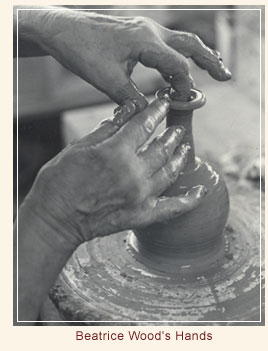
Beatrice Wood

Photo by
William Gray Harris
"Very few people know how to work.  Inspiration, everyone has inspiration, that's just hot air."


American Potter, Artist
1893 - 1998


I have often heard beginning writers say that they only write when they are inspired.  Unfortunately, if they wait until they are inspired, their output will be very small.  Most experienced artists and writers know they must work whether they are inspired or not.  Often when we work the inspiration will arrive on its own time and when we least expect it.  

Success comes from work.  Work when you are sad.  Work when you are happy.  Work when you don't feel like it.  Work when you want to go to a movie.  Our minds are very good at finding excuses for not working.  "I have to do the dishes."  "I have to wash the clothes."  And the list goes on.  Work takes discipline and will power.  

See writing and painting as a job that you need to show up to every day.  Since you have no boss but yourself, you have to hold yourself accountable.  Schedule your hours when you are most creative and stick to your schedule.  Maybe you write between 5 am and 6 am.  Or if you have the luxury, schedule your work hours from 8 am to 5 pm with an hour off for lunch.  Some writers write in the morning and do their research and marketing in the afternoon.  You have to find the schedule that best fits your temperament.

Friday, March 25, 2011

Michael Chabon

"A book itself threatens to kill its author repeatedly during it composition."


American Novelist
1963 - 


Do you an unfinished novel laying on a shelf in your office?  Do you have unfinished paintings hidden in a closet somewhere?  I spent 4 years working on a novel before I quit to write a book on pet loss with my wife.  Many published and unpublished writers have books they have never finished.  And the same is true with painters.  In fact, painters often paint over old paintings.

In an essay, Burn Before Reading, recently published in the New York Times Book Review (March 6, 2011), Dan Kois identifies a few novelists with unfinished novels. 
  • Saul Bellow
  • Truman Capote
  • Michael Chabon
  • Junot Diaz
  • Jennifer Egan
  • Nikolai Gogol
  • Chang-rae Lee
  • Harper Lee
  • Richard Price
  • John Updike
  • Evelyn Waugh

So take heart, my friend!  You are not the only one who did not finish a novel, a painting, a song or a poem.  The difference between those who are successful and those who are not is the successful artists and writers keep creating new works even if the old ones are not finished.  So keep writing.  Keep painting.

Monday, March 21, 2011

Suzanne Valadon

"I paint with the stubbornness I need for living, and I've found that all painters who love their art do the same."


French Painter
1865 - 1938


Suzanne Valadon was the daughter of an unmarried laundress.  When she was 15, she joined the circus, but was forced to quit a year later after falling off a trapeze.  She eventually became a model for artists including Renoir and Toulouse-Lautrec where she studied their artistic techniques.  She is best known for painting female nudes but also painted landscapes, florals and still life.  She sometimes worked as long as 13 years on a painting before showing it in public.

To be a creative artist, you need to be persistent because many obstacles will get in your way including your own need for perfection.  The creative journey is only for the stubborn.  How long are you willing to work at your painting?  Your writing?  Your acting?  Or do you give into family pressure?  Societal pressure?  

What are you willing to sacrifice for your creative work?  What are you willing to give up?  Life is never easy and the same is true for the creative leader.  There are many days when you will take one step forward and three backwards.  Do you have the stubbornness to keep going even when you see very little light at the end of the tunnel?

Suzanne Valadon was the model for these paintings by Renoir:

Dance At Bougival


Saturday, March 5, 2011

Ernest Hemingway


"The best people possess a feeling for beauty, the courage to take risks, the discipline to tell the truth, the capacity to sacrifice.  Ironically, their virtues make them vulnerable; they are often wounded, sometimes destroyed."


American Novelist
1899 - 1961


As writers, artists and creative leaders we often are vulnerable to the hostile, negative behavior of people who do not understand us and what we represent.  These negative people can be our friends and family initially and the wider world eventually as our creative ideas and works try to find their place in that world.  We need to remain strong and courageous in the face of negative attacks.

As creative leaders we often sacrifice much to achieve our dreams.  We become so focused on and obsessed with our work that we ignore family and friends.  We miss out on the joys of life.  We may forget to take care of our health.  We drink and/or take drugs to kill the demons chasing us.  We suffer ridicule at the hands of those who don't understand us and what we do.

People may hate us when we tell the truth.  Often people are not ready for the truth we have to speak.  They may criticize and condemn us.  They may laugh at us.  We must find the discipline and the courage to speak the truth anyway — to open up and share our thoughts and feelings, to share the beauty we see.

Hemingway At Work


Tuesday, January 25, 2011

Jim Rohn

"Dreams get you started; discipline keeps you going."


American Author / Motivational Speaker
1930 - 2009


We all have dreams and most of us never act on our dreams.  We find excuses and reasons why we can't do something.  We focus on all the obstacles we see in front of us.  Dreams may inspire us to act for a day or two, but it takes discipline to keep writing and painting.  And this goes for successful writers and painters as well as beginners.  I have read stories of successful writers and painters who stop working.  The first book or two made them a celebrity and they never finish the next book.  They get caught up in the celebrity of being a writer.  Being a creative leader requires discipline to sit down at the computer, to stand at that easel, or to sit at the piano.  

Do you have the discipline to accomplish your dreams?  Do you rise before everyone in your family so that you can spend an hour or two working on your art?  Or do you stay up after everyone else has gone to bed?  Do you do what many others only dream about?  Discipline is key to your success.

Friday, January 21, 2011

Beverly Pepper

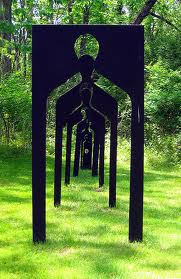
Alpha


"I go to my studio every day.  Some days work comes easily.  Other days nothing happens.  Yet on the good days the inspiration is only an accumulation of all the other days, the nonproductive ones."


American Artist
1922 -


Horizontal Twist Vision 1
(2008)
Farmers understand that they have to leave the fields fallow some years.  The soil needs a rest and an opportunity to rebuild itself.  If they planted corn every year, they would deplete the soil of its nutrients eventually.  Artists, writers and creative leaders are going to have good days and bad days.  The bad days are a way of restoring the creative energies to our spirit — of making us whole again.  Work every day but understand that some days you will be producing weeds and other days you will harvest the corn.

Wednesday, December 15, 2010

Zig Ziglar

"Most people who fail in their dreams fail not from lack of ability but from lack of commitment."


American Speaker/Author
1926 -


We all have dreams, things that we want to accomplish in our lives, but many of us give up too soon.  We don't have the commitment to achieve what we dream of achieving.  To be an artist in a world where you have to have a 9 - 5 job in order to live requires commitment.  You have to get up earlier than everyone else or go to bed later than everyone else in your family.  You have to steal minutes wherever you can to write, to draw, to paint, to dance.  Sometimes we have to create in isolation, without contact with other creative souls.  We have to force ourselves to write even when our body and mind is finding ways to procrastinate.  Many of us don't have people in our lives encouraging us to create.  In fact, we may have people telling us to get a real job.  We have to be our own coach and cheerleader.  We have to be willing to do what unsuccessful people are not willing to do?  Have you the commitment to be a creative leader?