Welcome!

Welcome! There are more than 900 Inspirational Quotes For Writers, Artists and Other Creative Leaders on this site.
Spend a few minutes exploring. And come back again and again for other inspirational quotes.
Showing posts with label History. Show all posts

Monday, January 9, 2017

Harley King — Gift of Memory


Without memory, we lose all sense of self. We lose the threads and tangles that tell our stories. We lose our history from where we came. We lose our connection to the past. Memory gives our lives meaning and explains who we are and from where we came.

Yet, memory is fragmented, distorted and unconnected. Distorted memories can create false selves and cause us unhappiness. We must reshape our memories into a cohesive story that allows us to enjoy the person whom we have become. We must dig through the ashes of forgetfulness and find the keys to who we are.

Cradle your memories in your arms.  Give them the love and attention that they need.  Memory restores us to the world in which we live.  Choose to cherish your memories.

And as creative leaders, you are fortunate to have the skills and talents necessary to craft memory into a powerful story that touches the hearts and souls of others. Through the retelling of memory life is restored.


Sunday, October 4, 2015

Book Review - No Higher Honor by Condoleezza Rice

No Higher Honor: A Memoir of My Years in WashingtonNo Higher Honor: A Memoir of My Years in Washington by Condoleezza Rice
My rating: 5 of 5 stars

After listening to the audio book by Hillary Clinton on her experience as Secretary of State, I decided to follow it with No Higher Honor by Condoleezza Rice, her predecessor.  The books are in many ways very similar both in the telling and in the stories being told.  Like I was not a Clinton fan prior to reading her book, Hard Choices, I am not a George Bush fan either.  In fact, I have very negative views of his conduct of the wars during his administration, but I feel it is very important to keep an open mind and to listen to what they have to say.  One does not have to agree with someone to appreciate what he has to say.

Rice tells a very powerful story about her 8 years of experience in the Bush Administration as the National Security Advisor and the Secretary of State.  She was introduced to George W. by his father whom she had served under during his administration.  Rice consistently defends the George W. and his decisions.  His administration was deeply influenced by the 9/11 attacks on New York and Washington, D.C.  She discusses the fear that permeated the administration in the months and years that followed the attacks. The way the Administration saw the world was colored by that fear.  While Rice admits making mistakes in her positions, she does not voice any negative feelings toward George W.  She is less positive about Dick Cheney and Don Rumsfeld with whom she experienced major disagreements, although one has to read between the lines to gain a sense of the conflict.

Rice grew up in the segregated Birmingham, Alabama.  She tells the story of how one of her kindergarten friends was killed during the 1963 church bombing in Birmingham.

One of my favorite anecdotes was during a trip to Rome for the funeral of the pope.  She was sitting between George W. and Bill Clinton.  She said Bill talked all the time and George did not talk.  The story, I believe, is very telling about the differences between the two men.

Rice did her own recording of the book so one hears the story in her voice.  I would highly recommend the book to anyone interested in politics, history and the international world.  The book offers more of the story than one finds in the newspapers and on television.  And I would also recommend that one reads it in conjunction with Hillary Clinton's book on her experiences.  Hillary opens her book with the letter she received from Condoleezza.  A part of me wishes that Rice had chosen to run for President and that she and Hillary would have had an opportunity to campaign against each other.


View all my reviews

Monday, April 13, 2015

Harley King

Maya Pyramids - Mexico       

My most memorable class in high school was American History my junior year, not because of the subject but because of the teacher.  He encouraged me to think.  In college, I took only required history classes and I could not tell you anything about them today.  History was not something that inspired me.  I came from the generation that spouted such slogans as "Don't Trust anyone over 30."

I did not discover the value of history until I was in my early forties.  I was taking a trip to Mexico with my family and decided to read something about the history of Mexico.  I read the book, The Conquest of New Spain, by Bernal Diaz del Castillo.  Diaz was a soldier with Hernan Cortez when he conquered the Aztecs.  He wrote this first hand account years later.  I was hooked.  I was soon reading other books of history as well as biographies and memoirs.

Buddha - Asia
History at its heart is about storytelling, not dates and names.  And history like all good stories has many lessons to teach if we are paying attention.  Nations and their leaders, unfortunately, have a tendency to repeat the mistakes of the past.  We never seem to be able to learn from history.  By the second or third generation after a key historical event, the lessons are being forgotten.

But history goes beyond nations and their leaders.  Artistic disciplines also have a history.  Beginning artists study past artists.  Beginning writers study great writers.  Beginning musicians study previous musicians.  Failure to know the historical roots of one's artistic profession will often lead to mediocre artistic endeavors.  As creative leaders we need to know from where we came.

The same is true in business.  If business leaders do not know the history their organization and their industry, they will make the same mistakes that their predecessors did.  History has so much to teach.  We need to pay attention.

And we also have personal histories.  Where were you born?  What was your childhood like? Do you know the history of your family? What mistakes did you make?  Have you learned from your mistakes?  Or have you repeated your mistakes again and again?

May you learn the lessons that history has to teach and pass them onto others.

Machu-pichu, Peru, Inca

Saturday, May 17, 2014

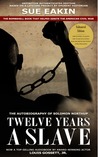
Twelve Years A Slave: A Book Review

Twelve Years a SlaveTwelve Years a Slave by Solomon Northup

My rating: 5 of 5 stars


If you have watched the movie, Twelve Years a Slave, then you should read this book. If you have not watched the movie, Twelve Years a Slave, then you definitely need to read this book. The book is an as-told-to story by Solomon Northup, a man who was born, raised and living in New York state. As Northup tells the story, he was conned into traveling to Washington D.C. where he was drugged, kidnapped and sold into slavery in the deep South in 1840. He spent 12 years as a slave before he was able to send information of his whereabouts to friends who traveled south and freed him. .

The book shares the experience of one man as a slave and all the horrors that he faced. Married with children before the kidnapping, Northup suffered as no person should be made to suffer. He was whipped, beaten and almost hung. His skills as violin player and his intelligence kept him alive through these difficult, almost unbearable times. He was also forced to whip other slaves.

The book was written by David Wilson who served as Northup's ghost writer. It followed in the footsteps of the publishing success of Uncle Tom's Cabin and was used by the abolition forces to further their cause. After Northup's release from slavery, he traveled around the north giving anti-slavery speeches and may have been involved in the Underground Railroad, though, there is no evidence to support this. Published in 1853, the book was an instant success with 8,000 copies being sold in the first month. The book went out of print in 1856 and remained out of print until 1968.

Along side the amazing story of Solomon Northup is the fascinating story of Sue Lyles Eakin and the work she did to bring the book to the attention of American readers in the 20th and 21st centuries. Sue Eakin discovered an original copy of the book in a plantation home near where Northup was a slave when she was 12 years old. Northup's story became her life's passion. Dr. Eakin wrote her master's thesis about Northup's story and after decades of research produced the first authenticated edition in 1968. She continued to spend her life verifying, validating and substantiating the story through thousands of hours of research. In 2007, at the age of 88, she completed her final definitive edition with over 100 pages of new information, images and maps. In her spare time, she authored over a dozen other history books and was a history professor.

One of the fascinating facts that I learned in this book was that in 1840 New York state passed a law authorizing the governor the authority to seek the release of free people who were sold into slavery. This law is what the friends of Solomon Northup used to travel to Louisiana and secure his release.

Amazon lists more than 30 different editions of this book. I would recommend you purchase this edition by Dr. Sue Eakin which contains all her documentation and verification of the facts in the story.

View all my reviews

Monday, April 21, 2014

Harry S. Truman

I was an avid reader of history and particularly the lives of great men and women.  I found that some were born to greatness, some attained it by accident, and some worked for it."


American President, Author
1884 - 1972


Commentary
As creative leaders we stand on the shoulders of those who have gone before.  What do you know of the lives and works of these earlier artists, writers, musicians and storytellers? What were the challenges they faced and the difficulties they overcame?  What creative ideas did they have that have made our work easier?  What knowledge did they have that has now been lost to the dustbins of history?  Which painters, writers and musicians are your heroes?  Whom do you dislike?  Whose shoulders are you standing on?

Do you worship your heroes and put them on a pedestal?  Or do you accept the fact that they are human and have flaws just like you?  Too often we believe that our heroes are super human and better than those around them.  And if we are unfortunate to get too close, we learn the truth and are disappointed.  All heroes have clay feet.  No human is perfect.  In fact, many of the great creative leaders have major flaws and weaknesses in other areas of their lives.  They may be terrible husbands, wives, parents or lovers.  They may hold serious biases and prejudices.  They may not be able to manage money or are penny pinchers.  They may drink too much or take drugs.

Most people are not born to greatness.  They usually work hard to achieve what they desire, but in the end the fame they find is often by accident.  So my advice to every creative leader is to work hard every day and enjoy what you do.  Fame is often fleeting and unfulfilling.  Fortunes come and go like the weather.  How you make the journey is much more important than when and where you arrive.  Because in the end we all arrive at the same place — the cemetery.  What we leave behind is our legacy.  What legacy will you leave behind?


Years ago, a speaker asked his audience:  "Who was President when you were born?"  Like most people in the audience, I had no idea, but I soon discovered that it was Harry S. Truman.  I began reading books about Truman as well as books that he wrote.  Harry S. Truman became one of my heroes.  I like much of what the man did and said, but I also recognize that he had clay feet.  Not everything he did was right.  Do you know who was President when you were born?


Biography
Harry S. Truman was born in 1884 in Lamar, Missouri.  He was the oldest child of Martha Ellen Young and John Anderson Truman.  His father was a poor farmer and livestock dealer.  He graduated from high school in 1901 and worked for the Santa Fe Railroad, held various clerical jobs and was employed by a bank.  He returned to farming in 1910 and began courting Bess Wallace who later became his wife.  He failed to be admitted to West Point because of his poor eyesight, but he later fought in World War I as an officer.

After the war, Truman opened a haberdashery in downtown Kansas City with his partner, Edward Jacobson, but went bankrupt during the recession of 1921.  In the army, Truman met James Pendergast, a fellow Lieutenant, and nephew of Thomas Pendergast, a Kansas City political boss.  In 1922, Truman was elected one of three judges of the County Court in the eastern district of Jackson County.  The position was administrative in nature, not judicial.  He functioned like a county commissioner.  His election was supported and helped by the Kansas City Democratic machine led by Tom Pendergast.

1948 Election: Newspapers predicted Dewey to Win
After serving as judge for several years, Truman wanted to run for Governor but Pendergast refused to support him.  In 1934, Pendergast supported his candidacy for U.S. Senate from Missouri and he won.  During his first term as a Senator, he was ignored by Roosevelt.  He won re-election in 1940 despite some major obstacles.  During World War II, he earned a national reputation through his chairmanship in a subcommittee of the Committee on Military affairs.  He attacked waste and profiteering by suppliers to the military.  In 1944, Truman was nominated and elected Vice-President of the United States in Roosevelt's fourth term.  When Roosevelt died on April 12, 1945, Truman became President.  He was re-elected in 1948 and chose not to run in 1952.

Favorite Story
Here is one of my favorite stories about Harry S. Truman.  I tell it in many of my presentations.  Truman was an excellent example of persistence — a trait that all creative leaders need.   http://www.slideshare.net/hgking/the-power-of-persistence-12296772


Sunday, June 3, 2012

Soren Kierkegaard

"Life must be lived forwards, but can only be understood backwards."


Danish Writer, Philosopher
1813 - 1855


Do you understand who you are and from where you have come?  Only in looking back at our lives can we begin to have inkling of who we are as we begin to connect the dots in our lives — as we begin to tell the stories of what has happened to us.  Some of the dots in my life begin with my loud voice.  As a child, I was asked to participate in church programs because I had a booming voice.  When I was a sophomore in high school I decided to become a preacher.  I have spent the last 25 years of my life as a motivational speaker.  Three dots that when I look back at my life begin to tell the story of who I was and who I became.  And there are other dots that connect me to my father and the father that I became.  And dots that point to my perception of myself as an outsider, an underdog.  What are the dots in your life that you are beginning to connect and therefore to understand?  What are the stories you are telling yourself but nobody else?  What are the stories that you are sharing with the world?

Wednesday, November 2, 2011

Dietrich Bonhoffer

"In the whole of world history there is only one really significant hour — the present." 


— Dietrich Bonhoeffer
German Theologian/Writer
1906 - 1945


We are often told to live in the moment, but few of us are able to achieve this for long.  We either disappear into memories of the past or become lost in dreams of the future.  The challenge is to spend more and more time in the present, because only in the present can we take action and accomplish something.  Only in the present can we paint, sculpt, write, draw, or create.  Cultivate the present.  Learn to live in the moment.  Learn to love where you are now.  Some people inhabit the past because they think life was better then.  Other inhabit the future because they hope the future will be better.  Only those who learn to spend most of their time in the present will achieve their dreams.

Thursday, July 14, 2011

John Cheever


"The need to write comes from the need to make sense of one's life and discover one's usefulness."


American Novelist
1912 - 1982


We all have a need to understand our lives and the things that happen to us.  Some turn to religion.  Others turn to history or politics or science.  Creative leaders turn to their art.  The stories we tell help us to make sense of who we are and why we are here.  And often we change the facts of our lives to tell a better story.  What stories are you telling in your artistic works?  How have you altered the facts of your stories to tell a greater truth?  


John Cheever is a perfect example of a writer who rewrote his life in his short stories and novels.  Born on May 27, 1912, John Cheever was the unwanted second child.  His father tried to convince his mother to have an abortion.  A storyteller from a young age, Cheever read Proust's In Search of Lost Time at the age of fourteen.  He dropped out of high school and never went to college.  He sold his first story to The New Republic at age 18.  For more than twenty years he published only short stories.  His first novel was not published until he was in his mid-forties.  In 1979 three years before his death, he won a Pulitzer Prize for a collection of his short stories that I highly recommend all creative leaders read.


Friday, July 1, 2011

Heinrich Heine

Painting of Heine
by Moritz Daniel Oppenheim
Wherever they burn books they will also, in the end, burn human beings."


German Poet
1797 - 1856


When a nation or society has no respect for its artists, writers and musicians, it is a nation in danger of losing its humanity.  I find it very sad that in this country where liberty is held in high esteem that there are people who choose to burn books.  When my daughter was in high school, she knew teenagers who participated in the burning of books with members of their church.  How ignorant these people must be.  Books are our connection to the world beyond our immediate home.  But it is not just in this country and it is not just books.  In 2001 when the Taliban were in power in Afghanistan, they destroyed two 1700 year-old Buddha statues carved in a cliff in the Hindu Kush mountains.  Other cultures have destroyed paintings.  And governments and societies have tried to control the type of art works that are created.  Both Hitler and Stalin restricted the type of art that could be created.

Artists, writers and musicians are one of the greatest treasures that a society has and yet people continue to treat them with contempt — telling them to get a real job.  In fact, the way we know about the past is through the artists, writers and the musicians.  We would know very little about ancient Rome or Greece if it were not for books and paintings.  Future societies will know us primarily through the writers and painters of today.  Our legacy is past down through our art.  

Here is a poem by Heinrich Heine.

WHY THE ROSES ARE SO PALE
by: Heinrich Heine (1799-1856)
       DEAREST, canst thou tell me why
      The rose should be so pale?
      And why the azure violet
      Should wither in the vale?
       
      And why the lark should in the cloud
      So sorrowfully sing?
      And why from loveliest balsam-buds
      A scent of death should spring?
       
      And why the sun upon the mead
      So chillingly should frown?
      And why the earth should, like a grave,
      Be moldering and brown?
       
      And why it is that I myself
      So languishing should be?
      And why it is, my heart of hearts,
      That thou forsakest me?
This English translation of "Why the Roses are so Pale" was composed by Richard Garnett (1835-1906).

Monday, April 18, 2011

Sidney Nolan

"Painting is an extension of man's means of communication.  As such, it's pure, difficult, and wonderful."


Australian Artist
1917 - 1992


All the arts are about communication.  Whether you paint, write, sing or act, you are involved in the process of communicating.  And communication is one of the most difficult aspects of being human.  We never seem to get it right.  Marriages break up over the inability to communicate.  Children don't speak to their parents.  Bosses fail to inspire their employees.

Painting, poetry and novels are highly specialized forms of communication — an attempt by the artist to tell the world what he is feeling.  And sometimes he is successful and sometimes he is not.  Take this painting, Death of Sergeant Kennedy at Stringbark Creek, by Sidney Nolan.  What does it communicate to you?  If I asked 10 different people the same question, I bet I would get 10 different answers.  Communication is very difficult.  If it was easy, we probably would not have a need for creative leaders who work hard at communicating.


Even artists and writers don't always know what they are communicating with their creative work.  Paintings, poetry and novels are often communicating on multiple levels with multiple messages.  The painter, poet and novelist are aware of some of these messages but not all of them.  That is what makes art so fascinating.


If you are interested in feedback from your audience, don't ask whether they liked the work or if it was any good.  Ask: "What does my painting, poem or story communicate to you?"  Then listen with your heart and soul.  You may be amazed at what others see in your work.

Friday, March 11, 2011

Rudyard Kipling

"If history were taught in the form of stories, it would never be forgotten."


English Novelist and Poet
1865 - 1936


Do you love history?  Do you read history?  Or could you care less about history?  Do you incorporate history into your writing and paintings?  I believe creative leaders need to study history?  Artists should study art history and many do.  Writers should study the lives of writers.  English degrees tend to focus on the literature and studying the literature.  Writing degrees tend to focus on the writing.  But few writers study the history of writing, the history of writers, the history of words or the history of publishing.  I have met many wanna-be poets who haven't even read other poets. They would never consider studying the history of poetry.

But understanding literature, art and theater requires more than studying the history of the arts.  We need to study literature, art and theater in the context of the times they were created.  We need to study the social, political and economic histories.  We need to read biographies and memoirs. 

Writers, artists and actors are people of their times.  They creative works contain the same beliefs, hopes and biases that can be found in the rest of their society.  Novels written in other times and places will teach you one perspective of that society.  Their paintings are minature history books.

So I encourage you to read a biography of a favorite writer, actor or artist.  Immerse yourself in the history of another time and place.  What was Paris like during the time of the Impressionists?  What was New York like during the 1950's and the beats?

One of my favorite movies is The Man Who Would Be King, starring Sean Connery and Michael Caine, directed by John Huston and based on the novel by Rudyard Kliping.  The movie takes us to another place and time and gives us a glimpse of a world not our own.  Here are some scenes from the movie.


Sunday, February 20, 2011

Lewis Mumford

"Humor is our way of defending ourselves from life's absurdities by thinking absurdly about them."


American Literary Critic, Historian, Philosopher
1895 - 1990


Life is full of absurd, strange and inconceivable happenings that could drive us insane if we did not have a sense of humor.  My wife told me a story today about an experience she had last weekend at a Barnes & Noble store we visit regularly.  She had made three separate purchases and written three separate checks when she discovered a fourth item she wanted to buy.  When she presented her fourth check in less than 2 hours, the computer system rejected it.  When the manager was called, she acted like my wife had written a bad check and treated her rudely.  My wife's response was to laugh at the absurdity of the situation and the stupidity of the manager before politely telling the manager that she would take her money and shop elsewhere.  Sometimes all we can do is laugh, because if we didn't we would go mad.  There was absolutely no excuse for the rude behavior of the manager.

I have worked in health care for over thirty-five years and have talked with lots of nurses about how they use humor to help them cope with the pain and death they saw daily.  They call it gallows humor.  Humor is one of the best ways of coping with the absurdities in our lives.


Winner of
The National Book Award
for Non-fiction (1962)
This past week I was giving a speech and a woman came up to me after the speech and told me how I had done a great job.  Her parting words were to tell me that I needed to take care of my health.  As I watched her walk away all I could do was laugh.  I know she meant well, but the statement came out of the blue and she knew nothing about my health.

Laughter is a powerful way of coping with the challenges we face.  Have you ever been rejected by a publisher or an art gallery?  Then take a deep breath and laugh at the absurdity of the situation.  Have critics ever given your creative work a bad review?  Then take a moment and laugh.  Are you unhappy with your work?  Instead of beating yourself up with negative self-talk, take a deep breath and laugh.  Find the absurdity in the pain you feel.

Sunday, February 13, 2011

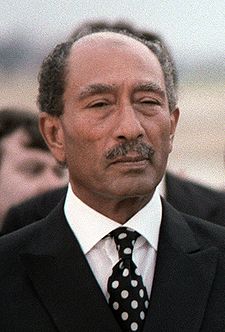
Anwar el-Sadat


". . . the gravest injustice done to the Egyptian people was the cultivation of fear . . . rather than trying to build up the inner man, we did everything we could to make him feel frightened.  Fear is, I believe, a most effective tool in destroying the soul of an individual — and the soul of a people."


— Anwar el-Sadat
Egyptian President
1918 - 1981


Many years ago I read these words in In Search of An Identity, the autobiography of Anwar el Sadat, President of Egypt from 1970 to 1981, and since then I have been sharing his words with my audiences in my motivational speeches on leadership.

Fear is a powerful tool for destroying the soul of a person and the spirit of a creative artist.  Rulers have used it for centuries and so have parents.  "You better behave or the bogeyman will get you."

Ask yourself what you are afraid of?  What fears control your actions?  What fears are holding you back?  Are you afraid of snakes?  Heights?  Success?  Math?  A blank piece of paper?  Silence?  A blank canvas?  The neighbor's dog?

Creative leaders must learn to shake off the chains of fear.  Fear can prevent us from taking risks, trying new ideas, exploring new ways of thinking.  Each of us must find the courage to do what we desire to do despite our fears.

In 2010 my daughter and her husband moved to Minneapolis, Minnesota without jobs.  This is something I have never had the courage to do — to simply pick up and leave.  It took them six months to find jobs, but they did it.  I am sure there were many moments of fear, but they had the courage to keep going.


Anwar el-Sadat, Jimmy Carter
and Menachem Begin
at the signing of the treaty
at the White House.

During these days when Egypt is all over the news, it is important that we also remember history.  Anwar el-Sadat was one of 13 children born to poor Egyptian parents.  Sadat participated in the military coup that launched the Egyptian Revolution of 1952.  He served under Gamal Abdel Nasser who was President until 1970.  He became President when Nasser died and served for eleven years until he was assassinated in 1981 by military officers.  His vice-president, Hosni Mubarak, became president.

Sadat signed the Egyptian-Israeli Peace Treaty with Israeli Prime Minister Menachem Begin in 1979 and was awarded the Nobel Peace Prize.  He said at the time: "Let us put an end to wars, let us reshape life on the solid basis of equity and truth."


Saturday, February 5, 2011

Wendell Phillips

"Revolutions are not made: they come.  A revolution is as natural a growth as an oak.  It comes out of the past.  Its foundations are laid far back."


American Abolitionist, Orator, Lawyer, Author
1811- 1884


What, you might ask, do revolutions have to do with creativity?  Revolutions are a creative response to the status quo and happen at all levels of society.  Revolutions are happening in literature and art as each generation rejects the styles of previous generations.  Consider how Impressionism, Cubism and Abstract Expressionism started out as movements outside the mainstream.  


Revolutionaries have to think outside the box.  They have to be willing to see the world through new eyes.  The abolitionists stood up against slavery.  The civil rights activists stood up against segregation.  Wendell Phillips also said:  "Physical bravery is an animal instinct, moral bravery is a much higher and truer courage."  

What risks are you taking in your art?  Your writing?  Are you challenging the status quo?  Are you standing up for what is right?  Are you looking at the world with fresh eyes?  Creative leaders have to think outside the box.  They need to risk trying new techniques — new ways of thinking.

Wendell Phillips was born in Boston, Massachusetts and graduated from Harvard Law School.  He was a powerful speaker and became a voice of the anti-slavery movement.

Tuesday, February 1, 2011

Eugene Delacroix

Self-Portrait (1837)
"What moves men of genius, or rather what inspires their work, is not new ideas but their obsession with the idea that what has already been said is still not enough."


French Artist
1798 - 1863


Orphan Girl at the Cemetery
(1923)
Why do you write?  Why do you paint?  What inspires your creative work?  Do you have something new to say to the world?  Are you obsessed with telling the world what you know?  We each create for different reasons — some we are conscious of and others that are hidden even from us.  

I personally believe that there is little in the universe of humanity that has not been thought, said or written by someone somewhere, but fortunately, we have forgotten much of what has been learned by previous generations and each generation has to learn anew.  It is in the relearning of the forgotten that we have the inspiration to create what has not been created — to reshape the myths of the world.


I challenge each creative leader to study history — to understand what happened before you were born.  It is in the knowing of the past that you can begin to reshape the future — to create anew that which is ancient, to find the thread that ties us together.


Liberty Leading the People
(1830) The Louvre

Monday, November 8, 2010

Harry S. Truman

Harry S. Truman
"I was an avid reader of history and particularly the lives of great men and women.  I found that some were born to greatness, some attained it by accident, and some worked for it."


American President, Author
1884 - 1972


As creative leaders we stand on the shoulders of those who have gone before.  What do you know of the lives and works of these earlier artists, writers, musicians and storytellers?  What were the challenges they faced and the difficulties they overcame?  What creative ideas did they have that have made our work easier?  What knowledge did they have that has now been lost to the dustbins of history?  Which painters, writers and musicians are your heroes?

Most people are not born to greatness.  They usually work hard to achieve what they desire, but in the end the fame they find is often by accident.  So my advice is to work hard every day and enjoy what you do.

Saturday, September 11, 2010

Christina Baldwin

"Story is the mother of us all.  First we wrap our lives in language and then we act on who we say we are.  We proceed from the word into the world and make a world based on our stories."

— Christina Baldwin
American Writer

The world we live in is the world we have created by the stories we tell ourselves individually and collectively.  Both personal, family and community history is made up of remembered stories that we have told ourselves over the years.  We make decisions about our lives based on the stories we believe to be true.  As creative leaders in our society, what stories are you telling in your writing and painting?  The stories that you and I choose to tell help shape the future of our world.