Welcome!

Welcome! There are more than 900 Inspirational Quotes For Writers, Artists and Other Creative Leaders on this site.
Spend a few minutes exploring. And come back again and again for other inspirational quotes.
Showing posts with label Information. Show all posts

Monday, September 7, 2015

Ben Franklin


For many people learning stops after graduating from high school or college. They stop investing in themselves. While education will not cure all the world's problems, it will help us understand them and give us the skills to find the answers. 

I believe that reading is one of the most important ways of increasing one's knowledge.  I ask people when was the last time they read a book and many can't remember.  Some offer the excuse that they don't have the time between work and raising a family.  Others admit to not liking to read.

When I was a child growing up in the 1950s and 1960s, I had a more difficult time finding a good book than children do today.  In the farming community of 1800 where I grew up, there was a school library and a small community library.  The nearest bookstore was 25 miles away.  Yet, I was always able to find something to read even though my choices were limited.  Today, books are available in giant bookstores, through online bookstores, and in libraries. I can access and borrow books from libraries through out the state without leaving my home.  Books now come in several formats including the traditional printed books, audiobooks and ebooks.  And people have access to thousands of free books online.  Project Gutenberg offers over 49,000 free ebooks.

Learning, though, is not limited to books.  There are documentaries that teach us about the world in which we live as well as teach us new ideas and skills.  If you are a visual learner, like my wife, documentaries are a great way to learn new ideas.  And technology has now given us new ways to access this knowledge.  You can find documentaries on Netflix, Hulu and Youtube.

We can also find knowledge in seminars, workshops and lectures.  We can find workshops on many subjects from business topics to art, from cooking to writing, and from investing to storytelling.  TED Talks offers free lectures on many different topics.

We live in the information age.  There is an abundance of information.  I think if Ben Franklin suddenly appeared in our age that he would be amazed at the learning opportunities that people have.  Are you taking advantage of the plethora of knowledge at your finger tips?  When was the last time you learned a new skill? When was the last time you invested in yourself?

As creative leaders, we have a responsibility to invest in ourselves.  We need to grow and change.  We need to expand our knowledge base.  We need to find new ways of communicating our ideas.  Take the time today to invest in yourself.

Monday, June 25, 2012

David Handler

"A writer like me is sort of like a sponge; you just soak up everything around you."


— David Handler
American Novelist
1952 -


Every creative person should be a sponge soaking up the world around them.  Information is fodder for the creative muse.  Information keeps us alive and ticking.  Information inspires us.  What new ideas have you encountered today?  What new pieces of seemingly useless information have you added to your memory?  What questions have you raised that you do not know the answers to?  

Brain Exercise:  Take a moment and write down ten questions you wish you knew the answers to.  Then for the next ten days make up an answer to one of the questions and write your answer down.

Here is David Handler talking about writing.


Friday, December 23, 2011

John Keats

"I am certain of nothing but the holiness of the Heart's affections and the truth of imagination."


English Poet
1795 - 1821


One of the most powerful forces available to creative leaders is their imagination.  Your imagination will open up new worlds and provide you answers to many of the challenges you face in your creative work.  You must learn to cultivate your imagination.  You must nurture it and feed it.  Imagination grows through exposure to various ideas and various experiences.  


Steve Jobs, after dropping out of college, audited a course on calligraphy because he was interested in the subject.  What he learned in that single course gave rise more than a decade later to the multiple fonts available on the Mac computer.  And since Windows adopted much of its style and look from Mac, the computer world was given an array of fonts from which to choose.  How much different life would have been if computer users could not change fonts.


What are you doing to expand your imagination?  What ideas are you exposing yourself to?  How are you growing your imagination.  If you don't use it, you may lose it.  Feed your imagination today.

Sunday, December 18, 2011

Richard Wilbur


"All that we do
Is touched with ocean, yet we  remain
On the shore of what we know."


— Richard Wilbur
American Poet
1921 - 


There is a vast world of knowledge and wisdom that we know little or nothing about.  We choose to live our lives on the shore of what we have learned.  We judge everything in light of what we think we know and seldom venture out of our safe haven.  Try to see  the world from new angles.  Explore the unknown and come away a better person because of it.  Change who you are by increasing your knowledge and wisdom.

Monday, October 31, 2011

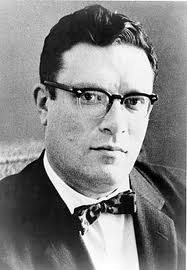
Isaac Asimov

"The saddest aspect of life right now is that science gathers knowledge faster than society gathers wisdom."


American Writer/Novelist
1920 - 1992


Man's knowledge of the world around him has grown rapidly in the last 150 years, but man's understanding of his heart has not changed in thousands of years.  The more we learn; the less we know.  Our understanding of technology and science has moved so quickly that our emotional lives have failed to keep up.  We lack the wisdom to function in this crazy technological world.  So some people reject technology and try to return to earlier times.  Others find refuge in fundamental religions.  A few seek to find a path that leads to wisdom.  

Seeking and communicating wisdom should be a goal of all creative leaders.  With our paintings, poems and stories, we need to help people find the wisdom to live in these challenging times.  Through our novels, plays and film we can show people the best way to find  a path out of the maze.

Monday, May 30, 2011

Albert Einstein

"I am enough of an artist to draw freely upon my imagination.  Imagination is more important than knowledge.  Knowledge is limited.  Imagination encircles the world."


German Theoretical Physicist
1879 - 1955


Unfortunately, most schools are focused on increasing the knowledge of their students, not their imagination.  And while knowledge is important, imagination is even more important.  There is a limit to how much knowledge we can gain and retain.  The span and accuracy of knowledge is constantly changing and expanding.  What is considered truth today is considered foolish tomorrow.  Once people believed the earth was flat.  We would be much better off if our schools also encouraged imagination.

And the same can be said about creative leaders.  Many artists, writers, actors and musicians study to increase their knowledge of their art.  And this knowledge is good but limited.  We need to be encouraging our imaginations.  We should be exploring the worlds of our imaginations.  What are you doing to increase your imagination?

Tuesday, February 15, 2011

Linus Pauling

"Satisfaction of one's curiosity is one of the greatest sources of happiness in life."


American Scientist
1901 - 1994


Are you curious about the world around you?  Are you searching for new information and ideas?  Are you asking questions and looking for answers?  Creative leaders seek out new ideas and new ways of seeing the world.  We want answers to our questions.  Part of our thrill in life is learning something new — figuring out something we didn't know.

Creative leaders need a strong sense of curiosity about the world they inhabit.  They are not satisfied with the pat answers of the past.  The challenge is in finding new answers to the age old questions.

Saturday, February 12, 2011

Robert Henri

Self-Portrait
(1903)

"Let a student enter the school with this advice:  No matter how good the school is, his education is in his own hands.  All education must be self-education."


American Painter
1865 - 1929


I believe that each of us is in charge of our own education.  We choose what we want to learn and what we don't want to learn.  Even in the best of schools, students fail because they don't apply themselves.  And in the worst of schools, students still graduate and go on to accomplish great things.  Yes, a teacher can inspire you and mentor you, but in the end you are responsible for your own education.

And I believe learning is a life-long process.  When a person stops learning, he stops living.  What are you doing to further your education in your chosen field?  What are you exploring outside your field of expertise?  When was the last time your read a new book?  Or talked to a stranger?  Or developed a new habit?

Tam Gan
(1914)
This week while traveling, I met a minister who had lived for fifteen years in Japan.  I learned about his life as a minister and living in Japan.  He shared how he had witnessed the cremation of a dead person.  The Japanese custom is to wash the body and then have it cremated.  The family gathers at the crematory to witness the burning of the body.  Then the family is given a portion of the ashes and bones in a small box and the remainder are buried in the ground.  I learned something new by listening and asking questions.  And who knows, maybe some day the material will appear in a short story. 

Creative leaders need to be constantly learning new things.  What have you learned recently that you can incorporate into your writing or painting or acting?  

Friday, February 4, 2011

Bebe Moore Campbell

"As I grow older part of my emotional survival plan must be to actively seek inspiration instead of passively waiting for it to find me."


American Novelist
1950 - 2006


Where do you find inspiration?  Do you wait for inspiration to hit you like a lightening bolt or are you actively looking for events, people, places and objects to inspire you?  I believe we need to constantly be stoking the fires of creativity.  And we can do this by exploring places we have never been, immersing ourselves in new cultures and meeting new and unusual people.  We can also stoke the fires by reading books on history, biographies and memoirs.  If we wait for inspiration to strike, we may be along time in waiting.  What do you do to stoke the fires of creativity in your life?

Elizabeth Bebe Moore was born and raised in Philadelphia, Pennsylvania.  She graduated from the University of Pittsburgh with a degree in elementary education and taught school in Atlanta, GA.  Her first book was a work of nonfiction, Successful Women, Angry Men: Backlash in the Two-Career Marriage.  She was the author of three New York Times bestsellers:  Brothers and Sisters, Singing in the Comeback Choir and What You Owe Me, as well as two picture books for children.  Elizabeth Bebe Moore Campbell died on November 27, 2006 from brain cancer.

Friday, September 24, 2010

Georgia O'Keefe

"Imagination makes you see all sorts of things."

Georgia O'Keefe
American Artist
1887 - 1986


Imagination is essential and necessary for the creative leader — writers, artists, poets, storytellers, musicians.  And in my experience we have very little control over it.  It appears when it wants to.  Have you ever struggled with a problem and could not find the answer and suddenly it appeared out of nowhere.  A few weeks ago, I was struggling with a project and during my morning walk at 5 am, the answer popped into my head.  Take good care of your imagination.  Encourage it.  Feed it.  Stretch it.  Trust it.  And believe in it.  Imagination is one of the best gifts that you have been given.

Do you know what it means to feed your imagination?  Give it large doses of information.  The creative mind needs information to be able to connect the dots between the strange and the obscure.  Read books on all kinds of topics.  Listen to people tell their stories.  Observe and study nature.