Welcome!

Welcome! There are more than 900 Inspirational Quotes For Writers, Artists and Other Creative Leaders on this site.
Spend a few minutes exploring. And come back again and again for other inspirational quotes.
Showing posts with label Farm. Show all posts

Sunday, June 17, 2012

Lewis Carroll

"Stories are "love gifts."


English Author
1832 - 1898


Today, in the United States, we celebrate Father's Day.  What better gift to give a father than the gift of story.  Story touches the heart in way that most gifts cannot.  Maybe you could tell your father a funny story about something that happened to you.  Or maybe you should tell a story that communicates how important your father is to you.

My father was always working to provide for his family.  First, he was a farmer, raising champion hogs to sell at market.  When he could no longer support his family through farming, we moved to town and he build houses for people in the community.  Yet, my father would take time out of his busy schedule to attend all my basketball games from junior high through high school.  Even my freshman year, he would show up to the freshmen games even when other parents and students did not attend.  I will always remember him sitting in the bleachers.

When my father was in high school back in the early 1940's, he played basketball and was the captain of his team his senior year.  My father passed away in July of 1990, almost 22 years ago.  But his memory lives on in the stories I tell.  What stories of your dad are you telling today?

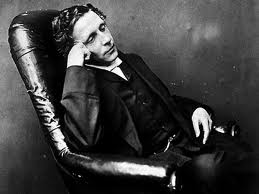
And if you are a father, do what Lewis Carroll is doing in this picture.  Treat yourself to a long nap.

Tuesday, June 21, 2011

Robert Bly


"When anyone seriously pursues an art — painting, poetry, sculpture, composing — over twenty or thirty years, the sustained discipline carries the artist down to the countryside of grief, and that descent, resisted so long proves invigorating. . . . As I've gotten older, I find I am able to be nourished more by sorrow and to distinguish it from depression."


American Poet
1926 - 


I first heard Robert Bly read poetry in 1969 while I was in college and I still own a copy of his very first book of poetry, Silence in the Snowy Fields, which I bought when he was in town and is autographed by him.  He was majestic, expansive and seemed to blow the roof off the auditorium.  I fell in love with the poetry I read in that small sixty-page book, published by Wesleyan University Press, full of images of the midwest where I was born and raised.  Years later I had another opportunity to hear Bly read and I bought a collection of his prose poems, Morning Glory.  I own a number of his poetry books and his books of translated poems.  I even bought the book that made him rich and famous, Iron John, a non-fiction book I have never been able to finish reading.  

Here is a short poem that I love.  The last two lines have the feel of Japanese haiku.

Watering the Horse

How strange to think of giving up all ambition!
Suddenly I see with such clear eyes
The white flake of snow
That has just fallen in the horse's mane!

Here is another favorite poem of mine from his first collection.  This poem evokes the feeling of the rural countryside in which I grew up.  Anyone who grew up in the rural midwest will immediately feel at home.

Three Kinds of Pleasure
        
                   I
Sometimes, riding in a car, in Wisconsin
Or Illinois, you notice those dark telephone poles
One by one lift themselves out of the fence line
And slowly leap on the gray sky —
And past them, the snowy fields.

                   II
The darkness drifts down like snow on the picked cornfields
In Wisconsin:  and on these black trees
Scattered, one by one,
Through the winter fields —
We see stiff weeds and brownish stubble,
And white snow left now only in the wheeltracks of the combine.

                  III
It is a pleasure, also, to be driving
Toward Chicago, near dark,
And see the lights in the barns.
The bare trees more dignified than ever,
Like a fierce man on his deathbed,
And the ditches along the road half full of a private snow.


Thursday, April 14, 2011

Charles Baudelaire

"Any healthy man can go without food for two days — but not poetry."


French Poet
1821 - 1867


Obviously, Baudelaire was passionate about poetry.  Are you passionate about your creative work?  Are you able to live without producing a poem, a play or a painting?  While my goal is to write every day, there are some days I don't have the time.  If I don't write for several days, I can feel my need to write growing within my spirit.  I have to sit down and put pen to paper.

There are three levels of involvement that people have with their art.  These levels are best illustrated by the three key players in breakfast.  The first level is illustrated by the farmer.  He is hungry and wants something to eat.  He is interested in the breakfast.  The hen illustrates the second level.  She is committed to the breakfast.  She is willing to share her eggs with the farmer.  The pig illustrates the third level.  He is passionate about the breakfast because he is willing to put his bacon on the line.  Are you just interested in your art much like the farmer?  Or are you committed to your art like the hen?  Or are you passionate about your art like the pig?  Are you willing to put your bacon on line for your art?


Sunday, February 27, 2011

Harold S. Kushner

"If we put our soul into our work, if, rather than just going through the motions, what we do flows from the deepest part of our being, then after a burst of creativity, we need to replenish our souls."


American Rabbi, Author
1935 -


Sometimes we need to rest — to replenish our spirit.  We cannot work all the time.  How do you replenish your spirit — restore your energy?  Exercise?  Walking?  Reading?  Visiting friends?  Loafing?  Good farmers know the importance of leaving a field fallow so as to restore the nutrients in the soil.  How do you restore the nutrients in your soul?  Do you take the time to be with yourself without the noise and chaos of the world in which you live?  Do you spend time with your soul in meditation and prayer?  Have you learned how to relax — to slow the pace of your life?  Take time today to pause for a few minutes and listen to the spirit within your flesh.  Find comfort in the small acts like the dance of a child, the breeze in the trees, the scampering of a squirrel or the hug of a friend?  Gently love the world in which you find yourself.


Harold S. Kushner wrote a book, The Lord Is My Shepherd: Healing Wisdom of the Twenty-Third Psalm, in which he meditates on the meaning of the twenty-third psalm.  The words I quoted above come from the chapter entitled: He Restoreth My Soul.  Kushner tells the story of a group of people who were on safari in Africa and hired porters to carry their supplies.  After three days the porters insisted on stopping for a day to rest.  The porters claimed that they were stopping not because they were tired, but because they had walked too far too fast and they needed time for their souls to catch up.  Have you traveled too fast and left your soul too far behind?  Do you need to wait for your soul to catch up?

As a speaker, I travel a lot — both by car and by plane.  I am currently in the midst of five weeks of travel.  Every time I return home, it takes me a day or two to renew my spirit and allow my soul to catch up.  And sometimes I feel like my soul does not catch up with my body before I am back on the road chasing the tiger.  In my case, my writing of poetry helps my soul to find its way back to the body and restore my sense of who I am.  


The Twenty-Third Psalm


The Lord is my shepherd; I shall not want.
He makes me lie down in green pastures,
He leads me beside the still waters.
He restores my soul.
He guides me in straight paths for His Name's sake.
Yea, though I walk through the valley of the shadow of death,
I will fear no evil
For Thou are with me.
Thy rod and Thy Staff, they comfort me.
Thou preparest a table before me in the presence of mine enemies.
Thou anointest my head with oil,
My cup runneth over.
Surely goodness and mercy shall follow me all the days of my life,
And I will dwell in the House of the Lord forever.

Friday, January 21, 2011

Beverly Pepper

Alpha


"I go to my studio every day.  Some days work comes easily.  Other days nothing happens.  Yet on the good days the inspiration is only an accumulation of all the other days, the nonproductive ones."


American Artist
1922 -


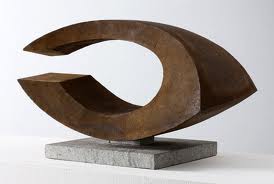
Horizontal Twist Vision 1
(2008)
Farmers understand that they have to leave the fields fallow some years.  The soil needs a rest and an opportunity to rebuild itself.  If they planted corn every year, they would deplete the soil of its nutrients eventually.  Artists, writers and creative leaders are going to have good days and bad days.  The bad days are a way of restoring the creative energies to our spirit — of making us whole again.  Work every day but understand that some days you will be producing weeds and other days you will harvest the corn.

Wednesday, October 20, 2010

Dag Hammarskjold

"What is one to do on a bleak day but drift for a while through the streets — drift with the stream."


Swedish Diplomat/Author
1905 - 1961


Drifting is an art that many of us have never learned.  In our fast pace world where we seek to climb the ladder of success and produce more and more artistic work, we never stop and rest.  Even our vacations are full of doing.  We joke about going back to work in order to rest from our vacation.

In farming, there is a concept of letting the field lay fallow for a year — not to plant any crops.  The soil needs a break in order to replenish itself.  And the same is true of artists and writers.  We must learn to rest — to drift without direction or purpose, to lay fallow in order to replenish and restore our souls.  We must learn to enjoy a warm autumn afternoon simply for the sake of enjoying.  

Saturday, October 9, 2010

Albert Camus

"Autumn is a second spring when every leaf is a flower."


French Novelist
1913 - 1960


My wife and I were sitting on the back porch today enjoying the autumn morning.  Autumn is my favorite month.  If I had to rank the seasons from most favorite to least, here is my ranking:  Autumn, Spring, Winter, Summer.  What is your favorite season?  As artists, writers and creative leaders, we are affected by the seasons.  I studied and wrote exclusively haiku for seven years and the key to understanding haiku lies in the seasons.   Many of us have lost touch with the seasons.  We live in heated and air-conditioned buildings where the environment is controlled.  The further we get from the farms and the fields, the more we lose touch with the individual nature of each season.  I like winter because it cleans the cobwebs out of my brain.  I love spring because of the renewal and rebirth.  Summer with its heat overwhelms me.  My brain melts once the temperature gets above 75 degrees.  Autumn, though, brings me back to myself and I reflect on the importance of life.

This quote from Camus, the French novelist, caught me by surprise this morning.  The phrase, "Every leaf is a flower," makes me see the world anew and I find it to be true.

Tuesday, September 14, 2010

Salvador Dali

"At the age of six I wanted to be a cook.  At seven I wanted to be Napoleon.  And my ambition has been growing steadily ever since."

1904 - 1989


What did you want to be at age six?  I spent the first eight years of my life on a farm.  My first memory of being interested in a career was when I was in junior high.  I wanted to be an architect.  When I was a sophomore in high school I decided to be a preacher.  And the funny thing is that for the last twenty plus years I have been a professional speaker.  People will come up to me after I have spoken and say that I have missed my calling.  "You should have been a preacher," they say.  I smile and thank them.  I have learned that in some ways I am a preacher.  I am also a farmer and maybe to a certain extent an architect.  I plant seeds of hope in people's hearts.  I build up their self-esteem and help them rebuild their faith in themselves.  What did you want to be growing up?

Saturday, September 4, 2010

Barry Lopez

"The stories people tell have a way of taking care of them.  If stories come to you, care for them and learn to give them away where they are needed.  Sometimes a person needs a story more than food to stay alive. That is why we put these stories in each other's memories."

— Barry Lopez
American Writer
1945 -


Do you care for the stories in and about your life?  Stories are the memories of who we are and where we have gone.  Stories remind us of what is important and what we want to remember.  Do you take care of your family stories, those tales that create the collective you?  Each time I share a story I am giving a piece of myself away.

One of those stories that circulated in my family was the time when I was six or seven and lived on a farm. My father was working the second shift at a factory because the farm did not give us enough money to live on.  One summer afternoon after my father had left, the cows meandered out into the cornfield.  Now these can be dangerous for the cows because they don't know when to stop eating and they could kill themselves by eating too much corn.  My mother and I attempted to chase the cows back into the barn but were unsuccessful.  She went into the house to call my father and have him come home from work.  She told me to come in as well and leave the cows alone.  I prayed to God and asked that He helped me drive the cows back to the barn.  And by some miracle, I did.  God answered my prayer.  What I have never understood is why the prayer was answered when the result was I disobeyed my mother.  That story has circulated within my family for years and gave me the impression that I had a special connection to God.  That connection was broken when I was seventeen, but that is a story for another time.