Welcome!

Welcome! There are more than 900 Inspirational Quotes For Writers, Artists and Other Creative Leaders on this site.
Spend a few minutes exploring. And come back again and again for other inspirational quotes.
Showing posts with label Book Reviews. Show all posts

Monday, January 4, 2016

Harley King


In 2015, I read 55 books, an increase of 7 over 2014.  Sixty percent of the books were e-books, twenty-two percent were printed books and nineteen percent were audio books.  I continue to read more e-books than printed books because of both convenience and cost.  I read 35 works of fiction, 18 non-fiction books and 2 poetry collections.

Here are the sixteen best books I read in 2015.

I Can See Clearly Now16. I Can See Clearly Now by Wayne Dyer  

I had the opportunity to hear Wayne Dyer speak in person about 20 years ago.  I was a member of the Michigan chapter of the National Speakers Association.  The speaker before him was very high energy and kept the audience engaged for 3 hours.  The chapter presented an award to Dyer for what he had accomplished in life.  He spoke for 30 minutes following 3 hours of high energy.  When he first came on stage, I thought we were in trouble.  We had been there all day and Dyer spoke very softly in contrast to the previous speaker.  But he had us listening to his every word within less than a minute.  There was a peaceful gentleness about him that just captured our attention.

I have since listened to Dyer on CD multiple times.  When he recently passed on to the next world, I started to read his memoir and it is an amazing book.  It is not your typical memoir.  He organizes the book around key intellectual, philosophical and spiritual events in his life.  After writing about the event, he tells what the event means to him looking back on it all these years later.  He connects the key dots in his life and we begin to understand the intellectual underpinning of his books.

You will not find a lot of personal stories about his wives and children.  He only hints at what happened between his first wife and him.  The closest he comes to sharing his pain is in the chapter where his second wife leaves him for another man and he spends two years in deep depression.

The book is inspirational and full of spiritual connections.  Near the end of his life he gave up his home and the things he owned in Florida and walked away.  I highly recommend this book to anyone who has read any of Wayne Dyer's books or heard his CDs or seen his PBS programs.  The man communicates on a very deep spiritual level.
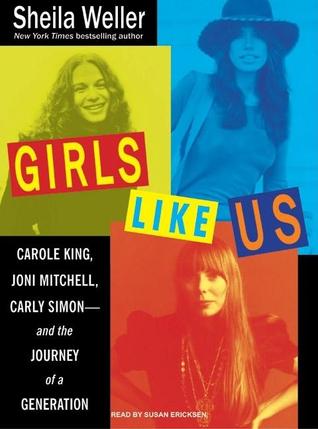
Girls Like Us: Carole King, Joni Mitchell, Carly Simon---and the Journey of a Generation15. Girls Like Us: Carole King, Joni Mitchell, Carly Simon — and the Journey of a Generation by Sheila Weller  

Sheila Weller is an amazing storyteller who has done her homework.  A lot of research has gone into this book which is about the lives of a generation of women as seen through the lives of 3 female singers of the era.  I knew much of the Carole King story having read her memoir and listened to her music.  I knew a lot less of Joni Mitchell and Carly Simon.  Weller fills her book with details of the lives of the three women but also the people who joined them on their journey.  I would recommend the book to anyone who grew up listening to Carole, Joni and Carly as well as anyone interested in the music of the era and the lives of the artists.
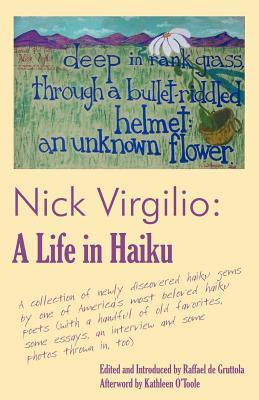
Nick Virgilio: A Life in Haiku14. Nick Virgilio: A Life in Haiku by Nicholas A. Virgilio  

I first read the haiku of Nick Virgilio in haiku magazines in the 1980s.  I also read his haiku in the The Haiku Anthology edited by Cor Van Den Heuvel.  This is the first collection of his haiku that I have read.  One of my favorite haiku by Virgilio is:

the sack of kittens
sinking in the icy creek
increases the cold

Farmers sometimes kill litters of baby kittens because there are too many cats on the farm.  In this haiku, we see the farmer standing by the creek watching the sack sink into the icy water.  He is not happy that he has to kill the kittens, but he knows it is for the best so they don't starve to death.  Yet he is uncomfortable and maybe even thinking of his own death.  It is winter and there is snow on the fields.  The farmer has some time on his hands.  The harvest is over and spring is still weeks away.  Watching the kittens die, the farmer feels a shiver through his body.

In the world of haiku, Nick Virgilio is known for the haiku he wrote about his brother who died in Vietnam.  This is one of my favorites:

deep in rank grass,
through a bullet- riddled helmet:
an unknown flower

Here the poet walking through a war-torn countryside comes upon a soldier's helmet and is surprised to see a flower popping through the holes in the helmet.  Even in death, there is life.  Just as the owner of the helmet is unknown to the poet so is the flower.  And yet that is okay.  We can not know everything.  No matter how violent life is, we can always find some beauty.

In one of the essays in the book, Virgilio compares himself to the Japanese haiku poet, Buson, in that like Buson he composes him poems.  For him it is not based simply on an experienced moment.  He would write and rewrite the haiku until he was satisfied.  The helmet poem above was inspired a photograph he saw in a newspaper in 1967.  The last line came to him during a conversation he was having with a friend.

In an interview published in the book, Virgilio discusses a haiku he created to communicate receiving the news of his brother's death.

telegram in hand,
   shadow of the marine
       darkens our screen door

In these eleven short words, Virgilio captures the essence of the moment.  The poet is focused on the small things:  the shadow and the screen door.  He may even be in denial.  He is staying at the edges of the truth.  And yet he knows the truth is there:  his brother is dead.  He doesn't want to face it head on.  

I highly recommend this book of haiku poetry by one of America's best haiku poets to all poets and lovers of poetry.

Yogi Berra: Eternal Yankee13. Yogi Berra: Eternal Yankee by Allen Barra  

I was inspired by Allen Barra's book on Willie Mays and Mickey Mantle to read this one on Yogi Berra.  As a St. Louis Cardinal fan, I never had much interest in the NY Yankees, but I found this biography of Yogi to be fascinating.  Yogi's career was coming to an end when I became interested in baseball as a child.  Unlike many athlete heroes, Yogi appears to have few personal flaws.  Growing up in an Italian neighborhood of St. Louis, he hoped to play for the Cardinals, but when he was offered only a $250 sign on bonus he refused because it was less than the $500 paid to his friend, Joe Garagiola.  Yogi was the inspiration for the cartoon character, Yogi Bear.  I recommend this book to baseball fans, Yankee fans and Yogi fans.

Sidetracked (Wallander #5)12. Sidetracked by Henning Mankell  

I last read a Henning Mankell novel back in 2011, but I felt like I was coming home when I read this novel.  I enjoy being in the company of Kurt Wallander.  He is a bit of a depressive, but he is tenacious.  This novel finds him on the trail of an axe murderer.  This is a great read that I would recommend to all who enjoy mysteries.


The Kizuna Coast (Rei Shimura Mystery, #11)11. The Kizuna Coast by Sujata Massey  

The Kizuna Coast is another excellent Rei Shimura mystery.  This one is set in Japan right after the earthquake and tsunami in 2011.  I was first introduced to the character of Rei in 2014 when I read The Flower Master.  I appreciated seeing the aftermath of tsunami through the eyes of a novelist.  Of the 4 Shimura mysteries that I have read, this is easily my favorite.  I highly recommend it to all readers of novels, not just mystery lovers.


Brush Back (V.I. Warshawski Novels)10. Brush Back by Sara Paretsky

This is my eleventh V.I. Warshawski novel and it has been a couple of years since I read my last one.  Reading the book was like visiting an old friend and catching up on what has happened to her in recent years.  At the age of fifty, Warshawski continues to stir the pot and get herself beaten up.  But in the end, she comes out on top, although, not always wiser. I enjoy the novels not so much for the plot as the voice and character of V.I. She is a great character. I highly recommend this book and the series to lovers of mysteries and strong women P.I.s.


Death of a Doll Maker (Sugawara Akitada #11)9. Death of a Doll Maker by I. J. Parker

I am addicted to the Sugawara Akitada historical mystery series set in 11th century Japan.  I have read 8 of the novels including 5 this year.  I.J. Parker is skilled at telling stories where Akitada not only solves mysteries but also has to cope with the challenges and pain of living.  The book is a great read, but I recommend reading early books in the series first.



A Fighting Chance8. A Fighting Chance by Elizabeth Warren

I knew very little about Elizabeth Warren prior to reading the book and I walked away impressed. Warren shares the story of her 10 year battle with big banks on the behalf of middle class working people and how she lost.  Warren is a law professor and bankruptcy expert turned activist and politician.  Mixed in with discussion of her fight with the banks is Warren's personal story of being born in Oklahoma and her struggle to obtain a college degree.  She tells the story of her marriage and divorce and re-marriage.  She talks of giving birth and raising her children and becoming a grandmother.  She also tells the story of her senate race to fill the seat of Ted Kennedy after he died.

I recommend the book to anyone who likes to read political memoirs or who is interested in bankruptcy and the banking industry and consumer protection.  I also recommend listening to the book rather than reading it so you can hear the passion and concern in her voice since she recorded the book herself.  
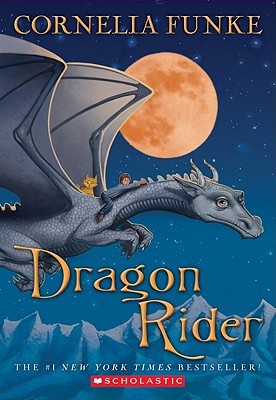
Dragon Rider7. Dragon Rider by Cornelia Funke  

I read this excellent book with my seven-year-old daughter.  I started reading it to her.  Then she wanted to read it to me.  Then we traded back and forth.  She would read two pages and then I would read two pages.  Excellent adventure story involving a silver dragon, a brownie, a boy and other characters.  Funke does a great job of weaving a story and drawing the reader in.  I would recommend this both for adults and children.


Ripper6. Ripper by Isabel Allende

Contrary to some negative reviews that I have read, I feel Ripper by Isabel Allende is a fantastic novel.  Allende tells the story in a circular manner which seems to bother some people but it is story telling at its finest.  The story keeps circling around the characters and slowly expands the world the story inhabits.  This style of storytelling is not normally seen in mystery novels.  I first discovered the style when I read the novels of John Irving who wrote one of my favorite novels, A Prayer for Owen Meany.  It took me several attempts before I actually read A Prayer... and the same may hold true for people who attempt to read Ripper.


This is the third novel that I have read in the last 2 years that was written in the circular storytelling style.  In 2014, I read Saving Fish From Drowning by Amy Tan and in 2013, See Now Then by Jamaica Kincaid.  All three books received negative criticism for repetition which means the reviewers did not understand the style of storytelling.  Circular storytelling, which can be very poetic in the right hands, builds the story through repetition and slowly draws the listener in.  Sometimes it is better to listen to circular storytelling than reading it on the page so I recommend that potential readers consider the audio version.  I wager you will like it better.
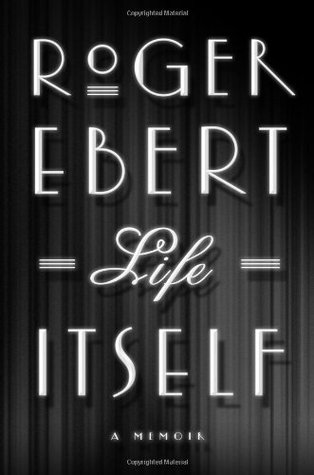
Life Itself5.  Life Itself by Roger Ebert 

I must confess that Roger Ebert was not my favorite movie critic.  I preferred Gene Siskel.  But this memoir has changed my opinion about Ebert.  Roger Ebert was raised in Urbana, Illinois in the 1940's and 50's.  I lived in Champaign-Urbana from 1975 -1982 so I was familiar with some of the things he talks about.  Even though Roger's mother wanted him to be a priest, his passion was journalism.  He did not set out to be a movie critic, but spent most of his life discussing movies in print and on television.

Late in life, cancer and 3 surgeries destroyed Ebert's ability to speak and eat.  He turned to writing his life story.  What amazed me is how much he remembers.  He says that he has always had a good memory, but not being able to engage in conversation with others opened up the flood gates and the memories poured through.

I found the book entertaining, funny with touching moments where Roger shares of himself.  I would recommend it to anyone who loves memoirs, journalism or the movies.  He does not tell his story in a straight forward fashion but skips around much as memory does — jumping back and forth in time.  I would have enjoyed having a conversation with Roger while sitting down to dinner.

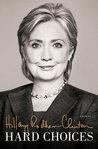
Hard Choices4. Hard Choices by Hillary Clinton

Hard Choices is full of stories of Clinton's time as Secretary of State and the people she met.  I was fascinated and intrigued as I read it.  She tells stories of both failures of diplomacy and successes.  She provides insight into many of the key players on the international scene and some historical context to current events.

If you are interested in international politics, you should read this book with an open mind.  While you may not agree with Clinton's conclusions, you will have a better understanding of who Hillary Clinton is and the challenges the United States faces on the world stage.  
I also have walked away with the belief that people who run for President should have spent time as Secretary of State.  Presidents have less influence on the internal affairs of the country than they do on the international scene.  Congress has greater control and influence on the American society than any one President.  Congress makes the laws and determines the direction of the country.  Decisions made in Congress are with us for generations.  Presidents can twist arms, but in the end, their influence is short-lived.  Presidents can do more on the world stage than they can at home.  Unfortunately, most candidates for President have very little experience on the international stage and waste much of their time in office learning how the world works.  If Presidents spent time as secretary of state before running for President, they would have a greater opportunity to influence world events.

I would recommend this book to anyone interested in international politics or in understanding what makes Hillary Rodham Clinton tick.  I also would recommend that you listen to the audio version of the book.  While Clinton read the opening and closing chapters of the book, she did not read the entire book.  Kathleen Chalfant did an excellent job of reading most of the book. Though, I would have preferred to have Hillary's voice all the way through.

No Higher Honor: A Memoir of My Years in Washington3. No Higher Honor by Condoleezza Rice

After listening to the audio book by Hillary Clinton on her experience as Secretary of State, I decided to follow it with No Higher Honor by Condoleezza Rice, her predecessor.  The books are in many ways very similar both in the telling and in the stories being told.  

Rice tells a very powerful story about her 8 years of experience in the Bush Administration as the National Security Advisor and the Secretary of State.  She was introduced to George W. by his father whom she had served under during his administration.  Rice consistently defends the George W. and his decisions.  His administration was deeply influenced by the 9/11 attacks on New York and Washington, D.C.  She discusses the fear that permeated the administration in the months and years that followed the attacks. The way the Administration saw the world was colored by that fear.  While Rice admits making mistakes in her positions, she does not voice any negative feelings toward George W.  She is less positive about Dick Cheney and Don Rumsfeld with whom she experienced major disagreements, although one has to read between the lines to gain a sense of the conflict.

Rice grew up in the segregated Birmingham, Alabama.  She tells the story of how one of her kindergarten friends was killed during the 1963 church bombing in Birmingham.

One of my favorite anecdotes was during a trip to Rome for the funeral of the pope.  She was sitting between George W. and Bill Clinton.  She said Bill talked all the time and George did not talk.  The story, I believe, is very telling about the differences between the two men.

Rice did her own recording of the audio book so one hears the story in her voice.  I would highly recommend the book to anyone interested in politics, history and the international world.  The book offers more of the story than one finds in the newspapers and on television.  And I would also recommend that one reads it in conjunction with Hillary Clinton's book on her experiences.  Hillary opens her book with the letter she received from Condoleezza.  


2. The Making of The President 1960 by Theodore H. White

The Making of The President 1960 earned the author, Theodore H. White, a Pulitzer Prize in 1962.  In the  book, White, a journalist, follows the candidates from the moment they made the decision to enter the race for the Presidency until Kennedy was elected.

In the 1970’s I had read White’s The Making of the President 1968, the third of 4 books in the series.  I was impressed with book when I read so decided with being on the doorstep of the 1916 election that I would read the original book in the series.

The book is as relevant and important today as it was in 1960.  White has the reporter’s knack of capturing the detail that makes the story exciting even 55 years after the event.  Many of the issues that he identifies in the 1960 campaign are still relevant today.  He also has a strong sense of history and is able to put the events of the time in historical context.

White touches on the fact that the peaceful transfer of power from one person to the next is unusual in the annals of history.  White writes:

“Heroes and philosophers, brave men and vile, have since Rome and Athens tried to make this manner of transfer of power work effectively; no people have succeeded at it better, or over a longer period of time, than the Americans.”

The Democrats seeking the nomination of their party in 1960 included Senator Hubert Humphrey of Minnesota, Senator Stuart Symington of Missouri, Senator Lyndon B. Johnson of Texas, former Illinois governor Adlai Stevenson II and Senator John F. Kennedy of Massachusetts.  The Republicans seeking the nomination of their party in 1960 were Governor Nelson Rockefeller of New York and Vice-President Richard M. Nixon. 

White is excellent at summing up a situation in a very simple image.  After Humphrey had lost the primary in West Virginia which ended his campaign, White writes: “In the morning, when Humbert Humphrey woke, the Presidential image had evaporated. Outside the Ruffner Hotel his parked bus had overnight been given a ticket for illegal parking.”

Lyndon Johnson, like some politicians today, was seen as being too close to the workings of Washington.  Johnson’s weakness was that he believed that the Senate was America and that he was the Senate. In a very relevant passage even today, White writes: “Long service in Washington at the court of power decisions causes men to forget that power rises ultimately from beyond the Potomac.”

Here is one of White’s descriptions of Kennedy: “He had mastered politics on so many different levels that no other contemporary American could match him. He had nursed ward politics with his mother’s milk; heard it from his grandfathers, politicians both, in boyhood; seen it practiced from his father’s embassy in London at the supreme level of world events in 1939, as war and peace hung in the balance.”

White fills his book with telling details.  He writes: “At almost any moment of afternoon and evening on the road, soup is the favorite Kennedy dish — almost any kind of soup: chicken soup, tomato soup, bean soup and his favorite New England clam chowder.”

White reviews in detail the impact of the changing demographics on the politics of the time.  Between 1950 and 1960, the population of the country grew by 18%.  Forty-one million Americans were born during the period and 16 million died.  Two-thirds of the growth had occurred in the suburbs.

White also discusses immigration which statistically began being counted in 1819 as required by Congress.  White writes, “In 1820 America held 9,638,000 people, of whom almost 20 per cent were Negroes; and the rest are considered to have been the parent ‘colonial stock’ of America — an overwhelmingly British stock, spiced lightly with adventurers from all northern Europe.”

Over 40 million immigrants entered the country between 1820 and 1960.  The Irish came first.  Between 1847 and 1854, over one million Irish entered the country.  Almost 900 thousand Germans came between 1850 and 1857 and they kept coming in waves.  By 1960 people with German heritage had become the second largest component of the American population.  The Scandinavians arrived in the late 1800s.  In the early part of the 20th century, more than 3 million Italians arrived.  

White also writes about the issue of religion.  He reminds us that many of the early settlers came to escape the religious wars of Europe.  The memories of how they were punished in Europe for their religious beliefs led to the decision that government had no right to make inquiry into the faith of its citizens and that the state should not have any connection to religion.  People were free to worship as they pleased without guidance from the government.

I think every American would benefit from the reading and rereading of this book. White is a great storyteller who helps us understand how politics work and how Presidents are elected to serve the people.  


The Cider House Rules1. The Cider House Rules by John Irving  

This is another brilliant novel by Irving, one of American's finest novelists.  I saw the movie based on the novel about 15 years ago.  I remember little of the movie except for Michael Caine who played Dr. Larch.  Irving is a phenomenal storyteller who tells his stories in a circular fashion.  Each circle reveals more of the story.  Detail after detail is slowly revealed.

The story is about abandonment — about orphans and abortions and about unwanted children.  Dr. Larch has spent a lifetime doing what he calls: "God's work."  He delivers unwanted babies, raises them in the orphanage until he can find a home for them.  He also provides abortions to women who are early enough in their pregnancies.  At the heart of the story is Homer Wells for whom Dr. Larch could never find a home.  Larch teaches him how to deliver babies.  Homer ventures out into the world and his life becomes entangles with the lives of Candy and Wally.  This is a novel that everyone should read.

Thursday, December 31, 2015

Book Review: The Making of The President 1960

The Making of the President 1960The Making of the President 1960 by Theodore H. White
My rating: 5 of 5 stars

The Making of The President 1960 earned the author, Theodore H. White, a Pulitzer Prize in 1962. In the book, White, a journalist, follows the candidates from the moment they made the decision to enter the race for the Presidency until Kennedy was elected.

In the 1970’s I had White’s The Making of the President 1968, the third of 4 books in the series. I was impressed with book when I read so decided with being on the doorstep of the 1916 election that I would read the original book in the series.

The Making of the President 1960 is as relevant and important today as it was in 1960. White has the reporter’s knack of capturing the detail that makes the story exciting even 55 years after the event. Many of the issues that he identifies in the 1960 campaign are still relevant today. He also has a strong sense of history and is able to put the events of the time in historical context.

White touches on the fact that the peaceful transfer of power from one person to the next is unusual in the annals of history. White writes:

“Heroes and philosophers, brave men and vile, have since Rome and Athens tried to make this manner of transfer of power work effectively; no people have succeeded at it better, or over a longer period of time, than the Americans.”

The Democrats seeking the nomination of their party in 1960 included Senator Hubert Humphrey of Minnesota, Senator Stuart Symington of Missouri, Senator Lyndon B. Johnson of Texas, former Illinois governor Adlai Stevenson II and Senator John F. Kennedy of Massachusetts. The Republicans seeking the nomination of their party in 1960 were Governor Nelson Rockefeller of New York and Vice-President Richard M. Nixon.

White is excellent at summing up a situation in a very simple image. After Humphrey had lost the primary in West Virginia that ended his campaign, White writes: “In the morning, when Humbert Humphrey woke, the Presidential image had evaporated. Outside the Ruffner Hotel his parked bus had overnight been given a ticket for illegal parking.”

Lyndon Johnson, like some politicians today, was seen as being too close to the workings of Washington. Johnson’s weakness was that he believed that the Senate was America and that he was the Senate. In a very relevant passage, White writes: “Long service in Washington at the court of power decisions causes men to forget that power rises ultimately from beyond the Potomac.”

Here is one of White’s descriptions of Kennedy: “He had mastered politics on so many different levels that no other contemporary American could match him. He had nursed ward politics with his mother’s milk; heard it from his grandfathers, politicians both, in boyhood; seen it practiced from his father’s embassy in London at the supreme level of world events in 1939, as war and peace hung in the balance.”

White fills his book with telling details. He writes: “At almost any moment of afternoon and evening on the road, soup is the favorite Kennedy dish — almost any kind of soup: chicken soup, tomato soup, bean soup and his favorite New England clam chowder.”

White reviews in detail the impact of the changing demographics on the politics of the time. Between 1950 and 1960, the population of the country grew by 18%. Forty-one million Americans were born during the period and 16 million died. Two-thirds of the growth had occurred in the suburbs.

White also discusses immigration which statistically began being counted in 1819 as required by Congress. White writes, “in 1820 America held 9,638,000 people, of whom almost 20 per cent were Negroes; and the rest are considered to have been the parent ‘colonial stock’ of America — an overwhelmingly British stock, spiced lightly with adventurers from all northern Europe.”

Over 40 million immigrants entered the country between 1820 and 1960. The Irish came first. Between 1847 and 1854, over one million Irish entered the country. Almost 900 thousand Germans came between 1850 and 1857 and they kept coming in waves. By 1960 people with German heritage had become the second largest component of the American population. The Scandinavians arrived in the late 1800s. In the early part of the 20th century, more than 3 million Italians arrived.

White also writes about the issue of religion. He reminds us that many of the early settlers came to escape the religious wars of Europe. The memories of how they were punished in Europe for their religious beliefs led to the decision that government had no right to make inquiry into the faith of its citizens and that the state should not have any connection to religion. People were free to worship as they pleased without guidance from the government.

I think every American would benefit from the reading and rereading of this book as we enter another election year. White is a great storyteller who helps us understand how politics work and how Presidents are elected to serve the people.


View all my reviews

Saturday, July 18, 2015

Book Review

Hard ChoicesHard Choices by Hillary Rodham Clinton
My rating: 5 of 5 stars

First, let me say that prior to reading this book I was not a Hillary Clinton fan.  I supported Obama in the 2008 election.  And I was concerned that this book was just a brochure for her next run for president.  Fortunately, I was wrong.  This book is full of stories of her time as Secretary of State and the people she met.  I was fascinated and intrigued as I read it.  She tells stories of both failures of diplomacy and successes.  She provides insight into many of the key players on the international scene and some historical context to current events.

If you are interested in international politics, you should read this book with an open mind.  While you may not agree with Clinton's conclusions, you will have a better understanding of who Hillary Clinton is and the challenges the United States faces on the world stage.  And, yes, if she obtains the Democratic nomination, I will probably support her.  My only wish is that she would have remained as Secretary of State another four years instead of choosing to run for President.  She could have accomplished so much more.

I also have walked away with the belief that people who run for President should have spent time as Secretary of State.  Presidents have less influence on the internal affairs of the country than they do on the international scene.  Congress has greater control and influence on the American society than any one President.  Congress makes the laws and determines the direction of the country.  Decisions made in Congress are with us for generations.  Presidents can twist arms, but in the end, their influence is short-lived.  Presidents can do more on the world stage than they can at home.  Unfortunately, most candidates for President have very little experience on the international stage and waste much of their time in office learning how the world works.  If Presidents spent time as secretary of state before running for President, they would have a greater opportunity to influence world events.

I would recommend this book to anyone interested in international politics or in understanding what makes Hillary Rodham Clinton tick.  I also would recommend that you listen to the audio version of the book.  While Clinton read the opening and closing chapters of the book, she did not read the whole book.  Kathleen Chalfant did an excellent job of reading most of the book. Though, I would have preferred to have Hillary's voice all the way through.


View all my reviews

Book Review

The Cider House RulesThe Cider House Rules by John Irving
My rating: 5 of 5 stars

The Cider House Rules is another brilliant novel by John Irving, one of American's finest novelists.  I saw the movie based on the novel about 15 years ago.  I remember little of the movie except for Michael Caine who played Dr. Larch.  I liked the movie at the time and will now have to watch it again.  Irving is a phenomenal storyteller who tells his stories in a circular fashion.  Each circle reveals more of the story.  Detail after detail is slowly added to the story.

The story is about abandonment — about orphans and abortions and about unwanted children.  Dr. Larch has spent a lifetime doing what he calls: "God's work."  He delivers unwanted babies, raises them in the orphanage until he can find a home for them.  He also provides abortions to women who are early enough in their pregnancies.  At the heart of the story is Homer Wells for whom Dr. Larch could never find a home.  Larch teaches him how to deliver babies.  Homer ventures out into the world and his life becomes entangled with the lives of Candy and Wally.

This is a novel that everyone should read.


View all my reviews

Sunday, December 28, 2014

Harley's Book Review — Words Under the Words


Words Under the Words

by Naomi Shihad Nye


With this book, Naomi Shihab Nye has become one of my favorite contemporary poets. The book is filled with phenomenal lines and images. In my first reading of the 104 poems, I marked 30 poems that I wanted to read again. 

Here are the beautiful opening three lines of Biography of an Armenian Schoolgirl.

"I have lived in the room of stone where voices become
bones buried under us long ago. Where you could dig
for centuries uncovering the same sweet dust."

In the poem, At Otto's Place, Naomi writes:

"Could I live like this? I ask myself
and I know, somehow, I must.
More and more my life is peeling paint,
straight horizons.
More and more my name dissolves in the air,
salt, something invisible I taste,
and forget."

I love the phrase, "my life is peeling paint." What a powerful image!

In the poem, The House in the Heart, Nye writes:

"This body we thought so important,
it's a porch, that's all.
I know this, but I don't know
what to do about it."

Our bodies are a resting place — a place from which we look out at the world. We know many things but knowledge alone is not enough. We need to learn what to do to change things. Nye packs so much into these four lines.

In the poem, Jerusalem, Nye writes:

"To live without roads seemed one way
not to get lost. To make maps
of stone and grass, to rub stars together
and find a spark."

It is only because we have roads that we get lost. If we did not have roads to follow, we would not lose our way. So often we get so focused on where we want to go that we forget where we are. Maybe our goals and dreams are not as important as we think.

I highly recommend this book to anyone who loves to read poetry as well as anyone who loves words.

Saturday, November 15, 2014

Harley's Book Review — The Art of Social Media


The Art of Social Media

by Guy Kawasaki and Peg Fitzpatrick


I first became involved with social media in 2009 when I joined Goodreads and it remains to this day one of my most favorite sites. I wish I had had it 50 years ago so I could have an accurate record of the books I have read. The second site I joined was LinkedIn which I am also a big fan of and wish I had it 40 years ago when I got into business. I have since joined Twitter, Facebook, SlideShare, YouTube, SoundCloud and Google+. I have written a blog since 2010. So I have been active on social media for about 5 years but I am not by any means an expert. The reason I became involved with Google+ is because I read Guy Kawasaki's book, What the Plus! Google+ for the Rest of Us. I have been very active as a moderator of a poetry group.

Even with my experience, I found helpful tips in Kawasaki's new book, The Art of Social Media, co-written with Peg Fitzpatrick due out in December. This is a book that you will want to go back to again and again. I read the Kindle version in 3 short days. The book is filled with links that I could easily click on in the Kindle and immediately see what he was discussing. Kawasaki gives lots of examples and sites for more information. The 123 tips are numbered and well organized into 12 chapters.

If you are new to social media or have some experience like me, I would highly recommend this book. If you are an expert in social media, then this book is probably not for you unless you want to give it to your clients.


Sunday, June 1, 2014

Book Review: Sleeping Preacher by Julia Kasdorf

Book Review:  
Sleeping Preacher by Julia Kasdorf


When I was a child, I was fascinated by the story my mother told about the sleeping preacher, John Kaufman. After graduating college, I set out to write a historical novel about his life. Unfortunately, I ran into some obstacles and never finished the novel. In the early 1900's he had visited the church my grandmother attended. During the late 1800's until the first decade of the 20th century, a number of sleeping preachers arose around the world. The preachers, both men and women, would enter into a trance and preach a coherent sermon. People would stick needles in their legs to see if they were faking.

I was immediately interested in Sleeping Preacher by Julia Kasdorf as soon as I read a review of the book and now I have finally read it. The poet, Julia Kasdorf, also attended the same college I did, a decade later, but I have never met her. While many of these poems address growing up Mennonite, some do not. Kasdorf writes of herself as well as family. The opening lines of A Family History about her mother read:

"At dusk the girl who would become my mom
must trudge through the snow, her legs
cold under skirts, a bandanna tight on her braids."

Each poem is a story packed with description of a world that many of us have never encountered. The opening lines of the poem, August, read:

"Dad's mother was coming home
from picking huckleberries on the mountain
when sunlight spooked the horse, and it tore
through a pasture fence, dragging the buggy
until it broke lose, hurling the children,
killing their mother, spilling
those silver pails of sweet, black fruit."

While the poem goes on to tell of other women who died in the month of August, these opening seven lines encapsulate a powerful story in their own right. The attention to detail builds the story image by image.

In the poem, Friendschaft, Kasdorf captures Mennonite genealogy.

"As I grow up, the great aunts click their tongues.
They are looking for signs of their lives
in my limbs. It's the Hartzler blood that makes you
dark and thin. It's just like Aunt Toot to love
olives and pickles and fuss like a hen.
Your Yoder nose...."

I can't even begin the number of times I heard the same type of remarks growing up. Kasdorf was six when her family bought their first television and she captures that moment in a poem. I was seventeen when my family bought our first TV. I found in these poems much that I have heard and remember.

The first poem of Kasdorf that I read before buying the book was What I Learned from My Mother. The poem discusses what to do when someone dies. She closes the poem with these lines:

"To every house you must enter, you must offer
healing: a chocolate cake you baked yourself,
the blessing of your voice, your chaste touch."

The title poem, The Sleeping Preacher, tells the story of church reform through the eyes of her great-grandmother. The closing lines read:

"She did not think of us,
only to save us, leaving nothing
for us to touch or see
except this stubborn will to believe."

I highly recommend this book to poets and other readers, especially those interested in learning more about the Mennonite culture and way of life.


Saturday, May 17, 2014

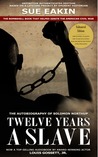
Twelve Years A Slave: A Book Review

Twelve Years a SlaveTwelve Years a Slave by Solomon Northup

My rating: 5 of 5 stars


If you have watched the movie, Twelve Years a Slave, then you should read this book. If you have not watched the movie, Twelve Years a Slave, then you definitely need to read this book. The book is an as-told-to story by Solomon Northup, a man who was born, raised and living in New York state. As Northup tells the story, he was conned into traveling to Washington D.C. where he was drugged, kidnapped and sold into slavery in the deep South in 1840. He spent 12 years as a slave before he was able to send information of his whereabouts to friends who traveled south and freed him. .

The book shares the experience of one man as a slave and all the horrors that he faced. Married with children before the kidnapping, Northup suffered as no person should be made to suffer. He was whipped, beaten and almost hung. His skills as violin player and his intelligence kept him alive through these difficult, almost unbearable times. He was also forced to whip other slaves.

The book was written by David Wilson who served as Northup's ghost writer. It followed in the footsteps of the publishing success of Uncle Tom's Cabin and was used by the abolition forces to further their cause. After Northup's release from slavery, he traveled around the north giving anti-slavery speeches and may have been involved in the Underground Railroad, though, there is no evidence to support this. Published in 1853, the book was an instant success with 8,000 copies being sold in the first month. The book went out of print in 1856 and remained out of print until 1968.

Along side the amazing story of Solomon Northup is the fascinating story of Sue Lyles Eakin and the work she did to bring the book to the attention of American readers in the 20th and 21st centuries. Sue Eakin discovered an original copy of the book in a plantation home near where Northup was a slave when she was 12 years old. Northup's story became her life's passion. Dr. Eakin wrote her master's thesis about Northup's story and after decades of research produced the first authenticated edition in 1968. She continued to spend her life verifying, validating and substantiating the story through thousands of hours of research. In 2007, at the age of 88, she completed her final definitive edition with over 100 pages of new information, images and maps. In her spare time, she authored over a dozen other history books and was a history professor.

One of the fascinating facts that I learned in this book was that in 1840 New York state passed a law authorizing the governor the authority to seek the release of free people who were sold into slavery. This law is what the friends of Solomon Northup used to travel to Louisiana and secure his release.

Amazon lists more than 30 different editions of this book. I would recommend you purchase this edition by Dr. Sue Eakin which contains all her documentation and verification of the facts in the story.

View all my reviews

Saturday, January 4, 2014

Harley King

The Best Fifteen Books 
I Read in 2013


In 2013 I read 43 books — the same as in 2012.  Forty percent of the books were in the traditional printed form.  Thirty-three percent were in the ebook format.  And twenty-seven percent were audiobooks.  I have found that some books work best in the audio format.  Forty-nine percent of the books I read were non-fiction, including 3 memoirs and 3 biographies.  Thirty-seven percent were novels and twelve percent poetry books.  Here is my list of the top 15 books that I read in 2013.

Merge / Disciple: Two Short Novels from Crosstown to Oblivion15)  Merge / Disciple by Walter Mosley.  These are two short science fiction novellas that explore contact with aliens.  Mosley, best known as a mystery writer, has created two fascinating stories about aliens arriving to colonize the planet.  I enjoyed listening to both of these novellas.

Ronald Reagan and Margaret Thatcher: A Political Marriage14)  Ronald Reagan and Margaret Thatcher: A Political Marriage by Nicholas Wapshott.  While I have never been a fan of Ronald Reagan, I have come to appreciate some of his views.  This biographical history focuses on the relationship of Reagan and Thatcher and provides valuable insight.

Ten Poems to Say Goodbye13)  Ten Poems to Say Goodbye by Roger Housden.  Excellent book. Housden explores the world of death, grief and letting go through the lens of ten poems. Powerful presentation and insight.  

First Ladies12)  First Ladies by Margaret Truman.  Great book with lots of anecdotes about the First Ladies and Presidents. As the daughter of President Harry S. Truman, she experienced the White House first hand as well as the pressure inside the Washington bubble. We hear a lot about the Presidents in other books. This book tells you the power behind the presidents. Easy to read. Fun to read. It is not chronological. Instead it skips around in time.  Margaret Truman shares the stories of the First Ladies and their role during the time their husbands were in office.  

The Masuda Affair (Sugawara Akitada, #7)11)  The Masuda Affair by I. J. Parker.  This is the third novel that I have read in the Sugawara Akitada series and I have loved each one.  Parker is a master of historical murder mysteries.  The focus is less on the mystery and more on the character of Sugawara Akitada who is grieving over the death of a five-year-old son.

GUYKU: A Year of Haiku for Boys10)  Guyku: A Year of Haiku for Boys by Bob Raczka.  This is a fun book to read. While these short poems are not traditional haiku, they fall in a category of modern senryu. I laughed at each and every poem. They are full of insight and humor. The book also contains the beautiful illustrations of Peter Reynolds. This is also a good book to read to children. My five year old daughter enjoyed it and has asked that I read it to her on many occasions. The very first poem is one of my favorites:

The wind and I play
tug-of-war with my new kite.
The wind is winning.


Breakdown  (V.I. Warshawski, #15)9) Breakdown by Sara Paretsky. This is my tenth V.I. Warshawski novel and I loved it. I enjoy the novels not so much for stories as the voice and character of V.I. She is a great character. What made this book unique for me was that it was the first time that I had listened to the audiobook. It took me a few minutes to get used to the narrator because she didn't sound like the V.I. I had in my head from reading the other 9 books. But I soon accepted her. Since I listened to the book rather than read it, I discovered V.I. to be angrier than when I read the other books. I highly recommend this book to anyone who loves strong women.

The Last Days of Ptolemy Grey8)  The Last Days of Ptolemy Grey by Walter Mosley.  I have read thirteen of Walter Mosley's books — most of them being murder mysteries. Mosley has written a number of novels outside of the mystery genre which I have also read. The Last Days of Ptolemy Grey is the best one that I have read. I love this book told from the perspective of a ninety + year old man. What I liked about the Easy Rawlins novels was the character more than the storyline. And the same is true here. I loved the character of Ptolemy. I highly recommend this book.

Wolf7)  Wolf by James L. Haley.  Let me admit up front that I have never read one of Jack London's books, but I should have and I will. But the fact that I have not read his books did not hinder my reading of this excellent biography by James Haley. Haley tells the story of London's birth to his death. London was a world traveler who drew his stories from his travels. Poor for most of his short life, London grew to be a socialist and political activist. A prolific writer, London wrote a 1,000 words a day. This was an excellent biography and worth reading whether you have read London's books or not. And if you are a writer, you definitely should read this book.

Paul Newman: A Life6)  Paul Neuman: A Life by Shawn Levy. Paul Newman was born in Cleveland, OH four months after my mother was born in central Illinois and seven months before my father was born. He was clearly of my parents' generation. The Paul Newman I discovered was an actor who played rebel characters that inspired me in my youth. My favorite movies were Cool Hand Luke, Butch Cassidy and the Sundance Kid, and the Sting. All released between 1967 and 1973.

In this biography I learned much more about Paul Newman, the human being. His was a strong liberal voice in politics. I discovered that we both supported Eugene McCarthy for President. I shaved my beard to go "Clean for Gene." He backed John Anderson, the independent candidate in 1980, as did I. He was a race car driver and won several races. He started racing in his late forties and was still driving into his eighties. He was an entrepreneur founding his own food company that donated the profits to charity. The company was so successful that it has been studied in colleges. He was a philanthropist donating much of his money to charitable organizations. He created the Hole in the Wall Gang camps for children with illnesses.

This biography is a must read for anyone who likes Paul Newman, the actor, and for anyone who loves a great biography.

Miles: The Autobiography5)  Miles: The Autobiography by Miles Davis.  The first and only Miles Davis album that I ever bought was Bitches Brew in 1970. I later used the music on the album to jar students in a training class to think creativity, but have not listened to the album in years. So I did not know what to expect when I decided to listen to the autobiography of Miles Davis. The original book came out in 1989. The audio recording that I listened to came out in 2012. I have since listened to the Kind of Blue which many consider his magnum opus. I loved it.

Miles Davis tells his story in his own words and in his own way. Quincy Troupe interviewed and recorded Miles and transcribed and organized the powerful story. I must warn anyone who is offended by swear words not to even consider reading the book. Almost every paragraph has language that will be offensive to some.

Miles began playing with some of the great jazz players when he was seventeen. He played with Dizzy Gillespie and Charlie Parker and was a member of Parker's band for several years. He enrolled in Juilliard but later dropped out. One of the things that surprised me was how often musicians moved in and out of bands. Bands did not stay together very long and would substitute players. John Coltrane played in Miles band from 1955 - 1960. Later in the 1960s, Herbie Hancock was a member of his band. Miles mentored and influenced many younger musicians.

Miles Davis was continually changing and innovating his music. He did not sit still and play the same songs. He was always on the cutting edge, looking for something new. He was a creative genius, adapting and changing with the times. 

In 1955, Davis had an operation to remove polyps from his larynx. He was not supposed to speak for 10 days but had an argument with someone and permanently damaged his voice, resulting in a raspy, whispery tone to his voice. The actor, Dion Graham, who read the book for the recording, did a phenomenal job imitating Miles' whispery voice. I had the feeling that I was actually listening to Miles Davis tell his story.

This book is not for everyone. You will need an open mind and a willingness to listen to a the opinions of a creative genius. You will need to be willing to step into his world view and if you do you will be richly rewarded. I would recommend the book to jazz lovers and those interested in understanding the world of music. I also recommend that you listen to the Dion Graham recording rather than reading the book. I think you will find it a lot more entertaining.

See Now Then: A Novel4)  See Now Then by Jamaica Kinkaid.  This is a fantastic novel and a challenge to read. In fact, I don't recommend that you read it. I recommend that you listen to the CD recording read by the author. Kincaid writes long sentences that circle around and repeat words. She says the first story she submitted to the New Yorker was 300 words and only one sentence. Many readers will be bored by the repetition. Yet, when you listen to Kincaid read the novel, the dead words on the page come alive. 

This novel is a poetic meditation on family, marriage and love. It is not a narrative novel that flows in a straight line from the beginning to end. It circles around, repeating words and phrases, finding its way slowly, building its emotional bond with the listener. Jamaica Kincaid has a beautiful voice and it is only in listening to the reading does one hear and appreciate the subtleties of her humor.

Good Poems, American Places3)  Good Poems, American Places by Garrison Keillor.  Garrison Keillor continues to edit the best anthologies of poetry being published today. This is the third collection in the series.  It took me almost a year to read this book because I sipped its contents slowly. Each small sip is to be enjoyed and savored. If you love poetry, read this book. If you are new to poetry, read this book. It is great introduction to what is being written today. Put this on your reading list today.

Mastery2)  Mastery by Robert Greene.  A great book that every person, who wants to master a task, a skill or a talent, should read. If you want to be a writer, an artist or a musician, you should read this book. If you want to own your own company, be president of a company, or be a great employee, you should read this book. If you want to start a new career, become a doctor or a mechanic, or run a marathon, then read this book.

Robert Greene shares the stories of people who have become masters in their field. Using the stories of both dead and living masters, Greene reveals what it takes to become a master in your field. He shares the stories of Charles Darwin, Leonardo da Vinci, Albert Einstein, John Coltrane, Martha Graham, Buckminster Fuller, Zora Neale Hurston and Wolfgang Mozart to name a few. He also shares the stories of living masters like Yoky Matsuoko, Freddie Roach, Daniel Everett and Santiago Calatrava. From these inspirational stories, Robert Greene identifies the keys to mastery.

This book is a must read for anyone who wants to become a master of some skill or talent. Pick up a copy today and change your life.  
All business, professional and creative leaders should read this book.  All college students and graduates should read this book.

Quiet: The Power of Introverts in a World That Can't Stop Talking1)  Quiet by Susan Cain.  If there is only one book you are going to read this year, it should be Quiet by Susan Cain.  This book could save your marriage, your job, and your life.  

I am a closet introvert. Most of my life I have functioned as an introvert, but in my work I take on the persona of an extrovert. Susan Cain calls me a pseudo-extrovert -- someone who for various reasons takes on the identity of an extrovert. Cain's thesis is that for most of the 20th century, Americans worshiped people who were extroverts and discouraged introverts. We see this in a school system that encourages socialization. In the last 30 years parents have taken this to the extreme with extra-curricular activities almost every day of the week. Outgoing, friendly people are celebrated. The book worm, the loner, is discouraged.  

Susan Cain has amassed an enormous amount of research demonstrating that society, business, communities and even marriages need and benefit from having both introverts and extroverts on the team. We are all to varying degrees somewhere on the introvert - extrovert continuum. If you are an introvert or an extrovert or in a relationship with one or the other, then you need to read this book. Business people should read this book to understand their employees, their bosses and their peers. Teachers should read this book to understand the differences in the personalities of the children they teach. Husbands and wives should read this book to understand each other. 

To see all 43 books that I read in 2013, go to Goodreads.  https://www.goodreads.com/review/list/2103162-harley?shelf=read-2013