Welcome!

Welcome! There are more than 900 Inspirational Quotes For Writers, Artists and Other Creative Leaders on this site.
Spend a few minutes exploring. And come back again and again for other inspirational quotes.
Showing posts with label Painting. Show all posts

Monday, August 15, 2016

William Baziotes — The Process of Creation


Evolution is the way a poem happens for me. I don't know what the poem is about until I'm finished writing. The poem evolves as I write. I know there are writers who outline everything they do. They know what they are going to write every step of the way. For me, it does not work. I like not knowing. The excitement is in the writing. The same thing happens when I write a story or a novel. Only at the end do I know what I was writing about.  And even then I might not be sure.

When I travel I am the same way. I want to discover new places. My wife and I once were on a trip with another couple. They had everything planned down to the minute and became upset if we deviated from the plan because it put them behind schedule. I can't travel that way. The joy is in the discovery.

Art for me is also about discovery.  When I draw a mask, I never know what a mask will look like until I am finished.  The joy is in the process of creation. The joy is in not knowing where you are going. 

Zentangle 2016
I have been studying Zentangle, a meditative art form, for the last four years.  A basic principle of Zentangle art is that you don't plan your work.  The fun is in the exploration — of discovering where you should go.

One of the things I have learned over the years is that creative leaders have many different ways of working. What works for one person does not work for another. How do you work? Do you map out your story in advance of writing it? Do you know what your painting will look like before you start painting it? Are you confined by the expectations of yourself or others?

Monday, March 7, 2016

Joan Miro — Planting Seeds of the Spirit


Growing up in a conservative Mennonite family, I was not exposed to art as a child. My maternal grandfather even forbid photographs and television.  My parents did not buy a TV until after he died. 

The Garden 2
Joan Miro
My first exposure to art came my freshman year in college where in one of my classes we had to choose an artist to study. I chose Joan Miro, a Spanish artist, and his paintings planted in my soul a love of art. I had an opportunity to study art history about 30 years later and fell in love with several painters including Diego Rivera, Frida Kahlo, Eastman Johnson, Edvard Munch and Pierre-Auguste Renoir. When you fall in love with a painting, you come back to it again and again for it to refresh your soul. 

A great novel stays with you long after you have read it. My all time favorite novel is Crime and Punishment by Fyodor Dostoyevsky.  I first read it college and have read it 3 times since.  

How many times do you listen to the same piece of music over and over. And each time you hear it years later, it brings back waves of emotion. Roberta Flack, Harry Chapin and Kris Kristofferson remain some of my favorite singers more than 40 years after I first heard them.  

Artists, musicians and writers all plant seeds with their works of art. What seeds are you planting with your writing, your painting or your music? How is your art impacting your audience? What seeds have you planted in their souls?


Monday, February 29, 2016

Christina Baldwin — The Gift of Creativity


Sometimes as writers we become caught up in the business of publishing and experience the hurt and pain of rejection. We become frustrated and sometimes quit writing because we don't think we are good enough. The need to write, to express ourselves, is not about being published. The need to write and to create is the gift in itself. Celebrate and honor the gift you have been given. Write for the sake of writing.  Write for the sake of the gift.

The same can be said of painting and any of the other forms of creative expression. Painting is not about selling your art to the highest bidder or having your painting hang in a museum somewhere. The art of painting is a gift to be honored and treasured. Respect and appreciate the gift that you have been given.


Monday, October 5, 2015

Danny Kaye


We are in charge of our lives.  We make choices every day that lead us where we want to be.  Life is like a canvas and we are the artists of our lives.  We paint the person we want to be.  Or we paint the person we think we should be.  Or we paint the person we think others want us to be.    

Are you painting the life you want?  Have you chosen a large enough canvas?  Are you too stingy with the paint?  What color are you painting on the canvas of your life?  Blue?  Red?  Purple?  Are you painting flowers?  Or dirt?  Is the life you are painting happy?  Or sad?  Or anxious?

We tell our stories through what we paint on the canvas.  Others will know us by what we paint.  They will judge us by the colors we use or fail to use.  What stories are you telling?  Have you changed the facts to fit the story?  Or have you altered the story to fit the facts?  Are the pictures of your life filled with people?  Or animals?  Or is your life a landscape empty of people and animals?  Do you prefer the solitude of the mountains or the splashing of waves against the shore?

Are  you timid in how you approach life?  Or do you rush full speed ahead and ignore the red flags popping up every where?  Do you splash the paint on the canvas or do you make tiny delicate strokes with your brush?

Can you visualize your future?  Do you know what you want to paint on the canvas of your life?  Do you know what color you want your life to be?  Are you only painting the surfaces of your life?  Or are you exploring the depths of your soul?  If we look into your eyes, what will we see?  

Every day we pick up the paint brush and add a few strokes of paint to our self-portrait.  Is your self-portrait a true picture of who you are?  Or do you need to change the paint brushes that you are using?  Or do you need to use different colors that better reflect your character and inner beauty?  Are you painting the picture you want to paint?


Monday, November 10, 2014

Alice Neel

"The place where I had freedom was when I painted.  When I painted I was completely and utterly myself.  For that reason it was extremely important to me."


American Artist
1900 - 1984


Commentary
Do you feel free when you are creating?  Is the act of creation a liberating experience for you?  If it is not a freeing experience, then maybe you are working on the wrong subject.  The act of creating should open you up and free your spirit.  Life may restrict and limit us with work, family, housing and food, but painting and writing should take us to worlds with no limits or restrictions.  We should be free to paint and write as we choose.  Don't let others impose their ideas on your art.  Be yourself when you create and let your spirit lead you and inspire you.

Creative Practice
Using this quote as a starting point, write for ten minutes every day this week about what freedom to create means to you.  Compare what you wrote on day one with what you wrote on day 7.  What changed and what stayed the same?  Then share your best writing here.

About the Artist
My Mother
1952
Alice Neel was born in Merion Square, Pennsylvania on January 28, 1900.  She was the fourth child of Alice Hartley and George Neel.  After high school, Neel held a secretarial job with the Army Air Corps for 3 years and took art classes in the evening.  In 1925 she graduated from the Philadelphia School of Design for Women.

On June 1, 1925, Neel married Cuban painter, Carlos Enriquez.  She gave birth to her first daughter in December of 1926.  Her daughter died just before her first birthday.  Her second daughter was born in 1928.

In 1930 Enriquez traveled to Cuba with their second daughter and left her in the care of his sisters while he traveled to Spain. Later that year, Neel suffered a nervous breakdown and was hospitalized.  She attempted suicide several times.  Although they never divorced, Neel and Enriquez never saw each other after 1933.

        After Neel's separation from Enriquez, she had several lovers.  One of her lovers in a fit of rage burned over 300 of her drawings and watercolors.  He also slashed more than 50 oil paintings.  In 1939, Neel gave birth to her son, Richard.  Jose Santiago Negron, a nightclub singer, was the father.  A second son was born in 1941.  The father was Sam Brody, a photographer and filmmaker.  They had a relationship for two decades even though Brody was married.

Video
Here is a video of Alice Neel at work painting.  It is a silent film shot by her son.  


Monday, August 11, 2014

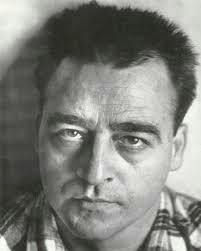
Kenneth Patchen


"I don't consider myself to be a painter.  I think of myself as someone who has used the medium of painting in an attempt to extend — give an extra dimension to — the medium of words.  It happens very often my writing with a pen is interrupted with my writing with a brush — but I think of both as writing."


American Poet, Novelist
1911 - 1972


Commentary
We define ourselves with labels.  "I am a painter.  What are you?"  "I am a poet."  We are born into this world without labels and when we die, our obituaries tell the world that we were lawyers, doctors, merchants or candlestick makers.

Kenneth Patchen
In my profile I list many of the labels that have defined me over the years:  a carpenter, street sweeper, car hop, corn detasseler, hospital orderly, radio announcer, blogger, book editor, publisher, freelance writer, bus driver, sports writer, bookkeeper, policy and procedures writer, forms designer, marketing vice-president, corporate executive, professional speaker, facilitator, salesman, trainer, poet, storyteller, organizational development consultant, ad writer and communications executive.  And that is the short list.

What labels have you given yourself?  What labels have others given you?  Do these labels define you?  Do the labels tell the world who you are?  Do your labels limit you or expand the boundaries of who you are?  Do the labels allow others to place you in a cubbyhole?  To limit your creativity?

Do you ever judge people by their labels?  "Oh, he is just a bus driver?  A street sweeper?  A garbage collector?...."

Patchen said that he is not a painter.  He is a writer who has given an added dimension to his writing.  He has extended the boundary of the label beyond how most people define it.


Kenneth Patchen
Biography
Kenneth Patchen, the son of Wayne and Eva Patchen, was born in Niles, Ohio.  His father worked in the steel mills.  He had four sisters and a brother.  His younger sister, Kathleen, was killed in an automobile accident when he was a teenager.  Patchen developed an interest in literature and writing while in high school.  He attended the University of Wisconsin for one year on a football scholarship but dropped out after a spinal injury.

After dropping out, Patchen traveled to the east coast and met his future wife, Miriam Oikemus, in Boston.  They were married in 1934 in Pennsylvania.  As Patchen attempted to make a living writing, the couple moved frequently between the east and west coasts.  He permanently injured his spine fixing a friend's car in 1937.  He underwent multiple surgical procedures and spent the rest of his life in severe pain.  In later life, Patchen created may of his painted poems while confined to bed because of his back surgeries.  
Patchen's first book of poetry, Before the Brave, was published by Random House when he was 25.  His Collected Poems was published in 1969 when he was 58.  Patchen was friends with James Laughlin, e.e. cummings,  and Kenneth Rexroth.  Patchen influenced both Allen Ginsberg and Lawrence Ferlinghetti.

Many of Patchen's creative works blurred the lines between poetry, painting and jazz.  He collaborated with jazz bassist and composer Charles Mingus.  

Video
Here is Kenneth Patchen reading his poem, In Order To.


Monday, June 30, 2014

Charles Demuth

Self-Portrait
(1907)
"Paintings must be looked at and looked at and looked at. . . . No writing, no talking, no singing, no dancing will explain them."


American Artist
1883 - 1935


My Egypt by Charles Demuth
(1927)
Commentary
One of the lessons I learned early in my career is not to explain my poetry to others.  If I had to explain it, then either I did not succeed or the reader failed to understand.  I would attend writer's groups where we would share our work and then the group would critique it.  Some writers would keep trying to explain their poems if they didn't feel the group grasped the meaning of the poem.  If you feel you have to explain your poem to the reader, then you failed to write a successful poem.  

I think the same is true of any art form.  You don't need to explain your work.  A painter shouldn't explain the meaning of his painting.  The viewer has the responsibility in the communication exchange to study the work to the best of his ability just as the reader also has some responsibility.  It is a two way street.  

Biography
Charles Demuth was born in Lancaster, PA where he lived and worked for much of his life.  He suffered from both lameness and severe diabetes for most of his life.  He graduated from the Franklin and Marshall Academy, an all-male prep school, and studied art at the Drexel Institute and the Pennsylvania Academy of Fine Arts.  While Demuth studied and painted in Philadelphia, New York, Paris and Bermuda, he created most of his mature work in a second floor studio in the house he shared with his mother in Lancaster.  The house is now the Demuth Museum.

Cross-Pollination
Artists often influence each other.  In this case, the painter, Charles Demuth, was inspired by a poem of his friend, William Carlos Williams.


The Figure 5 In Gold (1928)
Inspired by a poem of
William Carlos Williams:
The Great Figure


The Great Figure
by William Carlos Williams

Among the rain
and lights
I saw the figure 5
in gold
on a red
firetruck
moving
tense
unheeded
to gong clangs
siren howls
and wheels rumbling
through the dark city.


Monday, March 24, 2014

Henri Matisse

"Creation is the artist's true function; where there is no creation there is no art."


French Artist
1869 - 1954


Commentary
Most of us are drawn to the arts because of a need to create something, to express what we are feeling.  Those who stay involved with some art form, such as writing, painting or acting, must also learn technique, but if in the study of techniques we forget creativity, we have lost touch with the purpose of art.  Creativity is the very heart of what we do.  The mastery and perfection of technique must never be more important then the creative impulse.  The art we create must be fresh and new, not boring and repetitious.

Matisse, Woman With A Hat, 1905
Biography
Henri Matisse was born in northern France, the eldest son of a grain merchant.  At 18, he moved to Paris to study law.  At 20, he had an appendicitis attack and while recovering took up painting because his mother gave him art supplies to keep him from being bored.  When Matisse decided to study art instead of law, his father was very disappointed.

Matisse is best known for his use of color and his original draughtsmanship.  While he was a printmaker and sculptor, he is best known as a painter.  His creative work spans more than half a century and he is considered one of the leading painters in modern art.

Video
Here is a documentary about Henri Matisse.


Saturday, April 14, 2012

Susan Minot


"I also find solace in painting because it's an alternative to writing.  It doesn't involve words, and while it requires concentration that makes the time you are doing it disappear, it does not involve the mind the same way, or require logic in the same way.  Painting allows me to convey something not from my head, but from my hand, through images."


American Novelist
1956 - 


I have taken up painting late in life but like Susan I find it a great alternative outlet for my creativity.  I can paint for 2 to 3 hours and be totally lost in what I am doing.  Here is video of Susan Minot talking about both her writing and her art.


Wednesday, February 22, 2012

Camille Pissarro

"It is only by drawing often, drawing everything, drawing incessantly, that one fine day you discover to your surprise that you have rendered something in its true character."


— Camille Pissarro
French Artist
1830 - 1903


Conversation
(1881)
The key to success is to practice, practice and practice!  If you don't get it right the first time, do it again.  Keep working.  Too often we give up too soon.  Draw, write and paint every day.  Be patient with yourself.  Give yourself time to develop and grow into the artist that you want to be.  Nothing happens over night.  Sometimes it takes years.  Sometimes it takes a lifetime. 

The time is now.  Get up off that couch.  Stop watching television.  Draw.  Paint.  Write.  Do something.  Anything.  Every minute you waste is gone forever.  Practice!  Practice!  Practice!


Saturday, October 8, 2011

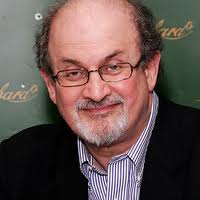
Salman Rushdie

Salman Rushdie
"Language is courage: the ability to conceive a thought, to speak it, and by doing so to make it true."


Indian Novelist
1947 -


One of the things that makes us humans special is our ability to learn and understand verbal language.  We name things.  That is what writers do.  That takes courage.  We conceive a thought, write it down and share it with others.  And this also makes writing different than painting.

Eric Fischl
Eric Fischl, an American artist, says it this way:  "The difference between painting and other forms of creativity like writing or filmmaking is that painting is a preverbal experience."  The language of painting is the language of the eyes.  We communicate by seeing.  The language of the  spoken word is the language of the ears.  We understand by hearing.  Language was first spoken before it was written.  It takes courage to speak and to hear what is  spoken.

The ability to conceive a thought and then speak it is an amazing gift.  If you ever become depressed because you feel you don't have talent, stop and think about the many gifts you have been given — the ability to think, the ability to comprehend language, the ability to speak words and the ability to write and read.  Consciousness itself is an amazing gift.  If you don't think of it as a gift, imagine being dead and having no consciousness.
Painting by Eric Fischl

And because we can speak words, we are able to imagine that which is not.  We are able to conceive ideas and worlds that do not exist.  We are not limited to the world that we see, hear,  taste, smell and touch.  And writers have the power to help us see worlds that only exist in our minds.  Imagination is an amazing gift.  Celebrate your imagination.  Celebrate your ability to speak.  

Here is Salman Rushdie discussing his creative process.


Sunday, October 2, 2011

Henri Matisse

"Every day that dawns is a gift to me and I take it that way.  I accept it gratefully without looking beyond it . . . . I think only of the joy of seeing the sun rise once more and of being able to work a little bit, even under difficult conditions."


French Artist
1869 - 1954


Each day we live is a gift that we often forget to be thankful for.  We become so busy with the hundreds of tasks that we have to do that we lose sight of the fact that life is a blessing.  Matisse wrote these words after a second operation from which he did not expect to wake.  Even though he was physically in pain, he found joy in being able to paint.  Each day is a gift.  Are you living it to the fullest?  Are you grateful for the life you have?  Does your creative work bring you joy?


La Musique

Friday, July 15, 2011

Rafael Alberti


"In the very beginning I looked to painting as the medium for addressing concerns in shapes and colors.  Then it was poetry where these concerns found expression through the medium of word and metaphor."


Rafael Alberti
Spanish Painter, Poet
1902 - 1999


I am fascinated by creative leaders who use more than one medium to express themselves.  Rafael Alberti was one of those who was at home both in the visual arts and the written word.  The need to create and communicate one's feelings transcends the medium.  Some writers work in short stories, novels, poetry and plays.  Some artists paint, draw and sculpt.  And then there are the writers who also paint and the painters who also write.  Or the musicians who paint and the actors who play music.  We all have the urge to express ourselves.  The medium of paint, words or music is just the vehicle to carry the communication.

What vehicles do you like to use to express your artistic desires?  Poetry?  Music?  Painting?  Acting?  Plays?  Dancing?  Sculpting?  Novels?  Short Stories?  Have you stepped outside your comfort zone and tried something new?  

Thursday, July 7, 2011

Henry Miller

Self-Portrait
(1943)
"Paint what you like and die happy."


— Henry Miller
American Novelist, Painter
1891 - 1980


The message here is simple and direct:  do what you like.  Too often we don't do what we like.  Nor do we learn to like what we do.  And then people become unhappy with their lives and they spend their time complaining.  Don't let others dictate what is important for you.  

And I am not telling you to run away from your spouse and children and join an artist colony where you spend every day either painting or writing.  We all have responsibilities and we should not shirk them.  If you get married, you have made a commitment and you need to live up to it.  If you bring children into this world, you have a responsibility to raise, educate and care for them.  Doing what you love does not mean avoiding your responsibilities.  Doing what you love means finding 30 minutes or 60 minutes where you do what you want to do — where you do what you love to do.  Then you can die happy.


Sunday, July 3, 2011

Duke Ellington

"I merely took the energy it takes to pout and wrote some blues."


American Composer, Musician
1899 - 1974


Many of us waste energy complaining.  We need to learn to transform our frustrations, fears and failures into positive energy that inspires us to create great works of art.  Are you feeling down today, maybe even depressed?  Great.  Use that negative energy to create.  Write through the frustration.  Paint a picture with large dramatic brush strokes.  Are you angry and upset?  Transform that negative energy.  Splatter the canvas with paint.  Quickly write a poem in very large letters and don't rewrite it.  Read the poem aloud to the universe.  Is your heart broken and you can't stop crying?  Give yourself a hug and sing in a loud voice a country song about your broken heart and the mean person who broke it.  Be sure to sing off key.  Paint a picture of a heart in agony.  Dance wildly about the living room and do a belly laugh.

Emotions are a part of being human.  What most people don't realize is that they can control and change their emotions.  Don't wallow in self-pity, take charge of your life and choose to change your emotions.  Do something that gets you out of that rut.  Climb a mountain in your backyard.  Take photos of squirrels chasing each other in fun.  Go for a swim.  Listen to Duke Ellington.


Friday, July 1, 2011

Heinrich Heine

Painting of Heine
by Moritz Daniel Oppenheim
Wherever they burn books they will also, in the end, burn human beings."


German Poet
1797 - 1856


When a nation or society has no respect for its artists, writers and musicians, it is a nation in danger of losing its humanity.  I find it very sad that in this country where liberty is held in high esteem that there are people who choose to burn books.  When my daughter was in high school, she knew teenagers who participated in the burning of books with members of their church.  How ignorant these people must be.  Books are our connection to the world beyond our immediate home.  But it is not just in this country and it is not just books.  In 2001 when the Taliban were in power in Afghanistan, they destroyed two 1700 year-old Buddha statues carved in a cliff in the Hindu Kush mountains.  Other cultures have destroyed paintings.  And governments and societies have tried to control the type of art works that are created.  Both Hitler and Stalin restricted the type of art that could be created.

Artists, writers and musicians are one of the greatest treasures that a society has and yet people continue to treat them with contempt — telling them to get a real job.  In fact, the way we know about the past is through the artists, writers and the musicians.  We would know very little about ancient Rome or Greece if it were not for books and paintings.  Future societies will know us primarily through the writers and painters of today.  Our legacy is past down through our art.  

Here is a poem by Heinrich Heine.

WHY THE ROSES ARE SO PALE
by: Heinrich Heine (1799-1856)
       DEAREST, canst thou tell me why
      The rose should be so pale?
      And why the azure violet
      Should wither in the vale?
       
      And why the lark should in the cloud
      So sorrowfully sing?
      And why from loveliest balsam-buds
      A scent of death should spring?
       
      And why the sun upon the mead
      So chillingly should frown?
      And why the earth should, like a grave,
      Be moldering and brown?
       
      And why it is that I myself
      So languishing should be?
      And why it is, my heart of hearts,
      That thou forsakest me?
This English translation of "Why the Roses are so Pale" was composed by Richard Garnett (1835-1906).