"They say great themes make great novels, but what these young writers don't understand is that there is no greater theme than men and women."
— John O'Hara
American Novelist
1905 - 1970
I just finished Andrea, a short novel, by John O'Hara. It is the tragic story of a 20 year love affair between a man and a woman. I also recently finished the Good Earth by Pearl Buck. The key relationship in the novel is between a man and his wife — a relationship the man did not appreciate as much as he should have.
The best stories are about relationships. And the best of the best stories are about the relationships between men and women. What makes those relationships work? Why do the relationships fail? Think about your own life. What relationships are the most important to you? What relationships are you exploring in your writing? What relationships are you exploring in your paintings?
I believe all arts are about self-discovery whether we are talking about painting or literature or theater. In the process of creating we discover who we are and whom we may want to be. Maybe we learn something about ourselves in how a character in a story behaves. Or we see ourselves through the lens of a photographer or painter. Or we play a character on stage who is are alter ego.
What have you learned about yourself today? Last week? Last month? Last year? Life is a journey of self-discovery and change. Are you growing and developing as you age?
Are you making a difference? Are you leaving your small corner of the world a better place than when you found it? More than 25 years ago, I was fired from a job and immediately put my house up for sale because I knew I would have to move in order to find another job in my field. A couple weeks later, my wife and I stopped at a nursery and purchased a cherry tree that we planted in the backyard. Now, we were never going to see this tree grow, but we did it anyway. I have strong belief that you need to leave a place better than you found it. You need to give back and that is what I was doing. On a couple of occasions, I had a chance to revisit this house and I saw that the tree had grown into a beautiful tree.
In the moments before I speak, I motivate myself by repeating over and over to myself: "I will touch the life of at least one person. I will make a difference in the life of one person." I know I won't touch everyone, but if I am able to motivate one person to be better than he is, then I know I have done my job. As writers and artists we have the same opportunity to make a difference in people's lives.
I had an opportunity to hear Jane Goodall speak about her work about ten years ago. My wife, daughter and I drove three hours to hear her speak. Then we stood in a long line so she could sign a book for my daughter. We did not arrive home until about 2 am. Jane Goodall was an inspiration for my daughter. She made a difference in my daughter's life.
How are you touching the lives of the people who view your paintings or read your books? Are you leaving your corner of the world better than you found it?
Watch this video of Jane Goodall and her research.
Creative leaders must live in a state of change. Each new painting, each new story, each new poem brings about change. You are no longer where you were. You finished your last project and now you are on to the next. You are filled with the excitement of beginning something new but you don't know where it will take you. You are in between. You are nowhere. And as you create, the change continues. You think you are going one direction and suddenly a new character appears and takes you into another. Change is constant and as creative leaders we must learn to appreciate it, encourage it, embrace it and enjoy it.
"It's not the length but the quality of life that matters to me. It has always been important to me to write one sentence at a time, to live every day as if it were my last and judge it in those terms, often badly, not because it lacked grand gesture or grand passion but because it failed in the daily virtues of self-discipline, kindness and laughter."
Are you focused on the big picture or do you live each day as if it was your last? The challenge is to balance both. You need the big picture of where you are going, but you need to live as if each day is your last. And by that I don't mean spending all day with family and doing nothing. Living each day as your last has to do with your passion, purpose, desire, priorities and commitment. Are you focused on the right priorities? Are you focused on the passion in your life? Are you committed to doing your best each and every day. Are you focused on the virtues of self-discipline, kindness and laughter?
One of the hardest things to do is to face the truth about ourselves. It hurts. And sometimes the pain is more than we want to bear. Sometimes the truth does not fit our self-image. And yet the truth when faced will make us better people — better creative leaders.
What truths are you not facing today? What truths are you hiding from? What truths do you need to embrace? What lies are you still living with? What lies are preventing you from becoming who you are meant to be? What lies should you stop telling yourself?
"Even if you don't consider yourself an artist, to make something that is beautiful and not destructive, or to make something that is useful and not destructive, that is the healing power of the artist."
One of the oldest needs of human beings is the need to create. There are people who make beautiful objects, but society does not consider them artists. There are people who make useful objects, but society does not consider them artists. And yet in my opinion, they are artists. A gardener who is passionate about the garden she grows is an artist. A furniture maker who is passionate about the furniture he makes is an artist.
Here is Alice Walker talking about the genesis of her novel, The Color Purple.
Human beings have a need to feel good about themselves. Even those who have done evil deeds have a way justifying what they have done. They do not believe that they are bad people. They use their memories to justify the person they have become. And on the flip side, even the most successful and influential people sometimes feel as if they have accomplished nothing. They remember only the negative events in their lives and become depressed.
Our memories are very powerful and they influence the lives we lead. We all are selective in the memories that we retain. We choose how we remember our past and what we believe about ourselves. We are defined by one memory alone, but some of us live that way. Choose wisely the memories that you keep and let go of those that trouble you.
Sometimes people refuse to accept the gifts they have been given. And some even fight the gifts or deny them. We need to embrace our gifts and accept the responsibility that goes with the gift. Be happy to work with what you have been given. Celebrate your creative powers.
Here is Mary Oliver reading 2 of her poems as well as being interview by Coleman Barks.
Are you living the truth of your life? Do you know what the truth of your life is? Do you know who you are? Are you comfortable with who you are? Are you in touch with yourself and understand why you behave in the way you do? Have you forgiven yourself for your mistakes and failures. Do you believe that the answers to your questions are inside you, not in books and ideas? Believe in yourself and stand up for what you believe.
My first encounter with death was when my grandfather (my father's father) died during my tenth grade school year. I served as one of pall bearers. A year later, a girl in my class died. She was a cheerleader and I never saw her again after the game. Sudden and quick death. When I was a freshman in college a sixteen year old girl I had known from my camp years died in an automobile accident. During the summer between my junior and senior year in college my girl friend's mother died of breast cancer. And the list could go on and on. Every year or two someone I know dies. And I am sure I am not unusual. Most people know someone who has died.
Death is an every day affair, and yet we know so little of it. We try to deny its existence. We seek ways to extend our lives. We avoid talking about it happening to us. Yet death stalks us and is always close by. We cannot avoid it. So our art becomes a form of salvation — a way to extend our lives beyond the grave, a way to keep us alive. Art gives us hope that maybe we too can live forever.
The key to being successful in any of the artistic endeavors is practice. If you want to be a writer, then write every day. Write thousands upon thousands of words. Spend more time writing than rewriting. Keep creating day in and day out. Also read every day. Read and study other authors.
If you want to be a painter, then paint every day. Draw thousands of pictures. Paint thousands of pictures. Success comes from practice. And study the paintings of other painters. Study the masters. Visit the art museums.
For most of us, the practice of our chosen craft does not come easy. We must practice, practice and practice.
"The weak can never forgive. Forgiveness is the attribute of the strong."
— Mahatma Gandhi
Indian Lawyer/Political Activist
1869 - 1948
Sometimes the private lives of writers, singers and artists don't live up to the high standards of their creative work. Alcohol, drugs and sex have destroyed some of our most creative people. Some have battled their demons and lost. The demons may have fueled their creativity, but in the end the demons took control and destroyed them. Creative leaders must learn to forgive those who have hurt them and to grow beyond the pain into better human beings.
Learn to forgive the people in your life who have hurt you. The anger does you no good. It is very destructive and in the end you will be the one who suffers. Make the choice today to be a better person.
Many of us seek knowledge and wisdom. And some of us spend a lifetime seeking. But few if any ever find the answers we are looking for. Creative leaders seek answers in their art. The creative process is about looking for answers — about seeking knowledge and wisdom. And for most creative leaders, the path to knowledge is found in exploring our feelings in our art.
Do you have enough time to do everything you need and want to do? Probably most of you answered no. We are a culture obsessed with time. And there never seems to be enough. And for some of us we have to squeeze our creative work in between everything else we do. I rise an hour before I have to in order to write. I sometimes write over my lunch hour. Or when my wife goes to the mall, I tag along and sit at a table and write.
But if we are honest with ourselves, we probably waste time. What do you do driving to and from work? I listen to books on CD. What do you do when you are sitting at the doctor's office waiting to see the doctor? Can you steal 10 or 15 minutes to write or draw. We all have the same amount of time — 24 hours a day. The key is how we prioritize. It is all about choices. We do what we want to do.
"A young artist must forget painting when he paints. That's the only way he will do original work. To blossom forth, a work of art must ignore or rather forget all the rules."
When I teach people to be speakers, I tell them that first they must learn the rules of speaking and then learn that they can break all the rules. When it comes to the creatives arts, no rules are absolute. And all rules can be broken. Yes, it is good to know what the rules are so that you are aware when you are breaking them. But understand that you can break every single rule and still create a masterpiece.
But watch out for the rule police. Their job is to find all the mistakes that you make and throw them into your face. Maybe it is a spelling mistake or a misplaced comma. Or maybe the arms in your painting are too short or the eyes too big. The rule police thrive on finding something wrong, but usually are unwilling to paint or write themselves.
The key to your success in the creative arts is knowing when and where to bend or break the rules. You must learn to push the envelope.
"It had been fourteen years and I hadn't had anything published. I had 250 rejection slips. I got my first novel published and it was called Kinflicks. It turned out to be a best seller."
The creative arts are not for the weak of will. The creative arts require commitment, persistence and self-discipline in the face of cold-hearted rejection. Do you have the self-discipline to stay focused when the world is screaming that you should quit and find a normal line of work? Do you have the strength to keep going when you have received 250 rejection letters? How long are you willing to wait for success? Two years? Five years? Ten? Twenty?
Listen to Lisa talk about the gravel road that eventually led to her success.
If you have read Fahrenheit 451, you will understand the irony of this statement. Fahrenheit 451 is about a culture where books are burned. And if you haven't read it, you should. But Bradbury is correct. Not reading books is even more dangerous than burning them. If a person doesn't read, he is limiting his understanding of the world around him and the pleasure he can find in inhabiting another world.
In my classes I often meet business people who admit to not reading a book about since school. This is very sad and senseless. Books help us understand the past so that we are better prepared for the future. Books teach us and educate us about the world in which we live. I tell people if they want to understand what makes people tick, they should read novels. For novelists to be able to tell a great story, they have to understand at some level what makes people tick.
I am also surprised by want-to-be writers who don't read. This is particularly true of some people who write poetry. They say they write it but don't read it. A curious fact.
As creative leaders, we need to be constantly learning and growing. Books are one avenue for learning? When was the last time your read a book? What books are you reading now? What are your favorite books?
This video of Ray Bradbury is a must see for all lovers of books and lovers of the work of Ray Bradbury.
One of the things that makes us humans special is our ability to learn and understand verbal language. We name things. That is what writers do. That takes courage. We conceive a thought, write it down and share it with others. And this also makes writing different than painting.
Eric Fischl
Eric Fischl, an American artist, says it this way: "The difference between painting and other forms of creativity like writing or filmmaking is that painting is a preverbal experience." The language of painting is the language of the eyes. We communicate by seeing. The language of the spoken word is the language of the ears. We understand by hearing. Language was first spoken before it was written. It takes courage to speak and to hear what is spoken.
The ability to conceive a thought and then speak it is an amazing gift. If you ever become depressed because you feel you don't have talent, stop and think about the many gifts you have been given — the ability to think, the ability to comprehend language, the ability to speak words and the ability to write and read. Consciousness itself is an amazing gift. If you don't think of it as a gift, imagine being dead and having no consciousness.
Painting by Eric Fischl
And because we can speak words, we are able to imagine that which is not. We are able to conceive ideas and worlds that do not exist. We are not limited to the world that we see, hear, taste, smell and touch. And writers have the power to help us see worlds that only exist in our minds. Imagination is an amazing gift. Celebrate your imagination. Celebrate your ability to speak.
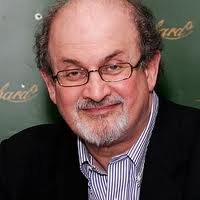
Here is Salman Rushdie discussing his creative process.
"I hope my work is recognizable as being by a woman, though I certainly would never deliberately make it feminine in any way, in subject or treatment. But if I speak in a voice which is my own, it's bound to be the voice of a woman."
Let's discuss the gender issue. Can you look at a painting and tell whether it was painted by a male or female? Can you read a poem or story and tell if a man or woman wrote it? Can a male writer create female characters who are authentic? Can a female writer create characters who are truly male?
14th Street
(1930)
I ask these questions because I believe, contrary to current popular opinion, that men and women have more similarities than they have differences. Our desires, dreams and hopes are very much alike. What do you think? Does gender influence your art? Your stories? Your poems?
Isabel Bishop made the above statement when she was 76. Four years later, she said: "I didn't want to be a woman artist, I just wanted to be an artist." Do you want to be known as an artist or as a male or female artist? Or are you an artist who happens to be female?
Here is a link to a narrative poem that I wrote in the voice of a Mexican woman: No One Sees Me.