Welcome!

Welcome! There are more than 900 Inspirational Quotes For Writers, Artists and Other Creative Leaders on this site.
Spend a few minutes exploring. And come back again and again for other inspirational quotes.

Sunday, June 1, 2014

Book Review: Sleeping Preacher by Julia Kasdorf

Book Review:  
Sleeping Preacher by Julia Kasdorf


When I was a child, I was fascinated by the story my mother told about the sleeping preacher, John Kaufman. After graduating college, I set out to write a historical novel about his life. Unfortunately, I ran into some obstacles and never finished the novel. In the early 1900's he had visited the church my grandmother attended. During the late 1800's until the first decade of the 20th century, a number of sleeping preachers arose around the world. The preachers, both men and women, would enter into a trance and preach a coherent sermon. People would stick needles in their legs to see if they were faking.

I was immediately interested in Sleeping Preacher by Julia Kasdorf as soon as I read a review of the book and now I have finally read it. The poet, Julia Kasdorf, also attended the same college I did, a decade later, but I have never met her. While many of these poems address growing up Mennonite, some do not. Kasdorf writes of herself as well as family. The opening lines of A Family History about her mother read:

"At dusk the girl who would become my mom
must trudge through the snow, her legs
cold under skirts, a bandanna tight on her braids."

Each poem is a story packed with description of a world that many of us have never encountered. The opening lines of the poem, August, read:

"Dad's mother was coming home
from picking huckleberries on the mountain
when sunlight spooked the horse, and it tore
through a pasture fence, dragging the buggy
until it broke lose, hurling the children,
killing their mother, spilling
those silver pails of sweet, black fruit."

While the poem goes on to tell of other women who died in the month of August, these opening seven lines encapsulate a powerful story in their own right. The attention to detail builds the story image by image.

In the poem, Friendschaft, Kasdorf captures Mennonite genealogy.

"As I grow up, the great aunts click their tongues.
They are looking for signs of their lives
in my limbs. It's the Hartzler blood that makes you
dark and thin. It's just like Aunt Toot to love
olives and pickles and fuss like a hen.
Your Yoder nose...."

I can't even begin the number of times I heard the same type of remarks growing up. Kasdorf was six when her family bought their first television and she captures that moment in a poem. I was seventeen when my family bought our first TV. I found in these poems much that I have heard and remember.

The first poem of Kasdorf that I read before buying the book was What I Learned from My Mother. The poem discusses what to do when someone dies. She closes the poem with these lines:

"To every house you must enter, you must offer
healing: a chocolate cake you baked yourself,
the blessing of your voice, your chaste touch."

The title poem, The Sleeping Preacher, tells the story of church reform through the eyes of her great-grandmother. The closing lines read:

"She did not think of us,
only to save us, leaving nothing
for us to touch or see
except this stubborn will to believe."

I highly recommend this book to poets and other readers, especially those interested in learning more about the Mennonite culture and way of life.


Monday, May 26, 2014

William Butler Yeats

“I always think a great speaker convinces us not by force of reasoning, but because he is visibly enjoying the beliefs he wants us to accept.”


— William Butler Yeats
Irish Poet
1865 - 1939


Commentary
So what does this quote have to do with being a poet, a writer or an artist?  Like great speakers, creative leaders must enjoy the work they do and be able to communicate their passion through their creative work.  If we are not passionate about what we do, our work will fall flat and be uninspired.  Are you passionate about the work you create?  Do you enjoy creating?

Biography
William Butler Yeats was born in Dublin, Ireland, the son of John Butler Yeats and Susan Mary Pollexfen.  When Yeats was two, his family moved to England to help his father further his artistic career.  Yeats did not do well in school, particularly in the areas of spelling, math and language.  His family moved back to Ireland when he was fifteen and he began writing poetry.  His first poem was published in 1885 in the Dublin University Review.  Thirty-eight years later at the age of 58, Yeats received the Nobel Prize in Literature and was recognized as one of the most important figures in 20th century literature.

Poetry
Here are a few poems by William Butler Yeats.

A Drinking Song

Wine comes in at the mouth
And love comes in at the eye;
That’s all we shall know for truth
Before we grow old and die.
I lift the glass to my mouth,
I look at you, and I sigh.

To a Child Dancing in the Wind

Dance there upon the shore;
What need have you to care
For wind or water's roar?
And tumble out your hair
That the salt drops have wet;
Being young you have not known
The fool's triumph, nor yet
Love lost as soon as won,
Nor the best labourer dead
And all the sheaves to bind.
What need have you to dread
The monstrous crying of the wind?

A Coat

I made my song a coat
Covered with embroideries
Out of old mythologies
From heel to throat;
But the fools caught it,
Wore it in the world's eyes
As though they'd wrought it.
Song, let them take it,
For there's more enterprise
In walking naked.

Here is Colin Farrell reading When you are Old by William Butler Yeats.


Monday, May 19, 2014

Chinua Achebe


"Art is man's constant effort to create for himself a different order of reality from that which is given to him."


Nigerian Novelist/Poet
1930 - 2013


Commentary
Through our painting and writing we have an opportunity to recreate the world as we want it to be.  We have the ability and the opportunity to alter reality.  The world into which we are born can be changed.  We can change our story by retelling it in new ways.  Have you changed your story?  Have you altered the reality in which you live?  Or are you caught up in facts as reality?  The more you can alter and change reality, the better artist you will become.

Biography
Chinua Achebe was born Albert Chinualumogu Achebe in the Igbo village of Ogidi in southeastern Nigeria.  Chinualumogu means "May God fight on my behalf."  His parents, Isaiah Okafo Achebe and Janet Anaenechi Iloegbunam Achebe stood at the crossroads of traditional Igbo culture and Christian culture.  His father and mother converted to Protestantism.  

Achebe's mother and sister told him many stories as a child which is a Igbo tradition.  He entered St. Philip's Central school when he was six.  He also attended Sunday school every week.  When he was twelve he moved away from his family and his village to attend the Central school where his older brother taught.  At fourteen, he entered secondary school and completed it in four years instead of the normal five.

In 1948, Achebe entered Nigeria's first university and studied English, history and theology. After his college studies, Achebe found work writing scripts for oral delivery at the Nigerian Broadcasting Service, a radio network, in the city of Lagos.  

Achebe's first and most famous novel, Things Fall Apart, was published in 1958. The novel has sold over 8 million copies and has been translated into 50 languages.

Video
Here is a video of Chinua Achebe discussing Africa after 50 years after writing and publishing Things Fall Apart.


Saturday, May 17, 2014

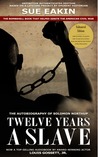
Twelve Years A Slave: A Book Review

Twelve Years a SlaveTwelve Years a Slave by Solomon Northup

My rating: 5 of 5 stars


If you have watched the movie, Twelve Years a Slave, then you should read this book. If you have not watched the movie, Twelve Years a Slave, then you definitely need to read this book. The book is an as-told-to story by Solomon Northup, a man who was born, raised and living in New York state. As Northup tells the story, he was conned into traveling to Washington D.C. where he was drugged, kidnapped and sold into slavery in the deep South in 1840. He spent 12 years as a slave before he was able to send information of his whereabouts to friends who traveled south and freed him. .

The book shares the experience of one man as a slave and all the horrors that he faced. Married with children before the kidnapping, Northup suffered as no person should be made to suffer. He was whipped, beaten and almost hung. His skills as violin player and his intelligence kept him alive through these difficult, almost unbearable times. He was also forced to whip other slaves.

The book was written by David Wilson who served as Northup's ghost writer. It followed in the footsteps of the publishing success of Uncle Tom's Cabin and was used by the abolition forces to further their cause. After Northup's release from slavery, he traveled around the north giving anti-slavery speeches and may have been involved in the Underground Railroad, though, there is no evidence to support this. Published in 1853, the book was an instant success with 8,000 copies being sold in the first month. The book went out of print in 1856 and remained out of print until 1968.

Along side the amazing story of Solomon Northup is the fascinating story of Sue Lyles Eakin and the work she did to bring the book to the attention of American readers in the 20th and 21st centuries. Sue Eakin discovered an original copy of the book in a plantation home near where Northup was a slave when she was 12 years old. Northup's story became her life's passion. Dr. Eakin wrote her master's thesis about Northup's story and after decades of research produced the first authenticated edition in 1968. She continued to spend her life verifying, validating and substantiating the story through thousands of hours of research. In 2007, at the age of 88, she completed her final definitive edition with over 100 pages of new information, images and maps. In her spare time, she authored over a dozen other history books and was a history professor.

One of the fascinating facts that I learned in this book was that in 1840 New York state passed a law authorizing the governor the authority to seek the release of free people who were sold into slavery. This law is what the friends of Solomon Northup used to travel to Louisiana and secure his release.

Amazon lists more than 30 different editions of this book. I would recommend you purchase this edition by Dr. Sue Eakin which contains all her documentation and verification of the facts in the story.

View all my reviews

Monday, May 12, 2014

Zig Ziglar

"You never know when one kind act, or one word of encouragement, can change a life forever."


American Speaker/Author
1926 - 2012


Commentary
Words are very powerful. A few words here or there can change a life. Who have been the encouragers in your life? Maybe it was a parent, a teacher, a friend, a child or a preacher? What did they say to you? How did they touch your life? How did they change your life? 

Many motivational speakers have inspired me over the years. Driving to Texas from Illinois in December of 1982 to start a new job, I discovered Zig Ziglar, the grandfather of motivational speaking, on the radio. I didn't know who he was or the impact he would eventually have on my life. I have since met him and seen him on several occasions speak. The last time I saw him speak was at the 2000 National Speakers Association annual convention in Washington, D.C. Like many speakers that I enjoy, I have listened to him dozens of times on tape. I, with his permission, actually tell some of his stories.

One of my favorite Ziglar stories is the story of the man who had an opportunity to visit heaven and hell before he died. St. Peter asked the man where he wanted to go. He told St. Peter to take him down to hell. There he saw a beautiful banquet hall with the finest food and drink you could imagine. When he looked at the people he saw that they were skin and bones and that they were cursing and swearing at each other. He told St. Peter to take him up to heaven. In heaven, he saw the same beautiful banquet hall filled with the finest food and drink. When he looked at the people, he saw that they were healthy and robust and that they were laughing and singing. The man asked St. Peter what was going on. St. Peter responded, "Did you see the silverware." Strapped to each arm was a four foot fork and a four foot knife. Now, we all know we can't eat with such large silverware. The people in hell were so busy getting everything for themselves that nobody got anything. Up in heaven each person would feed the person across from him and that person would feed him back. The message is very simple but powerful: if you help other people get what they need and want you will get everything you need and want.

As creative leaders we have the opportunity to touch the lives of the people we meet through our books, paintings, songs, photographs and stories. Whose life did you touch today?

Biography
Zig Ziglar
Motivational Speaker / Author

Hilary Hinton Ziglar was the tenth of twelve children born to John Silas Ziglar and Lila Wescott Ziglar.  When Ziglar was five, his family moved to Yazoo City, Mississippi where he spent most of his early childhood.  His father and sister died a year later.  Ziglar served in the United States Navy during World War II.  He married his wife, Jean, in 1946.

Zig Ziglar began his career as a salesman and eventually moved into motivational speaking. He wrote and published more than a dozen books including See you at the Top, Secrets of Closing the Sale and Confessions of a Happy Christian.

Video
Here is Zig Ziglar telling his famous primp the pump story.


Monday, May 5, 2014

Berthold Auerbach

"Music washes away from the soul the dust of everyday life."


German Novelist, Poet
1812 - 1882


Commentary
Of the arts, music holds the greatest sway over the soul.  It has the power to soothe the pain and free the spirit.  For many of us, certain songs bring to mind special moments and times.  What music do you listen to during times of trouble?  Do you sing in the shower or while walking alone along the railroad tracks?  What music inspires your creativity?  Do you paint to the sounds of rock and roll or write to the concertos of Bach?  What music moves you to dance with joy and to celebrate life?

Biography
Berthold Auerbach was born Moses Baruch Auerbach in a village in the Black Forest of Germany.  He was one of eleven children in a Jewish family.  His father, who intended for Moses to be a rabbi, started him in Jewish studies early in his life.  In his 12th year he entered a Talmud school to complete his studies, but he gave up studying the Talmud and entered the university to study law.  He then dropped law for history and philosophy. Spinoza became his philosopher of choice and he wrote a novel about him in 1837 as well as translated his writings.  He was imprisoned for three months in 1837 for his democratic views.  Auerbach married Augusta Schreiber in 1847.  She, unfortunately, died in childbirth a year later.  

Berthold Auerbach wrote poetry, plays and novels.  A complete edition of his writings was published in 22 volumes in 1863.  His novels described rural life in southern Germany.

Free ebook
Here is a link to a free ebook of Landolin by Berthold Auerbach, published by Project Gutenberg.  

Bach Concerto:
And here is a Bach concerto for your listening pleasure.


Monday, April 28, 2014

Piet Mondrian

"The position of the artist is humble. He is essentially a channel."


Dutch Painter
1872 - 1944


Commentary
Sometimes creative leaders let their egos get in the way of their painting, their writing or their art. They believe they know all and are all powerful. They berate others and often are hostile to the ideas of others. An artist needs to be humble and realize he or she has been given a gift. Pride and ego will ruin the gift. 

Like Piet, many artists and writers talk about simply being a channel for something greater than themselves. Have you ever created something and afterwards wondered where it came from? When we learn to let go of the conscious egotistical self and become a channel for creativity, we will surprise and amaze ourselves with the gift we have been given. Don't seek to understand the source of this gift. Simply accept the gift with humility.

Biography
Piet Mondrian grew up as the second of five children in a Protestant home in Holland.  His father was an amateur artist who gave drawing lessons to his son.  His uncle, an accomplished artist, taught him to paint.  At twenty, he entered the Royal Academy of Visual Arts in Amsterdam.  His education included drawing models, copying old masters and genre painting.

In 1905 Mondrian was introduced to the paintings of the French Post-Impressionists which deeply influenced him and opened up the world of color in a new way.  In 1912, he moved to Paris and was introduced to Cubism, another stop on his way to his mature work of abstraction.  In 1914, he visited his sick father in the Netherlands and was unable to return to France because of World War I.  

While in Holland, Mondrian published a journal, De Stijl (The Style), that presented the ideal of total abstraction as a model for harmony.  He emphasized the need for horizontal and vertical lines.  The movement had a major influence on art, architecture and typography in the 20th century.

Mondrian moved back to Paris after World War I where he continued his work in abstract art.  Prior to World War II, he moved first to London for two years before moving to New York in 1940.  He never married and died of pneumonia at the age of 71.


Monday, April 21, 2014

Harry S. Truman

I was an avid reader of history and particularly the lives of great men and women.  I found that some were born to greatness, some attained it by accident, and some worked for it."


American President, Author
1884 - 1972


Commentary
As creative leaders we stand on the shoulders of those who have gone before.  What do you know of the lives and works of these earlier artists, writers, musicians and storytellers? What were the challenges they faced and the difficulties they overcame?  What creative ideas did they have that have made our work easier?  What knowledge did they have that has now been lost to the dustbins of history?  Which painters, writers and musicians are your heroes?  Whom do you dislike?  Whose shoulders are you standing on?

Do you worship your heroes and put them on a pedestal?  Or do you accept the fact that they are human and have flaws just like you?  Too often we believe that our heroes are super human and better than those around them.  And if we are unfortunate to get too close, we learn the truth and are disappointed.  All heroes have clay feet.  No human is perfect.  In fact, many of the great creative leaders have major flaws and weaknesses in other areas of their lives.  They may be terrible husbands, wives, parents or lovers.  They may hold serious biases and prejudices.  They may not be able to manage money or are penny pinchers.  They may drink too much or take drugs.

Most people are not born to greatness.  They usually work hard to achieve what they desire, but in the end the fame they find is often by accident.  So my advice to every creative leader is to work hard every day and enjoy what you do.  Fame is often fleeting and unfulfilling.  Fortunes come and go like the weather.  How you make the journey is much more important than when and where you arrive.  Because in the end we all arrive at the same place — the cemetery.  What we leave behind is our legacy.  What legacy will you leave behind?


Years ago, a speaker asked his audience:  "Who was President when you were born?"  Like most people in the audience, I had no idea, but I soon discovered that it was Harry S. Truman.  I began reading books about Truman as well as books that he wrote.  Harry S. Truman became one of my heroes.  I like much of what the man did and said, but I also recognize that he had clay feet.  Not everything he did was right.  Do you know who was President when you were born?


Biography
Harry S. Truman was born in 1884 in Lamar, Missouri.  He was the oldest child of Martha Ellen Young and John Anderson Truman.  His father was a poor farmer and livestock dealer.  He graduated from high school in 1901 and worked for the Santa Fe Railroad, held various clerical jobs and was employed by a bank.  He returned to farming in 1910 and began courting Bess Wallace who later became his wife.  He failed to be admitted to West Point because of his poor eyesight, but he later fought in World War I as an officer.

After the war, Truman opened a haberdashery in downtown Kansas City with his partner, Edward Jacobson, but went bankrupt during the recession of 1921.  In the army, Truman met James Pendergast, a fellow Lieutenant, and nephew of Thomas Pendergast, a Kansas City political boss.  In 1922, Truman was elected one of three judges of the County Court in the eastern district of Jackson County.  The position was administrative in nature, not judicial.  He functioned like a county commissioner.  His election was supported and helped by the Kansas City Democratic machine led by Tom Pendergast.

1948 Election: Newspapers predicted Dewey to Win
After serving as judge for several years, Truman wanted to run for Governor but Pendergast refused to support him.  In 1934, Pendergast supported his candidacy for U.S. Senate from Missouri and he won.  During his first term as a Senator, he was ignored by Roosevelt.  He won re-election in 1940 despite some major obstacles.  During World War II, he earned a national reputation through his chairmanship in a subcommittee of the Committee on Military affairs.  He attacked waste and profiteering by suppliers to the military.  In 1944, Truman was nominated and elected Vice-President of the United States in Roosevelt's fourth term.  When Roosevelt died on April 12, 1945, Truman became President.  He was re-elected in 1948 and chose not to run in 1952.

Favorite Story
Here is one of my favorite stories about Harry S. Truman.  I tell it in many of my presentations.  Truman was an excellent example of persistence — a trait that all creative leaders need.   http://www.slideshare.net/hgking/the-power-of-persistence-12296772


Monday, April 14, 2014

Marc Chagall

"If I create from the heart, nearly everything works, if from the head, almost nothing."


Russian Artist
1887 - 1985


Commentary
Sometimes the mind gets in the way of creativity.  We are constantly talking to ourselves about our work and usually this self-talk is very negative.  "Oh, I shouldn't say that.  What will my mother say?"   Or "I am no good at painting faces."  One expert says that 75% of what we say to ourselves is negative and this negativity hurts our ability to create.  

We need to learn to use positive self-talk, to appreciate the talent and skills we have been given.  We each are unique.  No two people are alike.  We all have different skills, interests and beliefs.  We need to pat ourselves on the back.  

I and the Village
(1911)
Since there are enough negative people in the world who will put us down and criticize our work, we don't need to do it to ourselves.  I challenge you to listen to your self-talk and whenever it is negative, change it and make it positive.  Become a believer in the talent you have been given.  Choose to be positive — to find the rainbow in every dark cloud.

When I first became a speaker, I used positive self-talk to overcome my fear and doubt about standing up in front of others.  I repeatedly said positive comments out loud prior to going on stage.

Where do you need more self-confidence?  What changes in behavior do you want to make?  Use self-talk to become the person you want and need to become.  You can change who you are by changing what goes into your mind.


Biography

La Mariee
(1950)
Marc Chagall was born Moishe Shagal in Vitebsk, Russia, the eldest of nine children born to Khatski Shagal, a herring merchant and his wife, Feige-Ite.  Shagal was educated at a Jewish religious school where he studied Hebrew and the Bible.  There was no art in his home and the concept was unknown to him.  In high school, he saw a fellow student drawing and became interested.  He began to copy the work of the masters that he found in books.

At nineteen, Chagall moved to St. Petersburg, then the capital of Russia, and spent four years studying painting.  In 1910 he moved to France at the age of 23.  He returned to Russia in 1914 planning to only stay a few weeks, but World War I intervened.  He stayed in Russia and married Bella Rosenfeld.  Chagall exhibited his paintings in Moscow and St. Petersburg.  He became a stage designer for a theater in Moscow.  In 1923, he returned to France.  In 1926, an exhibit of his work was held in the United States.  He escaped France during World War II and entered the United States.  He returned to France in 1948 where he remained until his death.

Video
Here is a video of Chagall's paintings.


Monday, April 7, 2014

Barry Lopez

Photo by David Liittschwager

"The stories people tell have a way of taking care of them.  If stories come to you, care for them and learn to give them away where they are needed.  Sometimes a person needs a story more than food to stay alive. That is why we put these stories in each other's memories."


— Barry Lopez
American Writer
1945 -


Commentary
Do you care for the stories in and about your life?  Stories are the memories of who we are and where we have gone.  Stories remind us of what is important and what we want to remember.  Do you take care of your family stories, those tales that create the collective you?  Each time I share a story I am giving a piece of myself away.

One of those stories that circulated in my family was the time when I was six or seven and lived on a farm. My father was working the second shift at a factory because the farm did not give us enough money to live on.  One summer afternoon after my father had left, the cows meandered out into the cornfield.  Now this can be dangerous for the cows because they don't know when to stop eating and they could kill themselves by eating too much corn.  My mother and I attempted to chase the cows back into the barn but were unsuccessful.  She went into the house to call my father and have him come home from work.  She told me to come in as well and leave the cows alone.  I prayed to God and asked that He helped me drive the cows back to the barn.  And by some miracle, I did.  God answered my prayer.  What I have never understood is why the prayer was answered when the result was I disobeyed my mother.  That story has circulated within my family for years and gave me the impression that I had a special connection to God.  That connection was broken when I was seventeen, but that is a story for another time.

What are your family stories?  What are the tales that have helped to create the person who you are?  What stories are you repeating over and over to people?  What stories are you hiding that you have been unwilling to tell?  What stories do you need to change because they are hurting you and holding you back from becoming who you want to become?  Are you taking good care of your stories?  Have you written them down?  Made them available to others?

Biography
Barry Lopez was born in Port Chester, New York and raised in both New York City and Southern California.  He graduated from the University of Notre Dame.  He currently lives in Oregon where he moved in 1968.  Lopez has traveled to remote and populated areas of the world.

Lopez is an essayist, author and short-story writer.  He has received the National Book Award for his book, Arctic Dreams, and was a National Book Award finalist for his book, Of Wolves and Men.

Prior to 1981, Lopez was also a landscape photographer and still maintains a close connection with various artists and photographers.

Here is a link to his website:  http://www.barrylopez.com/index.htm

Video
Here is a video with Barry Lopez.


Monday, March 31, 2014

e. e. cummings

Self-Portrait
1939
"most people are perfectly afraid of silence"


American Poet/Artist
1894 - 1962


Commentary

e. e. cummings
1933

Writers and artists require silence to focus on their work and, yet, many people are afraid of silence.  Silence helps us find our way through the maze of life.  Silence opens like a flower in the morning.  Take time to enjoy the silences of your life.  The hardest silence to find is the silence of the mind.  We are constantly talking to ourselves even when we have silenced the voices around us.  Learn to slow your mind down and quiet the voices talking inside your head.    Rid yourself of your mother's voice.  Your father's voice.  The voice of the critic.  The voice of the editor.  Learn to love silence. 


Biography
Edward Estlin Cummings was the oldest child of Edward Cummings and Rebecca Haswell Clarke.  His artistic talents were present from an early age.  His mother preserved many of his drawings of animals from his early childhood.  He wrote his first poems at the age of 3 with his mother serving as scribe.  He was reading at four.  He compiled his first book of poems at age 12 and his second collection at age 14.  His first published poem appeared in the Cambridge Review when he was 15.  In the summer of 1910 he wrote a poem a day.

In the fall of 1911, a couple months shy of his 17th birthday, Cummings entered Harvard College as a freshman.  In 1913 he acted in a play along side then graduate student T. S. Eliot and won the affections of the girl they both pursued.  Cummings graduated from Harvard in June of 1915 and delivered one of the graduated speeches on the new art.

Cummings pursued the twin arts of painting and poetry throughout his life. Best known for his poetry, Cummings also published two novels and four plays. His paintings can be found online at http://www.eecummingsart.com/ .

Video:
My favorite poem by e. e. cummings is anyone lived in a pretty how town. Here is Cummings reading the poem.


Monday, March 24, 2014

Henri Matisse

"Creation is the artist's true function; where there is no creation there is no art."


French Artist
1869 - 1954


Commentary
Most of us are drawn to the arts because of a need to create something, to express what we are feeling.  Those who stay involved with some art form, such as writing, painting or acting, must also learn technique, but if in the study of techniques we forget creativity, we have lost touch with the purpose of art.  Creativity is the very heart of what we do.  The mastery and perfection of technique must never be more important then the creative impulse.  The art we create must be fresh and new, not boring and repetitious.

Matisse, Woman With A Hat, 1905
Biography
Henri Matisse was born in northern France, the eldest son of a grain merchant.  At 18, he moved to Paris to study law.  At 20, he had an appendicitis attack and while recovering took up painting because his mother gave him art supplies to keep him from being bored.  When Matisse decided to study art instead of law, his father was very disappointed.

Matisse is best known for his use of color and his original draughtsmanship.  While he was a printmaker and sculptor, he is best known as a painter.  His creative work spans more than half a century and he is considered one of the leading painters in modern art.

Video
Here is a documentary about Henri Matisse.


Monday, March 17, 2014

Claude Monet

Painting of Monet
by Auguste Renoir
1875
"I perhaps owe having become a painter to flowers."


— Claude Monet
French Painter
1840 - 1926


Commentary
Why did you become a painter, a writer or a storyteller? Why did you start playing music and composing songs? Why do you love to take photographs? What drives you to be creative? What is your story? I began writing poetry when I was a junior in high school and I submitted my early poems as a paper for a social studies seminar. My English teacher asked me why I had not shown them to her. At the time I had not made the connection between writing and English class. I wrote because it was a way to express my ideas on societal problems. Why are you an artist? I'd love to hear your story.

File:Claude Monet - Water Lilies - 1906, Ryerson.jpg
Water Lilies 1906
Biography
Claude Monet was born in Paris, France to Claude Adolphe Monet and Louise Justine Aubree Monet.  He was baptized as Oscar-Claude but his parents called him Oscar.  His father wanted him to enter the family grocery business but Monet wanted to be an artist.  When he was sixteen his mother died.  Monet moved to Paris and lived with his widowed, childless aunt.

When Monet was twenty, he joined the First Regiment of African Light Cavalry in Algeria.  He was committed to serve for seven years but was discharged after two years because he had contracted typhoid fever.  

Woman in a Green Dress
by Claude Monet
Model is Camille Doncieux
1866.
In 1867, Camille Doncieux, a model, gave birth to Monet's first child.  They were married in 1870.  In 1879, Camille died from cancer at the age of thirty-two.

Monet was a founder of the Impressionist movement in France and was one of its most consistent and prolific artists.  The first Impressionist exhibition was held in 1874.  Renoir chaired the hanging committee and did most of the work himself.  Monet showed 11 paintings in the collection of 165.

Monet died of lung cancer at the age of 86.