Welcome!

Welcome! There are more than 900 Inspirational Quotes For Writers, Artists and Other Creative Leaders on this site.
Spend a few minutes exploring. And come back again and again for other inspirational quotes.

Thursday, June 23, 2011

Lillian Hellman

"Nothing you write, if you hope to be good, will ever come out as you first hoped."


American Playwright
1905 - 1984


Often what we create does not match our expectations of what we imagined we would create.  Creation takes hard work and the process of re-creating again and again until we come close to capturing our vision of what we thought we wanted to say.  Rarely, though, does the end product match what we imagined it to be in the beginning.  The process of creation changes the vision and perfects its limited and narrow perspective.  Our imagination gives us the seed necessary to start us on our journey, but hard work is the rain that the seed needs to help it grow into a beautiful rose.  Be patient with yourself.  Don't quit just because reality does not match your dreams.  Keep working.  Keep learning.  Keep growing.  Some day what you create will be what you want it to be.

Wednesday, June 22, 2011

Gustave Flaubert

"Be regular and orderly in your life like a bourgeois, so that you may be violent and original in your work."


French Novelist
1821 - 1880 


For me, I work best when my everyday life is dull and boring.  The more things I can do as a routine habit allows my mind to flow freely.  My wife, though, keeps me on my toes by constantly re-arranging the house.  She reorganizes the kitchen cabinets periodically.  I go to pour myself a cup of coffee and the cups are not where they should be.  When I am looking for a bowl or a plate, it is not where it should be.  But she doesn't stop with the kitchen.  She re-arranges the various rooms to suit her moods.  All this re-learning is a challenge for someone who prefers to keep his routines the same every day.  The reason I prefer routines is so my mind does not have to worry about what shirt to wear or what food to eat.  My mind is free to concentrate on what is important like the poem I am writing.  The more normal and routine my life is; the more I can go crazy in my mind.  As a writer I live in my imagination.  Some might call me the absent-minded professor.

Tuesday, June 21, 2011

Robert Bly


"When anyone seriously pursues an art — painting, poetry, sculpture, composing — over twenty or thirty years, the sustained discipline carries the artist down to the countryside of grief, and that descent, resisted so long proves invigorating. . . . As I've gotten older, I find I am able to be nourished more by sorrow and to distinguish it from depression."


American Poet
1926 - 


I first heard Robert Bly read poetry in 1969 while I was in college and I still own a copy of his very first book of poetry, Silence in the Snowy Fields, which I bought when he was in town and is autographed by him.  He was majestic, expansive and seemed to blow the roof off the auditorium.  I fell in love with the poetry I read in that small sixty-page book, published by Wesleyan University Press, full of images of the midwest where I was born and raised.  Years later I had another opportunity to hear Bly read and I bought a collection of his prose poems, Morning Glory.  I own a number of his poetry books and his books of translated poems.  I even bought the book that made him rich and famous, Iron John, a non-fiction book I have never been able to finish reading.  

Here is a short poem that I love.  The last two lines have the feel of Japanese haiku.

Watering the Horse

How strange to think of giving up all ambition!
Suddenly I see with such clear eyes
The white flake of snow
That has just fallen in the horse's mane!

Here is another favorite poem of mine from his first collection.  This poem evokes the feeling of the rural countryside in which I grew up.  Anyone who grew up in the rural midwest will immediately feel at home.

Three Kinds of Pleasure
        
                   I
Sometimes, riding in a car, in Wisconsin
Or Illinois, you notice those dark telephone poles
One by one lift themselves out of the fence line
And slowly leap on the gray sky —
And past them, the snowy fields.

                   II
The darkness drifts down like snow on the picked cornfields
In Wisconsin:  and on these black trees
Scattered, one by one,
Through the winter fields —
We see stiff weeds and brownish stubble,
And white snow left now only in the wheeltracks of the combine.

                  III
It is a pleasure, also, to be driving
Toward Chicago, near dark,
And see the lights in the barns.
The bare trees more dignified than ever,
Like a fierce man on his deathbed,
And the ditches along the road half full of a private snow.


Monday, June 20, 2011

Mark Rothko

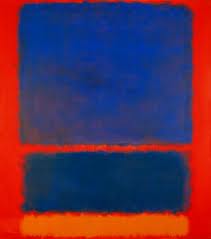
"The most important tool the artist fashions through constant practice is faith in his ability to produce miracles when they are needed."


Mark Rothko
Russian Artist
1903 - 1970


I remember in the early days of speaking when I was conducting 2 1/2 day workshops, I was never sure what the ultimate outcome would be — would the group bond and be persuaded by the message I was delivering.  After conducting more than 25 sessions, I became confident that no matter where the group began, they would end up in the same place — passionate about creating a caring environment for their customers and employees.  I developed a faith that the program worked.  I learned to believe in my ability to connect and bond with my audience.

As creative leaders we need to believe in what we are doing.  We need to have the faith that the art we are producing is good.  When our backs are up against the wall, we will be able to produce a miracle.  Do you have faith in your abilities?  Do you believe in what you are doing?

Sunday, June 19, 2011

Marcel Duchamp

"I force myself to contradict myself, so as to avoid conforming to my own taste."


French Artist
1887 - 1968


Nude Descending
A Staircase No. 2
(1912)
Do you ever feel that you are in rut — repeating the same stories over and over, painting the same landscape again and again?  Sometimes we fall into a rut and don't even know.  Our creative works become the same — bland and boring.  What are you doing to make your art fresh and new?  How do you challenge yourself to step outside your comfort zone?  How do you avoid old habits?

As creative leaders, you need to challenge yourself — explore new territory, try new ideas.  We all can become stale and tired.  You need to find new sources of ideas — new ways of seeing the world.

Saturday, June 18, 2011

Deepak Chopra

"The most creative act you will ever undertake is the act of creating yourself."


Indian Author, Speaker
1946 -


The life we live is a work of art and we must continuously be creating and recreating it.  The choices we make in life determine the person we become.  And the person we become is reflected in the life we live.

Are you living the life you want to live?  Have you become the person you dreamed of becoming.  To create your life you want requires vision, hard work and persistence.  If you think painting a picture or writing a novel is a challenge, creating your life is a bigger challenge.  

Sometimes creative leaders become so caught up in their creative work that they lose sight of themselves and the person who they wanted to become.  They lose sight of the people they love.  We must learn to take care of ourselves — our physical, mental and emotional natures.  If we let our work devour us, we can become addicted to drugs, alcohol or sex.  We can become paranoid, fearful and anxious.  We must learn to love ourselves and those nearest to us.

Friday, June 17, 2011

Pierre Auguste Renoir

Self-Portrait
(1875)
"It is not enough for a painter to be a clever craftsman; he must love to 'caress' his canvas, too.


— Pierre Auguste Renoir
French Artist
1841 - 1919


For some people the process of creation is painful and difficult.  They struggle to put words on paper or paint on the canvas.  They let their fear of failure or their drive for perfection prevent them from working.  Others love to work.  They are happiest standing before a canvas or sitting before a computer.  Work comes easy for them.  Which person are you?  Do you love your work?  Do you enjoy painting?  Can you get lost in process of painting?  Do you enjoy writing?  Can you write for hours and suddenly stop and realize how fast the time has flown by?  Or do you procrastinate and look for ways to avoid working?  Do you tell yourself that you have to clean the house, wash the dishes or pay the bills instead of working on your art or writing?

Umbrellas
(1981)


Read my poem, Indecision, inspired by Renoir's painting, Umbrellas.

Thursday, June 16, 2011

Paul Klee

"Nothing can be rushed.  It must grow, it should grow of itself . . ."


Swiss Painter
1879 -1940


The creative process cannot be rushed or forced.  It must evolve at its own rate.  Sometimes it moves slowly and other times with the speed of light.  And the creative process cannot be managed or controlled.  It has a mind of its own.  You cannot flip a switch and suddenly be creative.  Some writers and artists have rituals they hope will invoke the creative muse to  visit them, but the rituals usually don't work.  Deadlines will not pressure the creative muse to appear.  And neither will procrastination.  The creative process takes its own sweet time.  Some take drugs hoping to break down the walls and release the imprisoned muse.  They are deluded.  

So what can we do?  Work.  And work some more.  Work when you feel creative.  Work when you feel terrible.  The key is to keep working even if what you produce is worthless.  The creative muse demands it.


Wednesday, June 15, 2011

Dorothy Dunnett

"Facts are the soil from which the story grows.  Imagination is a last resort."


Scottish Novelist, Portrait Painter
1923 - 2001


A story should be rooted in reality.  The reader needs to be able to relate the characters to the world that he knows.  Consider the novel, Watership Down, by Richard Adams.  The story is about rabbits and yet, we identify with them because of their human characteristics.  Dorothy Dunnett was a writer of historical novels who did immense research to place her stories in historical reality.  But facts are never enough.  It is in the imagination that the story takes wings and flies far from the facts to spin a story that touches the minds and hearts of the readers.

Have you rooted your stories in the reality?  Have you used your imagination to carry the stories to the heavens?  How about your paintings?  Is there something in the work with which we can identify?  Does the painting carry us beyond the facts into another world?

Tuesday, June 14, 2011

Roberto Bolano

"You have to know how to look even if you don't know what you're looking for."


Chilean Novelist, Poet
1953 - 2003


One of the functions of artists and writers is to see the world in ways that nobody else does and at the same time help others to see the world in new ways.  I have often found that the best novels teach me new things about the world that I had not previously discovered.    Creative leaders may not know what they are looking for, but they will recognize it when they see it and they will find a way to communicate it to others.

Do you know how to look at the world?  What makes your way of viewing the world unique?  Do you know what you are looking for?  Have you found it or are you still looking?  Do you appreciate your unique vision of the world?  Have you accepted your vision of how the world should be?  Have you communicated your vision to others?

Here is a poem by Roberto Bolano from his book, The Romantic Dogs, translated by Laura Healy.

Self Portrait At Twenty Years
I set off, I took up the march and never knew
where it might take me. I went full of fear,
my stomach dropped, my head was buzzing:
I think it was the icy wind of the dead.
I don't know. I set off, I thought it was a shame
to leave so soon, but at the same time
I heard that mysterious and convincing call.
You either listen or you don't, and I listened
and almost burst out crying: a terrible sound,
born on the air and in the sea.
A sword and shield. And then,
despite the fear, I set off, I put my cheek
against death's cheek.
And it was impossible to close my eyes and miss seeing
that strange spectacle, slow and strange,
though fixed in such a swift reality:
thousands of guys like me, baby-faced
or bearded, but Latin American, all of us,
brushing cheeks with death.

Monday, June 13, 2011

Robert Rauschenberg

"I've not been cursed with talent, which could be a great inhibitor."


American Artist
1925 - 2008


Estate
(1963)
Sometimes being blessed with too much talent can have a negative impact on a person's creative output. If painting or writing comes too easily, the person may quit out of boredom.  Or he may not work up to his potential because it requires so little effort.  He doesn't push himself.  Or if the talent is recognized early, expectations may be set so high by the powers that be that the person can not live up to the expectations.

If a person has to work hard to achieve great works of art, he may appreciate his accomplishments more.  He knows the amount of effort that went into the work.  He knows the obstacles he had to overcome.

So the key to success is not talent, but desire, hard work and persistence.  If you have the desire, work hard to perfect your skill and keep going long after everyone else has quit, you will be a success.

Sunday, June 12, 2011

Ralph Waldo Emerson

"The purpose of life is not to be happy.  It is to be useful, to be honorable, to be compassionate, to have it make some difference that  you have lived and lived well."


American Poet, Speaker, Writer
1803 - 1882


Too often people spend their time trying to find happiness.  Instead, they should be seeking ways to make a difference in the lives of others.  Happiness is never permanent.  We may experience moments of happiness, but we will not stay in that frame of mind.  Seek instead to be useful — to help others in their time of need.  If we focus on helping others and worry less about our own happiness, we will wake up one day and find that we are at peace with ourselves.

Why were you born?  What is your purpose for living on this planet?  When you reach the end of the road one day and look back across your life, what is the legacy you want to leave behind?  I believe we each have a reason for being born and part of our mission in life is to discover our purpose for being.  How would the world be different if you had never lived?  Ponder that question.  How many lives have you already touched?  A few years ago someone told me that I had inspired him to become a nursing home administrator.  I did not remember the young man, but he had heard me speak and was inspired.  And I sure you have made a difference in the lives of people you never met.  Has someone been inspired by a poem, a story or a novel you wrote?  Has someone been inspired by a picture you painted?  Maybe someone bought a painting from you and hung it in their living room.  And every time they look at it, they experience a moment of happiness. 

Here is a poem by Ralph Waldo Emerson.  Maybe it will inspire you years after he wrote it.

The Apology

Think me not unkind and rude,
That I walk alone in grove and glen;
I go to the god of the wood
To fetch his word to men.

Tax not my sloth that I
Fold my arms beside the brook;
Each cloud that floated in the sky
Writes a letter in my book.

Chide me not, laborious band,
For the idle flowers I brought;
Every aster in my hand
Goes home loaded with a thought.

There was never mystery,
But 'tis figured in the flowers,
Was never secret history,
But birds tell it in the bowers.

One harvest from thy field
Homeward brought the oxen strong;
A second crop thine acres yield,
Which I gather in a song.

Saturday, June 11, 2011

Harry Emerson Fosdick

"Picture yourself vividly as winning and that alone will contribute immeasurably to success. Great living starts with a picture, held in your imagination, of what you would like to do or be."


Harry Emerson Fosdick
American Author, Clergy
1878 - 1969


Do you see yourself as a successful writer, successful artist or successful actor?  Success begins in the mind.  If you want to be successful, you need to see yourself as a success.  You need to believe in yourself and your talent.  Another word for it is visualization.  You need to visualize your success.  The mind is very powerful.  You must first see yourself as successful.

Do you ever worry?  Maybe you worry about having enough money to pay the bills.  Or maybe you worry about those you love.  Most people worry at one time or another.  Worry is a negative form of visualization.  Worry is visualization of your deepest fears.

Harness the visual power within your mind to create your success as an artist, a writer and a creative leader.  See yourself writing a novel, painting a picture, or writing a screenplay.


Friday, June 10, 2011

Henry Ward Beecher

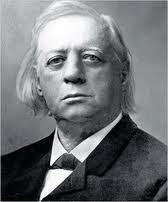
"Every artist dips his brush in his own soul, and paints his own nature into his pictures."


— Henry Ward Beecher
American Clergy, Author, Speaker
1813 - 1887


If you have ever read the biographies of famous artists and writers, you may have discovered that some of these creative geniuses were not the best of human beings.  They may have been mean and cruel to those they loved.  They may have had affairs of the heart.  They may have been paranoid and psychotic.  They may have been insecure and boorish.  Their personal lives never seem to match the beauty found in their art.

So where does the great creative work come from?  Every person has some good and bad within himself.    The best creative work comes from being in touch with the good within one's souls.  By doing so, creative leaders create great work that connects with what is best in all humans.  But the cost of such greatness is often the chaos of their personal lives.

Thursday, June 9, 2011

Tobias Wolff

"We are made to persist.  That's how we find out who we are."


— Tobias Wolff
American Author
1945 - 


The difference between the winners and the losers is that the winners keep going long after the losers have quit.  Many people want to be writers, painters, musicians, and actors.  Most quit too soon.  They let rejection and negative criticism cause them to give-up.  The creative journey takes a lot of stamina and persistence.

In 1914, Thomas Edison was 67 years old. He had lived a lifetime and invented hundreds of gadgets including the light bulb. He was a multi-millionaire living in Menlo Park, New Jersery. One night in February 1914 his phonograph factory burnt to the ground. Overnight he lost more than 3 million dollars and he had no insurance. The next day he was walking through his burnout factory and his son came over to console him. Edison turned to his son and he said: "There is great value in disaster. It burns up all our mistakes. Thank God we can start anew." He redesigned the phonograph, rebuild the factory and gave the world a brand new phonograph within three months. I don't care what challenges you face today or what is preventing you from continuing your creative journey. The difference between the winners and the losers is the winners keep going long after the losers have quit.


Wednesday, June 8, 2011

Jonathan Hull

"Without art; without paintings, books, sculpture and music, the human soul would be quite impenetrable, don't you think?"


— Jonathan Hull
American Novelist, Journalist


Can you imagine a world without art?  No books to read.  No writers of poetry.  No paintings.  No sculpture.  No music.  No theater.  No movies.  No stories.  Could you live in such a world?  And yet there are people who live lives without creating and appreciating the world of art.  They have no interest in books, paintings or music.  I for one could not live in such a world. 

I have a strong need to create a work of art.  To write a poem.  To sing a song.  To paint a picture.  To tell a story.  Without creative work, my soul would die a slow death.  Celebrate the fact that you have the ability to appreciate great works of art.  Believe that you have the skill to create great works of art.

Tuesday, June 7, 2011

Gordon B. Hinckley

"Go forward in life with a twinkle in your eye and a smile on your face, but with great purpose in heart."


American Author, Religious Leader
1910 - 2008


Do you know what your purpose is?  Why you are alive on this planet in the 21st century?  We all have a reason for being.  Some people take a lifetime to figure out their purpose in life.  Others know and understand what their purpose is at a very young age.  Purpose is what gives our lives meaning.  Purpose requires that we do some soul searching to help us understand why we live the life we have chosen.

I believe that everything in life is a choice.  We choose how we want to live.  Sometimes by not making a choice we have chosen.  If you don't like something in your life, then choose something different.  We have no choice over what happens to us.  Our key choice is how we respond to what happens to us.  Do you have a twinkle in your eye and a smile on your face?  Or are you grouchy and grumpy?  Do you respond to the hand that life has dealt you by moaning, groaning and griping?  Or do you pick yourself up and stay focused on your purpose — the great reason you are here?

On the days when you are discouraged, refocus on your purpose.  Remind yourself of where you want to go — of the legacy you want to leave behind.  

Monday, June 6, 2011

Joan Miro

"I try to apply colors like words that shape poems, like notes that shape music."


— Joan Miro
Spanish Artist
1893 - 1993


Hand Catching a Bird
(1968)
Our lives are touched with color whether we are artists or not.  We are attracted to color and repulsed by color.  We wake to color in the morning and some of us dream in color.  We love the color of flowers in spring and summer.  We love the color of leaves in autumn.  Our lives our filled with color.  We often buy our clothes based on color.  We paint the walls of our houses with color.  We choose the color of the car we buy.  Color is an important part of our lives.  Chefs use color to make the meal appealing.  Advertisers use color to convince us to buy things.

In a study of the colors blue and red, scientists at the University of British Columbia discovered that red makes us more cautious and attentive to details while blue makes us more creative and receptive to new ideas.  Experiments showed that with a red background people performed as much as 31 percent better on tasks like proofreading.  When blue was used, people were more open to new ideas and creative solutions.

What are your favorite colors?  Do some colors make you happy?  What colors make you sad? What colors excite you?  How does color shape your art?  What colors are you attracted to in a painting?  How does color shape your writing?  Do you use color as part of your description?  How does color affect your music?  

Red Sun

Sunday, June 5, 2011

Ansel Adams

"When words become unclear, I shall focus with photographs.  When images become inadequate, I shall be content with silence."


— Ansel Adams
American Photographer
1902 - 1984


Sometimes words are not enough.  And sometimes pictures fail to communicate what we are feeling.  And all we have left is the silence.  If the writing is blocked, pick up a brush and paint a picture.  If the painting is blocked, walk into the woods and listen.  Life goes on even without the human voice.  Listen to the sounds between the silences.  Listen to the heartache in another human being.  The universe is bigger than mankind.  And yet the universe is contained in the soul of one individual.  We will not live forever.  And some day the civilizations we are so proud of will vanish and be replaced.  Change never ends.  Focus on what is possible and forget about what cannot happen.  


When we let the small things make us angry, we lose sight of the bigger picture — that in the grand scheme of things it will not matter a thousand years from now.  Where were you when Rome burned?  So take a deep breath and take the the beauty of the universe into your soul and create a masterpiece.  And give back to the universe a portion of what you have been given.  What is to be, will be.


Now, listen to Ansel Adams in his own words.


Saturday, June 4, 2011

Oscar Wilde

"Every portrait that is painted with feeling is a portrait of the artist, not the sitter."


— Oscar Wilde
Irish Poet, Novelist, Playwright
1854 -1900


Writers, artists and poets reinvent themselves in their work.  When they create a character or paint a portrait, they are recreating a portion of themselves and their lives.  Yes, it may be a portrait of another person, but the artist leaves a piece of his soul in the painting.  The great artists and writers put themselves in their work.  

Remember that your emotions, your feelings are important to your success.  Reach deep within yourself and find the heart of your emotion.  Open yourself up to the world and find the words and images that convey your emotions in new and exciting ways.

See if you can identify the artists of these portraits of women.