Welcome!

Welcome! There are more than 900 Inspirational Quotes For Writers, Artists and Other Creative Leaders on this site.
Spend a few minutes exploring. And come back again and again for other inspirational quotes.

Saturday, July 9, 2011

Annie Dillard


"Write as if you were dying.  At the same time, assume you write for an audience consisting solely of terminal patients.  That is, after all, the case.  What would you begin writing if you knew you would die soon?  What could you say to a dying person that would not enrage by its triviality?"


American Writer
1945 -


These are not idle statements.  Death puts a very different perspective on what we do.  What would you write if you knew you were dying?  Do you have a few final stories to tell or poems to write?  What would you paint?  Would try to create something you have never created or would you paint the same thing you have always painted?  Or would you write at all?  Would let go of your creative impulse?  

What would you write if no one would criticize you?  What would you paint if you knew that no one would laugh?  What would you sing if you knew that people would clap?  

Death is about saying goodbye to what we know.  Death is about letting go of material objects that have been a part of our lives.  Death is about forgetting.  Death is a door through which we all must walk whether we are painters, writers, doctors or lawyers.

Friday, July 8, 2011

Michele Cassou

"If you do not listen to your intuition, it will stop talking to you.  Your intuition is like a sensitive friend.  If you question it, censor it, judge it, it gets hurt and becomes silent."


French Artist, Teacher


You have to train yourself to listen to your intuition because your rational mind is very strong and often discards your intuition immediately.  In fact, it sometimes happens so fast that what you think is your intuition is actually your second on third thought.  The rational mind can move very quickly to override intuition.  Train yourself to grab hold of your intuition and not let go.  Learn to trust your feelings and first thoughts.  

And in the beginning you will often misunderstand your intuition.  Be patient.  It is okay to make mistakes.  The problem is not that your intuition is wrong, but that your interpretation is not accurate.  Sometimes it will take years to perfect listening to your intuition.  Trust your heart.  

Thursday, July 7, 2011

Henry Miller

Self-Portrait
(1943)
"Paint what you like and die happy."


— Henry Miller
American Novelist, Painter
1891 - 1980


The message here is simple and direct:  do what you like.  Too often we don't do what we like.  Nor do we learn to like what we do.  And then people become unhappy with their lives and they spend their time complaining.  Don't let others dictate what is important for you.  

And I am not telling you to run away from your spouse and children and join an artist colony where you spend every day either painting or writing.  We all have responsibilities and we should not shirk them.  If you get married, you have made a commitment and you need to live up to it.  If you bring children into this world, you have a responsibility to raise, educate and care for them.  Doing what you love does not mean avoiding your responsibilities.  Doing what you love means finding 30 minutes or 60 minutes where you do what you want to do — where you do what you love to do.  Then you can die happy.


Wednesday, July 6, 2011

Octavio Paz

"I don't believe that there are dangerous writers: the danger of certain books is not in the books themselves but in the passions of their readers."


Octavio Paz
Mexican Poet
1914 - 1998


Speakers are often evaluated and rated by their audiences.  While 90% of the audience may enjoy the presentation, there is often 10% who didn't like it.  Usually the problem does not lie with the speaker, but rather the audience member.  Either the person is angry at his boss who make him come or he is upset about something that is happening in his life.  

When people label books or paintings as dangerous, corrupt or incendiary, the problem lies not with the books or paintings.  The problem is in the passions of the audience member doing the labeling.  When a person is afraid of his own desires, he blames that which is outside himself instead of blaming himself.  Sometimes when someone condemns something too loudly, he is hiding his own desires.  

Don't let the negativity of others bring you down.  The problem rests with them, not with you.  Stand up for yourself and your creative work.  Believe in what you create.

Here is a poem by Octavio Paz.


Last Dawn

Your hair is lost in the forest,
your feet touching mine.
Asleep you are bigger than the night,
but your dream fits within this room.
How much we are who are so little!
Outside a taxi passes
with its load of ghosts.
The river that runs by
is always
running back.
Will tomorrow be another day?

Tuesday, July 5, 2011

Eric Fischl

"If you worry about how good the art is, you're never going to make your own art."


American Artist
1948 - 


For many of us we have a need to be perfect and  we punish ourselves when we don't live up to our expectations.  Some people go so far as to stop creating.  Their fear of not being perfect gets in their way and they give up.  If you create from your heart, stop worrying about technique and accept the fact that you will never be perfect.  And who says that you are a good judge of your own work.  There are many examples of creative leaders being remembered for some minor work that they dashed off in a very short time.  Do you really think that Charles Dickens thought that Christmas Carol would be his most famous, reproduced again and again in film and television?  Many times what the author loves does not sell well and is poorly received by the general public.  So don't worry about how good your art is.  Just paint, write and compose.  The public will do the rest.


Ten Breaths: Damage
(2007)


Monday, July 4, 2011

Harry Chapin

"Music was his life; it was not his livelihood.  And it made him feel so happy and it made him feel so good."


American Songwriter, Musician
1942 - 1981


Album Cover
These words come from Mr. Tanner, a song by singer and songwriter, Harry Chapin.  In those brief moments of despair when I doubt whether it worthwhile to continue writing, these words bring comfort.  For some of us, our art is not meant to be our livelihood.  That does not make what we do any less important than those people who create professionally for money.  

Fame and success is fleeting.  How many one hit wonders are out there?  How many child movie stars fizzle and implode when they become adults?  How many writers disappear from the publishing world after their deaths and their books go out-of-print?  How many artists have one major show and disappear?

Harry Chapin is one of my favorite singers because he tells stories with his music.  I first heard of him when a high school friend of mine made a short movie based on his song, Sniper.  I played one of the victims of the sniper.  I had a chance to see Harry Chapin in concert in the late 1970's on the campus of the University of lllinois in Champaign-Urbana.  And I was sad when his life was cut short by an automobile accident in 1981.

Here is Harry Chapin singing Mr. Tanner.  Listen to what his wife says about where Harry got his ideas for his songs.  Listen to the words of song and don't let the naysayers and critics put you down.  You are gifted.


Sunday, July 3, 2011

Duke Ellington

"I merely took the energy it takes to pout and wrote some blues."


American Composer, Musician
1899 - 1974


Many of us waste energy complaining.  We need to learn to transform our frustrations, fears and failures into positive energy that inspires us to create great works of art.  Are you feeling down today, maybe even depressed?  Great.  Use that negative energy to create.  Write through the frustration.  Paint a picture with large dramatic brush strokes.  Are you angry and upset?  Transform that negative energy.  Splatter the canvas with paint.  Quickly write a poem in very large letters and don't rewrite it.  Read the poem aloud to the universe.  Is your heart broken and you can't stop crying?  Give yourself a hug and sing in a loud voice a country song about your broken heart and the mean person who broke it.  Be sure to sing off key.  Paint a picture of a heart in agony.  Dance wildly about the living room and do a belly laugh.

Emotions are a part of being human.  What most people don't realize is that they can control and change their emotions.  Don't wallow in self-pity, take charge of your life and choose to change your emotions.  Do something that gets you out of that rut.  Climb a mountain in your backyard.  Take photos of squirrels chasing each other in fun.  Go for a swim.  Listen to Duke Ellington.


Friday, July 1, 2011

Heinrich Heine

Painting of Heine
by Moritz Daniel Oppenheim
Wherever they burn books they will also, in the end, burn human beings."


German Poet
1797 - 1856


When a nation or society has no respect for its artists, writers and musicians, it is a nation in danger of losing its humanity.  I find it very sad that in this country where liberty is held in high esteem that there are people who choose to burn books.  When my daughter was in high school, she knew teenagers who participated in the burning of books with members of their church.  How ignorant these people must be.  Books are our connection to the world beyond our immediate home.  But it is not just in this country and it is not just books.  In 2001 when the Taliban were in power in Afghanistan, they destroyed two 1700 year-old Buddha statues carved in a cliff in the Hindu Kush mountains.  Other cultures have destroyed paintings.  And governments and societies have tried to control the type of art works that are created.  Both Hitler and Stalin restricted the type of art that could be created.

Artists, writers and musicians are one of the greatest treasures that a society has and yet people continue to treat them with contempt — telling them to get a real job.  In fact, the way we know about the past is through the artists, writers and the musicians.  We would know very little about ancient Rome or Greece if it were not for books and paintings.  Future societies will know us primarily through the writers and painters of today.  Our legacy is past down through our art.  

Here is a poem by Heinrich Heine.

WHY THE ROSES ARE SO PALE
by: Heinrich Heine (1799-1856)
       DEAREST, canst thou tell me why
      The rose should be so pale?
      And why the azure violet
      Should wither in the vale?
       
      And why the lark should in the cloud
      So sorrowfully sing?
      And why from loveliest balsam-buds
      A scent of death should spring?
       
      And why the sun upon the mead
      So chillingly should frown?
      And why the earth should, like a grave,
      Be moldering and brown?
       
      And why it is that I myself
      So languishing should be?
      And why it is, my heart of hearts,
      That thou forsakest me?
This English translation of "Why the Roses are so Pale" was composed by Richard Garnett (1835-1906).

Thursday, June 30, 2011

William Sloan Coffin

"All of life is the exercise of risk."


American Author, Clergy, Peace Activist
1924 - 2006


Have you ever let fear stand in the way your doing something that you desired to do?  Most of us have.  And yet if we stop and think about it: all life is a risk.  While eating carrots, you can choke and die.  Walking down the street at 6 a.m., you can be hit by a speeding car.  Taking a shower, you can slip and fall and hit your head.  You can visit a doctor and be told that you have cancer and have only six weeks to live.  All life is fraught with risk.  So why haven't you tried that new technique of painting?  Are you afraid you will fail?  Why haven't you sent your novel to a publisher?  Are you afraid of rejection?

Fear is powerful and often stops us from doing what we want to do?  We all have dreams and hopes, but sometimes we are not courageous enough to take that first step into the unknown.  That first step is often the most difficult.  In our minds, we think of all the things that could go wrong.  We should instead focus on our dreams and what we want to accomplish.  What steps are you going to take today to overcome your fears?  

Wednesday, June 29, 2011

Odani Motohiko


"I used to find that idea of an ever changing, impalpable style appealing, but now I want to concentrate on the things I ought to be doing, the things that only I can do.  The result I hope will be works that like the Buddhist statues of the past will be capable of communicating with people for centuries to come."


Japanese Artist
1972 -


Are you doing the creative work that you ought to be doing — that only you can do?  In today's world it is easy to get sidetracked and caught up in projects that have nothing to do with our true work.  There are many people and things that demand our attention and time.  If you don't know what creative work you are supposed to be doing it is easy to get lost.  Do you have a vision of the work that you should be doing?  Do you stay focused or are you easily distracted?

Will the creative work that you are doing still be communicating to generations to come?  Or will your work be forgotten as soon as you leave this world?  No one can predict which poems, or paintings or sculptures will last for centuries and which are meant for the dustbins of time.  Many artists and writers dream and hope that their creative works will give them immortality.    


To see more of Odani Motohiko's creative work, check out this site:


Tuesday, June 28, 2011

George Grosz

"My drawings and paintings were done as an act of protest; I was trying by means of my work to convince the world that it is ugly, sick and hypocritical."


German Artist
1893 - 1959


The Wanderer
(1943)
Do you believe that art should be beautiful?  Should we as artists and writers only show what is best about the world and the humans who occupy great chunks of it?  Some people would say: "Yes, that the ugly is not art. That art and writing are to show mankind at its best."  Why do you think so many people want a happy ending to a novel or a movie?  The hero may go down into the gutter to find the criminal, but he must rise above the world he inhabits and transcend the ugliness around him.  He must be better than those he encounters.


Grosz fought on the side of Germany during World War I.  He volunteered in 1914 and was discharged in 1915 as unfit for duty.  He was conscripted in 1917 because Germany was desperate for soldiers.  He was court-martialed for insubordination and sentenced to death.  One of his patrons saved him from execution and he was diagnosed as suffering from shell-shock and discharged.  Anti-Nazi, Grosz left Germany for America before Hitler came to power and became a naturalized citizen in 1938.  Here is a painting Grosz painted in 1943, entitled, Hitler in Hell.


Hitler in Hell
(1943)

Monday, June 27, 2011

Medardo Rosso

"What the artist must aim at above all else is this: to produce, by any process whatever, a work which by the life and humanity emanating from it communicates to the beholder . . . ."


Italian Sculptor
1858 - 1928


Ecce Puer
Behold the Boy

(1906)
Who is the audience for your creative work?  This is a question I have struggled with for years.  Is there an audience for my work?  Is there someone who understands what I am communicating?  First, poetry has a very small readership in this country.  So the audience from which I can draw my readership is very small.  Second, finding this readership is very difficult.  One would hope that one could find a readership among other poets, but there are many people who write poetry who have never read it.  Third, what I write does not fit within the historical categories of poetry.  I don't rhyme or follow western forms.  I did spend seven years writing and studying Japanese haiku which many in the west perceive as an exercise for school children.  So after 35 years of writing, I have yet to find an audience for my writing who will stand in line for six hours to buy my next book.  In fact, there are days I can't give it away.  But I don't let the lack of an audience stop me from writing.  I keep writing and believing that one day someone will read and appreciate.

Sunday, June 26, 2011

Edvard Munch


The Scream
(1893)

"I was walking along a path with two friends, the sun was setting.  I felt a breath of melancholy.  Suddenly the sky turned blood-red.  I stopped and leant against the railing, deathly tired, looking out across flaming clouds that hung like blood and a sword over the deep blue fjord and town.  My friends walked on.  I stood there trembling with anxiety and felt a great, infinite scream pass through nature."


Norwegian Painter
1863 - 1944


Edvard Munch
1921
Edvard Munch was inspired to paint The Scream by what he felt.  He later said: "For several years I was almost mad. . . You know my picture, The Scream? I was stretched to the limit — nature was screaming in my blood. . . After that I gave up hope ever of being able to love again."

What drives you to paint?  What inspires you to write?  Is it light or darkness?  Fear or compassion?  Beauty or pain?  What message do you want to communicate?  What is your vision of the world?  Does your creative work come from deep within your soul?  Do you paint what you feel?  Do you write what you experience?


Saturday, June 25, 2011

George Bernard Shaw

"The man who writes about himself and his own time is the only man who writes about all people and about all time."


1856 - 1950
Irish Playwright


Why do you write?  Why do you paint?  Is it to tell your story?  For many of us creative work helps us understand who we are and where we came from.  Creative work allows us to explore the world into which we were born.  In the process of understanding who we are and where we came from, we also begin to understand what it means to be human.

Friday, June 24, 2011

Tennessee Williams

"Life is all memory, except for the one present moment that goes by so quick you hardly catch it going."


American Playwright
1911 - 1983


Most of us live in the past with occasional ventures into the future.  The time spent in the present is minuscule.  The present moment no more than arrives and it is gone, quickly becoming a part of our memory.  Time passes second by second and we watch it leave. 

Are you frustrated because there is not enough time in a day to do all the painting or writing that you want to do?  Do you wish you had more time to do the things you want to do?  Modern life is hectic and it gets faster and faster every year.  Ever since man invented the first machine, we have been promised that we would gain more time to do the things we wanted to do.  And it has never happened.  Cell phones, I-Pads and computers do not make our lives easier.  We have to work longer and harder just to stay even.  We are now in touch with the world 24/7.

I talked with a salesman who said that thirty years ago he would leave town for a week. He would tell his secretary to take any messages and to tell the people he would call them when he returned.  He says that today if he don't return a call within 15 minutes he has lost the sale.

So what does this have to do with creative leadership?  Each of us have 86,400 seconds a day to spend as we choose.  How do you spend your seconds?  Doing the things you want to do or doing what others want you to do?  Do you spend your seconds focused on the past and what has already happened or do you spend your seconds in the present creating new works of art?

We all have been given the same amount of time each day.  We can not change the amount of time we have.  But we can choose how we spend it.  Be surely to spend your time wisely.

Thursday, June 23, 2011

Lillian Hellman

"Nothing you write, if you hope to be good, will ever come out as you first hoped."


American Playwright
1905 - 1984


Often what we create does not match our expectations of what we imagined we would create.  Creation takes hard work and the process of re-creating again and again until we come close to capturing our vision of what we thought we wanted to say.  Rarely, though, does the end product match what we imagined it to be in the beginning.  The process of creation changes the vision and perfects its limited and narrow perspective.  Our imagination gives us the seed necessary to start us on our journey, but hard work is the rain that the seed needs to help it grow into a beautiful rose.  Be patient with yourself.  Don't quit just because reality does not match your dreams.  Keep working.  Keep learning.  Keep growing.  Some day what you create will be what you want it to be.

Wednesday, June 22, 2011

Gustave Flaubert

"Be regular and orderly in your life like a bourgeois, so that you may be violent and original in your work."


French Novelist
1821 - 1880 


For me, I work best when my everyday life is dull and boring.  The more things I can do as a routine habit allows my mind to flow freely.  My wife, though, keeps me on my toes by constantly re-arranging the house.  She reorganizes the kitchen cabinets periodically.  I go to pour myself a cup of coffee and the cups are not where they should be.  When I am looking for a bowl or a plate, it is not where it should be.  But she doesn't stop with the kitchen.  She re-arranges the various rooms to suit her moods.  All this re-learning is a challenge for someone who prefers to keep his routines the same every day.  The reason I prefer routines is so my mind does not have to worry about what shirt to wear or what food to eat.  My mind is free to concentrate on what is important like the poem I am writing.  The more normal and routine my life is; the more I can go crazy in my mind.  As a writer I live in my imagination.  Some might call me the absent-minded professor.

Tuesday, June 21, 2011

Robert Bly


"When anyone seriously pursues an art — painting, poetry, sculpture, composing — over twenty or thirty years, the sustained discipline carries the artist down to the countryside of grief, and that descent, resisted so long proves invigorating. . . . As I've gotten older, I find I am able to be nourished more by sorrow and to distinguish it from depression."


American Poet
1926 - 


I first heard Robert Bly read poetry in 1969 while I was in college and I still own a copy of his very first book of poetry, Silence in the Snowy Fields, which I bought when he was in town and is autographed by him.  He was majestic, expansive and seemed to blow the roof off the auditorium.  I fell in love with the poetry I read in that small sixty-page book, published by Wesleyan University Press, full of images of the midwest where I was born and raised.  Years later I had another opportunity to hear Bly read and I bought a collection of his prose poems, Morning Glory.  I own a number of his poetry books and his books of translated poems.  I even bought the book that made him rich and famous, Iron John, a non-fiction book I have never been able to finish reading.  

Here is a short poem that I love.  The last two lines have the feel of Japanese haiku.

Watering the Horse

How strange to think of giving up all ambition!
Suddenly I see with such clear eyes
The white flake of snow
That has just fallen in the horse's mane!

Here is another favorite poem of mine from his first collection.  This poem evokes the feeling of the rural countryside in which I grew up.  Anyone who grew up in the rural midwest will immediately feel at home.

Three Kinds of Pleasure
        
                   I
Sometimes, riding in a car, in Wisconsin
Or Illinois, you notice those dark telephone poles
One by one lift themselves out of the fence line
And slowly leap on the gray sky —
And past them, the snowy fields.

                   II
The darkness drifts down like snow on the picked cornfields
In Wisconsin:  and on these black trees
Scattered, one by one,
Through the winter fields —
We see stiff weeds and brownish stubble,
And white snow left now only in the wheeltracks of the combine.

                  III
It is a pleasure, also, to be driving
Toward Chicago, near dark,
And see the lights in the barns.
The bare trees more dignified than ever,
Like a fierce man on his deathbed,
And the ditches along the road half full of a private snow.


Monday, June 20, 2011

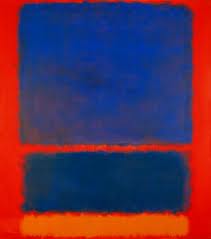
Mark Rothko

"The most important tool the artist fashions through constant practice is faith in his ability to produce miracles when they are needed."


Mark Rothko
Russian Artist
1903 - 1970


I remember in the early days of speaking when I was conducting 2 1/2 day workshops, I was never sure what the ultimate outcome would be — would the group bond and be persuaded by the message I was delivering.  After conducting more than 25 sessions, I became confident that no matter where the group began, they would end up in the same place — passionate about creating a caring environment for their customers and employees.  I developed a faith that the program worked.  I learned to believe in my ability to connect and bond with my audience.

As creative leaders we need to believe in what we are doing.  We need to have the faith that the art we are producing is good.  When our backs are up against the wall, we will be able to produce a miracle.  Do you have faith in your abilities?  Do you believe in what you are doing?