Welcome!

Welcome! There are more than 900 Inspirational Quotes For Writers, Artists and Other Creative Leaders on this site.
Spend a few minutes exploring. And come back again and again for other inspirational quotes.

Monday, September 10, 2012

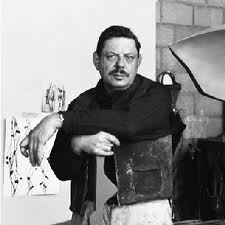
Claes Oldenburg


"Very often I am sitting at dinner and I take out my notebook.  I get inspired when I eat, for some reason."


— Claes Oldenburg
Swedish Sculptor
1929 -


Commentary
Saw
Tokyo
When are you inspired?  When you are eating like Oldenburg?  When you take a shower?  When you are walking or jogging?  When you are talking with friends?  In the mornings?  Late at night?  After a walk on the beach?  Or a short swim?  Inspiration comes in a thousand ways and in a thousand places and we never know when it will appear.

Are you a creative leader who waits until inspiration strikes to work on your creative masterpiece?  Don't!  You might be waiting a life time.  Inspiration is fickle and often unfaithful.  Learn to create each and every day even if it is only for 15 minutes.  

Also, identify the times of the day when you are most creative.  These will vary by person.  For some people the early morning is the most creative time.  For others it is late at night. For years early morning and late evening have been my most creative times, but I am now finding that I can also be very creative mid-afternoon.

Where are you most creative?  In your office?  At the local coffee shop?  On your sofa?  At the kitchen table?  Outdoors?  At the mall?  I have found that I can write almost anywhere if I put my mind to it.  I used to write in the privacy of my office only, but I have learned to write in the noisy chaos of shopping mall.  Technology now allows you write anywhere.  

Creative Practice
The Bottle of Notes
(1993)
Get out of your office or studio and find a new place to write or paint or draw or sculpt.  You are only limited by your imagination and the amount of gas in your gas tank.

About the Sculptor
Claes Oldenburg, the son of a Swedish diplomat, was born in Stockholm, Sweden in 1929.  His father was stationed in Chicago, IL in 1936 where Claes attended school.  He studied literature and art history at Yale University.  He also took art classes at the Art Institute in Chicago.  His first recorded art sale was at the 57th Street Art Fair where he sold 5 pieces for a total of $25.  He became a naturalized citizen in 1953.

Claes moved to New York in 1956 and became a part of the Pop Art movement.  Both his wives, Pat Muschinski and Coosje van Bruggen, worked with him in the creation of his sculptures.   Since 1981, Claes has signed all his works with his name and that of his second wife, van Bruggen.

Video


Quote Source:
Clint Brown. Artist to Artist. Jackson Creek Press, 1998. p. 127.

Monday, September 3, 2012

Robert Spiess

"Haiku are best appreciated through the intelligence of the heart."


American Haiku Poet
1921 - 2002


Commentary
Art, music and poetry should be appreciated in the heart.  Recent scientific research indicates that the heart has its own intelligence separate from the brain.  Creative leaders understand the heart's intelligence and have learned to listen to their hearts when creating works of art.  Are you listening to your heart?

Creative Practice
Meditate for five minutes on the love within your heart.  Then write a poem or paint a picture from the heart.  Don't think, analyze or question.  Just write.  Just paint.

About the Poet
In 1981, I was privileged to have dinner with Robert Spiess in Madison, Wisconsin.  We discussed haiku, the magazine, Modern Haiku, and his kayaking the rivers of Wisconsin. He was a gentle, soft-spoken man.

Robert Spiess was born on October 16, 1921 at 2 am in Milwaukee, WI to Myrtle and Oscar Spiess.  He was their only child.  The gregarious Oscar Spiess, was a sales representative for Miller Brewing Company.  Robert remembered his father as a storehouse of jokes and pranks.  Once Oscar cut the yoke out of his wife's egg and replaced it with the half of an apricot.

A high school English teacher inspired Robert's interest in poetry.  He entered the University of Wisconsin in 1939.  World War II interrupted his college education and he joined the Army Air Force.  He served as a cryptographer in the Pacific.  When  Eleanor Roosevelt visited the troops, Robert was surprised to have her join his buddies and him for breakfast one morning.  He was discharged in October of 1945 and returned to college where he graduated in June 1947 with a degree in botany.  A year later he received a master's in vocational guidance.  He worked as a employment counselor.

Spiess discovered haiku in the late 1930's.  Robert's first haiku were published in the American Poetry Magazine in 1949.  He often wrote his haiku while sailing, canoeing or kayaking.  In 1963 his haiku were published in American Haiku, the first magazine devoted solely to English-language haiku.  In the mid-sixties he served as editor of American Haiku.  In 1969, Kay Titus Mormino founded Modern Haiku which published several of Robert's haiku.  By the third issue, he was an associate editor and assumed the role of editor and publisher in 1978 which he held until his death.

Robert Spiess published haiku in many publications including American Haiku, Haiku West, Cicada, Dragonfly, High/Coo, Frogpond, Modern Haiku, Leanfrog and Windchimes.  He also published ten books.

Here are a few of his haiku from his book, The Turtle's Ears.

An open channel
     winding through the river ice
          . . . the old green canoe

Morning river mist;
     somewhere in the distance
          the drumming of a grouse

Evening rain;
     frogs purring
          in the marsh

Tar paper cabin
     behind the river's white birch
          — a muskellunge leaps

Shooting the rapids!
     — a glimpse of a meadow
          gold with butterflies

Muddy summer stream . . .
     finding an abandoned farm
          with a useless pump


Video
Here is a video discussing the intelligence of the heart.


Biography Sources:
http://www.worldhaiku.net/poetry/eng/us/r.spiess.htm
http://www.modernhaiku.org/issue33-3/spiessmemorial.html
http://www.haikupoet.com/definitions/speculations.html
Spiess, Robert. The Turtle's Ears. Wells Printing Company, 1971. 

Quote Source:
Spiess, Robert.  New and Selected Speculations on Haiku, p. 26.

Monday, August 27, 2012

David Smith


"If you ask me why I make sculpture, I must answer that it is my way of life, my balance, and my justification for being.  If you ask me for whom do I make art, I will say that it is for all who approach it without prejudice."


— David Smith
American Sculptor, Painter
1906 - 1965


Commentary
I began writing poetry when I was a junior in high school as a way of expressing my thoughts and ideas.  I was going through a spiritual transition from born-again Christian to non-believer.   The writing helped me to express my concerns about war, racism and hypocrisy.  The poems had no formal structure and did not rhyme.  I am not even sure why I called it poetry other than I gave each one a title and broke them into short lines.  It could have been a journal but I knew even less of about journals than I did poetry.  The poems were philosophical and full of questions about life.  I even had one published in the church's weekly magazine for youth.  When I was a senior, I handed in a paper composed entirely of poems I wrote.  The class was a seminar in philosophy, not English.  My English teacher asked me why I had not shown the poems to her.  I had not even considered it.  I did not associate the poems I wrote with what I read in English class.

Why do you write? Paint? Dance? Sculpt? Draw?  How did you begin?  Why did you begin? 

Creative Practice
Explore this week your creative roots?  Why did you start writing or painting?  What motivated you?  What drove you?  How much have you grown since those early attempts at self-expression?  Why do you continue to create?

About the Sculptor
CUBI VI
1963
Considered to be one of the greatest American sculptors of the 20th century, David Smith was born in 1906 in Decatur, Indiana.  His mother was a school teacher and his father was a telephone engineer.  Smith left college after one year and took a job working in the Studebaker automobile factory in South Bend, Indiana during the summers.  He learned how to solder and weld.

In 1927 Smith moved to New York and met and married Dorothy Dehner, an art student.  Smith studies at the Art Students League.  In 1935 Dorothy and David traveled to Europe and met many artists and visit museums.  In 1937 Smith joined the newly organized American Abstract Artists group.  In 1938, Smith had his first solo show at Marian Willard's East River Gallery in New York City. The show included welded iron sculptures and drawings from 1935 - 38.  During World War II, David Smith worked the night shift at the American Locomotive Company in New York, assembling M7 tanks and locomotives.  In 1946, Smith showed 54 sculptures at the Willard and Buchholz Galleries in New York City.  Thirty of these works were made in 1944 and 1945.

In 1950 David Smith received a Guggenheim Fellowship which was renewed in 1951.  His work became more abstract with less narrative.  Dehner and Smith divorced in 1952.  Smith had a solo show at the Willard-Kleeman Gallery in 1952.  In 1953 he married Jean Freas and divorced her in 1961.  In 1965 at the age of 59, David Smith was killed in an automobile crash in Vermont.

Enjoy the sculptures and paintings of David Smith.


Biography Sources:
http://www.davidsmithestate.org/index.html
http://en.wikipedia.org/wiki/David_Smith_(sculptor)
http://www.theartstory.org/artist-smith-david.html

Quote Source:
Clint Brown.  Artist to Artist.  Jackson Creek Press, 1998.


Monday, August 20, 2012

Masaoka Shiki

"Take your materials from what is around you — if you see a dandelion, write about that; if it's misty, write about the mist.  The materials for poetry are all about you in profusion."


Japanese Poet
1867 - 1902


Commentary
Where do you get your ideas for your writing or your painting?  Are your ideas rooted in the world in which you live?  Has that maple tree in your backyard shown up in your painting?  Has the dragonfly or the butterfly appeared in your writing?  Look around you.  The world is yours for the taking.  Be sure to incorporate it into your creative work.

Creative Practice
Take 10 minutes everyday and write or paint something that you normally don't write or paint.  Take your subject from what is around you.  Maybe it is a dandelion, or a squirrel, or an oak tree, or even a spider.  Or take something you normally write or paint and change your perspective.

About the Poet
Masakoa Shiki (Tsunenori), considered one of four great Japanese poets, was born into a samurai family of modest means in the castle town of Matsuyama on the island of Shikoku.  His father, Tsuneanao, was an alcoholic who died when Shiki was five years old.  His mother was the daughter of a Confucian scholar who became Shiki's first teacher.  She was forced to teach sewing to support her family.  At 15, Shiki became involved in the Freedom and People's Rights Movement and became interested in being a politician.  He moved to Tokyo in 1883 to live with an uncle. While in Tokyo, he discovered baseball and enjoyed playing.  He entered the Imperial University in 1890 where he studied literature and eventually concentrated on haiku.

When Shiki was 22, he began coughing up blood and adopted the pen name, "Shiki," the name of a bird that according to legend coughed up blood as it sang.  He dropped out of the university and began working as haiku editor for a newspaper, Nippon.  Shiki suffered fro tuberculosis the last 14 years of his life.  He went to China in 1895 as a war correspondent in the First Sino-Japanese war.  Living in filthy conditions in China, Shiki grew worse.  He became bedridden in 1897.  The illness worsened in 1901 and he began using morphine as a painkiller.  He died of TB in 1902 at the age of 35.  

Haiku by Shiki

spring rain:
browsing under an umbrella
at the picture-book store

a look backward
at the person who went by —
misted out

the nettle nuts are falling . . .
the little girls next door
don't visit me these days

ways of the world,
may he never know them,
the toad

lifting my head,
I look now and then —
the garden clover

to awaken
the hot-water bottle, barely
warm

how much longer
is my life?
a brief night . . .

a barrel full of phlegm —
even loofah water
will not avail me now

Biography  & Haiku Sources:
Beichman, Janine. Masaoka Shiki. Twayne Publishers (Boston). 1982.
Hoffmann, Yoel. Japanese Death Poems. Tuttle Publishing (Boston). 1986.
Isaacson, Harold J. Peonies Kana. Theatre Arts Books (New York). 1972.
http://en.wikipedia.org/wiki/Masaoka_Shiki

Quote Source:
Beichman, Janine. Masaoka Shiki. Twayne Publishers (Boston). 1982.

Monday, August 13, 2012

Alice Neel

Neel with her painting,
Self-Portrait, 1980
"The place where I had freedom was when I painted.  When I painted I was completely and utterly myself.  For that reason it was extremely important to me."


American Artist
1900 - 1984


Commentary
            Do you feel free when you are creating?  Is the act of creation a liberating experience for you?  If it is not a freeing experience, then maybe you are working on the wrong subject.  The act of creating should open you up and free your spirit.  Life may restrict and limit us with work, family, housing and food, but painting and writing should take us to worlds with no limits or restrictions.  We should be free to paint and write as we choose.  Don't let others impose their ideas on your art.  Be yourself when you create and let your spirit lead you and inspire you.

Creative Practice:
          Using this quote as a starting point, write for ten minutes every day this week about what freedom to create means to you.  Compare what you wrote on day one with what you wrote on day 7.  What changed and what stayed the same?  Then share your best writing here.

About the Artist
My Mother
1952
        Alice Neel was born in Merion Square, Pennsylvania on January 28, 1900.  She was the fourth child of Alice Hartley and George Neel.  After high school, Neel held a secretarial job with the Army Air Corps for 3 years and took art classes in the evening.  In 1925 she graduated from the Philadelphia School of Design for Women.
      On June 1, 1925, Neel married Cuban painter, Carlos Enriquez.  She gave birth to her first daughter in December of 1926.  Her daughter died just before her first birthday.  Her second daughter was born in 1928.
        In 1930 Enriquez traveled to Cuba with their second daughter and left her in the care of his sisters while he traveled to Spain. Later that year, Neel suffered a nervous breakdown and was hospitalized.  She attempted suicide several times.  Although they never divorced, Neel and Enriquez never saw each other after 1933.
        After Neel's separation from Enriquez, she had several lovers.  One of her lovers in a fit of rage burned over 300 of her drawings and watercolors.  He also slashed more than 50 oil paintings.  In 1939, Neel gave birth to her son, Richard.  Jose Santiago Negron, a nightclub singer, was the father.  A second son was born in 1941.  The father was Sam Brody, a photographer and filmmaker.  They had a relationship for two decades even though Brody was married.

Documentary Trailer


Solo Exhibitions:
1926, Havana, Cuba
1938, New York, Contemporary Arts
1944, New York, The Pinacotheca
1950, New York, A.C.A. Gallery
1951, New York, New Playwrights Theater
1960, Tinton Falls, New Jersey, Old Mill Gallery
1962, Portland, Oregon, Reed College
1963, New York, Graham Gallery
1965, New York, Graham Gallery
1965, Hanover, New Hampshire, Dartmouth College
1965, New York, Fordham University
1967, San Francisco, Maxwell Galleries
1968, New York, Graham Gallery
1970, New York, Graham Gallery
1971, Philadelphia, Moore College of Art and Design
1972, Bowling Green, Ohio, Bowling Green State University
1972, Bloomsburg, Pennsylvania, Bloomsburg State College
1972, Nairobi, Kenya, Paa Ya Paa Art Gallery
1973, Jenkintown, Pennsylvania, Langman Gallery
1973, New York, Graham Gallery
1974, New York, Whitney Museum of American Art
1974, Tinton Falls, New Jersey, Old Mill Gallery
1974, Summit, New Jersey, Summit Art Center
1975, Portland, Oregon, Portland Center for the Visual Arts
1975, San Francisco, American Can Collective
1975, Geneva, New York, Hobart and William Smith College
1975, Northampton, Massachusetts, Smith College Museum of Art
1975, Stockon, California, University of the Pacific
1975, Athens, Georgia, University of Georgia
1976, New York, Graham Gallery
1976, Glenside, Pennsylvania, Beaver College Art Gallery
1976, Washington, D.C., Fendrick Gallery
1976, Wallingford, Connecticut, Paul Mellon Arts Center
1977, Hagerstown, Maryland, Washington County Museum of Fine Arts
1977, Oshkosh, Wisconsin, University of Wisconsin
1977, Bethlehem, Pennsylvania, Lehigh University
1977, Flushing, New York, Queens College
1977, New York, Graham Gallery
1978,  9 Solo Exhibitions
1979, 8 Solo Exhibitions
1980, 4 Solo Exhibitions
1981, 6 Solo Exhibitions
1982, 1 Solo Exhibition
1983, 4 Solo Exhibitions
1984, 3 Solo Exhibitions
1985 - 2011, 41 Solo Exhibitions (After her death)

Biography Sources:
http://www.aliceneel.com/home/
http://en.wikipedia.org/wiki/Alice_Neel

Quote Source:
Clint Brown, Artist to Artist, p. 163.

Monday, August 6, 2012

Natalie Goldberg

"It is important to remember we are not the poem.... The power is always in the act of writing.... Write good poems and let go of them.  Publish them, read them, go on writing."


American Writer, Artist
1948 -


Message to followers
Two years ago tomorrow, I began this blog.  I have spent between 5 - 7 hours a week producing it.  This amounts to over 25o hours a year.  There are now over 700 quotes on this site that are designed to inspired creative leaders, including writers, artists, musicians and actors.  When I started, my goal was to write the blog daily for a year.  Unfortunately, the time I have spent on this blog has taken time away from my personal writing.  One option would be to close the blog down, but I believe the messages I have been sharing are important to others.  I have decided instead to change it from a daily blog to a weekly blog. So beginning with this entry, I will be publishing the blog every Monday morning.  And I have changed the name to Monday Morning Motivation.  Please come back every Monday for your dose of inspiration and motivation.

Commentary
Natalie Goldberg has had a powerful influence on my writing.  I have read all of her books on writing and continue to reread them.  I highly recommend that every new writer read her books.  

We are not our writing or our painting.  Don't get caught up in confusing your identity as a person with the identity of the people in your writing.  The power is always in the act of creation, not in the final product.  Enjoy and appreciate the creative process.  That is where you will learn the most about yourself.

About the Author
Natalie Goldberg is an American poet, painter, teacher and author.  She has written 12 books including Writing Down the Bones: Freeing the Writer Within which has been translated into 14 languages.  She has written several memoirs including The Great Failure and  Long Quiet Highway.  She currently lives in northern New Mexico.

Quote Source:  Writing Down the Bones by Natalie Goldberg, p. 32 - 32.

Sunday, August 5, 2012

Sam Harris

"We often behave in ways that are guaranteed to make us unhappy."


American Writer
1967 -


This quote comes from the book entitled, Lying, by Sam Harris and I find it very profound.  How many times have you been attracted to doing something that was not in your best interests?  Be honest with yourself.  It has happened many times in my life and I often gave into the desire.  Like the candy bar I didn't need or that second piece of pie.  Or choosing to sleep a little longer instead of getting out of bed and either exercising or writing.  And while these things I mention do not seem to have serious consequences, ultimately they will.   Have you ever gotten angry over what a loved one said?  We know we shouldn't get angry and yell at people but we do.  

And the exciting thing is we can choose not to behave in ways that make us unhappy.  We can choose not to do the thing that will cause us harm.  Are you writing a book?  Don't give in to your desire to procrastinate and miss your deadlines.  Are you painting enough pictures to have your own gallery show?  Don't give in to the desire to procrastinate.  The choices we make help determine our happiness.  Are you making the right choices?  And don't lie to yourself.

Saturday, August 4, 2012

Marva Collins

"Success doesn't come to you . . . you go to it."


American Educator
1936 -


Many people desire success — dream about success, but few are willing to put in the work necessary to be successful.  We hear in the news about people being overnight successes only to find out they had been creating in the shadows for years.  Overnight success is a rarity.  Most people spend years honing their craft before they achieve success.  

If you are waiting at the bus stop for success to pick you up and take you on the trip of your life, forget it.  It is not going to happen.  Get off the bench and start walking.  Soon you will be running and eventually you will be driving your own car.  Success comes to him who works hard and long.

Friday, August 3, 2012

Ben Stein

"The indispensable first step to getting the things you want out of life is this: decide what you want."


American Actor, Writer
1944 -


When I came out of college in 1971, I had no idea what I wanted to do with my life.  I had some vague idea about wanting to be a writer, but I had no idea on how to go about it.  Remember this long before the personal computer let alone the internet.  I was typing my work on a Royal typewriter.  The only way to find jobs was through the newspaper and there were not many jobs for want-to-be writers in central Illinois, farm country.  It took me four years to find a job writing and then it was an accident.  I applied for for a job as a speech writer but I heard nothing.  I found out later they hired a novelist with one published novel under his belt.  He spent most of this time while employed working on his second novel.  Three months after I applied, I received a call from a nursing home company about a job as a writer of policy and procedures manuals.  I interviewed and was hired.  I thought I would work for a year and move on to writing somewhere else.  Thirty-seven years later I still work in the nursing home industry and write in my spare time.  Sometimes when we don't know where we want to go, life will decide for us.  And often the decision is the correct one.  

If you know what it is you want to do with your life, that is great.  If you don't know, don't worry.  The river of life will take you where you need to go.  And if you haven't written down your goals, check out my article on this page about goals.  I was thirty-five before I learned the importance of goal-setting.  If you set goals, you will accomplish a lot more.

Thursday, August 2, 2012

Maxwell Maltz


"Remember you will not always win.  Some days, the most resourceful individual will taste defeat.  But there is, in this case, always tomorrow — after you have done your best to achieve success today."


American Author
1899 - 1975


One of the most valuable things I learned from playing sports as a kid is that you don't win them all.  There will be days you go home dejected because your team lost.  And you learn to bounce back and keep going.  One loss does not make a loser.  Professional baseball teams play 162 games a year and there is yet to be a team that loses every game.  Even the worst of teams win some games.  And the worst record goes to the Cleveland Spiders who in 1899 won 20 games and lost 134.  Sports has taught me to hold my head high because there is always tomorrow or next year.

As writers, not everyone of our novels, or stories or poems are going to be a bestseller or even get published.  As artists, not every painting will sell.  Sometimes the work we love will be a flop in the marketplace.  That does not mean we should give up.  We need to pick ourselves up, dust off our pants and take another swing.   The next at bat may be a home run.

Wednesday, August 1, 2012

Harley King


Photo by Johari King
"Study your fears for they have much to teach you.  Some fears protect us from danger.  Other fears predict the future.  Some fears are false and worrying about them keeps us from enjoying life.  Other fears are worthless and should be discarded."


— Harley King
American Poet / Speaker
1949 -


Have you examined your fears?  They have much to teach you?  Are you afraid of riding on elevators?  Do you know why?  Are you afraid of driving a car?  Do you know why?  It is important that you understand where your fears came from.  Understanding your fears will help you over come them.

I read a story recently about a man who in the middle of a violent storm went out of his house to move his car because he was afraid a tree would fall on it.  While he was sitting in the car, the tree fell on the car and killed him.  Sometimes our fears predict the future.  I learned this early in my marriage.  My wife is very good at sensing danger in the future.  Where we lived we had to drive 25 miles to a movie theater.  About ten miles into the drive, she sensed something was wrong so we turned around and went home.  Now I can never prove that something would have happened, but in my heart I know we made the right decision.

One of those fears that we should discard is the fear of rejection.  Many artists, writers and actors face rejection and it can hurt emotionally.  And sometimes our fear of rejection keeps us from sharing our work with the world.  Rejection by others can not harm us unless we let it.  You know your work better than anyone.  Don't let people's prejudices and ignorance stand in your way.

Tuesday, July 31, 2012

Napoleon Hill

"The starting point of all achievement is desire.  Keep this constantly in mind.  Weak desires bring weak results, just as a small amount of fire makes a small amount of heat."


American Author
1883 - 1970


The difference between the winners and losers is in the amount of desire they have.  Do you have the desire to do what it takes to become successful or do you give up too quickly?  Many people have dreams, hopes and even goals, but few have an abundance of desire.  For only if you have desire are you willing to make the sacrifices needed to be successful.

Monday, July 30, 2012

Octavia E. Butler


"You don't start out writing good stuff.  You start out writing crap and thinking it's good stuff, and then gradually you get better at it.  That's why I say one of the most valuable traits is persistence."


American Novelist
1947 - 2006


Practicing any of the arts takes patience and persistence.  Nothing happens overnight.  Many people quit too soon.  They become frustrated because what they produce does not match what is in their imagination.  And this quitting begins early in life.  Today I saw a four-year old girl who was working on a painting of the ocean became frustrated because the painting did not match what was in her mind.  She burst into tears.  Has this happened to you?  Do you become so frustrated that you quit?  Do you give up on your work?

Here is a video about Octavia Butler.


Sunday, July 29, 2012

Walt Disney

"All our dreams can come true — if we have the courage to pursue them."


— Walt Disney
American Film Director, Producer
1901 - 1966


Why do you think that everyone is given dreams?  Why do you think some people never achieve their dreams?  Are unachieved dreams some form of punishment?  Does God want us to fail?  Are we meant to fail?  Are we given dreams we cannot achieve so we can suffer? Are we to blame because we failed?

Maybe it is time to examine your dreams and understand from where they came.  Maybe it is time to pursue your dreams — to believe in the gifts that you have been given.  Maybe it is time to follow your dreams no matter where they may lead you.  And remember your dreams may lead you to places you never dreamed about.