Welcome!

Welcome! There are more than 900 Inspirational Quotes For Writers, Artists and Other Creative Leaders on this site.
Spend a few minutes exploring. And come back again and again for other inspirational quotes.

Monday, October 15, 2012

Friedrich Nietzsche


"When my creative energy flowed most freely, my muscular activity was always the greatest. . . . I might might often have been seen dancing; I used to walk through the hills for seven or eight hours on end without a hint of fatigue; I slept well, laughed a good deal—I was perfectly vigorous and patient."


— Friedrich Nietzsche
German Philosopher, Poet, Composer
1844 - 1900


Commentary:
What is the connection between movement and creative energy?  When sitting at my desk writing, I often have the urge to stand up and walk around.  Sometimes I am able to control this urge while on occasion my subconscious takes over and I suddenly find myself walking around.  I also find that some of my most creative thoughts come when I am taking a walk in the early morning.

For the past 25 years I have been teaching a 2 - 3 day workshop in which students sing and dance 4 to 5 times.  Now the dance is not really dance but more physical movement.  The impact on the classes has been amazing.  During the course of workshop people become bonded and connected.  The normal barriers between people fall away and people willingly share about their lives. 

A few years ago I took a class that combined movement, journey and creativity.  We were encouraged to move about an open room with no chairs and find our place in that room — our home.  Then we were asked to find some destination — some place we wanted to go.  And we were to create a path around the room to that point.  We were to move along that path multiple times until it became very familiar to us.  We were also to express our feelings through writing while on this journey.  I found the workshop fascinating.

Years ago when I was only writing haiku, I would take walks during which I would write one or two haiku in my head.  When I reached home, I would write a narrative about my walk and include the haiku.  This type of writing is called haibun and was first written in 17th century Japan by Matsuo Basho.

Creative Practice:
Take a fifteen minute walk and sit down and write for 15 minutes about anything that comes to mind.  Don't stop.  Keep writing.  Don't worry about grammar or spelling.  Repeat this process multiple times during the week.

About the Philosopher:
Portrait of Friedrich Nietzsche
Edvard Munch
1906
Friedrich Nietzsche was born 168 years ago on October 15, 1844 to Carl Nietzsche and Franziska Oehler in Rocken, a small town near Leipzig.  He was named after King Frederick William IV of Prussia who turned 49 on the day of Nietsche's birth.  Nietzsche's father died when he was five.

In 1864, Nietzsche began studying theology and philology at the University of Bonn.  Within a year, he lost his faith and stopped his theological studies.  He wrote his deeply religious sister: "Hence the ways of men part: if you wish to strive for peace of soul and pleasure, then believe; if you wish to be a devotee of truth, then inquire. . ."  He focused his attention on philology.

In 1868, Nietzsche became a professor of classical philology at the University of Basel in Switzerland.  Before leaving Prussia, he renounced his Prussian citizenship and remained officially stateless for the rest of his life.  Nietzsche published his first book, The Birth of Tragedy, in 1872.  The book was poorly received by his colleagues in the philological field.  He resigned his position as professor in 1879 because of health issues.

In 1889, Nietzsche suffered a mental collapse.  In 1898 and 1899, Nietzsche suffered two strokes and was partially paralyzed and unable to speak.  He had another stroke on August 24 and died on August 25, 1900.

Nietzsche is known for his use of poetry and prose in his writings.  Nietzsche was not widely read in his lifetime.  Because of his evocative style, people either love or hate his philosophy and his work even today is very controversial.  Nietzsche's best known writings include: Thus Spoke Zarathustra, Beyond Good and Evil, and The Will to Power.

Poem

Without a Home

Swift horses carry me
Without fear and trembling
Through the distant land.
And whoever sees me, knows me,
And whoever knows me, calls me:
The homeless man ...

No one would dare
To ask me about
Where my home is:
I have never been bound
To space and fleeting time,
Am as free as an eagle! ...


Biography Source:
http://en.wikipedia.org/wiki/Friedrich_Nietzsche

Quote Source: 
Anne Dillard, The Writing Life, p. 33 - 34.

Monday, October 8, 2012

Paul Klee

"Art does not reproduce the visible, rather, it makes visible."


— Paul Klee
Swiss Painter
1879 - 1940


Commentary:
Art does not simply copy the physical world in which we inhabit.  Whether the person is an abstract painter or a realistic painter, each painter must transform the world and make it visible to us.  The same is true of the writer.  Even the novelist with the most realistic dialogue has altered the world so that we can better understand it.  Painting or stories that simply duplicate the visible world fail to inspire us.  They must somehow make the real world more visible to us.

What is your creative vision of the world in which you live?  How does your artistic vision alter the world?  What do you bring to the table that changes the way we see?

Creative Practice:
Write down your artistic vision.  Be sure to write for a minimum of 15 minutes.  Keep writing until you have said everything you can think to say.  Don't try to be perfect or creative.  Don't worry about grammar or spelling.  Simply write and until you have nothing more to say.  If you have nothing to say, keep writing the same thing over and over until something comes.  Start with the phrase, "I see ...."  When you run into a roadblock, start over with "I see..."


About the Painter:
Klee's father was a German music teacher and his mother was a Swiss singer.  Although he was born in Switzerland, he is considered both a Swiss and German painter.  Early in his life, Klee studied music at the encouragement of his parents.  He was very talented on the violin, but chose to become a painter during his teenage years.  He studied art at the Academy of Fine Arts in Munich.  He married a pianist and fathered one child.  In 1910 Klee had his first solo exhibition in Bern.  His artistic breakthrough came in 1914 when he visited Tunisia and was impressed by the quality of light.  He wrote, "Color has taken possession of me; no longer do I have to chase after it, I know that it has hold of me forever... Color and I are one.  I am a painter."

Paintings:


Red Balloon
1922
The Solomon R. Guggenheim Museum
New York

Flower Myth (1918)
Sprengel Museum
Hannover, Germany


Fire in the Evening
1929
Museum of Modern Art

Quote Source: Clint Brown, Artist to Artist, p. 11.


Monday, October 1, 2012

Jean-Paul Sartre


"A man is always a teller of tales, he lives surrounded by his stories and the stories of others, he sees everything that happens to him through them, and he tries to live his own life as if he were telling a story."


— Jean-Paul Sartre
French Writer
1905 - 1980


Commentary
What stories are you telling others?  What stories are you telling yourself?  Stories are vital to our understanding of who we are.  Stories connect us with others.  Stories connect us with ourselves.  Stories are the lenses through which we understand the world we inhabit.

My story:  One summer while in college I attempted to read Sartre's novel, Nausea, but the book made me sick to my stomach and I never finished it.

Creative Practice
Tell a new personal story this week -- one you have never told before.  Tell the story several times to different people.  Let the story grow and evolve.  Retell the story with new emphasis.

About the Author
Jean-Paul Sartre was a French existentialist philospher, novelist and playwright.  He was awarded the 1964 Nobel Prize for Literature  but he declined it.


Quote Source:
Jack Maguire, The Power of Personal Storytelling, p. 46.

Monday, September 24, 2012

Josephine Hart

"Poetry has never let me down. Without poetry, I would have found life less comprehensible, less bearable and infinitely less enjoyable."


— Josephine Hart
Irish Novelist, Writer
1942 - 2011


Commentary
Reading is a habit that many of us cultivated at a very young age.  And most of us would admit that reading has helped us through some difficult times in our lives.  What do you read?  Poetry?  Novels?  Biographies?  History?  Memoirs?  Reading has brought me much comfort during my life.  Without reading I would have been a much different person.  Reading has opened my heart and shown me many worlds.  I remember once while I was in college of going to a restaurant late at night and reading poetry aloud for the shocked customers.

Creative Practice
Read aloud  one of your favorite poems for family and friends to hear.

About the Novelist
Josephine Hart who was born in 1942 in Ireland.  She wrote six novels and hosted public readings of poetry.

Video:
Here is a video of Hart discussing her novel, Damage.


Biography Sources:

Monday, September 17, 2012

Sophocles

"Look and you will find it — 
what is unsought will go undetected."


Greek Playwright
497 BC - 406 BC


Commentary
What are your dreams?  Your hopes?  What are you seeking from life?  What possibilities do you see for yourself?  Seek and you shall find.  If you can't imagine it, you can't achieve it.  Can you see yourself as a writer?  As an artist?  Or are you a wannabe — someone who wishes but does not see.

Too often we sell ourselves short?  We don't believe we can achieve our dreams?  And this lack of belief holds us back — keeps us from the success we desire.  A Greek playwright wrote these words almost 2500 years ago.  About 2000 years ago, Jesus said:  "Ask and it shall be given; seek and you shall find.  And many self-help motivational speakers will tell us the same thing today.  How many of us listen?  Too often we let our insecurities dominate our thinking.

Creative Practice
Visualize your dreams.  See yourself in your mind's eye as a writer, a painter, or a singer.  Spend 5 minutes every day meditating on this positive image of yourself.  Fill in the details.  See your success.

About the Playwright
Sophocles was born to a wealthy family in Colonus, Greece in 497 BC.  In 468 BC he achieved his first artistic triumph by  winning the Dionysia theater competition.  In his lifetime, he witnessed both the Persian Wars and the Peloponnesian War.

Sophocles introduced the addition of a third actor and reduced the role of the chorus in Greek theater.  He also introduced scene painting.  He is known for deep character development.  Only seven of his plays have survived.  


Jean-Auguste-Dominique Ingres
Oedipus and Sphinx, 1808
Louvre, Paris, France
Sophocles is known for his plays about Oedipus.  It is the story of a man whom the Oracle said will kill his father and marry his mother.  To prevent the prophecy from happening, his parents planned his death and gave him to a servant to carry it out.  Instead, the servant gave the baby to a family who did not know his history.  They raised him as their own.  After he learned of the prophecy, Oedipus fled the home of his adopted parents because he did not want to cause them harm.  On his travels, he met a man and fought with him.  Unbeknown  to Oedipus, he killed his birth father.  He became the ruler of Thebes by solving the riddle of the sphinx and married the widowed queen, his mother.  When the truth was revealed, Oedipus blinded himself and his mother killed herself.  This story became the basis for Freud's Oedipus complex theory — men desire to kill their fathers and marry their mothers.

In college, I read Oedipus the King and could not stop laughing.  I thought this Greek tragedy was a comedy because of the language.  I could not accept the way the characters spoke about the gods.  I thought it incongruous with the world view I held so I found it humorous.  


Quote Sources:
Julia Cameron, The Artist's Way, p. 92.

Monday, September 10, 2012

Claes Oldenburg


"Very often I am sitting at dinner and I take out my notebook.  I get inspired when I eat, for some reason."


— Claes Oldenburg
Swedish Sculptor
1929 -


Commentary
Saw
Tokyo
When are you inspired?  When you are eating like Oldenburg?  When you take a shower?  When you are walking or jogging?  When you are talking with friends?  In the mornings?  Late at night?  After a walk on the beach?  Or a short swim?  Inspiration comes in a thousand ways and in a thousand places and we never know when it will appear.

Are you a creative leader who waits until inspiration strikes to work on your creative masterpiece?  Don't!  You might be waiting a life time.  Inspiration is fickle and often unfaithful.  Learn to create each and every day even if it is only for 15 minutes.  

Also, identify the times of the day when you are most creative.  These will vary by person.  For some people the early morning is the most creative time.  For others it is late at night. For years early morning and late evening have been my most creative times, but I am now finding that I can also be very creative mid-afternoon.

Where are you most creative?  In your office?  At the local coffee shop?  On your sofa?  At the kitchen table?  Outdoors?  At the mall?  I have found that I can write almost anywhere if I put my mind to it.  I used to write in the privacy of my office only, but I have learned to write in the noisy chaos of shopping mall.  Technology now allows you write anywhere.  

Creative Practice
The Bottle of Notes
(1993)
Get out of your office or studio and find a new place to write or paint or draw or sculpt.  You are only limited by your imagination and the amount of gas in your gas tank.

About the Sculptor
Claes Oldenburg, the son of a Swedish diplomat, was born in Stockholm, Sweden in 1929.  His father was stationed in Chicago, IL in 1936 where Claes attended school.  He studied literature and art history at Yale University.  He also took art classes at the Art Institute in Chicago.  His first recorded art sale was at the 57th Street Art Fair where he sold 5 pieces for a total of $25.  He became a naturalized citizen in 1953.

Claes moved to New York in 1956 and became a part of the Pop Art movement.  Both his wives, Pat Muschinski and Coosje van Bruggen, worked with him in the creation of his sculptures.   Since 1981, Claes has signed all his works with his name and that of his second wife, van Bruggen.

Video


Quote Source:
Clint Brown. Artist to Artist. Jackson Creek Press, 1998. p. 127.

Monday, September 3, 2012

Robert Spiess

"Haiku are best appreciated through the intelligence of the heart."


American Haiku Poet
1921 - 2002


Commentary
Art, music and poetry should be appreciated in the heart.  Recent scientific research indicates that the heart has its own intelligence separate from the brain.  Creative leaders understand the heart's intelligence and have learned to listen to their hearts when creating works of art.  Are you listening to your heart?

Creative Practice
Meditate for five minutes on the love within your heart.  Then write a poem or paint a picture from the heart.  Don't think, analyze or question.  Just write.  Just paint.

About the Poet
In 1981, I was privileged to have dinner with Robert Spiess in Madison, Wisconsin.  We discussed haiku, the magazine, Modern Haiku, and his kayaking the rivers of Wisconsin. He was a gentle, soft-spoken man.

Robert Spiess was born on October 16, 1921 at 2 am in Milwaukee, WI to Myrtle and Oscar Spiess.  He was their only child.  The gregarious Oscar Spiess, was a sales representative for Miller Brewing Company.  Robert remembered his father as a storehouse of jokes and pranks.  Once Oscar cut the yoke out of his wife's egg and replaced it with the half of an apricot.

A high school English teacher inspired Robert's interest in poetry.  He entered the University of Wisconsin in 1939.  World War II interrupted his college education and he joined the Army Air Force.  He served as a cryptographer in the Pacific.  When  Eleanor Roosevelt visited the troops, Robert was surprised to have her join his buddies and him for breakfast one morning.  He was discharged in October of 1945 and returned to college where he graduated in June 1947 with a degree in botany.  A year later he received a master's in vocational guidance.  He worked as a employment counselor.

Spiess discovered haiku in the late 1930's.  Robert's first haiku were published in the American Poetry Magazine in 1949.  He often wrote his haiku while sailing, canoeing or kayaking.  In 1963 his haiku were published in American Haiku, the first magazine devoted solely to English-language haiku.  In the mid-sixties he served as editor of American Haiku.  In 1969, Kay Titus Mormino founded Modern Haiku which published several of Robert's haiku.  By the third issue, he was an associate editor and assumed the role of editor and publisher in 1978 which he held until his death.

Robert Spiess published haiku in many publications including American Haiku, Haiku West, Cicada, Dragonfly, High/Coo, Frogpond, Modern Haiku, Leanfrog and Windchimes.  He also published ten books.

Here are a few of his haiku from his book, The Turtle's Ears.

An open channel
     winding through the river ice
          . . . the old green canoe

Morning river mist;
     somewhere in the distance
          the drumming of a grouse

Evening rain;
     frogs purring
          in the marsh

Tar paper cabin
     behind the river's white birch
          — a muskellunge leaps

Shooting the rapids!
     — a glimpse of a meadow
          gold with butterflies

Muddy summer stream . . .
     finding an abandoned farm
          with a useless pump


Video
Here is a video discussing the intelligence of the heart.


Biography Sources:
http://www.worldhaiku.net/poetry/eng/us/r.spiess.htm
http://www.modernhaiku.org/issue33-3/spiessmemorial.html
http://www.haikupoet.com/definitions/speculations.html
Spiess, Robert. The Turtle's Ears. Wells Printing Company, 1971. 

Quote Source:
Spiess, Robert.  New and Selected Speculations on Haiku, p. 26.

Monday, August 27, 2012

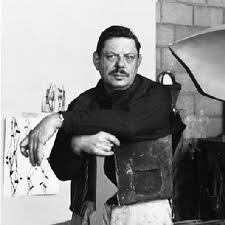
David Smith


"If you ask me why I make sculpture, I must answer that it is my way of life, my balance, and my justification for being.  If you ask me for whom do I make art, I will say that it is for all who approach it without prejudice."


— David Smith
American Sculptor, Painter
1906 - 1965


Commentary
I began writing poetry when I was a junior in high school as a way of expressing my thoughts and ideas.  I was going through a spiritual transition from born-again Christian to non-believer.   The writing helped me to express my concerns about war, racism and hypocrisy.  The poems had no formal structure and did not rhyme.  I am not even sure why I called it poetry other than I gave each one a title and broke them into short lines.  It could have been a journal but I knew even less of about journals than I did poetry.  The poems were philosophical and full of questions about life.  I even had one published in the church's weekly magazine for youth.  When I was a senior, I handed in a paper composed entirely of poems I wrote.  The class was a seminar in philosophy, not English.  My English teacher asked me why I had not shown the poems to her.  I had not even considered it.  I did not associate the poems I wrote with what I read in English class.

Why do you write? Paint? Dance? Sculpt? Draw?  How did you begin?  Why did you begin? 

Creative Practice
Explore this week your creative roots?  Why did you start writing or painting?  What motivated you?  What drove you?  How much have you grown since those early attempts at self-expression?  Why do you continue to create?

About the Sculptor
CUBI VI
1963
Considered to be one of the greatest American sculptors of the 20th century, David Smith was born in 1906 in Decatur, Indiana.  His mother was a school teacher and his father was a telephone engineer.  Smith left college after one year and took a job working in the Studebaker automobile factory in South Bend, Indiana during the summers.  He learned how to solder and weld.

In 1927 Smith moved to New York and met and married Dorothy Dehner, an art student.  Smith studies at the Art Students League.  In 1935 Dorothy and David traveled to Europe and met many artists and visit museums.  In 1937 Smith joined the newly organized American Abstract Artists group.  In 1938, Smith had his first solo show at Marian Willard's East River Gallery in New York City. The show included welded iron sculptures and drawings from 1935 - 38.  During World War II, David Smith worked the night shift at the American Locomotive Company in New York, assembling M7 tanks and locomotives.  In 1946, Smith showed 54 sculptures at the Willard and Buchholz Galleries in New York City.  Thirty of these works were made in 1944 and 1945.

In 1950 David Smith received a Guggenheim Fellowship which was renewed in 1951.  His work became more abstract with less narrative.  Dehner and Smith divorced in 1952.  Smith had a solo show at the Willard-Kleeman Gallery in 1952.  In 1953 he married Jean Freas and divorced her in 1961.  In 1965 at the age of 59, David Smith was killed in an automobile crash in Vermont.

Enjoy the sculptures and paintings of David Smith.


Biography Sources:
http://www.davidsmithestate.org/index.html
http://en.wikipedia.org/wiki/David_Smith_(sculptor)
http://www.theartstory.org/artist-smith-david.html

Quote Source:
Clint Brown.  Artist to Artist.  Jackson Creek Press, 1998.


Monday, August 20, 2012

Masaoka Shiki

"Take your materials from what is around you — if you see a dandelion, write about that; if it's misty, write about the mist.  The materials for poetry are all about you in profusion."


Japanese Poet
1867 - 1902


Commentary
Where do you get your ideas for your writing or your painting?  Are your ideas rooted in the world in which you live?  Has that maple tree in your backyard shown up in your painting?  Has the dragonfly or the butterfly appeared in your writing?  Look around you.  The world is yours for the taking.  Be sure to incorporate it into your creative work.

Creative Practice
Take 10 minutes everyday and write or paint something that you normally don't write or paint.  Take your subject from what is around you.  Maybe it is a dandelion, or a squirrel, or an oak tree, or even a spider.  Or take something you normally write or paint and change your perspective.

About the Poet
Masakoa Shiki (Tsunenori), considered one of four great Japanese poets, was born into a samurai family of modest means in the castle town of Matsuyama on the island of Shikoku.  His father, Tsuneanao, was an alcoholic who died when Shiki was five years old.  His mother was the daughter of a Confucian scholar who became Shiki's first teacher.  She was forced to teach sewing to support her family.  At 15, Shiki became involved in the Freedom and People's Rights Movement and became interested in being a politician.  He moved to Tokyo in 1883 to live with an uncle. While in Tokyo, he discovered baseball and enjoyed playing.  He entered the Imperial University in 1890 where he studied literature and eventually concentrated on haiku.

When Shiki was 22, he began coughing up blood and adopted the pen name, "Shiki," the name of a bird that according to legend coughed up blood as it sang.  He dropped out of the university and began working as haiku editor for a newspaper, Nippon.  Shiki suffered fro tuberculosis the last 14 years of his life.  He went to China in 1895 as a war correspondent in the First Sino-Japanese war.  Living in filthy conditions in China, Shiki grew worse.  He became bedridden in 1897.  The illness worsened in 1901 and he began using morphine as a painkiller.  He died of TB in 1902 at the age of 35.  

Haiku by Shiki

spring rain:
browsing under an umbrella
at the picture-book store

a look backward
at the person who went by —
misted out

the nettle nuts are falling . . .
the little girls next door
don't visit me these days

ways of the world,
may he never know them,
the toad

lifting my head,
I look now and then —
the garden clover

to awaken
the hot-water bottle, barely
warm

how much longer
is my life?
a brief night . . .

a barrel full of phlegm —
even loofah water
will not avail me now

Biography  & Haiku Sources:
Beichman, Janine. Masaoka Shiki. Twayne Publishers (Boston). 1982.
Hoffmann, Yoel. Japanese Death Poems. Tuttle Publishing (Boston). 1986.
Isaacson, Harold J. Peonies Kana. Theatre Arts Books (New York). 1972.
http://en.wikipedia.org/wiki/Masaoka_Shiki

Quote Source:
Beichman, Janine. Masaoka Shiki. Twayne Publishers (Boston). 1982.

Monday, August 13, 2012

Alice Neel

Neel with her painting,
Self-Portrait, 1980
"The place where I had freedom was when I painted.  When I painted I was completely and utterly myself.  For that reason it was extremely important to me."


American Artist
1900 - 1984


Commentary
            Do you feel free when you are creating?  Is the act of creation a liberating experience for you?  If it is not a freeing experience, then maybe you are working on the wrong subject.  The act of creating should open you up and free your spirit.  Life may restrict and limit us with work, family, housing and food, but painting and writing should take us to worlds with no limits or restrictions.  We should be free to paint and write as we choose.  Don't let others impose their ideas on your art.  Be yourself when you create and let your spirit lead you and inspire you.

Creative Practice:
          Using this quote as a starting point, write for ten minutes every day this week about what freedom to create means to you.  Compare what you wrote on day one with what you wrote on day 7.  What changed and what stayed the same?  Then share your best writing here.

About the Artist
My Mother
1952
        Alice Neel was born in Merion Square, Pennsylvania on January 28, 1900.  She was the fourth child of Alice Hartley and George Neel.  After high school, Neel held a secretarial job with the Army Air Corps for 3 years and took art classes in the evening.  In 1925 she graduated from the Philadelphia School of Design for Women.
      On June 1, 1925, Neel married Cuban painter, Carlos Enriquez.  She gave birth to her first daughter in December of 1926.  Her daughter died just before her first birthday.  Her second daughter was born in 1928.
        In 1930 Enriquez traveled to Cuba with their second daughter and left her in the care of his sisters while he traveled to Spain. Later that year, Neel suffered a nervous breakdown and was hospitalized.  She attempted suicide several times.  Although they never divorced, Neel and Enriquez never saw each other after 1933.
        After Neel's separation from Enriquez, she had several lovers.  One of her lovers in a fit of rage burned over 300 of her drawings and watercolors.  He also slashed more than 50 oil paintings.  In 1939, Neel gave birth to her son, Richard.  Jose Santiago Negron, a nightclub singer, was the father.  A second son was born in 1941.  The father was Sam Brody, a photographer and filmmaker.  They had a relationship for two decades even though Brody was married.

Documentary Trailer


Solo Exhibitions:
1926, Havana, Cuba
1938, New York, Contemporary Arts
1944, New York, The Pinacotheca
1950, New York, A.C.A. Gallery
1951, New York, New Playwrights Theater
1960, Tinton Falls, New Jersey, Old Mill Gallery
1962, Portland, Oregon, Reed College
1963, New York, Graham Gallery
1965, New York, Graham Gallery
1965, Hanover, New Hampshire, Dartmouth College
1965, New York, Fordham University
1967, San Francisco, Maxwell Galleries
1968, New York, Graham Gallery
1970, New York, Graham Gallery
1971, Philadelphia, Moore College of Art and Design
1972, Bowling Green, Ohio, Bowling Green State University
1972, Bloomsburg, Pennsylvania, Bloomsburg State College
1972, Nairobi, Kenya, Paa Ya Paa Art Gallery
1973, Jenkintown, Pennsylvania, Langman Gallery
1973, New York, Graham Gallery
1974, New York, Whitney Museum of American Art
1974, Tinton Falls, New Jersey, Old Mill Gallery
1974, Summit, New Jersey, Summit Art Center
1975, Portland, Oregon, Portland Center for the Visual Arts
1975, San Francisco, American Can Collective
1975, Geneva, New York, Hobart and William Smith College
1975, Northampton, Massachusetts, Smith College Museum of Art
1975, Stockon, California, University of the Pacific
1975, Athens, Georgia, University of Georgia
1976, New York, Graham Gallery
1976, Glenside, Pennsylvania, Beaver College Art Gallery
1976, Washington, D.C., Fendrick Gallery
1976, Wallingford, Connecticut, Paul Mellon Arts Center
1977, Hagerstown, Maryland, Washington County Museum of Fine Arts
1977, Oshkosh, Wisconsin, University of Wisconsin
1977, Bethlehem, Pennsylvania, Lehigh University
1977, Flushing, New York, Queens College
1977, New York, Graham Gallery
1978,  9 Solo Exhibitions
1979, 8 Solo Exhibitions
1980, 4 Solo Exhibitions
1981, 6 Solo Exhibitions
1982, 1 Solo Exhibition
1983, 4 Solo Exhibitions
1984, 3 Solo Exhibitions
1985 - 2011, 41 Solo Exhibitions (After her death)

Biography Sources:
http://www.aliceneel.com/home/
http://en.wikipedia.org/wiki/Alice_Neel

Quote Source:
Clint Brown, Artist to Artist, p. 163.