Welcome!

Welcome! There are more than 900 Inspirational Quotes For Writers, Artists and Other Creative Leaders on this site.
Spend a few minutes exploring. And come back again and again for other inspirational quotes.

Monday, November 4, 2013

Morgan Freeman


Acting means living, it's all I do and all I'm good at. If I weren't getting paid well, I would still be acting in a small troupe somewhere.


-- Morgan Freeman
American Actor, Film Director
1937 - 


Commentary
The question all creative leaders must face is whether they would still create if they didn't get paid for their work.  And the answer is in the affirmative for true artists.  Many of us will labor for a lifetime without financial reward or recognition or fame.  The joy we find in the creative process in the end is our reward.  

Do you find joy in the creative process?  Can you get lost for hours creating a story, a painting or a poem?  I find the creative process in and of itself very rewarding.  I feel good.  If I go for any period of time without creating something, I find myself feeling down.  My mood is impacted by whether or not I have spent time creating something.  The creative process brings me joy in a negative, hostile, crazy world.

Why do you think successful writers continue to write?  Why do successful songwriters continue to write songs?  Why do successful painters continue to paint?  Why do successful actors like Morgan Freeman continue to act?  Why do movie stars who are paid millions for some of their films take roles in plays that pay them peanuts?  The answer is the emotional high they find in creating something.  Creative leaders are blessed with the joy of creating.  

Creativity is a gift that we have been given.  Enjoy the gift for itself.  Don't fret over whether you will make any money.  There are other ways to make money.  Just don't give up on your gift.  Keep creating even when you are surrounded by darkness — even when your world is collapsing.  For only in the creating to we find salvation, healing and joy.

Creative Practice
This week create something for the sheer joy of creating — a poem, a painting, a story.  Enjoy the process and don't worry about publication, selling or perfection.

Biography
Morgan Freeman was born in Memphis, Tennessee to Mayme Edna, a teacher, and Morgan Porterfield Freeman, a barber.  He moved frequently in his childhood, living in Mississippi, Indiana and Illinois.  Freeman made his acting debut at the age of nine in a school play.  He won a statewide drama competition at age 12.  He turned own a partial acting scholarship to college to join the US Air Force.

After the Air Force, Freeman lived in Los Angeles, San Francisco and New York, finding work as an actor in various plays.  He made his off-Broadway debut in 1967.  The following year he debuted on Broadway in Hello, Dolly!  His first film appearance was in 1971.  He had TV roles in the soap opera, Another World and the kid's show, The Electric Company.  He has supporting roles in feature films in the 1980s and closed out the decade with powerful roles in Driving Miss Daisy and Glory in 1989.  He played Red, a convict, in The Shawshank Redemption in 1994.

Freeman has received 4 Academy Award nominations including Best Actor nominations in Driving Miss Daisy and The Shawshank Redemption.  He won Best Supporting Actor for his performance in Million Dollar Baby.


Monday, October 28, 2013

Julia Cameron

"Art opens the closets, airs out the cellars and attics.  It brings healing."


— Julia B. Cameron
American Writer, Artist, Filmmaker
1948 -


Commentary
Some would say that our hearts and souls become clogged with the emotions of living.  We suffer real and imagined hurts at the hands of others.  Overtime this pain begins to clog up our metaphoric arteries, blocking our hearts and souls.  We become unhappy and disenfranchised.  We are discouraged and depressed.

One avenue to salvation is involvement in the arts — writing, painting and singing, etc.  Writing opens the attics of our minds and allows us to clean out the cobwebs, chase away the mice and restore sanity.  Painting airs out the musty smells in the basements of our hearts, removes the boxes of ancient memories and fills us with hope.  Music soothes the soul and heals the heart.

Has your involvement in the arts helped you to heal the heart and cleanse the soul?  Has creativity brought you happiness and salvation?  Are you on the road to healing the hurt of yesteryear? Are you a better person today because of your creative work?

Sometimes we fight who we are, struggling against ourselves and our natures. But we must learn to accept who we are and appreciate who we become. We must love ourselves for what and who we are, and believe in our talents.

Creative Practice
In her book, The Artist's Way, Julia Cameron teaches the powerful tool of morning pages.  She suggests that people spend time every day writing anything that comes to mind.  One is not writing for publication, but to practice writing — to aid in the healing process.  This week spend 30 minutes each morning writing whatever enters your mind.  Don't pause, stop or reflect.   Just write.  Keep the pen on the paper and write.  (The key is to write longhand, not with a computer.) This begins the cleansing process.  And if you have not read her book, now would be a good time to do so.

Biography
Julia Cameron was born in Illinois and raised in a suburb of Chicago.  She attended both Georgetown University and Fordham.  She began her career at the Washington Post and later the Rolling Stone.  She met and married Martin Scorsese in 1975 and divorced in 1977.  

Cameron is best known for her book, The Artist's Way, in which she explores creativity as a spiritual path and helps people to unlock their creativity.  She has written 30 books  including the novel, The Dark Room, and is an award-winning poet, playwright and filmmaker.  You can find out more information about her and her work at:


Video
Here is a video of Julia Cameron talking about the spiritual path to creativity.


Friday, October 25, 2013

Susan Cain


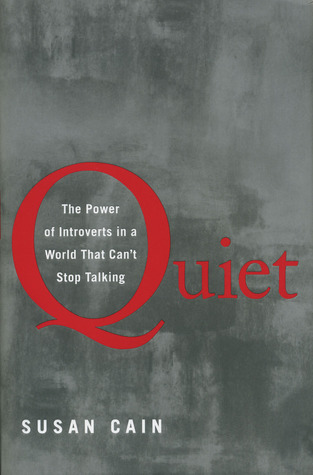
Quiet: The Power of Introverts in a World That Can't Stop Talking

by Susan Cain
American Author
1968 -


I am a closet introvert. Most of my life I have functioned as an introvert, but in my work I take on the persona of an extrovert. Susan Cain calls me a pseudo-extrovert -- someone who for various reasons takes on the identity of an extravert. Cain's thesis is that for most of the 20th century, Americans worshiped people who were extroverts and discouraged introverts. We see this in a school system that encourages socialization. In the last 30 years parents have taken this to the extreme with extra-curricular activities almost every day of the week. Outgoing, friendly people are celebrated. The book worm, the loner, is discouraged. 

My wife of 40 years, on the other hand, is a classic extrovert. She was born talking. She has never met a stranger who she couldn't start a conversation with. We can be sitting in the Drs. office and she will strike up a conversation with someone sitting in the next chair. In the mornings, I prefer silence. Since I don't talk, she turns on the TV so she hears someone talking. She is outgoing and friendly. Everyone falls in love with her. People when they first meet me see me as grumpy and grouchy even though I am not. I am just very quiet. We are opposites that were attracted to each othe
r. What has happened in the last 40 years is that I have taken on some of the behaviors of an extrovert and she has taken on some of the behaviors of an introvert. We have learned to live together.

Susan Cain has amassed an enormous amount of research demonstrating that society, business, communities and even marriages need and benefit from having both introverts and extroverts on the team. Steve Wozinak, inventor of the Apple computer, needed a Steve Jobs to market and sell the computer. 

Quiet: The Power of Introverts in a World That Can't Stop TalkingWe are all to varying degrees somewhere on the introvert - extrovert continuum. If you are an introvert or an extrovert or in a relationship with one or the other, then you need to read this book. Business people should read this book to understand their employees, their bosses and their peers. Teachers should read this book to understand the differences in the personalities of the children they teach. Husbands and wives should read this book to understand each other. 

If there is only one book you are going to read this year, it should be Quiet by Susan Cain. This book could save your marriage, your job, and your life.


https://www.goodreads.com/book/show/8520610-quiet

Monday, October 21, 2013

Jane Kenyon


"I think that writing . . . was my effort to understand and control what was happening to me.  For me poetry's a safe place always, a refuge, and it has been since I took it up in the eighth grade, so it was natural for me to write about those things that were going on in my soul."


Jane Kenyon
American Poet
1947 - 1995


Commentary
Is your art a safe place for you — a place of refuge from the chaotic world in which we live?   Does it give you control of things you have no control over?  Does writing help you understand who you are and why you do the things that you do?

Why do you write poetry?  Or paint?  Or tell stories?  I keep going back to this question in my life.  And I still do not know the answer.  I can mouth the  platitudes with the best of them.  "I do it because I have to."  "I have no choice.  Something inside has to get out."  Yet, those really don't answer the question.  All I know is that I write.  Why I write remains a mystery.  I did not have a miserable childhood.  I have not suffered physical or emotional abuse.  I have had a normal life — a safe life.  The paradox is that the secure life gives me the freedom to be wild in my mind.  My mind can go to places my body would never venture.

Does writing create a safe place for me?  I would not say that it creates a safe place for me.  I think writing creates a happy place — a peaceful place.  And probably most important — a creative place where limits do not exist, where I can go crazy, where I can pretend to be somebody I am not.  What kind of place does art create for you?

Unlike some writers, most of my writing is not autobiographical.  I enter the lives of characters I invent.  Even the poet writing the poem is a character.  The poet is not me.  Maybe a facet of me, but not me.  Are you the writer or the persona of the writer?  Does the writer exist or is he only the vessel through which the writing flows?

Creative Practice
This week pretend to write from the point of view of someone who is not you.  Pretend the writer is not you.  

Biography
Jane Kenyon was born in Ann Arbor, Michigan.  She graduated from the University of Michigan with a B.A. and a M.A.   While a student, she met the poet, Donald Hall, and they were married in 1972.  He was nineteen years her senior.  Four collections of her poetry were published in her lifetime.  She died in 1995 at the age of 47 from leukemia.

Monday, October 14, 2013

Johann Wolfgang von Goethe

"All truly wise thoughts have been thought already thousands of times; but to make them truly ours, we must think them over again honestly, till they take root in our personal experience."


Johann Wolfgang von Goethe
German Writer / Politician
1749 - 1832


Commentary
All wise thoughts have been said thousands, perhaps millions of times by writers, preachers, philosophers and other creative leaders.  That original thought that you had has been thought before.  That love poem you wrote because of your feelings has been written thousands, maybe even millions of times before.  That landscape painting you made has been painted thousands of time before. Yet, and this is the brilliance of Goethe's statement, each of us must rethink it for ourselves.  Each of us must find our truth in the world — in our experiences.

As creative leaders we seek originality — something new to say.  Yet, what we find is that it has been said before.  Originality comes in how we say it, not what we say.  When we say something in a new way, we may open up new windows of insight - new ways of thinking.

We are taught many things as children, but if we don't question what we have been taught, we will never be truly wise.  We will live off the wisdom of others, but the wisdom will never take root in our hearts.  We will never be truly wise.

Creative Practice
This week take an old idea and say it in a new way.  Take an old story and write it from the point of view of another character.  Take an old poem and rewrite in a new form.  Take a long poem and capture its essence in a haiku.  Take the emotion in an old poem or story and paint it.

Biography
Goethe was the son of Johann Caspar Goethe and Catharina Elizabeth Textor.  His father was 38 and his mother 17.  All their children died at early ages except Goethe and his sister.  Goethe was taught by his father and private tutors.  He studied Latin, Greek, French, Italian, English and Hebrew.

Goethe published his first collection of poetry at the age of 21.  In 1774 he wrote the book, The Sorrows of Young Werther, that would bring him world-wide fame but not fortune.  His body of literary work included epic and lyric poetry, prose and verse dramas, memoirs, literary criticism, scientific treatises and novels.  He also wrote over 10,000 letters and made over 3,000 drawings.  Faust is his most celebrated literary work.

Monday, October 7, 2013

Henry Miller

"There are no perfect beings, and there never will be."


— Henry Miller
American Writer
1891 - 1980


Commentary
Do you strive to be perfect in your writing, your painting, or even your music?  Perfection is a pursuit that plagues many people.  Ever since Adam and Eve were tossed out of the Garden of Eden, human beings have sought to return to the land of perfection.  As a child, I sought perfection at school, at church and in the home.  I attempted to become perfect in the eyes of God.

In fourth grade, my teacher, Mrs. Windley, pulled another boy and myself aside and told us that we needed to be leaders on the playground.  We needed to stop the other children who were misbehaving.  I, of course, had no idea what she meant.  Supposedly, because we behaved so well, she wanted us to influence the other children.  I had no idea how to do that.

I have tried to write the perfect poem, the perfect short story, the perfect novel and failed miserably.  Early in my career, I would spend hours and hours rewriting and revising.  I usually reached a point in my revising where the words returned to what I had originally wrote.  I had come full circle and I knew it was time to stop.

I read a story once of a Japanese haiku poet, who in his lifetime had written thousands of haiku.  When he was dying, he destroyed all but three of his haiku.  He felt the others were not good enough — were not perfect.

I have spent a lifetime struggling against the false god of perfection.  I know I will never be perfect, but a part of me still seeks to reach it.  The lesson I keep relearning is that it is okay to fail — to make mistakes, to be human.  Failure is part of the human state.
Self-Portrait

In the American society, we put people on pedestals and make heroes out of them.  They become our perfect idols.  We worship them.  And then when we discover that they are human, we vilify them.  They have let us down.  We condemn them.  We do it to our sports heroes, our politicians, our artists.  Nobody is perfect.  Our heroes have clay feet.  Our heroes will fail us.

Are you a perfectionist?  Do you punish yourself for your failures?  Do you judge yourself too harshly?  Have you learned to forgive yourself?  To accept your mistakes?  To understand that it is okay to be human? To realize the Garden of Eden does not exist?

Creative Practice
This week revisit some of your creative works that you consider to be failures and look at them through fresh eyes.  Learn to accept it.  Send it out into the world with all it flaws.  Also, take time this week and forgive yourself for the mistakes that you have made.  Accept the fact that you are human.

Biography
Henry Valentine Miller was the son of Heinrich Miller and Louise Marie Neiting.  He was of Lutheran German descent.  He was born and raised in New York City.  He attend college for one semester.

Miller was married five times (talk about failure) and had three children.  He worked for Western Union.  He wrote his first novel that was never published at the age of 31.  His second and third novels were not published until after his death. (More failure.)


Henry Miller painting
In 1930 Miller moved to Paris and began working on Tropic of Cancer.  He met Anais Nin who became his lover and financed the first printing of Tropic of Cancer in 1934.  The book was banned in the United States on the grounds of obscenity.  He continued to write novels that were banned. (More failure.)

Miller moved back to New York in 1940 and then to California in 1942.  In 1961 Tropic of Cancer was finally published in the United States by Grove Press.  The publication led to a series of obscenity trials that tested the laws on pornography.  The U. S. Supreme Court 1964 declared the book a work of literature.  Eventually his books were all published in the U.S.

Miller also painted more than 2,000 watercolor paintings in his life.  He was a friend of French painter, Gregoire Michonze.


Monday, September 30, 2013

Bertolt Brecht

"We're spongers. Spongers. The last human beings not to be servants.  What's a poem worth?  Four shirts?  A loaf of bread?  Half a cow?  We don't make merchandise; we just make gifts."


— Bertolt Brecht
German Poet / Playwright / Theater Director
1898 - 1956


Commentary
What is a poem worth?  How much are you willing to spend to read a poem?  Can you put a price on a poem?  Is it a commodity like milk or eggs or a new car?  I can buy a gallon of milk for $2.99.  Is that what a poem is worth?  This week on my trip to Baltimore I rented a car for $44 a day?  Is a poem less valuable then one day of transportation?  My hotel room cost me $109 a night excluding taxes?  Is a poem more valuable than a hotel room for a night?

The American society puts a dollar value on almost everything.  The price of weddings are going through the roof, but be careful, divorce costs even more.  What price is love?  How about sex?  Even dying costs thousands of dollars.  Should I have you bury me in a coffin made of poetry books?  It would be cheaper. 

We now can pay $.99 for a song?  How does that compare with a hair cut?  Or a pedicure? Or a day at the spa?  So what is a poem worth?  Or a short story?  I bought two hamburger patties to grill today for almost $6.00.  Are you willing to pay me $6.00 to nourish your soul instead of your body?  A Swedish massage will cost me $65 for one hour.  I could probably buy four books of poetry for that amount.  The poetry could nourish my soul for years.  The poetry can change my life and teach me to see the world differently.  So what is a poem worth?  

In the words of Bertolt Brecht, "We don't make merchandise; we just make gifts."  Whether you paint, draw, sing or write.  What we do is a gift.  What we create is a gift that we give to the world.  We can't measure our gifts with price tags.  Some things can not be sold; they must be given.  Not all success comes wrapped in dollar bills.  What gifts are you creating?  What gifts are you giving away?

Creative Practice
This week give away a poem, a painting, or a song to a stranger, a friend or even a family member.  Ask for nothing in return.  Share a small piece of yourself.  Give the gift that keeps on giving.

Biography
Brecht was born to a Protestant mother and a Catholic father in Augsburg, Bavaria.  His home was a comfortable middle class.  He studied drama at Munich University.  He wrote his first play, Baal,  in 1918 and his second, Drums in the Night, in 1919.  A collection of his poems, Devotions for the Home, was published in 1927.  Brecht went on to write over 50 plays in his lifetime.  He was one of the most influential and important playwrights of the 20th century.

Poem
Here is one of Brecht's poems.  Accept it as a gift.

On the Term of Exile
By Bertolt Brecht

No need to drive a nail into the wall
To hang your hat on; 
When you come in, just drop it on the chair
No guest has sat on.

Don’t worry about watering the flowers—
In fact, don’t plant them.
You will have gone back home before they bloom,
And who will want them?

If mastering the language is too hard,
Only be patient;
The telegram imploring your return
Won’t need translation.

Remember, when the ceiling sheds itself
In flakes of plaster,
The wall that keeps you out is crumbling too,
As fast or faster.


Translated from the German by Adam Kirsch

Monday, September 23, 2013

D. H. Lawrence

"The human soul needs beauty more than bread."


— D. H. Lawrence
English Novelist, Poet, Painter
1885 - 1930


Commentary
What does your soul need? Beauty? Bread? Creativity? Silence? Freedom? Faith? Love? Peace? Chaos?  Dignity? A connection with humanity?  What does your soul seek? God? Humanity? Hope?  What does your soul create? Beauty? Pain? Art? Poetry? Stories?

I think it is a privilege to be a creative leader.  We are doubly blessed.  Our creativity feeds our soul and our soul feeds our creativity.  Through the process of writing, painting or dancing, we cleanse and heal our spirit — we restore our soul.

Creativity is water for the soul and nourishment for the spirit.  Drink deeply that the fruits of your labor will grow and flourish.

Creative Practice
Feed your spirit this week.  Do what makes you feel good.  Take care of yourself.

Biography
David Herbert Lawrence was the fourth child of Arthur John Lawrence, a miner, and Lydia Beardsall who worked in a lace factory.  He spent his youth in the coal mining town of Eastwood, Nottinghamshire.  Lawrence received a teaching certificate in 1908.  He taught at the Davidson Road school for a couple of years.  His mother died from cancer in 1910.  Lawrence was devastated by her death.  His first novel, The White Peacock, was published in 1911.  

In 1912 Lawrence met Frieda Weekley, a married woman with three children, who was six years older than him.  They ran off to her parent's home in Germany.  Lawrence was arrested and accused of being a British spy, but was released due to the intervention of Weekley's father.  Lawrence and Weekley left Germany and walked across the Alps to Italy. In Italy, Lawrence finish Sons and Lovers which was published in 1913.  Lawrence and Weekley were married in England in 1914 after she obtained a divorce.

During World War I, Lawrence and his wife were accused of spying for the Germans and harassed by the authorities.  After the war, Lawrence went into voluntary exile returning to England only twice for brief visits.  He and Frieda spent the rest of his life traveling to Australia, Italy, Ceylon, United States, Mexico and France.  They arrived in the U.S. in 1922 and bought property in New Mexico.  While on a visit to Mexico in 1925, Lawrence almost died from an attack of malaria and tuberculosis which forced him to return to Europe.  He died in France from tuberculosis.


Monday, September 16, 2013

Miles Davis

"My future starts when I wake up every morning.  Every day I find something creative to do with my life."


— Miles Davis
American Musician
1926 - 1991


Commentary
How do you wake up every morning?  Are the creative juices flowing?  The life of the creative leader is about creating — about finding new ways of seeing the world.  About living the creative life.

The creative life is an attitude — a way of embracing the world.  Are you open to the possibilities?  The new beginnings?  Or have you closed your mind and heart and see only a narrow path before you?  Miles Davis, the musician, was always changing, exploring the music, finding new pathways, seeing new possibilities.  Whenever he felt himself growing stagnant, he would change directions, take a new path.  As a jazz musician, he improvised, played off of his fellow musicians, and changed the notes.

Are you living the creative life?  Or are you stagnant?  Do you hide behind what you created?  Or are you growing?  Improvising?  Exploring alternative paths?  Are you open new ideas?  

Creative Practice
Try something new this week — a new painting technique, a new form of poetry, a different style of music.  Do something you have never done — work with clay, write a song, learn to dance.  Wake up the creativity inside.  Develop a creative attitude.

Biography
Miles Davis was born in Alton, Illinois to Miles Henry Davis and Cleota May Davis.  His father was a dentist and moved the family to East St. Louis in 1927.  Miles thought of going to medical school, but his love of music was too strong.  His father gave him a trumpet at the age of thirteen and paid for music lessons.  By sixteen, Miles was playing professionally when not in school.  At seventeen, he spent a year playing in the Blue Devils, Eddie Randle's band.  In 1944, the Billy Eckstine band, which included Dizzy Gillespie and Charlie Parker, visited East St. Louis.  Miles had an opportunity to play with the band for a couple of weeks because the regular trumpet player was sick.

In the fall of 1944, Davis moved to New York to study at Juilliard School of Music.  He eventually dropped out to play music full time.  In 1945, when Dizzy Gillespie left Charlie Parker's band, Miles was hired to replace him.  He recorded and traveled with the band.  During these years Miles played as well as recorded with various bands.

In 1955, Davis had an operation to remove polyps on his larynx.  He damaged his vocal tones and consequently, he had a raspy voice the remainder of his life.

Davis recorded 48 studio albums and 36 live albums during his life.

Video:
Spend some time listening to a discussion of the Miles Davis Kind of Blue Album, created to celebrate the 50th anniversary of the production of the album.  Then listen to the album itself.


Monday, September 9, 2013

Mitch Albom


“. . . there's a story behind everything. How a picture got on a wall. How a scar got on your face. Sometimes the stories are simple, and sometimes they are hard and heartbreaking. But behind all your stories is always your mother's story, because hers is where yours begin.” 


― Mitch Albom
American Author / Radio & TV Broadcaster / Songwriter
1958 -


Commentary
A few years ago, I wrote the story of my mother's life.  I told her story as I knew it from her point of view.  I imagined what her thoughts were and how she would respond to the events that happened in her life.  It was a fascinating experience and gave me insight and understanding of my mother.

We all have stories to tell — some easy and some difficult — and we need to be telling these stories.  As Albom says, there is a story behind everything whether you are talking about the painting on the wall or the scar on my hand.  I have a scar on my hand which resulted from being silly.  When I was in my early thirties, a friend and I were chasing each other around the apartment acting silly.  I was carrying a glass of beer in my hand.  He slammed the door on me and the glass broke in my hand.  I had to go to the hospital for stitches.  Often it is the small things that happen in our lives that blossom into larger stories.

What stories are you not telling that you need to tell?  We need to listen to our own stories because in the listening we gain understanding and wisdom.  On my wall in my office hangs a drawing I made with colored pencils in 2006 in the midst of a personal health crisis.  I was diagnosed with prostate cancer and had surgery.  The drawing is entitled, All Eyes on Jesus.  The title for the drawing came to me before I ever put pencil to paper.  The drawing is of a cross surrounded by masks.  The hand of God is reaching for the cross and the fires of hell are burning up the masks.  For me, the drawing captures my struggle with religion.  The drawing  tells a story.

Creative Practice
This week write a story or a poem about your mother in her voice.  Tell the story in the first person about a particular incident or event in her life.  Maybe you could tell the story of your birth from her perspective.  Or tell the story of her father's death through her eyes. Choose a particular event and tell the story.

Biography
Mitch Albom grew up in New Jersey in a middle class family.  His parents encouraged his siblings and him to see the world which he has done.  While working in New York, Albom developed an interest in journalism and became a sports writer.  He was a full-time feature writer for the Fort Lauderdale News and Sun Sentinel.  He then moved to Detroit and became the lead sports columnist for the Detroit Free Press where he still writes 2 columns.  He has won more than 200 journalism awards.  He has written two sports books — one with Bo Schembechler, U of Michigan football coach and the other about the Fab Five U of M basketball team.

His breakthrough book was Tuesdays With Morrie about his conversations with a former college professor who was dying.  He wrote the book to help pay for the professor's medical bills. Rejected by several publishers, it was eventually published by Doubleday in 1997.  The initial printing was 20,000 copies.  The memoir has sold over 14 million copies and has been translated into 41 languages.

Albom followed up six years later with a novel, The Five People You Meet in Heaven, which was published in 2003.  The novel has sold more than 10 million copies.  His next novel, For One More Day, was published in 2006 and spent 9 months on the New York Times Bestseller list.

As if writing is not enough for Albom, he also hosts a general radio talk show on WJR in Detroit 5 days a week.  The show is also televised and simulcast by MSNBC.  He has appeared on numerous TV shows.  He is also a playwright and songwriter.  He has also founded 7 charities.

Video
Here is Mitch Albom discussing why he thinks his books have been so successful.


Monday, September 2, 2013

Mahatma Gandhi

“Live as if you were to die tomorrow. Learn as if you were to live forever.”


― Mahatma Gandhi
Indian Lawyer /Activist
1869 -1948


Commentary
If you knew that you would live forever or at least as long as the universe exists, what would you do with your life?  Would you still write?  Or paint?  Or sing?  Would you obtain  a hundred college degrees?  Write a thousand novels?  Paint a million paintings?  What would you study?  History?  Science?  Religion?  Literature?  Why would you study?  For knowledge?  For wisdom?  Why would you create anything?  You would outlive the shelf life any novel you wrote or painting you painted.

Does the fact we know that we will die influence what we do in life?  If you were told that you had only six months to live, what would you do?  Spend the time with your loved ones?  Withdrawal from those around you?  Finish that great American novel that you have been working on for thirty years?  Travel the world and see all the places that you have wanted to visit?

There are only 24 hours in any given day.  What did you do with the last 24 hours of your life?  What are you going to do with the next 24 hours of your life?  Are you focused on what is important to you?  Or are you procrastinating?  Do you believe that there will always be a tomorrow?  If you don't have time today, maybe mañana?  We choose how we spend every minute of the 1440 minutes we are given each day.  What choices are you making?  Are they the right choices?

Creative Practice
Study how you are spending the 1440 minutes of your day?  Are you wasting any of those precious minutes?  Can you find an extra thirty minutes to focus on your creative work?

Biography
Mahatma Gandhi was born in India and studied law in England.  He became an advocate for the rights of Indians, first in South Africa and then in India.  He became the leader of India's independence movement, organizing non-violent forms of civil disobedience.

After studying law in England, Gandhi returned to India where he failed to establish a law practice in part because he was too shy to speak in court.  At 24, he accepted a job in South Africa with Dada Abdulla & Co, an Indian firm.  He worked as a legal representative for the Muslim Indian Traders.  Gandhi spent 21 years in South Africa where he formed many of his political views, ethics and leadership skills.  Gandhi represented the legal rights of wealthy Muslims and indentured Hindu laborers.

In South Africa, Gandhi faced discrimination.  He was thrown off a train for refusing to move from first class.  He was beaten by a stagecoach driver for refusing to give up his seat to a European passenger.  He was barred from many hotels.  The racism, prejudice and injustice against Indians in South Africa shaped Gandhi's social activism and awakened him to social injustice.  His fight for the rights of Indians in South Africa helped him to develop his non-violent forms of civil disobedience.

Gandhi returned to India permanently in 1915.  He joined the Indian National Congress and became its leader in 1920.  He spent the rest of his life working for the independence of India from England.  Gandhi was assassinated on January 30, 1948 by a Hindu nationalist.  Over two million people joined the five-mile long funeral march.

Gandhi was a prolific writer.  His complete writings were published in the 1960s and comprised about 50,000 pages published in 100 volumes. His autobiography is called, The Story of My Experiments with Truth.  

Monday, August 26, 2013

Elmore Leonard


"The writer has to have patience, the perseverance to just sit there alone and grind it out. And if it’s not worth doing that, then he doesn’t want to write."


Elmore Leonard
American Novelist / Screenwriter
1925 - 2013


Commentary
Creative leaders need to be patient.  No one is born with writing skills or artistic skills.  These have to be learned which does not and will not happen overnight.  For some of us it takes years and for others we may never perfect our craft.   Beginning writers often ask their teachers and mentors whether they have talent.  They are asking the wrong question.  They should be asking:  do I have the patience to learn this craft.  Do I have the persistence to keep going when everything and every person is telling me to quit?

Writing and painting are not easy.  Are you willing to sit in front of a blank page or a blank canvas waiting for your muse to show up and inspire you?  Are you willing to write and rewrite until your brain is numb?  Are you willing to spend long hours working while your friends are out partying and having fun?  Are you willing to spend difficult hours creating something that you may never be able to sell or able to make any money off your labor?

The creative arts are only for the strong of spirit — those who are able to sacrifice the rewards of the moment for the possibility of opportunity sometime in the future.  The creative arts are only for those who are driven by some demon deep inside — for those who are unable to stop creating even in the face of a hostile world.


Creative Practice
Answer this question truthfully:  If I knew now that I would never be rich, famous or successful in my lifetime, would I still create?

Biography
Born in New Orleans, Leonard was the son of Flora Amelia and Elmore John Leonard, a General Motors executive.  The family lived in several places because of Leonard Sr's job.  They finally settle in Detroit in 1934.  Elmore Leonard, Jr. graduated from both high school and college in Detroit with a degree in English and philosophy.  Elmore spent 3 years in navy at the end of World War II.

Leonard's first job after college was as a copywriter for an ad agency.  He wrote stories and novels on the side, publishing his first story in 1951 in the Argosy.  He wrote westerns, mysteries and crime novels.  His short stories and novels have been turned into movies, such as Hombre, Get Shorty, Killshot and Freaky Deaky .

Video
Here is Elmore Leonard discussing the story writing process.


Monday, August 19, 2013

Mayumi Oda

"Creativity is not a driving force.  It happens.  It creates itself and you have to be open."


1941 - 
Japanese Artist


Commentary
What is creativity?  Can you define it?  Where does it come from?  Why do some people think they are not creative?  Why are others swimming in a sea of creativity?  Can we control our creativity or does it move to the beat of a different drummer?  Why is one person creative and another not?

Are you open to the creativity within your spirit?  Do you hear it calling you?  Do you follow it down the path to your heart?  We are dancers on the shores of hope, giving gifts to those who understand.  Creativity does not drive through the rain, but sits under the umbrella and listens to the silence between the drops.  Do you let it happen gently on the corners of your soul or do you force it through the keyhole of resistance?
Art by Mayumi Oda

How does creativity manifest itself in your life?  What forms does it take?  What rituals are you forced to follow?  Can you call up creativity at will or must you kneel in prayer hoping for it to return?  Does creativity drain you of your energy or does it fill your spirit with enthusiasm?  Does creativity dance on the winds of love or is it a tornado of destruction?  Does creativity possess you or do you possess it?

Does your cup overflow with creativity?  Or does it come to you in drips and drops?  Do you go for days or weeks or months without a creative thought?  Or do your thoughts drown you in a tsunami of creativity?

Creative Practice
This week define what creativity means?  Can you put it into words?  What does it mean to your life?  Has creativity ever stirred up trouble for you?  How do you encourage creativity in others?  

Biography
Art by Mayumi Oda
Mayumi Oda was born into a Buddhist family in Japan in 1941.  She graduated from the Tokyo University of Fine Arts in 1966.  She also studied traditional Japanese fabric dyeing which has influenced her art.  She has exhibited her art in over 40 one-woman shows throughout the world.  Her art is part of the permanent collections of Museum of Modern Art in New York and the Museum of Fine Arts in Boston.

Oda paints images of goddesses including traditional images as well as those that she invents.  She is often described as a Japanese Matisse because of the color and free-flowing lines in her work.

Mayumi Oda has also spent many years as a global activist participating in anti-muclear campaigns worldwide.  Oda founded Ginger Hill, a farm and a retreat center on the Big Island of Hawaii. Oda hosts workshops and retreats at Ginger Hill.


Monday, August 12, 2013

Alex Haley


"The reality is that writing is a lonely, private and poor-paying affair. For every writer kissed by fortune, there are thousands more whose longing is never requited. Even those who succeed often know long periods of neglect and poverty. I did."


Alex Haley
American Writer
1921 - 1992


Commentary

The path to financial success is never easy for writers, artists or actors. In fact, for every Stephen King, John Grisham, James Patterson, Paul Newman, Tom Cruise or Angelina Jolie, there are hundreds of thousands, maybe millions of creative people who do not make a dime from their writing, acting or painting. And for some, financial success may be short-lived — one movie, one song, one novel. So if you are in the game for money, you would be better off investing in the stock market or real estate. 

Creative work is not for the faint-of-heart. If you need people in your life, skip writing and painting. Enter theater, film or music which require group participation. Writing and painting are lonely pursuits that involve a minimum amount of people contact. Writers and painters spend long periods by themselves. Writers spend long periods in their own heads visiting worlds that do not exist and talking with people who are imaginary. Sounds crazy, doesn't it?

Creative Practice
Be sure that you are in the arts because you can't live without it. Does it keep your spirit alive? Does it restore your soul? Does it make you happy?


Biography
Alex Haley, the oldest of five children, was born in Ithaca, NY.  His father was a professor of agriculture.  When Alex turned 18, he joined the Coast Guard where he had a 20 year career.  While in the Coast Guard, Haley taught himself how to write stories.  After the Coast Guard, he began a career in writing.

Alex Haley interviewed Miles Davis and the article appeared in the September 1962 issue of Playboy.  Haley also interviewed Martin Luther King, Jr, Muhammad Ali, Sammy Davis, Jr., Jim Brown, Johnny Carson, Malcolm X and Quincy Jones for Playboy.  He also interviewed George Lincoln Rockwell, leader of the American Nazi Party.  

Haley's first book, The Autobiography of Malcolm X, was published in 1965 and by 1977 had sold 6 million copies.  In 1998, Time named it one of ten most influential nonfiction books in the 20th century.

In 1976, Haley published Roots, a novel based on his family's history.  His work on the novel involved ten years of research and writing.  The book was adapted for a popular television miniseries by ABC.

Video
Here is a video of Alex Haley discussing Roots on the Merv Griffin Show (1977).