Welcome!

Welcome! There are more than 900 Inspirational Quotes For Writers, Artists and Other Creative Leaders on this site.
Spend a few minutes exploring. And come back again and again for other inspirational quotes.

Monday, October 6, 2014

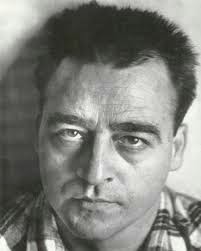
Facundo Cabral


"When life shows you a thousand reasons to cry, show it you have a thousand and one reasons to smile."


— Facundo Cabral
Argentine Folk-Singer, Writer, Novelist
1937 - 2011


Commentary
Nobody's life is perfect and without problems. We all face challenges. Being rich and famous does not protect anyone from facing life's challenges. Being poor and hungry does not ensure anyone happiness. Being a writer, a singer or a painter does not save you from suffering and pain. Being religious does not protect one from misery. 

We all have reasons to cry, but we have even more reasons to sing and smile. Have you seen the sun rise? Have you heard the singing of the birds? Have you listened to the rain on the leaves? Have you watched a calf being born? Have you fallen in love? Then celebrate life! Celebrate the gifts you have been given.

Biography
Facundo Cabral, an Argentine folk-singer, was shot and killed in Guatemala on Saturday, July 9th, 2011 at the age of 74. He had been born in La Plata, Argentina in 1937. He did not talk until he was nine years old, the same year his father abandoned the family. He could not read until he was 14. He was diagnosed with bone cancer in his twenties and was told that he only had a few months to live. When he was forty, his wife and one-year-old daughter were killed in an airplane crash.

Cabral taught himself to play a guitar and to sing folk songs. He became famous in the 1970's for his protest songs and had to leave Argentina for exile in Mexico. Cabral performed his music in over 165 countries in eight different languages. He inspired millions around the world with his songs, poems and novels.

Video
Take a moment and listen to this spoken word poem with English sub-titles by Facundo Cabral. Celebrate the life and words of an artist.


Monday, September 29, 2014

Ralph Ellison

"It takes a deep commitment to change and an even deeper commitment to grow."


American Novelist
1914 - 1994


Commentary
Change and growth require commitment.  People dream of changing their lives but usually they lack the deep commitment to do so.  Change takes hard work and follow through.  Nothing changes overnight.  

Many in the American society expect instant change.  Not happy with your body weight, take a pill or have surgery.  Not happy with your body, have plastic surgery.  Change takes commitment and patience.  It is better to lose weight slowly than quickly.  

Becoming a writer doesn't happen overnight.  It takes years.  Actors often are labeled an overnight success — a success which took ten or fifteen years.  Harrison Ford, the actor, spent 15 years in Hollywood before he got the break in Star Wars that made him famous.  Paulo Coehlo spent 15 years waiting for his best selling book, The Alchemist, to become a hit in the United States.  Vincent Van Gogh sold only one painting in his lifetime and died broke.  Creative expression is a lifetime commitment.  Don't give up.

Biography
Ralph Ellison was born in Oklahoma City, Oklahoma to Lewis Alfred Ellison and Ida Millsap.  His father was a small business owner and construction foreman who died when Ralph was three. In his youth Ellison took radios apart and rebuilt them.  As an adult he constructed and customized elaborate hi-fi stero systems.

Ellison entered the Tuskegee Institute on a scholarship to  study music and studied under piano teacher Hazel Harrison.  While studying music, he also began to read the classics.  His reading of The Waste Land by T.S. Eliot awakened in him the desire to write.  He learned later in life that his father wanted him to become a poet.

After his junior year, Ellison moved to New York to study sculpture and photography.  There he met Richard Wright who encouraged him to write fiction.  Between 1937 and 1944, Ellison published short stories, articles and book reviews in various magazines.  His first novel, Invisible Man, was published in 1952 and won the National Book Award for Fiction in 1953.

For most of his life, Ellison was a college professor and wrote and published essays.  He worked the rest of his life on his second novel and wrote over 2,000 pages.  The novel was published under the title, Juneteenth, after his death.

Video
Here is a short discussion of the impact of Ralph Ellison and Invisible Man.


Monday, September 15, 2014

Katsushika Hokusai

Great Wave of Kanagawa


"I have been in love with painting ever since I became conscious of it at the age of six. I drew some pictures I thought fairly good when I was fifty, but really nothing I did before the age of seventy was of any value at all. At seventy-three I have at last caught every aspect of nature — birds, fish, animals, insects, trees, grasses, all. When I am eighty I shall have developed still further, and I will really master the secrets of art at ninety. When I reach a hundred my work will be truly sublime, and my final goal will be attained around the age of one hundred and ten, when every line and dot I draw will be imbued with life."


Japanese Artist
1760 - 1849


Commentary
Self-Portrait
(1839)
Humility is a trait that many creative leaders do not possess, yet is is a behavior we all should cultivate.  In fact, the lack of humility has caused the downfall of many creative leaders.  They start believing what their admirers say and acting in accordance with what is said.  In the words of my childhood:  they grow too big for their britches.  They begin to believe their own press.

Learn to cultivate the trait of humility.  None of us are perfect.  We all make mistakes — both in our personal lives and our artistic creations.  It takes a lifetime to become a master and even then we may not achieve that designation.  Be thankful for what you have been given and seek to be humble.

Sometimes we become so caught up in the day to day activities of living that we forget how short life is. We are here today and gone tomorrow.  In the eons of time, we live for only a second.  That fact alone should make us humble.  And if you look at our place in the universe, we shrink even more.  Practice humility.

Biography
Hokusai began painting at the age of six.  He probably was inspired to pick up the brush by his father who painted designs on mirrors.  At twelve, Hokusai's father sent him to work at a bookshop and lending library, a popular institution for middle and upper class Japanese.  The bookshop contained books made from wood-cut blocks.  From the ages of 14 to 18, Hokusai was an apprentice of a wood-carver.

At 18, Hokusai found work in the studio of Katsukawa Shunsho who was an artist of wood block prints and paintings called ukiyo-e.  Hokusai became a master of the form.  He spent 10 years working for Shunsho.

Hokusai had two wives and five children.  Both wives died young.  His youngest daughter, Oyei, became an artist like him.  Hokusai changed his name at least thirty times throughout his career as he changed art forms.


Hokusai had a long career and he produced most of his important work after the age of 60. One of his most famous works, Thirty-six Views of Mount Fuji, was created between the ages of 66 and 73.

Video
Here is a short biography of Hokusai.


Monday, September 8, 2014

Dag Hammarskjold

"What is one to do on a bleak day but drift for a while through the streets — drift with the stream."


Swedish Diplomat/Author
1905 - 1961


Commentary
Drifting is an art that many of us have never learned.  In our fast pace world where we seek to climb the ladder of success and produce more and more artistic work, we never stop and rest.  Even our vacations are full of doing.  We joke about going back to work in order to rest from our vacation.

In farming, there is a concept of letting the field lay fallow for a year — not to plant any crops.  The soil needs a break in order to replenish itself.  And the same is true of artists and writers.  We must learn to rest — to drift without direction or purpose, to lay fallow in order to replenish and restore our souls.  We must learn to enjoy a warm autumn afternoon simply for the sake of enjoying. 

From 2006 to 2012 I averaged writing more than two poems a day.  For the last two years I have written less than 75 a year.  My poetic field is fallow.  My subconscious is replenishing itself.  I need the down time in order to rejuvenate my spirit.  I am drifting down the stream, waiting for the next big surge.

Biography
Dag Hammarskjold was born in Jonkoping, Sweden, the youngest son of Hjalmar Hammarskjold, Prime Minister of Sweden from 1914 - 1917.  Dag had a successful career as a public servant in Sweden, working in the central bank, ministry of finance, and ministry of  foreign affairs.  He became the second UN Secretary-General in 1953, a post he held until his death in 1961 in a airplane crash in Northern Rhodesia.  He received the Nobel Peace Prize in 1961 after his death.

Hammarskjold's only book, Markings, was published in 1963.  The book is a collection of his diary reflections and haiku.  

Monday, September 1, 2014

Georg Wilhelm Friedrich Hegel

Portrait by Jakob Schlesinger
(1831)

"Nothing great in the world was accomplished without passion." 


Georg Wilhelm Friedrich Hegel
German philosopher / writer
1770 - 1831


Commentary
An old man was traveling into New York by boat.  Everyone was crowding against the rail looking at the tall buildings.  A little girl fell overboard and soon the old man was in the water.  He grabbed the little girl and people hoisted her back up on ship.  People pulled him back on ship and they began clapping.  Some shouted, "Speech!  Speech!"  The old man looked around and said, "Who pushed me?"

And that is my question for you today?  What pushes you?  What motivates you?  What excites you?  What is the passion in your life?  We all need passion.

Passion is one of the keys to success.  If you are not passionate about what you do, you will not be successful.  Creative leaders need to be passionate about what they do.  Without passion it is easy to lose sight of one's goal.  Passion helps creative leaders overcome the obstacles they face.

Are you passionate about the art you are creating?  The novel you are writing?  The sculpture you are creating?  The poems that you are writing?  The canvas you are painting?  Do you wake up excited in the morning to begin work on your creative project?  Are you obsessed with your creative work?  Do you become depressed if you are not creating new work?


Monday, August 25, 2014

Brian Herbert

“The capacity to learn is a gift; the ability to learn is a skill; the willingness to learn is a choice.” 


― Brian Herbert
American Novelist
1947 -


Commentary
I am surprised every time I meet someone who shows no interest in learning.  For me, life is about learning new ideas, new techniques and new information.  If I lived a hundred lifetimes, I would never learn all there is to learn.

Creative leaders should develop a habit of lifelong learning.  Each new piece of information we learn has the potential to connect with an old piece of information that allows us to develop a new idea, a new way of looking at the world and even a new invention.

There are many ways of learning new ideas.  One of my favorite is through books.  Books have so much to teach us.  Have you developed a habit of daily reading?  How many books do you read a year?  I am reading over 40 at the current moment.  I am always looking for the next book to read.  And I think you should read what you like to read.  I love to read novels and poetry, and I also read history, biographies and memoirs.

Some people learn by meeting new people and learning their stories.  Every person has a story to tell.  I love to find people who have a story to tell about the industry they work in or the people they've met or the places they have been.  People are so fascinating.  Meeting people, though, is not about talking.  It is about listening.

Another way to learn is by doing new things and by going new places.  Trying something new like water skiing or surfing can open up new avenues of thought.  I am not the best of people to try doing new things.  I am afraid to fail.  Perfectionism raises its ugly head.  So I often avoid trying.  On the other hand I have traveled to many places and seen many new things that open the eyes.

Some people learn best by watching what is going on around them and imitating what they see.  They absorb lots of information with their eyes.  I learn some information with my eyes, but often I don't pay attention to the physical world.  I am too absorbed in my own thinking.  I admire people who see with their eyes.

Learning is a choice we all make.  Some of us choose to grow and develop our abilities.  Others choose to stagnate and die.  What choice have you made?

Biography
Brian Herbert is the oldest son of Frank Herbert, the famous science fiction writer and author of Dune.  Following in his father's footsteps, Brian has written several science fiction novels.  He has written several novels with Kevin J. Anderson that explore the worlds and history of Dune in greater detail.

Brian graduated from high school at sixteen and earned a B.S. degree in Sociology from UC-Berkley.  He is married with three daughters.

Video:
Here are Brian Herbert and Kevin J. Anderson discussing their writing.


Monday, August 18, 2014

Masaoka Shiki

"Take your materials from what is around you — if you see a dandelion, write about that; if it's misty, write about the mist.  The materials for poetry are all about you in profusion."


Japanese Poet
1867 - 1902


Commentary
Where do you get your ideas for your writing or your painting?  Are your ideas rooted in the world in which you live?  Has that maple tree in your backyard shown up in your painting?  Has the dragonfly or the butterfly appeared in your writing?  Look around you.  The world is yours for the taking.  Be sure to incorporate it into your creative work.

Even if you paint abstract paintings or write surrealistic poetry, you can take your inspiration from the world in which you live.  Nature is full of opportunity to explore the meaning of life and other philosophical questions.  It also teaches us practical lessons that we as humans need to learn.  What can you learn from the squirrel or rabbit or deer?

Human frailties can also be a great source of inspiration whether you are painting or writing.  What are you learning from the people in your life?  How are you applying these lessons to your art?

Creative Practice
Take 10 minutes everyday and write or paint something that you normally don't write or paint.  Take your subject from what is around you.  Maybe it is a dandelion, or a squirrel, or an oak tree, or even a spider.  Or take something you normally write or paint and change your perspective.

About the Poet
Masakoa Shiki (Tsunenori), considered one of four great Japanese poets, was born into a samurai family of modest means in the castle town of Matsuyama on the island of Shikoku.  His father, Tsuneanao, was an alcoholic who died when Shiki was five years old.  His mother was the daughter of a Confucian scholar who became Shiki's first teacher.  She was forced to teach sewing to support her family.  At 15, Shiki became involved in the Freedom and People's Rights Movement and became interested in being a politician.  He moved to Tokyo in 1883 to live with an uncle. While in Tokyo, he discovered baseball and enjoyed playing.  He entered the Imperial University in 1890 where he studied literature and eventually concentrated on haiku.

When Shiki was 22, he began coughing up blood and adopted the pen name, "Shiki," the name of a bird that according to legend coughed up blood as it sang.  He dropped out of the university and began working as haiku editor for a newspaper, Nippon.  Shiki suffered fro tuberculosis the last 14 years of his life.  He went to China in 1895 as a war correspondent in the First Sino-Japanese war.  Living in filthy conditions in China, Shiki grew worse.  He became bedridden in 1897.  The illness worsened in 1901 and he began using morphine as a painkiller.  He died of TB in 1902 at the age of 35.  

Haiku by Shiki

spring rain:
browsing under an umbrella
at the picture-book store

a look backward
at the person who went by —
misted out

the nettle nuts are falling . . .
the little girls next door
don't visit me these days

ways of the world,
may he never know them,
the toad

lifting my head,
I look now and then —
the garden clover

to awaken
the hot-water bottle, barely
warm

how much longer
is my life?
a brief night . . .

a barrel full of phlegm —
even loofah water
will not avail me now

Biography  & Haiku Sources:
Beichman, Janine. Masaoka Shiki. Twayne Publishers (Boston). 1982.
Hoffmann, Yoel. Japanese Death Poems. Tuttle Publishing (Boston). 1986.
Isaacson, Harold J. Peonies Kana. Theatre Arts Books (New York). 1972.
http://en.wikipedia.org/wiki/Masaoka_Shiki

Quote Source:
Beichman, Janine. Masaoka Shiki. Twayne Publishers (Boston). 1982.

Monday, August 11, 2014

Kenneth Patchen


"I don't consider myself to be a painter.  I think of myself as someone who has used the medium of painting in an attempt to extend — give an extra dimension to — the medium of words.  It happens very often my writing with a pen is interrupted with my writing with a brush — but I think of both as writing."


American Poet, Novelist
1911 - 1972


Commentary
We define ourselves with labels.  "I am a painter.  What are you?"  "I am a poet."  We are born into this world without labels and when we die, our obituaries tell the world that we were lawyers, doctors, merchants or candlestick makers.

Kenneth Patchen
In my profile I list many of the labels that have defined me over the years:  a carpenter, street sweeper, car hop, corn detasseler, hospital orderly, radio announcer, blogger, book editor, publisher, freelance writer, bus driver, sports writer, bookkeeper, policy and procedures writer, forms designer, marketing vice-president, corporate executive, professional speaker, facilitator, salesman, trainer, poet, storyteller, organizational development consultant, ad writer and communications executive.  And that is the short list.

What labels have you given yourself?  What labels have others given you?  Do these labels define you?  Do the labels tell the world who you are?  Do your labels limit you or expand the boundaries of who you are?  Do the labels allow others to place you in a cubbyhole?  To limit your creativity?

Do you ever judge people by their labels?  "Oh, he is just a bus driver?  A street sweeper?  A garbage collector?...."

Patchen said that he is not a painter.  He is a writer who has given an added dimension to his writing.  He has extended the boundary of the label beyond how most people define it.


Kenneth Patchen
Biography
Kenneth Patchen, the son of Wayne and Eva Patchen, was born in Niles, Ohio.  His father worked in the steel mills.  He had four sisters and a brother.  His younger sister, Kathleen, was killed in an automobile accident when he was a teenager.  Patchen developed an interest in literature and writing while in high school.  He attended the University of Wisconsin for one year on a football scholarship but dropped out after a spinal injury.

After dropping out, Patchen traveled to the east coast and met his future wife, Miriam Oikemus, in Boston.  They were married in 1934 in Pennsylvania.  As Patchen attempted to make a living writing, the couple moved frequently between the east and west coasts.  He permanently injured his spine fixing a friend's car in 1937.  He underwent multiple surgical procedures and spent the rest of his life in severe pain.  In later life, Patchen created may of his painted poems while confined to bed because of his back surgeries.  
Patchen's first book of poetry, Before the Brave, was published by Random House when he was 25.  His Collected Poems was published in 1969 when he was 58.  Patchen was friends with James Laughlin, e.e. cummings,  and Kenneth Rexroth.  Patchen influenced both Allen Ginsberg and Lawrence Ferlinghetti.

Many of Patchen's creative works blurred the lines between poetry, painting and jazz.  He collaborated with jazz bassist and composer Charles Mingus.  

Video
Here is Kenneth Patchen reading his poem, In Order To.


Monday, August 4, 2014

George Bellows

Self-Portrait
"The ideal artist is he who knows everything, feels everything, experiences everything, and retains his experience in a spirit of wonder and feeds upon it with creative lust."


American Painter
1882 - 1925


Commentary:
Anne in White
Do you experience the world in a spirit of wonder?  Are you surprised by the things that happen or have you become cynical and negative?  A creative leader must be like a young child soaking up life and enjoying every moment of it.  Everything that happens to us — good, bad and indifferent — is fuel for our creative lust.  I don't believe artists and writers experience the world at a deeper level then other people.  It's more they have learned to use that experience to feed their creativity.

Creativity is both sexual and sensuous. When we are painting and writing, we have a deep desire to create, to give birth.  We can feel the lust in our loins, the joy in our hearts.  How powerful is your desire to create?  Can you feel it deep within your body?  Does every part of you tingle with excitement?  Can you taste the lips of your lover?

Biography
George Bellows, an only child, was born four years after his parents married and was raised in Columbus, Ohio.  His love of drawing was kindled because he was not allowed to play outside on Sundays.  His mother did allow him to draw while she read the Bible aloud.

Dempsey and Firpo
(1924)
Bellows attended Ohio State University and played on both the baseball and basketball teams.  He was considered good enough to play professionally, but he turned down a professional baseball contract.  He worked as a commercial illustrator while a student and accepted magazine assignments throughout his life.  His true love was painting so he quit school and moved to New York to study art under Robert Henri at the New York School of Art.  Edward Hopper and Rockwell Kent were fellow students

In 1910 Bellows married Emma Story in St. George's Episcopal Church.  They had two children.  Bellows died of a ruptured appendix at the early age of 43.

George Bellows was a realistic painter known for his bold depictions of urban life as well as portraits.  By the age of thirty his work hung in the Metropolitan Museum of Art.  He is ranked as one of the giants of American art.

Video
Here is a video discussion of the boxing paintings of George Bellows.


Monday, July 28, 2014

Elisabeth Kubler-Ross

"Learn to get in touch with the silence within yourself and know that everything in this life has a purpose."


Swiss Psychiatrist/Author
1926 - 2004


Commentary
Silence is where our work as creative leaders begins.  We must go back to the well of silence again and again to refresh our spirit and restore our sanity.  There is a lot of noise in our society today that will cloud our thinking and hinder the flow of creativity.  The noise of multiple voices rises from the traditional media: newspaper, radio and television.  And the noise is multiplied a hundred times over today by the cell phones, the internet and social media.  Each of these technologies has value and can contribute to our success, but we must manage and control their use, not let them control us.  We must sometimes go silent and cut ourselves off from the noise.  We must go deep inside and experience the silence.

And in the silence we will know and understand our purpose.  If we lose sight of our purpose, we will lose our way and become lost in the noise and chaos.  The silence allows us to find ourselves and to stay focused on what is important and why we are here.

Are you in touch with your purpose?  Do you know why you are here?  Do you know what lessons you have learned and what lessons you still need to learn?  How are you going to make a positive contribution to the world at large?  What are you giving back to society?  Seek to know who you are by knowing your purpose for being.  Embrace the silence and stay focused on your purpose.

Biography
Elisabeth Kubler was born in Zurich, Switzerland, the oldest of triplets.  Her father did not want her to study medicine, but she persisted and graduated from the University of Zurich medical school in 1957.  She married Emanuel Ross, an American medical student in 1958 and moved to the United States.


During her psychiatric residency in New York, Kubler-Ross began studying patients who were dying.  Her extensive work led to her book, On Death and Dying, in 1969 where she introduced the Five Stages of Grief.  During her career, she wrote more than 20 books on death and dying.  She finished her final book, On Grief and Grieving, shortly before she died.

Monday, July 21, 2014

Suzanne Valadon

The Blue Room
(1923)

"I paint with the stubbornness I need for living, and I've found that all painters who love their art do the same."


French Painter
1865 - 1938


Commentary:
To be a creative artist, you need to be persistent because many obstacles will get in your way including your own need for perfection.  The creative journey is only for the stubborn.  How long are you willing to work at your painting?  Your writing?  Your acting?  Or do you give into family pressure?  Societal pressure?  Doubts?  Fears?

What are you willing to sacrifice for your creative work?  What are you willing to give up?  Life is never easy and the same is true for the creative leader.  There are many days when you will take one step forward and three steps backwards.  Do you have the stubbornness to keep going even when you see very little light at the end of the tunnel?

Biography:
Suzanne Valadon was the daughter of an unmarried laundress.  When she was 15, she joined the circus, but was forced to quit a year later after falling off a trapeze.  She eventually became a model for artists including Renoir and Toulouse-Lautrec where she studied their artistic techniques.  She is best known for painting female nudes but also painted landscapes, florals and still life.  She sometimes worked as long as 13 years on a painting before showing it in public.

Suzanne Valadon was the model for these paintings by Renoir:


Monday, July 14, 2014

Muriel Rukeyser

"The universe is made of stories, not of atoms."


American Poet
1913 - 1980


Commentary
The universe is alive with story.  Without story, much of what we as humans know would be meaningless.  Through story we understand the world around us.  Through story we understand our lives and why we have lived the way we lived.  Story provides meaning to the events that have happened and the sorrows we have experienced.  

As creative leaders, we are driven to share our story whether that be through a poem, a painting, a novel, a song, a sculpture, a film or a dance.  What stories are you telling in your art?  What stories are you telling that define who you are?  Our lives are filled with story.  Share yours today.

Biography
Muriel Rukeyser was born in New York City to a middle-class Jewish family.  Her father, Lawrence B. Rukeyser was born in Wisconsin.  He moved to New York and started his own sand and gravel company which went bankrupt in 1932.  Her mother, Myra Lyons, was born in Yonkers.  Muriel began writing poetry in high school.  Muriel attended Vassar College and Columbia University, but her education ended with her father's bankruptcy.

Muriel married and divorced the painter, Glynn Collins.  The marriage lasted on six weeks.  She gave birth to her son out of wedlock.  

Rukeyser's first book of poetry, Theory of Flight, was published in 1935 as part of the Yale Younger Poets Series.  She was 21.

Muriel Rukeyser was a poet, social activist, teacher, biographer, screenwriter, dramatist, translator and author of children's books.  She taught at Sarah Lawrence College and founded a literary magazine with Elizabeth Bishop, Mary McCarthy and Ellen Clark.

Poetry
Here is a poem by Muriel Rukeyser.

Poem
by Muriel Rukeyser

I lived in the first century of world wars.
Most mornings I would be more or less insane,
The newspapers would arrive with their careless stories,
The news would pour out of various devices
Interrupted by attempts to sell products to the unseen.
I would call my friends on other devices;
They would be more or less mad for similar reasons.
Slowly I would get to pen and paper,
Make my poems for others unseen and unborn.
In the day I would be reminded of those men and women,
Brave, setting up signals across vast distances,
Considering a nameless way of living, of almost unimagined values.
As the lights darkened, as the lights of night brightened,
We would try to imagine them, try to find each other,
To construct peace, to make love, to reconcile
Waking with sleeping, ourselves with each other,
Ourselves with ourselves. We would try by any means
To reach the limits of ourselves, to reach beyond ourselves,
To let go the means, to wake.

I lived in the first century of these wars.


Video
Here is Muriel Rukeyser reading The Ballad of Orange and Grape.