Welcome!

Welcome! There are more than 900 Inspirational Quotes For Writers, Artists and Other Creative Leaders on this site.
Spend a few minutes exploring. And come back again and again for other inspirational quotes.

Monday, January 5, 2015

Harley King


The Ten Best Books I Read in 2014

In 2014, I read 48 books, five more than I read in each of the previous two years. Now, I must admit tha
t 6 of these books were chapter books for kids that I read with my daughter. Some people would not count these, but I do. Taking those books out of the equation, I read almost the same number of books as last year.

Forty eight percent of the books were e-books. Twenty-nine percent were traditionally printed books and twenty-three percent were audio books. Fiction dominated my reading this year with 58% of books being works of fiction. Twenty-three precent of the books were poetry and 19 percent were non-fiction.

Here is my list of the top 10 books that I read in 2014.


The Complete Collected Poems10. The Complete Collected Poems by Maya Angelou.  With the passing of Maya Angelou, I decided to read some of her work which somehow I had missed previously. I read both I Know Why a Caged Bird Sings and The Complete Collected Poems. Like any collection of poems, there are some that I like better than others. While Angelou will not be on my list of favorite poets, I have a lot of respect for anyone who writes poetry. This book is definitely worth reading.
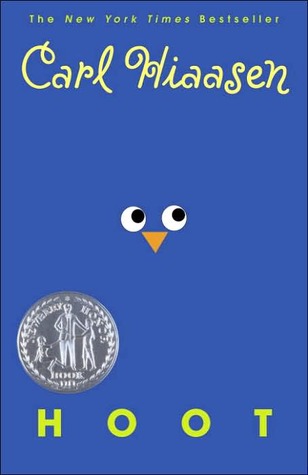


Hoot9. Hoot by Carl Hiaasen. This chapter book is targeted at middle school children. I read it to my six year old daughter and she enjoyed it. Younger children can appreciate these stories more than most people think. Since Carl Hiaasen is also a writer of adult mystery books, he held my attention and had me on the edge of chair wanting more.
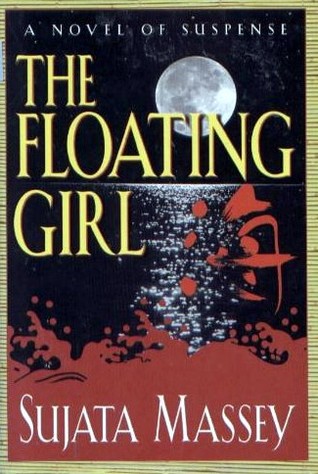


The Floating Girl8. The Floating Girl by Sujata Massey. I read mystery novels not so much for the plot as for the unique voice of the main character. I want to enter their world as they see it. Rei Shimura is one of those voices. Rei was born in America of a Japanese father and American mother. She is living in modern Japan but is not accepted as Japanese. I read three Rei Shimura mysteries this and I found them enjoyable. Besides The Floating Girl, I read The Flower Master and The Bride's Kimono.

Sujata Massey was born in Sussex, England to parents from India and Germany and grew up in St. Paul, Minn
esota. She attended John Hopkins University and worked as a reporter for the Baltimore Evening Sun. She moved to Japan, taught English and began writing her first novel.


Life Class7. Life Class by Pat Barker.  I discovered the writer, Pat Barker, while listening to the World Book Club podcast. She was being interviewed about her World War I novels. Barker is a historical novelist and her area of expertise is World War I. Life Class is about a small group of art students who become caught up in World War I. The main character is a young man named Paul Tarrant who is struggling to find out if he has the skills to be an artist. His love interest is a fellow art student, Elinor Brooke. Another art student, Kit Neville, also is pursuing Elinor and she enjoys the attentions of both men. The war disrupts their idyllic life and changes them forever. Barker details life in England in the early part of the 20th century. I found the novel to be a great read.


Saving Fish from Drowning6. Saving Fish From Drowning by Amy Tan. A fantastic story that is not for everyone. If you are looking for storytelling in a straight line with lots of action this book is not for you. In telling a great story, Amy Tan travels down many paths and bunny trails providing us with fascinating information on various minor characters and history. I would also recommend that you listen to the audio version instead of reading it yourself. Tan does a superb job of narrating the book herself. 

The story is told in the first person narration of a ghost, a woman who has recently died under strange circumstances. Just before she is to lead of a group of her friends on a tour of Burma, she dies with her throat slit. But she wakes to find herself a ghost so she accompanies her friends who decide to continue the trip even though their leader is dead. The ghost reports on the trials and tribulations of the group as they travel through China and Burma (now known as Myanmar) including being kidnapped by a tribal group.

I read the Joy Luck Club when it first came out many years ago, but have not read anything by Amy Tan since then. I think I will need to go back and read some of her other books to see what I have missed.


Sleeping Preacher 5. Sleeping Preacher by Julia Kadorf. When I was a child, I was fascinated by the story my mother told about the sleeping preacher, John Kaufman. After graduating college, I set out to write a historical novel about his life. Unfortunately, I ran into some obstacles and never finished the novel. In the early 1900's he had visited the church my grandmother attended. During the late 1800's until the first decade of the 20th century, a number of sleeping preachers arose around the world. The preachers, both men and women, would enter into a trance and preach a coherent sermon. People would stick needles in their legs to see if they were faking.

I was immediately interested in Sleeping Preacher by Julia Kasdorf as soon as I read a review of the book. The poet, Julia Kasdorf, also attended the same college I did, a decade later, but I have never met her. While many of these poems address growing up Mennonite, some do not. Kasdorf writes of herself as well as family. The opening lines of A Family History about her mother read:

"At dusk the girl who would become my mom
must trudge through the snow, her legs
cold under skirts, a bandanna tight on her braids."

Each poem is a story packed with description of a world that many of us have never encountered. The opening lines of the poem, August, read:

"Dad's mother was coming home
from picking huckleberries on the mountain
when sunlight spooked the horse, and it tore
through a pasture fence, dragging the buggy
until it broke lose, hurling the children,
killing their mother, spilling
those silver pails of sweet, black fruit."

While the poem goes on to tell of other women who died in the month of August, these opening seven lines encapsulate a powerful story in their own right. The attention to detail builds the story image by image.

In the poem Friendschaft, Kasdorf captures Mennonite genealogy.

"As I grow up, the great aunts click their tongues.
They are looking for signs of their lives
in my limbs. It's the Hartzler blood that makes you
dark and thin. It's just like Aunt Toot to love
olives and pickles and fuss like a hen.
Your Yoder nose...."

I can't even begin the number of times I heard the same type of remarks growing up. Kasdorf was six when her family bought their first television and she captures that moment in a poem. I was seventeen when my family bought our first TV. I found in these poems much that I have heard and remember.

The first poem of Kasdorf that I read before buying the book was What I Learned from My Mother. The poem discusses what to do when someone dies. She closes the poem with these lines:

"To every house you must enter, you must offer
healing: a chocolate cake you baked yourself,
the blessing of your voice, your chaste touch."

The title poem, The Sleeping Preacher, tells the story of church reform through the eyes of her great-grandmother. The closing lines read:

"She did not think of us,
only to save us, leaving nothing
for us to touch or see
except this stubborn will to believe."

I highly recommend this book to poets and other readers, especially those interested in learning more about the Mennonite culture and way of life.
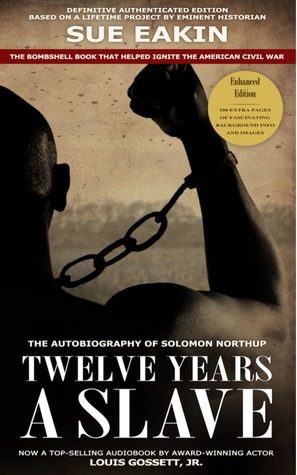


Twelve Years a Slave4. Twelve Years a Slave by Solomon Northup. If you have watched the movie, Twelve Years a Slave, then you should read this book. If you have not watched the movie,Twelve Years a Slave, then you definitely need to read this book. The book is an as-told-to story by Solomon Northup, a man who was born, raised and living as a free person in New York state. As Northup tells the story, he was conned into traveling to Washington D.C. where he was drugged, kidnapped and sold into slavery in the deep South in 1840. He spent 12 years as a slave before he was able to send information of his whereabouts to friends who traveled south and freed him. .

The book shares the experience of one man as a slave and all the horrors that he faced. Married with children before the kidnapping, Northup suffered as no person should be made to suffer. He was whipped, beaten and almost hung. His skills as a violin player and his intelligence kept him alive through these difficult, almost unbearable times. He was also forced to whip other slaves.

The book was written by David Wilson who served as Northup's ghost writer. It followed in the footsteps of the publishing success of Uncle Tom's Cabin and was used by the abolition forces to further their cause. After Northup's release from slavery, he traveled around the north giving anti-slavery speeches and may have been involved in the Underground Railroad, though, there is no evidence to support this. Published in 1853, the book was an instant success with 8,000 copies being sold in the first month. The book went out of print in 1856 and remained out of print until 1968.

Along side the amazing story of Solomon Northup is the fascinating story of Sue Lyles Eakin and the work she did to bring the book to the attention of American readers in the 20th and 21st centuries. Sue Eakin discovered an original copy of the book in a plantation home near where Northup was a slave when she was 12 years old. Northup's story became her life's passion. Dr. Eakin wrote her master's thesis about Northup's story and after decades of research produced the first authenticated edition in 1968. She continued to spend her life verifying, validating and substantiating the story through thousands of hours of research. In 2007, at the age of 88, she completed her final definitive edition with over 100 pages of new information, images and maps. In her spare time, she authored over a dozen other history books and was a history professor.

One of the fascinating facts that I learned in this book was that in 1840 New York state passed a law authorizing the governor the authority to seek the release of free people who were sold into slavery. This law is what the friends of Solomon Northup used to travel to Louisiana and secure his release.

Amazon lists more than 30 different editions of this book. I would recommend you purchase this edition by Dr. Sue Eakin which contains all her documentation and verification of the facts in the story.
Out Stealing Horses3. Out Stealing Horses by Per Petterson. A fantastic novel. I heard an interview with Petterson on the BBC World Book Club and decided to read the novel. The book is about the relationship of a father and son set in Norway. A 67 year old man reflects back on his life and the summer of 1948 which he spent with his father. I highly recommend this book to all fathers, sons and daughters.
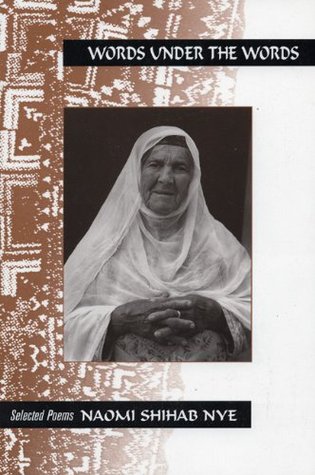


Words Under the Words: Selected Poems2. Words Under the Words by Naomi Shihab Nye.  With this book, Naomi Shihab Nye has become one of my favorite contemporary poets. The book is filled with phenomenal lines and images. In my first reading of the 104 poems, I marked 30 poems that I wanted to read again.  Here are the beautiful opening three lines of Biography of an Armenian Schoolgirl.

"I have lived in the room of stone where voices become
bones buried under us long ago. Where you could dig
for centuries uncovering the same sweet dust."

In the poem, At Otto's Place, Naomi writes:

"Could I live like this? I ask myself
and I know, somehow, I must.
More and more my life is peeling paint,
straight horizons.
More and more my name dissolves in the air,
salt, something invisible I taste,
and forget."

I love the phrase, "my life is peeling paint." What a powerful image!

In the poem, The House in the Heart, Nye writes:

"This body we thought so important,
it's a porch, that's all.
I know this, but I don't know
what to do about it."

Our bodies are a resting place — a place from which we look out at the world. We know many things but knowledge alone is not enough. We need to learn what to do to change things. Nye packs so much into these four lines.

In the poem, Jerusalem, Nye writes:

"To live without roads seemed one way
not to get lost. To make maps
of stone and grass, to rub stars together
and find a spark."

It is only because we have roads that we get lost. If we did not have roads to follow, we would not lose our way. So often we get so focused on where we want to go that we forget where we are. Maybe our goals and dreams are not as important as we think.

I highly recommend this book to anyone who loves to read poetry as well as anyone who loves words.

1. H
aiku in English: The First Hundred Years edited by Philip Rowland, James Kacian, and Allan Burns.  The value of this collection of haiku is that it tells the story of haiku written in English over the last one hundred years. If you are a haiku poet and have read and studied haiku then I recommend that you first read the essay by Jim Kacian at the end of the book. It is superb! 
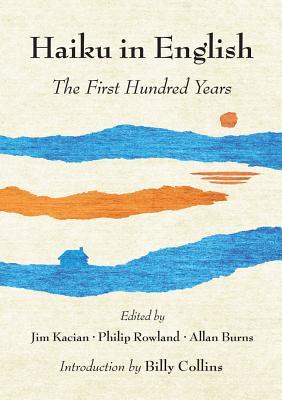
Haiku in English: The First Hundred YearsThis anthology of English-language haiku is edited by Jim Kacian, Philip Rowland and Allan Burns. To put the book together, they obviously have read thousands of haiku published in the haiku magazines in the the last 60 years. They document the growth and changes in haiku through the work they have selected.

The anthology begins with some of the shorter poems of Ezra Pound and includes some well-known poets and writers like Wallace Stevens, Amy Lowell, Langston Hughes, e. e. cummings, Allen Ginsberg, Gary Snyder, and Jack Kerouac. Most of these poets dabbled in haiku but their real work was elsewhere. Then the anthology shifts to early haiku poets like Cor van den Heuvel who is best known for his anthology called The Haiku Anthology. The book is still the best collection of haiku written in English. It is the book that I would recommend to anyone interested in reading haiku.

For a period of 7 years between 1975 to 1982, I wrote and published more than 100 haiku in more than 20 haiku magazines. I also read the haiku of many of the poets in these pages. One of my favorites is James W. Hackett. I own several of his small books. Others who I read include: Nick Virgilio and Robert Spiess. Spiess was the editor of Modern Haiku, one of the best haiku magazines and one of the oldest that is still published. I was fortunate to have dinner with the man one evening in Madison, WI where he lived. 

I also remember reading the haiku of John Wills, Rod Willmot, Virginia Brady Young, Michael McClintock, Geraldine Clinton Little, Janice Bostok, Alan Pizzarelli, Elizabeth Searle Lamb, Marlene Mountain, George Swede, Ruth Yarrow, Gunther Klinge, Peggy Willis Lyles, Alexis Rotella, James Kirkup, and Lee Gurga. I own two hardback collections of Raymond Roseliep, the Iowa priest who wrote haiku: Rabbit in the Moon and Listen to Light. Lorraine Ellis Harr, who has three haiku in this anthology, published my first haiku in her magazine, Dragonfly. I also met Randy Brooks who published several of my haiku in his magazine, High/Coo. So reading this book for me was like taking a trip down memory lane. A special thanks to Jim Kacian, Philip Rowland and Allan Burns.


You may also want to read:

Ten Best Books I Read in 2012
The Best Fifteen Books I Read in 2013
The List of All the Books I Read in 2014

Monday, December 29, 2014

Brianna King


What the world needs now is more imagination and creativity.  Every day we face problems and challenges in our personal as well as our professional lives.  Too often we continue to respond to these problems in the same way that we have always responded.  We keep doing what we have always done and keep getting the same result.  Instead, we should be searching for new ways of solving the problems.

What challenges do you face as a creative leader?  What obstacles stand in your way of achieving the success you dream about?  Are you so focused on the problems that you fail to see the opportunities around the corner?  Shift your focus to the possibilities.  Choose a new path into the future.  Imagine a better world.

Albert Einstein once said, "Imagination is more important than knowledge. Knowledge is limited. Imagination encircles the world.”  

What are you doing to expand your imagination — to open the doors of creative thinking? What are you doing to escape of the black hole of negative thinking?  Here are five ways to increase your imaginative thinking.
  1. Develop an attitude of curiosity.  Be curious about everything.  Look for connections that others do not see.
  2. Question and challenge accepted beliefs, assumptions and practices.  Just because you have always done it a certain way does not mean you should continue to do it that way.
  3. Explore the world.  Travel to places you have never been.  Read books in fields of learning that you normally don't read.  Engage people outside your field of expertise in conversations and learn from them.
  4. Conduct daily doodling practice.  Doodle for 5 - 10 minutes.  Doodling helps to relax your mind and start your creative juices flowing.  Drawing can free your mind of entrenched ways of seeing. Create new ways of seeing by doodling.  Focus your attention on the doodling.  Don't worry about being artistic.
  5. Conduct daily writing practice.  Write everyday for 10 minutes.  Don't worry about grammar, spelling or punctuation.  Start with the phrase, "In the future, I".  Keep writing for the full 10 minutes.  When you run out of things to write, start again with the phrase, "In the future, I".
Remember that your imagination and creativity will help you solve most of your problems and help you build a better world.  Begin now to cultivate your imagination.  

Sunday, December 28, 2014

Harley's Book Review — Words Under the Words


Words Under the Words

by Naomi Shihad Nye


With this book, Naomi Shihab Nye has become one of my favorite contemporary poets. The book is filled with phenomenal lines and images. In my first reading of the 104 poems, I marked 30 poems that I wanted to read again. 

Here are the beautiful opening three lines of Biography of an Armenian Schoolgirl.

"I have lived in the room of stone where voices become
bones buried under us long ago. Where you could dig
for centuries uncovering the same sweet dust."

In the poem, At Otto's Place, Naomi writes:

"Could I live like this? I ask myself
and I know, somehow, I must.
More and more my life is peeling paint,
straight horizons.
More and more my name dissolves in the air,
salt, something invisible I taste,
and forget."

I love the phrase, "my life is peeling paint." What a powerful image!

In the poem, The House in the Heart, Nye writes:

"This body we thought so important,
it's a porch, that's all.
I know this, but I don't know
what to do about it."

Our bodies are a resting place — a place from which we look out at the world. We know many things but knowledge alone is not enough. We need to learn what to do to change things. Nye packs so much into these four lines.

In the poem, Jerusalem, Nye writes:

"To live without roads seemed one way
not to get lost. To make maps
of stone and grass, to rub stars together
and find a spark."

It is only because we have roads that we get lost. If we did not have roads to follow, we would not lose our way. So often we get so focused on where we want to go that we forget where we are. Maybe our goals and dreams are not as important as we think.

I highly recommend this book to anyone who loves to read poetry as well as anyone who loves words.

Monday, December 22, 2014

Harley King


Memories are the stories that we tell ourselves and others to remind us of the experiences in our lives.  Rarely are these stories entirely true.  The stories have been altered by time and our ability to forget.  We have the ability to change our stories and yet believe them to be true.  

Cherish your ability to forget what has happened to you because it helps you live a productive and happy life.  If we remembered every detail of our lives, we would suffer from boredom.  Be wary of the negative stories you tell yourself because some portion of each story we tell is false.  You have recreated the experience to fit your beliefs.  Don't live in a past that causes you pain and heartache.  

Celebrate your ability to recreate your experiences into stories that shape who you want to be, not who you are.  Our creative spirits provide us with a rich tapestry of memory.  We change our stories to give us hope.  Memory is a creative gift.  Alter your story to honor your life.

May your memories grow in proportion to the richness of your creative spirit.


Monday, December 15, 2014

Harley King


Commentary
Life's journey is full of experiences from which we can and should learn wisdom. Sometimes these experiences will knock us to the ground and force us to reconsider our beliefs and values. Sometimes we will have to learn the lesson multiple times before we gain the wisdom to move on to better opportunities and new lessons.  Sometimes we fail to gain the wisdom and will repeat the same mistakes again and again.

Wisdom comes not from simply living in the moment, but from deep reflection and introspection.  Wisdom comes from questioning what we do and analyzing why we behave in the manner in which we do.  Life gives us many opportunities to grow in wisdom and understanding.  Each life lesson teaches us to become better individuals and to open our hearts to the wisdom that is given.

Sometimes the lessons that life throws our way will force us to lose our faith and push us toward giving up.  We become discouraged and depressed.  We enter a world of darkness and unhappiness.  We must keep to the path and not lose sight of the goal.  We must not let the pessimism of others defeat us.  We must keep going despite how we feel.  Keep in mind that on cloudy days the sun still shines.  We must learn to fly above the clouds and experience the joy of the sun's rays.

May you seek the wisdom that comes from experience and the faith that restores the heart.


Monday, December 8, 2014

Henri Nouwen

"Solitude is the furnace of transformation."


 Henri Nouwen
Dutch Priest / Writer
1932 - 1996


Commentary
In my mind, solitude and silence are very closely linked.  Silence means to be without sound. Yet, unless we are deaf, we rarely will be able to find silence in this world.  Even in the forest late at night, one will hear sound.  What we can do is limit the types of sound we hear.  I can remove urban sounds by traveling to the country.  I can turn off the radio or the television.  I can choose what sounds I want to hear. 

Solitude, on the other hand, is the state of being alone and without human contact.  There still will be noise and sound.  We can be alone in our own homes, during a walk through a park, or driving a automobile, but sound will also be there, including the sound of our own thoughts.

As creative leaders, we must learn to manage, encourage and harness both silence and solitude if we are going to be successful.  When I write, I try to limit the sounds that I hear. I don't play music as some do.  I don't listen to TV.  I have learned to write in public and to block out the white noise.  I also need solitude, particularly from loved ones.  It is very hard for me to write with my wife in the same room.  I can write in a mall because I have more space.

Creative Practice
Evaluate the role silence and solitude play in your life.  Look for ways to add more solitude.    Learn to cut out some of the noise that follows you.  Add 15 minutes more of solitude to your life.


The Return of the Prodigal Son
Rembrandt
Write a poem about silence or solitude. Paint a picture of solitude or silence. Evoke the sound of solitude in your music.

Biography
Henri Nouwen was born in Nijkerk, Netherlands.  He was the oldest of four children born to Laurent and Maria Nouwen.  
Henri Nouwen was ordained as a priest in 1957 and completed a degree in psychology in 1963.  He came to the United States in 1964 and taught at Notre Dame, Yale and Harvard.  He wrote 40 books on spirituality.  His most famous book is The Return of the Prodigal Son: A Meditation on Fathers, Brothers and Sons which was published in 1992.  He wrote the book in response to the painting, the Return of the Prodigal Son by Rembrandt.  He traveled to Russia to observe the painting at the Hermitage Museum.

Video
Here is a video about Henri Nouwen.


Monday, December 1, 2014

Ben Stein

"The indispensable first step to getting the things you want out of life is this: decide what you want."


 Ben Stein
American Actor, Writer, Lawyer
1944 -


Commentary
When I came out of college in 1971, I had no idea what I wanted to do with my life. I had some vague idea about wanting to be a writer, but I had no idea on how to go about it. Remember this long before the personal computer let alone the internet. I was typing my work on a Royal typewriter. 


The only way to find jobs was through the newspaper and there were not many jobs for want-to-be writers in central Illinois, farm country. It took me four years to find a job writing and then it was an accident. I applied for for a job as a speech writer but I heard nothing. I found out later they hired a novelist with one published novel under his belt. He spent most of this time while employed working on his second novel. Three months after I applied, I received a call from a nursing home company about a job as a writer of policy and procedures manuals. I interviewed and was hired. 

I thought I would work for a year and move on to writing somewhere else. Thirty-nine years later I still work in the nursing home industry and write in my spare time. Sometimes when we don't know where we want to go, life will decide for us. And often the decision is the correct one.

If you know what it is you want to do with your life, that is great. If you don't know, don't worry. The river of life will take you where you need to go. 


Research shows that only about 2% of Americans write goals — only 2% know what they want to do with their lives.  I was 35 years old when I first heard about the importance of goal-setting in achieving one's dreams. In college I had dreamed of being a writer but at 35 was far from my dream. I had only written about 200 poems in 15 years. I set a goal to write a poem a day for a year. That year I wrote over 400 poems.

If you want to achieve your dreams, you need to turn them into goals. Goals are dreams with deadlines.

Biography
Ben Stein was born in Washington, D.C.  He was the sone of Mildred and Herbert Stein.  His father was a writer, presidential advisor and economist.  He graduated from Columbia University with a degree in economics and Yale with a law degree.  His legal career began as poverty lawyer and eventually became a trial lawyer.

Ben Stein in
Ferris Bueller's Day Off
Stein served as a speechwriter and lawyer for President Nixon and President Ford.  Time magazine speculated in 1976 that Stein might have been Deep Throat, probably in part because Stein had been a high school classmate of Bob Woodward.  Stein has repeatedly denied the accusation.  

Stein began his film career at the age of 42 as an economics teacher in the 1986 movie, Ferris Bueller's Day Off.  He has also appeared in Seinfeld, The Mask, MacGyver, Married With Children, and Ghostbusters.  He has also written for the television industry.  

Stein has written 28 books, 7 fiction and 21 non-fiction.  His first novel, On The Brink, was co-written with his father and published in 1978.  His most recent book, How To Really Ruin Your Financial Life and Portfolio, was published in 2012.

Video
Here is Ben Stein in the movie, Ferris Bueller's Day Off.


Monday, November 24, 2014

Terry Pratchett

"Real education happens when you pick up a fact here, and another fact there, and put them together and get an insight."


English Novelist
1948 -


Commentary
One of my greatest pleasures is when I create a moment of insight by combining multiple facts into a new idea. I believe we are in charge of our own education. Books, classes, schools are just tools to help us gain information. The real education is in the application of the information to how we live our lives. Some people are book smart but have no idea what living is all about. Some people are street smart but may have lost their souls in the process of surviving. The education for creative leaders occurs during the process of creating. This is where we synthesize all the information we have accumulated in our brains and bodies. This is where our souls are reborn.

Biography
Pratchett is the only child of David and Eileen Pratchett.  He was born in Beaconsfield in Buckinghamshire, England.  He claims his most valuable education came in The Beaconsfield Public Library rather than school.  One of his early interests was astronomy.  He owned a telescope and wanted to be an astronomer, but was not good in math.  He also loved science fiction and attended science fiction conventions.  

Pratchett published his first short story at 13 in the school magazine.  The story was republished commercially when he was 15.  Pratchett left school at 17 to work as a journalist for the Bucks Free Press.  His first children's novel, The Carpet People, was published in 1971 with his own illustrations.  His first science fiction novel, The Dark Side of the Sun, was published in 1976.  The first novel, The Colour of Magic, in his famous Discworld series was published in 1983.  In 1987 gave up his day job to write full time.

Pratchett married his wife Lyn in 1968 and currently lives in Broad Chalke, a village west of Salisbury, Wiltshire.  He has an observatory in his garden.  An asteroid has been named after him.  Pratchett is known for wearing large, black fedora hats.  He was knighted by the Queen in 2009.  In 2007, Pratchett was diagnosed with a rare form of Alzheimer's disease.  In 2008, he donated a million dollars to Alzheimer's research.

Video
Here is an interview of Terry Pratchett.


Monday, November 17, 2014

Claes Oldenburg

"Very often I am sitting at dinner and I take out my notebook.  I get inspired when I eat, for some reason."


— Claes Oldenburg
Swedish Sculptor
1929 -


Commentary
Saw
Tokyo
When are you inspired?  When you are eating like Oldenburg?  When you take a shower?  When you are walking or jogging?  When you are talking with friends?  In the mornings?  Late at night?  After a walk on the beach?  Or a short swim?  Inspiration comes in a thousand ways and in a thousand places and we never know when it will appear.

Are you a creative leader who waits until inspiration strikes to work on your creative masterpiece?  Don't!  You might be waiting a life time.  Inspiration is fickle and often unfaithful.  Learn to create each and every day even if it is only for 15 minutes.  

Also, identify the times of the day when you are most creative.  These will vary by person.  For some people the early morning is the most creative time.  For others it is late at night. For years early morning and late evening have been my most creative times, but I am now finding that I can also be very creative mid-afternoon.

Where are you most creative?  In your office?  At the local coffee shop?  On your sofa?  At the kitchen table?  Outdoors?  At the mall?  I have found that I can write almost anywhere if I put my mind to it.  I used to write in the privacy of my office only, but I have learned to write in the noisy chaos of shopping mall.  Technology now allows you write anywhere.  

Creative Practice
The Bottle of Notes
(1993)
Get out of your office or studio and find a new place to write or paint or draw or sculpt.  You are only limited by your imagination and the amount of gas in your gas tank.

About the Sculptor
Claes Oldenburg, the son of a Swedish diplomat, was born in Stockholm, Sweden in 1929.  His father was stationed in Chicago, IL in 1936 where Claes attended school.  He studied literature and art history at Yale University.  He also took art classes at the Art Institute in Chicago.  His first recorded art sale was at the 57th Street Art Fair where he sold 5 pieces for a total of $25.  He became a naturalized citizen in 1953.

Claes moved to New York in 1956 and became a part of the Pop Art movement.  Both his wives, Pat Muschinski and Coosje van Bruggen, worked with him in the creation of his sculptures.   Since 1981, Claes has signed all his works with his name and that of his second wife, van Bruggen.

Video
Here is a short video discussing the sculptures of Claes Oldenburg and placing him in historical contest.


Quote Source:
Clint Brown. Artist to Artist. Jackson Creek Press, 1998. p. 127.

Saturday, November 15, 2014

Harley's Book Review — The Art of Social Media


The Art of Social Media

by Guy Kawasaki and Peg Fitzpatrick


I first became involved with social media in 2009 when I joined Goodreads and it remains to this day one of my most favorite sites. I wish I had had it 50 years ago so I could have an accurate record of the books I have read. The second site I joined was LinkedIn which I am also a big fan of and wish I had it 40 years ago when I got into business. I have since joined Twitter, Facebook, SlideShare, YouTube, SoundCloud and Google+. I have written a blog since 2010. So I have been active on social media for about 5 years but I am not by any means an expert. The reason I became involved with Google+ is because I read Guy Kawasaki's book, What the Plus! Google+ for the Rest of Us. I have been very active as a moderator of a poetry group.

Even with my experience, I found helpful tips in Kawasaki's new book, The Art of Social Media, co-written with Peg Fitzpatrick due out in December. This is a book that you will want to go back to again and again. I read the Kindle version in 3 short days. The book is filled with links that I could easily click on in the Kindle and immediately see what he was discussing. Kawasaki gives lots of examples and sites for more information. The 123 tips are numbered and well organized into 12 chapters.

If you are new to social media or have some experience like me, I would highly recommend this book. If you are an expert in social media, then this book is probably not for you unless you want to give it to your clients.


Monday, November 10, 2014

Alice Neel

"The place where I had freedom was when I painted.  When I painted I was completely and utterly myself.  For that reason it was extremely important to me."


American Artist
1900 - 1984


Commentary
Do you feel free when you are creating?  Is the act of creation a liberating experience for you?  If it is not a freeing experience, then maybe you are working on the wrong subject.  The act of creating should open you up and free your spirit.  Life may restrict and limit us with work, family, housing and food, but painting and writing should take us to worlds with no limits or restrictions.  We should be free to paint and write as we choose.  Don't let others impose their ideas on your art.  Be yourself when you create and let your spirit lead you and inspire you.

Creative Practice
Using this quote as a starting point, write for ten minutes every day this week about what freedom to create means to you.  Compare what you wrote on day one with what you wrote on day 7.  What changed and what stayed the same?  Then share your best writing here.

About the Artist
My Mother
1952
Alice Neel was born in Merion Square, Pennsylvania on January 28, 1900.  She was the fourth child of Alice Hartley and George Neel.  After high school, Neel held a secretarial job with the Army Air Corps for 3 years and took art classes in the evening.  In 1925 she graduated from the Philadelphia School of Design for Women.

On June 1, 1925, Neel married Cuban painter, Carlos Enriquez.  She gave birth to her first daughter in December of 1926.  Her daughter died just before her first birthday.  Her second daughter was born in 1928.

In 1930 Enriquez traveled to Cuba with their second daughter and left her in the care of his sisters while he traveled to Spain. Later that year, Neel suffered a nervous breakdown and was hospitalized.  She attempted suicide several times.  Although they never divorced, Neel and Enriquez never saw each other after 1933.

        After Neel's separation from Enriquez, she had several lovers.  One of her lovers in a fit of rage burned over 300 of her drawings and watercolors.  He also slashed more than 50 oil paintings.  In 1939, Neel gave birth to her son, Richard.  Jose Santiago Negron, a nightclub singer, was the father.  A second son was born in 1941.  The father was Sam Brody, a photographer and filmmaker.  They had a relationship for two decades even though Brody was married.

Video
Here is a video of Alice Neel at work painting.  It is a silent film shot by her son.  


Monday, November 3, 2014

Sally Field

"It took me a long time not to judge myself through someone else's eyes."


— Sally Field
American Actress
November 6, 1946 -


Commentary
Probably one of the most negative, destructive critics that creative leaders confront are themselves. We are often harsher on ourselves than we are on our family, peers and friends. We compare ourselves to those around us and believe we are not as good. We believe that others don't like us and are looking down their noses at us. We take a simple negative statement that often is uttered and forgotten to heart and walk around crushed for days and weeks.

Don't judge yourself through the eyes of others. Don't let their negative comments penetrate your heart and soul. Protect yourself from the onslaught of their poisonous arrows. No one can know you better than yourself. Their comments are only their perception of who they think you are. They only see only a part of you. They don't know you.

Creative Practice
This week make a list of 10 of your most positive traits and post them somewhere that you can read them. Read this list aloud to yourself when you wake in the morning and again before you go to bed at night. Carry a copy of the list with you and whenever someone puts you down, pull out your list and read it aloud to yourself.

Biography
Sally Field, the Academy Award winning actress, was born in Pasadena, California to Richard Field, an Army officer, and Margaret Field, an actress. Her parents divorced when she was four. She was a cheerleader in high school. In the 1960s she starred in two TV shows: Gidget and the The Flying Nun. Gidget lasted only 32 episodes (one season) from September, 1965 - April 1966. The Flying Nun lasted for 83 episodes and ran from September, 1967 - September, 1970.

Sally Field starred in the title role of the 1976 TV movie, Sybil, and won an Emmy Award. She co-starred with Burt Reynolds in Smokey and the Bandit in 1977. In 1979, she starred inNorma Rae and won the Academy Award for Best Actress. She won a second Best Actress award for the 1984 movie, Places in the Heart.

Video
Here are clips from 10 of Sally Field's movies.


Monday, October 27, 2014

Denis Diderot

"Only passion, great passions, can elevate the soul to great things."


— Denis Diderot
French Art Critic, Writer
1713 - 1784


Commentary
Are you passionate about your creative work?  Passion is key to achieving great work.  Without passion you will likely lose your way and become lost in the desert of disillusionment.  Without passion your work will be mediocre.  

Writing a novel takes years for most people.  You have to be passionate about your characters, about the people who inhabit your novel or your novel will fail.  If you don't like your characters, neither will others.  

Writing poetry has almost no financial award and very little recognition.  Are you passionate enough about writing poetry that you can do it for years in seclusion?  Are passionate enough to continue writing even when no one reads it or appreciates your skill? Passion drives the poetic soul.  

Painting by yourself in a studio day after day can be boring.  You long to meet people and talk.  You long for noise and interaction.  Do you have the passion to keep painting even when you are drawn to put the brush down.

Creative Practice
Make a list of 10 creative activities in which you are engaged.  Using a scale of 1 to 100, rate how passionate you are about each activity.  One means no passion.  100 means totally passionate.  Focus your creative efforts on the activities that you are most passionate about.  Stop engaging in creative activities that you are not passionate about.

Biography
Denis Diderot was the son of Didier Diderot and Angelique Vigneron.  His father was a craftsman and manufacturer of medical and surgical instruments.  Diderot earned a degree in philosophy, but abandoned the study of law.  He was disowned by his father because he chose to become a writer instead of entering a profession like the law or the clergy.  He was further cutoff from his father because of his marriage to a woman beneath his class.

Diderot's best known work was the Encyclopedie.  He was the co-founder, chief editor and contributor to the controversial work.  He also wrote essays, plays and novels.

Monday, October 20, 2014

Richard Wollheim


"Learning appears as a way of staying young, perhaps of staying alive, and also as a way of growing up, perhaps facing death."


British Author, Philosopher
1923 - 2003


Commentary
Life-long learning is a powerful habit to develop. Learning something new keeps us in touch with our youth and helps us to stay active and alive. What have you learned in the last week? The past month?  Who has taught you something new about yourself or your art?

We experience the world through our senses — hearing, seeing, tasting, touching and smelling. And what we experience teaches us much if we are paying attention and alert to the possibilities. Did you smell the wind today? Did you hear the approaching storm? Do you taste the rain on your face?

From the time we are born until we die, our purpose is to learn, to grow, and to change. Most learning does not occur in school and we don't stop learning once we graduate. Cultivate a learning attitude. Unfortunately, many people do not learn from their mistakes. They are not willing to change and grow. To be a great artist or writer, you must be constantly learning about the world in which we inhabit.

And when we face death, it will teach us much that we have forgotten. Do not be afraid of death. Understand that it is a gift. It is a door through which we pass, a gate that leads to another world.


Biography
Wollheim was the son of actress and a theatrical agent.  He participated as a soldier in World War II and for a short time was a prisoner of war.  After the war, he studied philosophy, politics and economics.  He taught at the University College in London, Harvard University, Columbia University, University of Minnesota, the University of California at Berkeley as well as other universities.

Wollheim married Anne Powell in 1950 and had twin sons.  He married his second wife, Mary Day Lanier, in 1967 and she gave birth to a daughter.

Richard Wollheim is known for his philosophical work on mind and emotions as related to the visual arts.  He was president of the British Society of Aesthetics from 1992 until 2003

Wollheim wrote and published 14 books including a biography of Freud (1971), a novel entitled, A Family Romance (1969) and several philosophical books including Painting as Art, Art and Its Objects, The Thread of Life, On the Emotions, The Mind and Its Depths and The Germs: A Memoir of Childhood. 

Monday, October 13, 2014

Deepak Chopra

"The most creative act you will ever undertake is the act of creating yourself."


Indian Author, Speaker, Medical Doctor
1947 -


Commentary
The life we live is a work of art and we must continuously be creating and recreating it. The choices we make in life determine the person we become. And the person we become is reflected in the life we live.
Are you living the life you want to live? Have you become the person you dreamed of becoming. To create your life you want requires vision, hard work and persistence. If you think painting a picture or writing a novel is a challenge, creating your life is a bigger challenge.

Sometimes creative leaders become so caught up in their creative work that they lose sight of themselves and the person who they wanted to become. They lose sight of the people they love. We must learn to take care of ourselves — our physical, mental and emotional natures. If we let our work devour us, we can become addicted to drugs, alcohol or sex. We can become paranoid, fearful and anxious. We must learn to love ourselves and those nearest to us.

Biography
Deepak Chopra was born in New Delhi, India to Krishan Lai Chopra and Pushpa Chopra.  His name, Deepak, means lamp.  His father was a cardiologist and a department manager at a hospital for over 25 years.  His father and grandfather both served in the British army.  

Deepak graduated from medical school in India in 1969 and began his career practicing medicine in rural India.  Early in his career, Chopra became interested in finding the biological basis for the influence of thoughts and emotions over the lives of humans.

Chopra married his wife in 1970 and moved to the United States to take up a clinical internship in Plainfield, New Jersey.  In 1973, he earned his license to practice medicine in Massachusetts.  He taught at the medical schools of Tufts University, Boston University and Harvard University.

While traveling back home to India in 1981, Chopra began practicing transcendental meditation to help himself stop smoking and drinking black coffee.

Deepak Chopra has written more than 75 books and 21 of them have been New York Times bestsellers.  His books have been translated in to 35 languages.

Video
Here is Deepak Chopra talking about reinventing the body.


Monday, October 6, 2014

Facundo Cabral


"When life shows you a thousand reasons to cry, show it you have a thousand and one reasons to smile."


— Facundo Cabral
Argentine Folk-Singer, Writer, Novelist
1937 - 2011


Commentary
Nobody's life is perfect and without problems. We all face challenges. Being rich and famous does not protect anyone from facing life's challenges. Being poor and hungry does not ensure anyone happiness. Being a writer, a singer or a painter does not save you from suffering and pain. Being religious does not protect one from misery. 

We all have reasons to cry, but we have even more reasons to sing and smile. Have you seen the sun rise? Have you heard the singing of the birds? Have you listened to the rain on the leaves? Have you watched a calf being born? Have you fallen in love? Then celebrate life! Celebrate the gifts you have been given.

Biography
Facundo Cabral, an Argentine folk-singer, was shot and killed in Guatemala on Saturday, July 9th, 2011 at the age of 74. He had been born in La Plata, Argentina in 1937. He did not talk until he was nine years old, the same year his father abandoned the family. He could not read until he was 14. He was diagnosed with bone cancer in his twenties and was told that he only had a few months to live. When he was forty, his wife and one-year-old daughter were killed in an airplane crash.

Cabral taught himself to play a guitar and to sing folk songs. He became famous in the 1970's for his protest songs and had to leave Argentina for exile in Mexico. Cabral performed his music in over 165 countries in eight different languages. He inspired millions around the world with his songs, poems and novels.

Video
Take a moment and listen to this spoken word poem with English sub-titles by Facundo Cabral. Celebrate the life and words of an artist.