Welcome!

Welcome! There are more than 900 Inspirational Quotes For Writers, Artists and Other Creative Leaders on this site.
Spend a few minutes exploring. And come back again and again for other inspirational quotes.

Monday, October 10, 2016

Walter Inglis Anderson — Risk


Life is about taking chances. Risk is a key part of success. And, I think, most creative leaders understand this. The very nature of creativity is risk taking. In order to create something new, we have to break down old patterns and rebuild in a different way. But if we are being honest with ourselves, we must admit that we do not take risks in every area of our lives. 

I, for one, will not risk my financial stability and security. I am an intellectual risk taker. I will explore new ideas and new ways of thinking. I will question my beliefs and those of others, but I am not an entrepreneur. I will not gamble the financial security of my family and myself. I will take risks with my writing and my art, but I won't risk my relationships with my family and friends.

Where do you draw the line? What are you not willing to risk? I am not willing to risk my money. If I gamble at a casino, I am only willing to lose five dollars. I work too hard for my money to throw it way.

Anderson is right. The most difficult risk is being honest with ourselves, admitting our failures and our weaknesses. What are your blind spots? What are you not willing to admit to yourself or to others? What do you want to keep hidden from the world? It takes courage to be honest with yourself. To face your fears and failures and honestly assess your weaknesses.

Monday, October 3, 2016

George Washington Carver — How far will you go


One of challenges we all face is accepting people who are different than ourselves. And I am not talking here about race or culture or religion or nationality. I'm talking about the little things that separate people. Is there someone in your life who talks too much or too little? Are there people whom you perceive to be stuck-up or arrogant? Do you dislike fat people or sloppy people? Is there someone in your life who is too organized or too thin? Do you think all poets and artists are crazy and should get a job that pays a salary? Do you not like the way someone combs his hair or the clothes he wears?

As George Washington Carver points out, we are all human. We have all been young and if we live long enough we will all grow old. What people who complain about growing old don't realize is that the alternative is dying young. Now the interesting idea in this quote is that we need to be tolerant of both the strong and the weak. And it is easy to see the importance of being tolerant of the weak, but why the strong? I think the reason we need to be tolerant of the strong is because they also make mistakes. We have a tendency to put people on a pedestal and then knock them off. We don't like it when our heroes are too perfect. We prefer them to have clay feet so we can knock them down.

As writers, artists and actors, we sometimes put other actors, writers and artists on a pedestal and become disappointed when they don't live up to our expectations. We need to become more accepting and tolerant of our peers, mentors and teachers. We are all human and we all make mistakes. The message is simple: judge not others.


Monday, September 19, 2016

Sara Teasdale — From the Heart


Do you listen to your heart?  Our most original creative work comes from the heart. The heart produces work that is more authentic than work produced by the analytical brain. Analytical stories and poems often fail to connect with the hearts of the readers and leave them wanting. Creative work that does not come from the heart can be cold and uncaring. You will do your best work if it comes from your heart.  So listen to your heart.  

Debt

by Sara Teasdale

What do I owe to you
Who loved me deep and long?
You never gave my spirit wings
Nor gave my heart a song.

But, oh, to him I loved,
Who loved me not at all,
I owe the little open gate
That led through heaven's wall.

(Originally published in Poetry, March 1914.)

Monday, September 12, 2016

Harley King — Tomorrow


During a conversation with a colleague this week, she asked me in jest: "What is the meaning of life." I responded with the first thing that came into my mind: "The sun will rise tomorrow."  And we both laughed.

On the surface, this appears to be a mundane, boring observation about the obvious. We all know the sun will rise tomorrow so we never give it any further thought.  We sometimes become so caught up in the stresses, challenges and problems that vex our daily lives that we act like the world is coming to an end. What we often forget is that tomorrow is a new day filled with new opportunities. 


In my 67 years on this planet, the sun has never failed to rise.  Now, I may not have been able to see it  on some days because of the clouds, but I knew it was there. This may seem like a simple observation, but it is filled with wisdom. If we choose, each new day is an opportunity to begin again. Every time the sun rises, we are given a chance to try something different — to find another path.

Have you ever sat before a blank piece of paper and had no idea what to write?  Have you ever stood before a blank canvas and had no idea what to paint?  Do you remember your frustration and maybe even anger?  Have you ever spent a few hours writing or painting and felt that your work was worthless? Have you ever wanted to give up and quit?  Remember that today will simply pass into history and tomorrow will be a brand new day that offers the opportunity to start again.

So tomorrow, give thanks for the sunrise and shout, "Good morning, world!" from the roof tops.

Monday, August 29, 2016

Henry Moore — Observation


How much is your art connected to nature? Do you spend time observing the shapes and patterns within nature? Do you study nature and learn from it?

When I spent seven years writing and studying haiku, I spent time connecting with the physical world around me — listening to nature. I would take walks and write haiku. Even those of us who live in cities are a part of nature. Here is a haiku that I wrote while walking around Chicago.

downtown Chicago
a squirrel buries apples —
warm autumn sun

As creative leaders, we must look for inspiration in nature whether we write novels, paint abstract paintings or compose music. Nature has much to teach us about ourselves and the world in which we live. Watch the rabbits playing in your backyard. Enjoy the beauty of a sunset. Take a walk and feel the snowflakes on your cheeks.

Monday, August 22, 2016

Carol Emshwiller — Change the World


Sometimes as creative leaders, we hope we can change the world — to make it a better place for everyone. Unfortunately, our vision of what we want the world to be and what it actually is rarely match. And even the most powerful people can not change the world to fit their vision. We can have an impact on the lives of some people and can alter the small corner of the universe where we eat and sleep. Maybe as Emshwiller suggests, we need to lower our sights. If I touch one heart, changed one life, I have made a powerful difference.

If I want to influence the world that I inhabit, I must first change myself. As creative leaders, we must work on becoming who we need to become before we can change those around us. It is very difficult to change someone else. Husbands and wives understand this. Those who learn to accept their spouses for who they are will be happily married. Those who spend all their time trying to change the behavior of those they love, often end up bitter and angry.

Change is something that we enjoy when we are the ones who initiate it. If someone else tries to change us, we put our foot down and refuse. As creative leaders, our art, writing and music can touch people's lives and inspire them when they are ready to hear and see. We all plant seeds and yet, we may never hear if the seeds grow and bear fruit. So we must hope that we have inspired a few.


What do you want or need to change in yourself?  What steps are you taking to change your behavior?  What are you doing to transform yourself into a better writer or artist? How will you be different tomorrow than you are today?  It is never to late to change your habits, your hopes and your dreams. Start today.

Monday, August 15, 2016

William Baziotes — The Process of Creation


Evolution is the way a poem happens for me. I don't know what the poem is about until I'm finished writing. The poem evolves as I write. I know there are writers who outline everything they do. They know what they are going to write every step of the way. For me, it does not work. I like not knowing. The excitement is in the writing. The same thing happens when I write a story or a novel. Only at the end do I know what I was writing about.  And even then I might not be sure.

When I travel I am the same way. I want to discover new places. My wife and I once were on a trip with another couple. They had everything planned down to the minute and became upset if we deviated from the plan because it put them behind schedule. I can't travel that way. The joy is in the discovery.

Art for me is also about discovery.  When I draw a mask, I never know what a mask will look like until I am finished.  The joy is in the process of creation. The joy is in not knowing where you are going. 

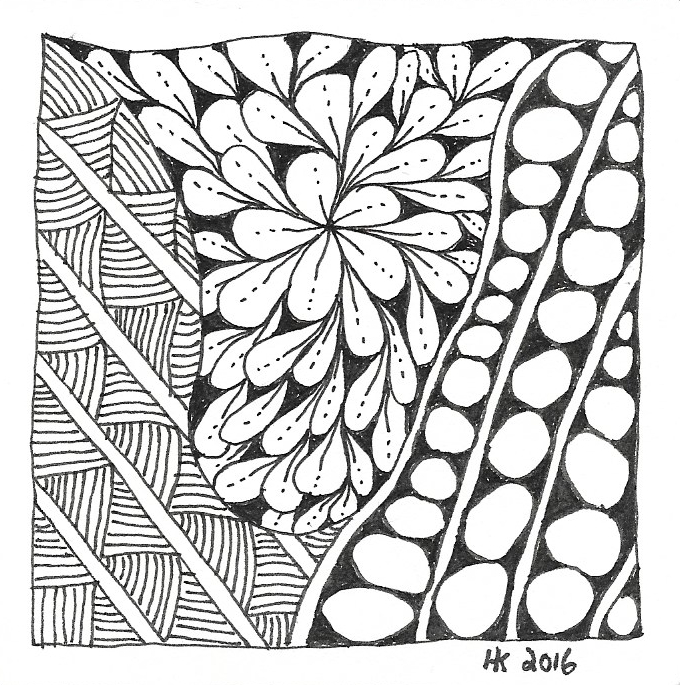
Zentangle 2016
I have been studying Zentangle, a meditative art form, for the last four years.  A basic principle of Zentangle art is that you don't plan your work.  The fun is in the exploration — of discovering where you should go.

One of the things I have learned over the years is that creative leaders have many different ways of working. What works for one person does not work for another. How do you work? Do you map out your story in advance of writing it? Do you know what your painting will look like before you start painting it? Are you confined by the expectations of yourself or others?

Monday, August 8, 2016

Harley King - Heroes and Stories


Are you the hero of your story? Or are you the victim? We all have faced challenges in our lives and we have struggled to overcome difficulties. We have people who seek to hurt us and cause us harm. Have you found the strength to share your story of triumph and victory over the pain? Or are you still dwelling in a past of unhappiness? Maybe it is time to retell your story with you as the hero. Maybe it is time to celebrate your healing.

Our stories are not new.  Others have tread the same path and faced the same challenges.  The difference is in the details. The difference is in our memories. Share your memories and the details that make your story unique. Share what is special about your story.

The fact that I have been fired five times in my career is a part of my story. Yet, I have risen from the ashes of failure to find new paths. I have used my failures as opportunities to grow and change. I have overcome the pain of loss. I have become the hero, not the victim.  I have been employed by the same company for the last 28 years.

The fact that I was diagnosed with prostate cancer is a part of my story.  Yet, today, ten years later, I am cancer-free.

The fact that editors have rejected my poems is a part of my story.  Yet, I did not let the rejection stop me from writing.  I chose to keep writing and have now written over 5,000 poems.  And I still write and rewrite my story.  I celebrate my story. 

What stories are you telling? Are you the hero?  Or the victim? Is it time to rewrite your story?

This entry marks the 950th post to this inspirational blog filled with positive quotes and comments. I have written every week for six years, beginning with my first entry on August 7, 2010.  The first two years I posted a daily entry. During the last four years I have posted weekly. I am writing and rewriting my story.
First blog post: August 7, 2010
http://harleyinspiration.blogspot.com/2010/08/every-flower-is-soul-blossoming-in.html

Monday, August 1, 2016

Tom Robbins — Options


Many artists and writers dream of becoming successful.  They believe they will be happy when they have a best seller on their hands.  Be careful what you wish for.  When you are an unknown writer or artist, you are free to explore new genres or avenues of thinking without anyone criticizing you. When you are successful, you can become boxed in by the expectations of others and your options to explore new genres becomes limited. 

One of my favorite mystery writers, Walter Mosley, has tried on occasion to write novels outside of the genre of mysteries and these novels have never been as successful as his Easy Rawlins novels. 

 I once talked with Denver Pyle, a Hollywood character actor for most of his career. He said that his role as Uncle Jessie on the Dukes of Hazard negatively impacted his ability to be cast in any other roles. He was typecast as Uncle Jessie. 

Sometimes we as creative leaders become trapped by our own success and are unable to reinvent ourselves. Ricky Nelson speaks of this trap in his song, The Garden Party.

Monday, July 25, 2016

Carl Rogers — Paradox of Change


Have you ever had a desire to change who you are?  Have you ever dreamed of waking up and being somebody different?  That is one of the fun things about being a novelist or an actor.  Novelists and short story writers can become the characters inside the stories they tell. I once wrote a short story, Bath Day, in which I inserted my real self as a minor character seen through the eyes of the main character.   Actors take on the character of others.  They play heroes and villains.  They experience death, love, sorrow and laughter in the skin of imaginary characters.

Most of us have struggled with our self-identity. We may not like our physical looks or the bill-paying work that we do or the fact that we have grown old. We may think that we are poor husbands, wives or parents.  And yet, if we learn to accept who we are and what we have done, then we can begin to change into who we want to be.

Have you ever tried to change your habits? Stop smoking? Lose weight? Start exercising? Learn another language? Leave the toilet seat down? Some people say it takes 21 days to form a new habit. Personal change is never easy. We need to learn to be more forgiving of ourselves and those with whom we share our lives. None of us are perfect. And if change is difficult for us, don't you think it is just as difficult for those you love. Learn to be gentle with yourself and those you love.

Monday, July 18, 2016

William A. Ward — Humor


Are you able to laugh at yourself and the circumstances you find yourself in?  Life has a tendency to throw you off balance and unless you are able to laugh, you will surely cry.  Laughter gives us balance and a way to cope with the challenges we face.  

Many of us take ourselves too seriously. We need to learn to laugh at ourselves. We all make mistakes. We all screw-up. When we learn to laugh at our mistakes, we begin to heal the pain. None of us are perfect, even those of us who try to be. For years perfection has been one of my goals whether I was speaking or writing and I have had to learn a hard lesson that it is okay to make a mistake. I have had to learn to relax and to laugh at myself. In fact, mistakes make us better people, more human.

Have you laughed today? In these crazy times (and when have they not been crazy?), we need to be able to find humor in the absurdity of living or we will quickly lose perspective. We will fail to see the forest. Laughter and humor are essential for maintaining one's sanity in a difficult, confusing and chaotic world.

Some of the best humor is what I call spontaneous humor.  This is humor that is not planned.  This is humor that rises spontaneously out of the situation and it can't be conveyed to others.  This is humor that you have to have been there to grasp it. 

Are you able to find the humor in difficult situations?  I challenge you to keep a humor journal where you record funny things that happen to you.  And on those days when you feeling down, pick up your journal and relive those laughs.

Monday, July 11, 2016

Brianna King — Second Chance


How many times a day do you think of yourself as a failure?  How often do you throw your creative work in the trash? Maybe it is time to learn the art of imperfection.  Too many of us strive to be perfect. Perfection cannot be achieved.  Even the best works of art have mistakes.

In Japan, some craftsmen practice the art of 500-year-old art of Kintsugi which involves repairing broken ceramic pieces with a lacquer that is mixed with gold, silver or platinum.  We should not simply throw things away because they are broken or imperfect.  We need to find the beauty in the imperfection.  We need to celebrate imperfection.  Our imperfections are what make us unique and special.  Without our imperfections, we would not be who we are.

So, the next time that you want to wad up your writing and toss it in the waste basket, don't. Put it aside and come back to it on another day.  Learn to find the good within your creative work.  Learn to celebrate the imperfections. Honor your mistakes.

Here is a video that provides more background on the philosophy and history of Kintsugi.


Tuesday, July 5, 2016

Katharine Graham — Love What You Do


Do you love what you do? Do you love to paint? Do you love to write? Do you love to act? Do you love to draw? What is your passion? If you do not enjoy writing or singing or painting, then maybe it is time to get out of the creative business and find something you love to do. The creative world is difficult and if you don't have fun being creative, you will feel like you have been hit by truck.

What we as creative leaders do is very important. We touch people's lives and help them feel better about themselves. We solve problems and show the world a better way. We bring beauty and new ideas into the world. We help people escape their mundane worlds for a short time. We inspire people to be better than they are. We give hope where there is none. We help people visit new worlds and experience new places.

Celebrate the creative work that you do. Be proud of the creative work that you create. Appreciate your accomplishments and achievements even when others don't recognize your talent. Be happy with who you are.

Monday, July 4, 2016

Certified Zentangle Teacher


I am now a Certified Zentangle Teacher (CZT). I attended a 3 day workshop in Providence, RI, last week and am now certified to teach Zentangle art. People learn to draw abstract patterns using black ink on white tiles. Zentangle practice is a relaxing and meditative form of art.

https://www.zentangle.com/zentangle-method

Here are some examples of my recent creations.


Monday, June 27, 2016

Jim Rohn — Discipline


We all have dreams and most of us never act on our dreams.  We find excuses and reasons why we can't do something.  We focus on all the obstacles we see in front of us.  Dreams may inspire us to act for a day or two, but it takes discipline to keep writing and painting.  And this goes for successful writers and painters as well as beginners.  

I have read stories of successful writers and painters who stop working.  The first book or two made them a celebrity and they never finish the next book.  They get caught up in the celebrity of being a writer.  Being a creative leader requires discipline to sit down at the computer, to stand at that easel, or to sit at the piano.  

Do you have the discipline to accomplish your dreams?  Do you rise before everyone in your family so that you can spend an hour or two working on your art?  Or do you stay up after everyone else has gone to bed?  Do you do what many others only dream about?  

Creative leaders can become easily sidetracked by the next creative thought or the next creative idea. We are attracted to the energy within new creative ideas. It is a emotional high and can be addictive. If we are not careful we will jump from one idea to the next and never finish what we have started. Creative leaders must master the art of self-discipline if they are to be successful.

Are you struggling with your dreams or have you mastered the art of self-discipline? Do you procrastinate and never finish what you start or do you bring your projects in on time? Do you let the pleasure of the moment keep you from doing the work you were meant to do? Do you let the joy of new ideas get in the way of completing your work? Remember self-discipline is the key to your success.

Monday, June 20, 2016

Samuel Taylor Coleridge - Advice


As creative leaders, we all receive advice — some good, some bad, and some dangerous.  Be careful of who you listen to.  The wrong advice can be damaging to your emotional and mental health as well as your creative output.  Good advice can keep you on track and motivated to keep producing creative work.  Dangerous advice is that which keeps us from fulfilling our potential.  We give up because some expert says we will never amount to anything.  

As creative leaders, we are also tempted to give advice.  Be careful.  The wrong advice can destroy a potential artist or writer.  I learned a valuable technique from a trainer many years ago.  He said if you are coaching someone on skill development, you should ask them two questions:  What did you do right?  and What will you do differently next time.

Most people know when they made a mistake or messed up, even if they don't consciously admit it.  And when they write or paint something, they are very critical of themselves.  So get them to focus on what they did right?  Have them focus on the good things.  Then ask them what they will do differently the next time they write a story or paint a picture?  Get the person to focus on how he can improve.  

Monday, June 13, 2016

Jack London — Inspiration


What inspires you? What motivates you to create? What moves your spirit? I often find my inspiration in nature. Maybe a lone tree in a field. Or a full moon rising slowly above the horizon? Maybe it is a butterfly fluttering about the yard on a warm afternoon. Or a snow-covered cornfield with the stalks popping through.

If you wait for inspiration, you may never find it. You must seek it out. You must chase it through the fields. Maybe it is buried beneath a rock. Or hiding in a bird's nest. Or lost in a raindrop.

Sometimes inspiration sneaks upon you when you are working and catches you by surprise. Sometimes it invades your dreams and you wake up with the answer to your problems. When you pretend that inspiration is not important, it will dominate your soul.

Consider inspiration as a friend who comes and goes at all hours of the day and night bearing gifts that will delight you. When you open the gifts offered by inspiration, be not frightened by what you find. Cherish the madness that inspiration bestows upon you. Taste the sadness when it leaves you naked and exposed to the elements.

Kneel before the altar of inspiration and pray that you will survive the dangerous journey. Catch fireflies and offer them as a sacrifice to the gods of inspiration. Dance with the goddess of inspiration and steal her beauty. Offer a prayer of thanksgiving for an opportunity to taste of the nectar of the gods.


Monday, June 6, 2016

Muhammad Ali — Growth


Life is about change and growth as individuals and as writers and artists.  If we think the same thoughts at 50 that we did at 20, we have failed to grow and mature in our thinking. We have wasted our time here on this earth.  If we paint the same paintings or write the same stories at 50 that we did at 20, we have failed to grow and develop our skills. We have wasted the precious gifts we have been given.

I am much more accepting of life today than I was when I was 2o.  I now take the long view and realize the world will go on long after I have left this world behind.  When I was eighteen, I thought the world was about to end.

How have you changed?  What have you learned? What did you learn yesterday?  What do you still need to learn?  Have you stopped growing?  Are you simply existing — waiting for the end to come?

In the summer of 1966, I saw Muhammad Ali standing on a street corner in downtown Chicago.  He was 24 years old and I was seventeen.  He was already a world champion boxer and I was a teenager from a small farming community just beginning to engage with the world. He had already refused to be inducted into the armed forces and was stripped of his title.  My first protest march was two years away.

More than 30 years after I saw Muhammad Ali, I met one of his daughters at the restaurant she owned in a suburb of Chicago.  I was there to give a speech on the privilege of service. Life had come full circle.

Life is about the people who cross our paths, the relationships that we choose to develop and the memories we acquire.  Life is about growth, learning and change.  Thank you, Muhammad Ali, for what you gave the world of yourself and what you taught us. 

Monday, May 23, 2016

Beverly Pepper — Fallow Fields


Farmers understand that they have to leave the fields fallow some years. The soil needs a rest and an opportunity to rebuild itself. If they planted corn every year, they would deplete the soil of its nutrients eventually. 

Artists, writers and creative leaders are going to have good days and bad days. The bad days are a way of restoring the creative energies to our spirit — of making us whole again. Work every day but understand that some days you will be producing weeds and other days you will harvest the corn.

Monday, May 16, 2016

Edwin Hubbell Chapin - Forgiveness


As creative leaders we often face rejection. People ignore our paintings. Editors reject our writing. Critics criticize our work. How we respond to this rejection is a indicator of our character. 

When I was in sixth grade I was asked to be the reporter for our class news in the local newspaper. The criticism I received was that I needed to tone my writing down because it was too much like advertising. I was so deeply hurt that it was years before I picked up a pen and began to write again. But those articles foreshadowed a later career in marketing and advertising where I did actually write ads.

I have been reading the biographies and memoirs of Presidents for several years now.  Even these great leaders had a hard time overcoming criticism and forgiving their critics.  Both Harry S. Truman and Dwight D. Eisenhower felt slighted by the other.  Richard M. Nixon felt slighted by JFK and LBJ and even Eisenhower on occasion.  Nixon's failure to forgive his enemies and his critics led in part to his down fall and resignation.

How do you handle criticism? How do you respond to rejection? Many years ago I submitted two haiku to two different magazines accidentally. The reason I found out is that they both were returned on the same day. The first letter I opened was a rejection slip and it hurt. When I opened the second envelope, I found the haiku was accepted for publication. I learned a valuable lesson that day. There will always be rejection, but there will also be acceptance. Don't focus on the rejection; focus on the acceptance. Editors are fickle and rejection often has nothing to do with you. It has to do with the editor's editorial needs and his personal taste.

Maybe it is time to take a look at your life.  Who do you need to forgive?  What criticisms and rejections are holding you back from success?  What pain and injury must you forget?  What we spend our time thinking about is who we become.  Are you so busy reliving the slights and rejections of the past that you fail to enjoy the present?  Life is too short to dwell on what we can't change. Forgive and move on.