
Monday, April 1, 2019
Monday, March 18, 2019

Monday, March 11, 2019

Monday, March 4, 2019

Monday, February 25, 2019

Monday, February 18, 2019

Monday, February 11, 2019

Monday, February 4, 2019

Monday, January 28, 2019
Eleanor Roosevelt — Age: a Work of Art

In one sense, we all are artists. We create the lives we lead. While we may not have any control over what happens to us, we do have control how we respond to what happens to us. And how we respond creates the person we become. When you reach the end of the road one day and you look back at your life, what is the legacy you have left behind. What kind of person have you become? Will you be a grouchy, grumpy old drunk or a kind, caring matriarch? Will you dance with laughter or worry and fret over the fact that your husband never puts down the toilet seat? We all make choices in life and those choices create the lives we lead.
Our lives are a work of art. What color are your memories? How many wrinkles line your dreams? Do your hopes have arthritis? What are you doing today that will create your legacy tomorrow? What decisions are you making today that will form the core of your character tomorrow? Life is about growth and change. What lessons are you learning that will change your life? Your life is a canvas. Pick up your paint brush and start painting. Live the life today that you will be proud of when you are 103.


Monday, January 21, 2019

Monday, January 14, 2019

Tuesday, January 1, 2019
Harley King — Top Ten Books I Read in 2018

In 2018 I read 44 books. Seventy-seven percent of the books were fiction, 23% were non-fiction. Of the novels, 10 were mysteries, 10 were fantasy, 9 were contemporary fiction, 3 were young adult and 2 were science fiction, Of the non-fiction books, 4 were biographies and memoirs. Eighty-five percent of the books I read were e-books, 15% were physical books.
Here are the 10 best books I read in 2018.
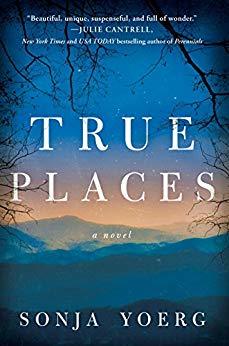
An excellent contemporary novel set in Virginia. The story is told from the point of view of various family members including a mother, father, brother and sister. The world of this family is shattered by Suzanne, the mother, discovering a starved young girl, Iris, at the edge of the road. Suzanne takes Iris to hospital and when she recovers into the family home. This simple act of kindness challenges the family to evaluate their relationships with each other.
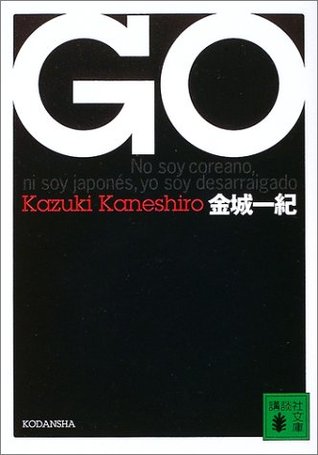
9. Go by Kazuki Kanishiro

I did find the action to be very predictable. I guessed a key event long before it happened. About a third of the way through the novel, I made the mistake of reading a few of the reviews. One mentioned how the physical details of India were inaccurate. Having never been there, I could not judge for myself, but the review colored my reading of the book. I began to question if the author had ever been there.
Even if the physical details are not accurate, the emotional power of the story makes it worth reading. If you enjoy love stories, you will enjoy this book.
7. Banana Rose by Natalie Goldberg

In many of her books on writing, Goldberg talks about the importance of detail in writing. And she practices what she preaches in this her only novel. She builds the story through attention to detail. I know some people have been disappointed with this book. I was not. I think she did a great job of telling the story. I liked the character of Banana Rose.
Not much happens in the story. We move from one day in Banana Rose's life to the next. The book is framed by the death of a friend. Goldberg discusses the writing of Banana Rose in the book, Wild Mind. She admits that the main criticism of her editor is that the book has no plot. In the rewrite, she added a slight plot, but don't expect great movement.
If you choose to read this book, go slow and absorb the details. The enjoyment is in the details. And read Wild Mind along side it.
5. The Man Who Cried I Am by John A. Williams
 Growing up in a small farming community in central Illinois in the 1960's, I had little access to bookstores. The closest was 25 miles away in Peoria. Since I was dependent on our small local library and our church library for books, I subscribed to the Doubleday Book Club. One of the books I bought through the club was The Man Who Cried I Am. I cannot remember if I read it, but I am sure that I probably did not fully grasp the meaning of the book given my small town upbringing.
Somewhere over the years I gave the book away. I purchased the ebook a few weeks ago and was surprised to find the introduction by Walter Mosley, one of my favorite writers. Written in the 1960's, the novel tells the story of a black writer during the last three days of his life. Max Reddick, who is dying of cancer, is in Europe for the funeral of a fellow writer. The book is filled with memories of his life in the 1940's, 1950's and 1960's, including the women he loved, the people he knew and the challenges he faced living in the United States and Europe as a black man. The book skips back and forth in time and the reader must play close attention because there is no warning that a time shift has occurred.
While the world has changed a lot in the last 50 years, much of it remains the same. The hearts of people are still corrupt, mean-spirited and violent. The forces that assassinated Kennedy and King are still with us. Now crazy people kill young children. Racism and violence are still with us.
This book should be read by all who have trouble understanding what it means to be a minority in the United States and by those who fail to understand what is behind the Black Lives Matter movement.

4. Bud, Not Buddy by Christopher Paul Curtis
My ten-year-old daughter read it in school so she read it to me. This is an amazing novel that parents should read with their children.
3. The Accidental President: Harry Truman and the Four Months that Changed the World by A. J. Baime

Years ago a workshop facilitator asked the group I was in: "Who was president when you were born?" I like most of the people in the class had no idea. The thought had never occurred to me. When I discovered it was Harry S. Truman, I began to read books, eight in all, about him including the comprehensive Truman by David McCullough. I have even read the boring Meeting at Potsdam by Charles Mee. I was not expecting to learn anything new about Truman and was surprised when I did.
The Accidental President is a surprisingly exciting book to read. Baime takes the reader through the first four months of Truman's presidency. He faced challenges that few, if any, presidents have faced upon taking office. The U.S. was fighting a war on two fronts in Europe and in Asia. He was thrown into negotiations with two savvy politicians, Churchill and Stalin, over the fate of Europe. He learned about the development of the atomic bomb and had to make a decision about whether to drop the bomb or not.
People often say that Truman was unprepared to be President. He had only been in the Senate for two terms. Truman was never in Roosevelt's inner circle and Roosevelt kept him in the dark after he was elected Vice-President in 1944. He became President with little knowledge of what was transpiring in the international arena. Yet, Truman was prepared in several ways. He was a student of history and what other leaders had done in difficult situations. He was a decision-maker and did not hesitate to make the difficult decisions. He had a natural instinct for politics. He also had a strong moral character, yet knew when to compromise.
Baime opens the book by taking us through the day when Roosevelt died and Truman stepped into his shoes. He follows this up with a section that shares to story of who Truman was and where he came from. Even in this section, I learned somethings about Truman that I was unaware of. Baime then proceeds to walk us through the riveting first four months of Truman's presidency and the challenges he faced.
I highly recommend this book to anyone in business who finds himself in the midst of a crisis. I also recommend the book to anyone interested in politics, history and the presidency.
2. The Golem and the Jinni by Helene Wecker

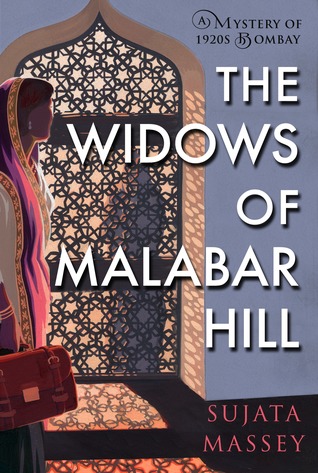 1. The Widows of Malabar Hill by Sujata Massey
I have read five of Sujata Massey's books prior to reading The Widows of Malabar Hill. Four of those books involved Rei Shimura, a half American, half Japanese antiques dealer and set either in Japan or America. My favorite was The Kizuna Coast set in Japan after the real-life tsunami. Sujata was born in England to parents from India and Germany, and was raised mostly in St. Paul, MN.
I have also read India Gray, a collection of short stories involving characters from India. My favorite short story, Outnumbered at Oxford, introduces Perveen Mistry in England. I could not wait to meet Perveen again in The Widows of Malabar Hill. And I was not disappointed. This novel is rich in historical detail. The novelist fills in what happened to Perveen prior to traveling to England to study law and what happened after she returned.
Perveen's family had migrated from Iran to India where they are a small religious minority (Zoarastrian). Perveen becomes the first woman in India to practice law. Her character is inspired by real life women who became the first female lawyers in India.
I highly recommend this mystery novel for its rich historical detail and its powerful female character.
Monday, December 17, 2018

Monday, December 10, 2018

Monday, July 2, 2018
Mark Twain — Courage
Ask yourself what you are afraid of? What fears control your actions? What fears are holding you back? Are you afraid of snakes? Heights? Success? Math? A blank piece of paper? Silence? A blank canvas? The neighbor's dog?
 In 1972 I was traveling through the western United States and decided to visit a mentor from my childhood who was living in British Columbia, Canada at the time. Ernie was a lumberjack turned minister and missionary. He had been the camp director of a Bible camp that I had attended every summer from the age of ten until high school. He was physically a very strong man. He could grab a pole with both hands and raise his legs in the air until they were parallel with the floor much like a flag.
I spent a couple of weeks with him in the Canadian Rockies. One time he took a group of us on a two-day canoe ride on a large lake. I saw from a distance a grizzly bear fishing for salmon. On our way home we encountered fog and lost our way. After going in a circle a couple of times, Ernie stopped the canoes and asked us to bow our heads in prayer. Despite his strength, Ernie knew that he could not let fear conquer him so he turned to God, the one source of strength that he knew.
Creative leaders must learn to shake off the chains of fear. Fear can prevent us from taking risks, trying new ideas, exploring new ways of thinking. Each of us must find the courage to do what we desire to do despite our fears.
Monday, May 14, 2018
Franklin D. Roosevelt — Doubt
Throughout my career I have faced doubts about decisions that I have made. When I accepted my first writing job in health care, I experienced doubt. I knew nothing about long-term care. Fortunately, I had a good boss and his encouragement allowed me to work through my doubt.
Five years later I was offered a position in marketing, and again I experienced doubt despite having built a reputation for hard work and creative thinking within the company. I knew nothing about marketing and had no desire to be a sales person. Again, having the encouragement of my new boss as well as a willingness to learn from others, I was able to move beyond the doubt to success.
I have often second guessed myself. When I buy something, I always question why I did what I did. When I trade in a car for a new one, I begin to doubt the decision I made. What doubts are preventing you from becoming the person you want to be?
New managers often have doubts about their talents and abilities. They are uncomfortable with the decisions they are called upon to make. They are uncertain about whether the employees like them or not.
Confidence is one of the keys to success. Even when you don't feel confident, you need to act confident. You need to walk tall and proud. Don't let your doubts hold you back. Act confident today.
New managers often have doubts about their talents and abilities. They are uncomfortable with the decisions they are called upon to make. They are uncertain about whether the employees like them or not.
Beginning writers and artists often have doubts about their talents and abilities. Even seasoned writers who have published multiple books may still have doubts when they begin a new book. "Do I still have what it takes? Can I pull it off again?"
Fear and doubt are normal responses to a new activity or situation. If we allow ourselves to wallow in self-doubt, we will never move beyond it. We must find a way to believe in ourselves and our abilities. What are you doing to push through the doubt to success?
"The only limit to our realization of tomorrow will be our doubts of today."
— Franklin D. Roosevelt
Monday, April 30, 2018
William Butler Yeats - Education
Good morning, Creative Leaders.
Have a very creative week and choose to plant seeds of hope in the hearts of others.
Monday, April 23, 2018
John Quincy Adams — Mentors
Most people start with their parents and move on to their teachers. My parents gave me a start by paying for my college education. I was the first in either my mother's or father's family to graduate from college. So I have much to be thankful for. And my teachers have been numerous, whether in the classroom or in books or in day-to-day living. And don't forget your children and grandchildren. They teach us parents so much. They help us to return to the passion of our youth.
How about the person who hired you into your current job? He or she saw something in you that others did not. Most of us have had job interviews where we did not get the job. How about the person who hired you into that most important first job in your career? The person who hired me into my first job in health care was a man named Wes Faulkner. He saw something in me that others did not. He taught me much about creativity, writing and corporate politics.
I could list hundreds of people who have touched my life from beggars whom I gave a handout to the Presidents of companies. None of us live in a vacuum. Think about your neighbors. The person who mowed your yard when you were sick. The minister who married you. The banker who loaned you money.
We have so much to be thankful for. Yet, how easily we forget and feel we have nothing — that we have not been as successful as we wanted. We need to develop an attitude of gratitude — to give thanks each and every today.
Saying thanks, though, is not enough. We need to give back. We need to mentor others. We need to inspire and motivate the people in our lives — the people we manage as well as members of our family and neighborhood.

Who are you mentoring this week? Who are you inspiring to learn more and achieve more?
This week focus on the words of John Quincy Adams:
"If your actions inspire others to dream more, learn more, do more, you are a leader."
Monday, April 16, 2018
Barbara De Angelis — Dance of Life
Too often we spend our time regretting who we were in the past and the mistakes we made. Or we spend our time dreaming about who we want to be in the future. We think about what we would do if we had more money or if we were famous. And we forget about the present.
Life should not be lived in the future nor in the past. We must learn to live in the present. This is where the dance of life takes place. Where are you living? Somewhere in the past — remembering all the bad things that happened to you or reliving your glory days when you were on top of your game? Or are you living in some distant future when you are successful, rich and living the dream?
The future will never happen unless we work hard in the here and now — unless we pay attention to what is happening to us at this moment. The past will always haunt us unless we can learn to forgive ourselves and move beyond the ghosts.
Hold this thought in your mind this week and ponder what it means for your life.
"The moment in between what you once were, and who you are now becoming, is where the dance of life really takes place."

— Barbara De Angelis
Wednesday, February 7, 2018
Subscribe to:
Posts (Atom)