Welcome!

Welcome! There are more than 900 Inspirational Quotes For Writers, Artists and Other Creative Leaders on this site.
Spend a few minutes exploring. And come back again and again for other inspirational quotes.

Tuesday, May 17, 2011

Arvo Part

Portrait of Arvo Part
(2011 by Michael) 
"I have discovered that it is enough when a single note is beautifully played.  This one note, or a silent beat, or a moment of silence, comforts me."


— Arvo Part
Estonian Classical Composer
1935 -


Many of the poems I have written are full of simple words and simple images.  I spent seven years early in my career writing haiku, a Japanese poetic form, that has a maximum of 17 syllables.  Most of my haiku are less than 17 syllables.  Here is one with four words and six syllables.

pregnant —
    she weeds
       carrots

Here is one with three words and six syllables.

spider
    underfoot —
        squash

For me, it is what is not said sometimes that is as important as what is said.  Listen to the silences between the words — the silences within the images, the silences between the notes.  Some writers are lavish with their words and sentences.  One of my favorites is John Irving.  His novels are written as circles within circles — very complex in construction and development and I enjoy them.  Some writers, artists and musicians seek simplicity in their work.  Arvo Part, the Estonian composer, is one of them.

Here is a track from his album, Alina.  Enjoy the pictures as well as the music.


We need both the simple and the complex in our lives.  If you are complex artist, seek simplicity in a few of your works.  If you are a simple artist, seek complexity.  And don't be fooled into thinking simple works are not as good as complex works.  Sometimes simple works are harder to create than complex works.  In a 500 page novel, you can make a few mistakes and nobody will notice.  In a haiku, one wrong word will ruin the haiku.

Here is a short poem, I wrote back in March 2011.

Your breath,
a feather

of love,
touches my ear.

I listen
to the moon

and cry softly.


(The portrait of Arvo Part above was done by Michael.  Check out his blog, Red. Yellow. Blue.)

Monday, May 16, 2011

Frida Kahlo

"I paint my own reality.  The only thing I know is that I paint because I need to, and I paint whatever passes through my head without any other consideration."


— Frida Kahlo
Mexican Painter
1907 - 1954


Do you paint the world as you see it or do you paint the world as it really is?  Can we as artists and writers know the world as it really is?  Or do we only experience a version of the world?  Only what our eyes, ears and nose tell us is out there.  Is the world we experience internal or external?  Is the world we remember internal or external?  

Roots (1943)
Sold for $5.6 million (2006)

Do you paint whatever passes through your mind?  Or do you censure what you paint because you think others won't like it or won't appreciate it or won't buy it?  Our minds often serve as judges who tell us what we should or shouldn't paint.  Our minds often limit us and hold us back from producing the art we want to produce.  Frida Kahlo was not that type of artist.  She painted the pain she felt.  She did not limit her art because she felt others wouldn't like it or understand it.  She painted the world as she saw it.  

Here is the movie trailer for the great movie of Frida Kahlo starring Salma Hayek.  If you have not seen this movie, you need to see it today.


Sunday, May 15, 2011

Graham Greene

"Writing is a form of therapy; sometimes I wonder how all those who do not write, compose, or paint can manage to escape the madness, melancholia, the panic and fear which is inherent in a human situation."


British Novelist
1904 - 1991


Have you ever thought of your writing or your painting as a form of therapy, as a way to help you through the challenges you face in life with at least a part of your sanity?  This goes to the heart of who do we create for?  Ourselves or others?  I think the answer for the most part is ourselves.  If we write what others want us to write or paint what others want us to paint, I think we hurt ourselves more than help ourselves.  We all have demons in our lives that we must work through.  For some it is their childhood.  For others it is the death of someone they loved dearly.  For others it is the spiritual doubts they have.  Creating works of art helps us cope with the pain that is at the heart of our lives.  It helps us face the fears that try to force us into hiding.  It helps us to keep the madness at bay for a little while.

Saturday, May 14, 2011

Vincent Van Gogh

Self-Portrait
1889
"If you hear a voice within you say, 'You cannot paint,' then by all means paint and that voice will be silenced."


— Vincent van Gogh
Dutch Painter
1853 - 1890


Most of us have a voice inside that plants seeds of doubt in our hearts.  "You can't paint.  You can't write.  You can't draw.  You can't speak.  You can't sing...."  The list goes on and on.  Today we call it self-talk.  One expert says that 75% of what we say to ourselves is negative.   We need to silence that negative voice by proving him wrong.  Don't listen to that negative voice that is determined to make you fail.  Keep writing.  Keep painting.  Keep drawing.

When I teach people how to be better speakers, I talk about that second voice sitting on their shoulders.  When I first started speaking, I heard two voices — the one coming out of my mouth and the one sitting on my shoulder.  The one was positive and upbeat.  The second was nervous and negative.  The more often I spoke, the less vocal the second voice became.  Today I rarely hear that negative voice.  And when I do, I give him a quick kick and he is gone.

And the same is true of my writing.  I used to hear the voice of doubt shouting in my ear.  Today, I can barely hear him mumble.  And when he does appear, he is skin and bones and dressed in rags.  Soon he will be homeless.

The First Steps, After Jean Francis Millet
(January 1890)

I have written two poems in response to this painting, The First Steps, by Van Gogh:  A Father's Dream from the point of view of the father and A Mother's Grief from the point of view of the mother.  Just click on the titles.

Friday, May 13, 2011

Leopold Stokowski

"A painter paints pictures on canvas.  But musicians paint their pictures on silence."


— Leopold Stokowski
1882 - 1977
British Orchestral Conductor


Have you ever listened to silence?  These days it is hard to find silence, because there is so much white noise.  Even in nature there is little silence.  We hear the wind, the insects, the birds and the animals.  We fill our days with noise from the moment we wake until the moment we sleep.  We turn on the television, plug in our I-Pods, and turn on our computers.   And some of us are afraid of silence.  If silence appears in a conversation, we become nervous.  Many of us can't be home by ourselves without turning on the TV or the radio so we have noise.  And cell phones allow us to stay connected to human voices so we don't feel alone even if we are deep in the woods.  I believe silence is a good thing and that we need to find ways to enjoy it more.  As an artist and writer I need silence to hear the voice of my muse.  Too much chaotic noise blocks the sweet voice of my muse.  Do you run from silence or have you learned to appreciate it?

Here is a video of Leopold Stokowski conducting Tchaikovsky.  Watch his hands paint the silence.  Fantastic1


Wednesday, May 11, 2011

Leonardo da Vinci

Self-Portrait
in red chalk
(1512)
"Art is never finished, only abandoned."


— Leonardo da Vinci
Italian Artist
1452 - 1519


Do you have paintings laying around that you have not finished?  Or stories that you can't seem to finish?  I have one such story.  No matter how many times I have rewritten it, I am never satisfied with the ending.  I put it away and and come back to it again and again.  I have a long eighty page poem about the life of my mother that I have never finished.  

Unfinished painting of
St. Jerome in the Wilderness
(1480)
But I think da Vinci is driving at something even deeper.  No art is ever finished.  Sure we may sell a painting or publish a novel, but if we could we would go back and change it.  And some artists do.  I have read of writers making changes even as the novel is going to the printer.  

And sometimes a writer spends a lifetime rewriting the same story.  He may publish 10 novels, but each is a variation of the others.  And artists may paint the same subject over and over.  Each time trying to perfect what they missed before.  Are there certain themes that reappear in your writing and your paintings?  Are there certain personal issues that you are working out in your art?  

Tuesday, May 10, 2011

St. Francis of Assisi

"He who works with his hands is a laborer.  He who works with his hands and his head is a craftsman.  He who works with his hands and his head and his heart is an artist."


— St. Francis of Assisi
Italian Friar and Preacher
Founder of the Franciscan Order
1181 - 1226


What makes a great painting, poem or novel is the heart of the artist.  Great art grows out of the heart, not the mind.  A person can perfect his technique and think new ideas, but if the work he produces does not have heart, it ultimately will fail.  Yet a work of art that has heart will be able to overcome poor technique and weak ideas.

Emotion is what connects one human being to another.  Emotion is what connects a work of art with the audience.  Emotion is what artists must put into their work.  Have you connected with your heart?  Do you create from the heart?  Do you feel as your heart feels?  Or are you lost somewhere in your mind, thinking up new thoughts and new ideas?  Ideas are not enough. We must feel the emotion behind what we create.

Monday, May 9, 2011

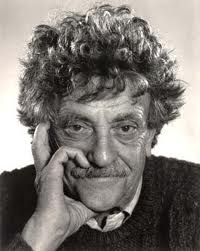
Kurt Vonnegut

"The practice of art isn't to make a living.  It's to make your soul grow."


American Novelist
1922 - 2007


Many of us dream of making a living from our art.  We want to spend a hundred percent of our time on our art.  Actually very few artists, musicians and writers make a living from their work.  Most have to take on jobs to support their creative habit or starve.  If the reason we write or paint is to make money, then we should give it up and go find a job in business.  Making art is not about money.  Making art is about personal growth and development — about the journey of the soul.  Money, if it comes, is the gravy.

Kurt Vonnegut is one of my favorite novelists.  His Cat's Cradle is in my all time list of favorite novels.  I first read him in college and last in 2009 when I read Armagedd0n in Retrospect.

Here is a visual tribute to Kurt Vonnegut.


Sunday, May 8, 2011

Henning Mankell

"To grow up is to wonder about things; to be grown up is to slowly forget the things you wondered about as a child."


Swedish Novelist
1948 - 


I watch the three-year-old child that my wife and I are raising and I am amazed at the creative powers of her mind to imagine worlds that I cannot see.  To invent stories and stories within stories.  What happens to us as we grow up and take on the cloaks of the adult world?  Where does our inventiveness go?  What worlds of the imagination have we forgotten?

What do you do to keep your mind young?  Do you play with children?  Do you enter their worlds?  Or does the path you walk become narrower with each passing day?  Do you still think as a child or have you given up childish things?  Are you young at heart?  Or are the arteries of your imagination clogged?

I recently finished Mankell's excellent novel, The Man From Beijing.  Here is a video of Henning Mankell discussing the novel at Strand Bookstore.


Saturday, May 7, 2011

Laura Kasischke


"Writing is really just a matter of writing a lot, writing consistently and having faith that you'll continue to get better and better.  Sometimes people think that if they don't display great talent and have some success right away, they won't succeed.  But writing is about struggling through and learning and finding out what it is about writing itself that you really love."


American Novelist, Poet
1961 - 


If success comes too early, it can destroy an artist.  Early success can create writer's block.  Artists become overwhelmed by the success and stop painting.  People start enjoying their celebrity status and forget about what brought them there.  And sometimes they start believing their own press clippings.  Sometimes it is better to wait until you are emotionally ready and have the wisdom to handle it.  

If writing or painting comes too easy, people often lose interest and look for something more challenging.  If writing is a struggle, then success when it comes will be sweeter.  Have the faith to keep writing, to keep drawing or to keep painting even when there seems to be no hope of success.  

Friday, May 6, 2011

George Bernard Shaw

"When I was young I observed that nine out of every ten things I did were failures, so I did ten times more work."


Irish Playwright
1856 - 1950


How do you respond when you fail?  Do you give up and quit?  Do you work harder at becoming better?  The difference between winners and losers is that the winners keep going long after the losers have quit.  What failures are holding you back today?  What expectations do you have about success?  When you try to do something new, how many times are you willing to fail before you find success?  Once?  Twice?  Five time?  A hundred times?

Why are we as a society obsessed with success and failure?  Many of us desire fame and fortune and will work hard to achieve it.  And some of us are destroyed when we fail.  We can't stand to fail.  When we reach the end of our lives will our failures and successes matter?  Or will the people we love be more important?


Thursday, May 5, 2011

Jim Trelease

"Story is the vehicle we use to make sense of our lives in a world that often defies logic."


American Author, Speaker, Artist
1941 -


Often the world we live in does not seem to make sense.  Sure we have scientific explanations of how the universe was made.  And we have made great strides in understanding genetics.  But in the end it is the emotional side of life that is chaotic.  People still hate and kill each other and justify it for the dumbest of reasons.  People steal from others whether at the local convenience store or at the gas pump or on Wall Street.  People take drugs to hide their pain and to avoid dealing with the emotional causes of the pain.  Even artists, musicians, actors and writers are often caught in the trap.  They pour their heart and soul into their work and have nothing left over for their families and friends.  They create beautiful works of art and leave their spouses and children crying in the dark.

One of the ways we can make sense of this wild and crazy world we inhabit is to share our stories.  By telling our stories we can impose some structure to the chaos and randomness of the world around us.  Story gives a sense of who we are and where we came from.  Story links us to our past and points the way into the future.

Wednesday, May 4, 2011

Virginia Satir

"We must not allow other people's limited perceptions to define us."


American Author
1916 - 1988


One of the challenges we all face is not letting other people's perceptions of us determine who we are and how we behave.  This development of who we believe ourselves to be begins almost from the moment we are born.  Our parents judge us based on our gender.  I have talked to women who say: "My father wanted a boy so he named me ___________."  Other people will tell us that we are big or tall or pretty.  And over the years these observations sink into our subconscious and we begin to believe them to be true.  Much of my childhood I was told that I was big for my age.  Over time that observation by people translated in my brain as "you are fat" even when I wasn't.

What observations have you heard throughout your life that you have come to believe as true?  How did these observations become translated into your brain?  Are these observations true or do you need to discard them?

As artists and writers we experience similar challenges.  People will criticize our creative works and often we come to believe these criticisms to be true.  We may even change our work to please the critics.  If we do, we are allowing their limited vision to define who we are and what we are capable of achieving.  Do not let those with limited imaginations limit you.  Stand up for yourself.  Choose to define yourself and your work by your vision, not that of others.


Tuesday, May 3, 2011

Ella Winter

"Choose well: your choice is brief and yet endless."


Australian Journalist, Author 
1898 - 1980


I believe everything we do in life is a choice and that we need to take responsibility for our actions and not blame others.  The challenge is to make the right choices or at least to make choices.  When I graduated from college I was afraid to choose a direction to my life.  I didn't know what I wanted to do.  If I went down the wrong path it would be a disaster.  What I have learned is that the choices I made have led me where I need to be.  The challenge is to choose.  If you keep choosing you will eventually end up where you are supposed to be.  If you don't choose and let life happen, you may end up where you don't want to be.

Many people blame others for the circumstances in which they find themselves.  They are what I call "IF ONLY THINKERS."  They preface everything with the phrase: if only.  If only I had more money.  If only I had a college education.  If only my boss liked me.  If only I had better parents.  If only....If only....If only....

Usually we only have a short time to make a decision before the door closes and the opportunity passes.  Sometimes the opportunity will come around again and other times it won't.  I once had an opportunity to work for a trade magazine but I turned it down because I was happy with the job I had.  And the opportunity to work for a trade journal never came around again.  I sent out resumes, but noone responded.  I don't know how my life would have been different if I had accepted the position, but I have no regrets.  I am satisfied with the life I have lived.

The choices we make often send us in directions we never imagined.  New opportunities arise for us to seize.  Each choice we make leads us closer to where we are supposed to be.  We make a life by making choices.  What choices are you making today that will open up new doors for you tomorrow?

Monday, May 2, 2011

Ralph Steadman

"What I used to do with a passion, foolishly and vainly imagining I would change the world for the better, I no longer tolerate in myself or anyone else.  But draw, always draw — and WRITE."


British Artist, Writer
1936 -


Have you ever dreamed of changing the world — making it a better place?  Unfortunately, most people have very little influence on the world at large.  And with the one person that we do have influence over — ourselves — we usually lack the discipline for long-term change.  Have you ever tried to change a spouse or a significant other?  It rarely works.  I have often heard of wrecked marriages resulting from one person trying to change the other.

The Sheriff
1995
Revolution is often said to be the passion of youth.  And if one does not die in the revolution, one grows wiser with age.  If you study history, you will realize that even when the evil empire is overthrown, it is usually replaced by another empire that eventually becomes evil itself.  And the cycle continues.  The young want power and the old are unwilling to relinquish it.

And what you might add does all this have to do with art and writing?  Every generation or two there are revolutions in artistic taste and style.  The younger generation of artists challenges the older generation.  Today abstract expressionism is giving way to a resurgence of realism.  And tomorrow?  I won't even begin to predict.

I think Ralph Steadman has hit the nail on the head.  Stop worrying about changing the world, your spouse or even yourself.  Just create:  draw, paint and write. 

Sunday, May 1, 2011

Fernando Del Paso

Venus de Milo
Ancient Greek Statue
"Literature and music exist in time: they have a beginning and an end.  Painting and sculpture exist in space. . . . Where does the Venus de Milo begin: in her navel, in her breasts, or in her head?  Where does an abstract painting begin: in the lower left corner, or in the center?"


Mexican Novelist, Painter and Poet
1935 -


Back of
Venus de Milo
De Paso has raised a very interesting question:  where does a painting or a sculpture begin?  When analyzing a painting, people often identify at what point the eye is drawn into the painting.  At what point do we the viewer enter into the picture?  But that point of entry is not the beginning of the painting.  In fact, paintings and sculptures have no beginning.  They just are here and now.

The flip side of this question is:  where does the novel exist?  In the head of the writer?  On the pages of the book it is printed in?  In cyberspace somewhere?  Or in the head of the reader?  And what novel are we talking about?  Is the novel that is in the writer's head the same as the novel on the page?  Is the novel that is in the reader's head the same as what is in the writer's imagination?  

Fernando Del Paso
How many times have you as a reader altered the novel on the page by changing the looks of a character or the physical location of the story.  Unlike the painting which is concrete and visual, the novel is nebulous and changing.  Yes, we can impose our stories upon the painting, but the painting still exists outside of us.  We change the novel as soon as it enters our brain.  We have altered the story as imagined by the novelist.

Have you ever wished that a novel would not end?  You may even have slowed down your reading so that the ending would be delayed?  Novels exist in time and have a beginning and a ending, but we can continue to revisit them through our memory. 

Saturday, April 30, 2011

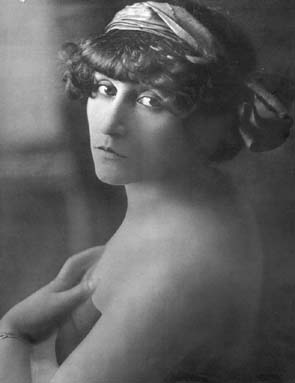
Colette

"You will do foolish things, but do them with enthusiasm."


French Novelist
1873 - 1954


Humans are not perfect.  We make foolish mistakes.  We behave in ways that we know we shouldn't.  We make choices that we later question.  We take the wrong turn in the road and find ourselves at a dead end.  We run out of gas and find ourselves stranded at the edge of the road.  We trust someone when we should have been wary.  Even the most rational of beings can make foolish decisions.  And creative leaders are not immune from this disease of foolishness.  Read the biography of any writer, artist or musician and you will find story after story of mistakes.  

Are you enthusiastic about your mistakes or do you try to sweep them under a carpet so no one finds out?  Do you celebrate your foolishness with a toast?  Are you able to laugh at your foolish mistakes?  Do you find humor in your imperfections?  Do you learn from your mistakes or are you doomed to repeat them again and again?

Friday, April 29, 2011

Eric Fischl

"What experience has shown me is that it takes your life to become an artist."


American Artist
1948 -


Becoming a painter, a poet, or a novelist takes a lifetime.  We are always in a state of becoming.  If we stop growing and changing, if we plateau, we die as artists.  We are on a journey.  The work we leave behind is the record of our journey.

Where are you on your artistic journey?  What challenges are you facing today?  What challenges have you learned to overcome?  What are your dreams for tomorrow?  What paths have you taken?  What roads have you avoided?

Don't despair if you feel you have lost your way.  Maybe you have just taken a detour and you will soon find your way again.  What we sometimes feel are the wrong roads turn out to be the right roads in the end.  We often cannot see the forest because of the trees.  Climb up the nearest tree and your world will change.  

I often hear people complaining about the weather.  It's too cloudy.  Too rainy.  Too cold.  Too hot.  Can't see the sun.  Yet if we get in an airplane and fly above the clouds, the sun is there.  It is always there.  So don't become discouraged.  Instead change your perspective.

Here is Eric Fischl talking about one of his paintings.


Thursday, April 28, 2011

Matsuo Basho

"Seek not to follow in the footsteps of men of old; seek what they sought."


Japanese Haiku Poet
1644 - 1694


Poems by Basho on Tanzaku paper
Yamagata Museum of Art


Sometimes we seek to copy the masters.  We need instead to look deeper than the surface technique and understand what they were attempting to accomplish — what was the passion in their lives.  We need to connect with their souls.  What was their moment of enlightenment?

I believe we have a spiritual connection with those artists and writers who have gone before us.  We need to explore this connection and learn from it.  We should not simply copy what we like.  We should connect with the meaning in their work.

What are you seeking to accomplish in your art?  What do you want others to perceive in your writing?  What is your understanding of the universe?  Have you achieved enlightenment?