Welcome!

Welcome! There are more than 900 Inspirational Quotes For Writers, Artists and Other Creative Leaders on this site.
Spend a few minutes exploring. And come back again and again for other inspirational quotes.

Monday, August 11, 2014

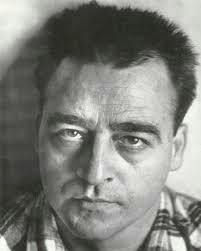
Kenneth Patchen


"I don't consider myself to be a painter.  I think of myself as someone who has used the medium of painting in an attempt to extend — give an extra dimension to — the medium of words.  It happens very often my writing with a pen is interrupted with my writing with a brush — but I think of both as writing."


American Poet, Novelist
1911 - 1972


Commentary
We define ourselves with labels.  "I am a painter.  What are you?"  "I am a poet."  We are born into this world without labels and when we die, our obituaries tell the world that we were lawyers, doctors, merchants or candlestick makers.

Kenneth Patchen
In my profile I list many of the labels that have defined me over the years:  a carpenter, street sweeper, car hop, corn detasseler, hospital orderly, radio announcer, blogger, book editor, publisher, freelance writer, bus driver, sports writer, bookkeeper, policy and procedures writer, forms designer, marketing vice-president, corporate executive, professional speaker, facilitator, salesman, trainer, poet, storyteller, organizational development consultant, ad writer and communications executive.  And that is the short list.

What labels have you given yourself?  What labels have others given you?  Do these labels define you?  Do the labels tell the world who you are?  Do your labels limit you or expand the boundaries of who you are?  Do the labels allow others to place you in a cubbyhole?  To limit your creativity?

Do you ever judge people by their labels?  "Oh, he is just a bus driver?  A street sweeper?  A garbage collector?...."

Patchen said that he is not a painter.  He is a writer who has given an added dimension to his writing.  He has extended the boundary of the label beyond how most people define it.


Kenneth Patchen
Biography
Kenneth Patchen, the son of Wayne and Eva Patchen, was born in Niles, Ohio.  His father worked in the steel mills.  He had four sisters and a brother.  His younger sister, Kathleen, was killed in an automobile accident when he was a teenager.  Patchen developed an interest in literature and writing while in high school.  He attended the University of Wisconsin for one year on a football scholarship but dropped out after a spinal injury.

After dropping out, Patchen traveled to the east coast and met his future wife, Miriam Oikemus, in Boston.  They were married in 1934 in Pennsylvania.  As Patchen attempted to make a living writing, the couple moved frequently between the east and west coasts.  He permanently injured his spine fixing a friend's car in 1937.  He underwent multiple surgical procedures and spent the rest of his life in severe pain.  In later life, Patchen created may of his painted poems while confined to bed because of his back surgeries.  
Patchen's first book of poetry, Before the Brave, was published by Random House when he was 25.  His Collected Poems was published in 1969 when he was 58.  Patchen was friends with James Laughlin, e.e. cummings,  and Kenneth Rexroth.  Patchen influenced both Allen Ginsberg and Lawrence Ferlinghetti.

Many of Patchen's creative works blurred the lines between poetry, painting and jazz.  He collaborated with jazz bassist and composer Charles Mingus.  

Video
Here is Kenneth Patchen reading his poem, In Order To.


Monday, August 4, 2014

George Bellows

Self-Portrait
"The ideal artist is he who knows everything, feels everything, experiences everything, and retains his experience in a spirit of wonder and feeds upon it with creative lust."


American Painter
1882 - 1925


Commentary:
Anne in White
Do you experience the world in a spirit of wonder?  Are you surprised by the things that happen or have you become cynical and negative?  A creative leader must be like a young child soaking up life and enjoying every moment of it.  Everything that happens to us — good, bad and indifferent — is fuel for our creative lust.  I don't believe artists and writers experience the world at a deeper level then other people.  It's more they have learned to use that experience to feed their creativity.

Creativity is both sexual and sensuous. When we are painting and writing, we have a deep desire to create, to give birth.  We can feel the lust in our loins, the joy in our hearts.  How powerful is your desire to create?  Can you feel it deep within your body?  Does every part of you tingle with excitement?  Can you taste the lips of your lover?

Biography
George Bellows, an only child, was born four years after his parents married and was raised in Columbus, Ohio.  His love of drawing was kindled because he was not allowed to play outside on Sundays.  His mother did allow him to draw while she read the Bible aloud.

Dempsey and Firpo
(1924)
Bellows attended Ohio State University and played on both the baseball and basketball teams.  He was considered good enough to play professionally, but he turned down a professional baseball contract.  He worked as a commercial illustrator while a student and accepted magazine assignments throughout his life.  His true love was painting so he quit school and moved to New York to study art under Robert Henri at the New York School of Art.  Edward Hopper and Rockwell Kent were fellow students

In 1910 Bellows married Emma Story in St. George's Episcopal Church.  They had two children.  Bellows died of a ruptured appendix at the early age of 43.

George Bellows was a realistic painter known for his bold depictions of urban life as well as portraits.  By the age of thirty his work hung in the Metropolitan Museum of Art.  He is ranked as one of the giants of American art.

Video
Here is a video discussion of the boxing paintings of George Bellows.


Monday, July 28, 2014

Elisabeth Kubler-Ross

"Learn to get in touch with the silence within yourself and know that everything in this life has a purpose."


Swiss Psychiatrist/Author
1926 - 2004


Commentary
Silence is where our work as creative leaders begins.  We must go back to the well of silence again and again to refresh our spirit and restore our sanity.  There is a lot of noise in our society today that will cloud our thinking and hinder the flow of creativity.  The noise of multiple voices rises from the traditional media: newspaper, radio and television.  And the noise is multiplied a hundred times over today by the cell phones, the internet and social media.  Each of these technologies has value and can contribute to our success, but we must manage and control their use, not let them control us.  We must sometimes go silent and cut ourselves off from the noise.  We must go deep inside and experience the silence.

And in the silence we will know and understand our purpose.  If we lose sight of our purpose, we will lose our way and become lost in the noise and chaos.  The silence allows us to find ourselves and to stay focused on what is important and why we are here.

Are you in touch with your purpose?  Do you know why you are here?  Do you know what lessons you have learned and what lessons you still need to learn?  How are you going to make a positive contribution to the world at large?  What are you giving back to society?  Seek to know who you are by knowing your purpose for being.  Embrace the silence and stay focused on your purpose.

Biography
Elisabeth Kubler was born in Zurich, Switzerland, the oldest of triplets.  Her father did not want her to study medicine, but she persisted and graduated from the University of Zurich medical school in 1957.  She married Emanuel Ross, an American medical student in 1958 and moved to the United States.


During her psychiatric residency in New York, Kubler-Ross began studying patients who were dying.  Her extensive work led to her book, On Death and Dying, in 1969 where she introduced the Five Stages of Grief.  During her career, she wrote more than 20 books on death and dying.  She finished her final book, On Grief and Grieving, shortly before she died.

Monday, July 21, 2014

Suzanne Valadon

The Blue Room
(1923)

"I paint with the stubbornness I need for living, and I've found that all painters who love their art do the same."


French Painter
1865 - 1938


Commentary:
To be a creative artist, you need to be persistent because many obstacles will get in your way including your own need for perfection.  The creative journey is only for the stubborn.  How long are you willing to work at your painting?  Your writing?  Your acting?  Or do you give into family pressure?  Societal pressure?  Doubts?  Fears?

What are you willing to sacrifice for your creative work?  What are you willing to give up?  Life is never easy and the same is true for the creative leader.  There are many days when you will take one step forward and three steps backwards.  Do you have the stubbornness to keep going even when you see very little light at the end of the tunnel?

Biography:
Suzanne Valadon was the daughter of an unmarried laundress.  When she was 15, she joined the circus, but was forced to quit a year later after falling off a trapeze.  She eventually became a model for artists including Renoir and Toulouse-Lautrec where she studied their artistic techniques.  She is best known for painting female nudes but also painted landscapes, florals and still life.  She sometimes worked as long as 13 years on a painting before showing it in public.

Suzanne Valadon was the model for these paintings by Renoir:


Monday, July 14, 2014

Muriel Rukeyser

"The universe is made of stories, not of atoms."


American Poet
1913 - 1980


Commentary
The universe is alive with story.  Without story, much of what we as humans know would be meaningless.  Through story we understand the world around us.  Through story we understand our lives and why we have lived the way we lived.  Story provides meaning to the events that have happened and the sorrows we have experienced.  

As creative leaders, we are driven to share our story whether that be through a poem, a painting, a novel, a song, a sculpture, a film or a dance.  What stories are you telling in your art?  What stories are you telling that define who you are?  Our lives are filled with story.  Share yours today.

Biography
Muriel Rukeyser was born in New York City to a middle-class Jewish family.  Her father, Lawrence B. Rukeyser was born in Wisconsin.  He moved to New York and started his own sand and gravel company which went bankrupt in 1932.  Her mother, Myra Lyons, was born in Yonkers.  Muriel began writing poetry in high school.  Muriel attended Vassar College and Columbia University, but her education ended with her father's bankruptcy.

Muriel married and divorced the painter, Glynn Collins.  The marriage lasted on six weeks.  She gave birth to her son out of wedlock.  

Rukeyser's first book of poetry, Theory of Flight, was published in 1935 as part of the Yale Younger Poets Series.  She was 21.

Muriel Rukeyser was a poet, social activist, teacher, biographer, screenwriter, dramatist, translator and author of children's books.  She taught at Sarah Lawrence College and founded a literary magazine with Elizabeth Bishop, Mary McCarthy and Ellen Clark.

Poetry
Here is a poem by Muriel Rukeyser.

Poem
by Muriel Rukeyser

I lived in the first century of world wars.
Most mornings I would be more or less insane,
The newspapers would arrive with their careless stories,
The news would pour out of various devices
Interrupted by attempts to sell products to the unseen.
I would call my friends on other devices;
They would be more or less mad for similar reasons.
Slowly I would get to pen and paper,
Make my poems for others unseen and unborn.
In the day I would be reminded of those men and women,
Brave, setting up signals across vast distances,
Considering a nameless way of living, of almost unimagined values.
As the lights darkened, as the lights of night brightened,
We would try to imagine them, try to find each other,
To construct peace, to make love, to reconcile
Waking with sleeping, ourselves with each other,
Ourselves with ourselves. We would try by any means
To reach the limits of ourselves, to reach beyond ourselves,
To let go the means, to wake.

I lived in the first century of these wars.


Video
Here is Muriel Rukeyser reading The Ballad of Orange and Grape.


Monday, July 7, 2014

Rabindranath Tagore


"Faith is the bird that feels the light 
and sings when the dawn is still dark."


Bengali Poet, Novelist, Musician, Painter, Playwright
1861 - 1941


Commentary
Do you believe in your artistic talent?  Do you have faith in your creativity?  Do you let your creative light shine or do you hide it under a bushel basket and refuse to share it with the world?  

Creative leaders need to have the faith that they are on the right path.  Even in those darkest hours before the dawn, you need to understand the sun will rise again — that your creative work is important.  

Don't give up on yourself.  Don't give up on the work you do.  You are unique and special.  No one else can create the paintings, the poems or the novels that you can create.  If you don't use your creative gift to produce art, the world will have lost much.  So pick up your pen and write.  Pick up your brush and paint.  Pick up your guitar and sing.

Biography
Tagore was the youngest of thirteen surviving children born to Debendranath Tagore and Sarada Devi.  The original family name was Banerjee but was eventually anglicised to Tagore.  His paternal grandfather visited Queen Victoria and other English royalty.  Tagore 

Tagore was raised mostly by servants because his father traveled a lot and his mother died when he was young.  He was raised mostly by servants.  His home was the social center for the arts including music, theater and literature.  His oldest brother was a poet and a philosopher.  Another brother was a composer, musician and a playwright.  His sister was a novelist.  Tagore shunned schools and formal education preferring to be tutored and to read books.  His father sent him to England to study law but he did not like it and instead studied Shakespeare.  He married Mrinalini Devi in 1883 and had five children.

Known mostly for his poetry, Tagore also wrote novels, essays, short stories and thousands of songs.  He composed over 2,000 songs.  He wrote 8 novels and 4 novellas.  He also took up painting at age 60 and had several exhibitions of his work.

In 1913, Tagore won the Nobel Prize in Literature.  In 1915 the British Crown granted him knighthood which he renounced in 1919 after the Jallianwala Bagh massacre.

Poetry
Here is a poem by Tagore:


My Song
by Rabindranath Tagore


This song of mine will wind its music around you,
my child, like the fond arms of love.

The song of mine will touch your forehead
like a kiss of blessing.

When you are alone it will sit by your side and
whisper in your ear, when you are in the crowd
it will fence you about with aloofness.

My song will be like a pair of wings to your dreams,
it will transport your heart to the verge of the unknown.

It will be like the faithful star overhead
when dark night is over your road.

My song will sit in the pupils of your eyes,
and will carry your sight into the heart of things.

And when my voice is silenced in death,
my song will speak in your living heart.

Monday, June 30, 2014

Charles Demuth

Self-Portrait
(1907)
"Paintings must be looked at and looked at and looked at. . . . No writing, no talking, no singing, no dancing will explain them."


American Artist
1883 - 1935


My Egypt by Charles Demuth
(1927)
Commentary
One of the lessons I learned early in my career is not to explain my poetry to others.  If I had to explain it, then either I did not succeed or the reader failed to understand.  I would attend writer's groups where we would share our work and then the group would critique it.  Some writers would keep trying to explain their poems if they didn't feel the group grasped the meaning of the poem.  If you feel you have to explain your poem to the reader, then you failed to write a successful poem.  

I think the same is true of any art form.  You don't need to explain your work.  A painter shouldn't explain the meaning of his painting.  The viewer has the responsibility in the communication exchange to study the work to the best of his ability just as the reader also has some responsibility.  It is a two way street.  

Biography
Charles Demuth was born in Lancaster, PA where he lived and worked for much of his life.  He suffered from both lameness and severe diabetes for most of his life.  He graduated from the Franklin and Marshall Academy, an all-male prep school, and studied art at the Drexel Institute and the Pennsylvania Academy of Fine Arts.  While Demuth studied and painted in Philadelphia, New York, Paris and Bermuda, he created most of his mature work in a second floor studio in the house he shared with his mother in Lancaster.  The house is now the Demuth Museum.

Cross-Pollination
Artists often influence each other.  In this case, the painter, Charles Demuth, was inspired by a poem of his friend, William Carlos Williams.


The Figure 5 In Gold (1928)
Inspired by a poem of
William Carlos Williams:
The Great Figure


The Great Figure
by William Carlos Williams

Among the rain
and lights
I saw the figure 5
in gold
on a red
firetruck
moving
tense
unheeded
to gong clangs
siren howls
and wheels rumbling
through the dark city.


Monday, June 16, 2014

Audrey Hepburn

"I love people who make me laugh.  I honestly think it's the thing I like most, to laugh.  It cures a multitude of ills.  It is probably the most important thing in a person."


— Audrey Hepburn
British Actress
1929 - 1993


Commentary
I am by nature a very serious person.  Laughter does not come easy for me.  Yet, I agree whole-heartedly with Audrey Hepburn — laughter cures a multitude of ills.  My wife, on the other hand, is the family comedian and is always making people laugh.  She is the life of the party.  She is always telling me to smile more and I keep telling her to be more serious.  Yet it is probably our ability and willingness to laugh together that has helped our marriage to last more than forty years.

One of our daughters is like my wife.  She does silly things to make people laugh and she is always trying to make me laugh.  She gets excited when she discovers something that make me laugh.  She finds joy in living.  

What I have discovered is that I have a unique sense of humor.  Much of what others find funny I do not laugh at.  I don't laugh at slapstick comedy and I find most sitcoms boring. Yet, someone can say something that is not meant to be funny and I will laugh.  I often find satire to be very funny.

I have slowly learned to incorporate humor into my workshops and seminars, but I don't and can't tell jokes.  I don't have it in me.  Yet, I have found that I can play off the humor that is within every group.  I listen to what others say and spontaneously create short responses that continue and extend the humorous point that someone made.

I believe we have to be able to laugh at life.  Even the best laid plans of mice and men will and often do go astray.  The creative leader has to learn to laugh when things go wrong.  We have to learn not to take ourselves too seriously because in the end it doesn't matter when we are six feet under.  Humor is the key to survival in this difficult and challenging world in which we live.

What makes you laugh?  Do you laugh often?  Do you have those deep belly laughs where everything shakes and tears fill your eyes?  Laughter helps us to relax and unwind and frees up the creative juices.  Most of us serious folks need to learn to laugh more and enjoy ourselves.

Biography
Audrey Kathleen Ruston was the daughter of Joseph Victor Anthony Ruston, a British subject, and Baroness Ella van Heemstra, a Dutch aristocrat.  Although she was born in Belgium, Audrey Hepburn held British citizenship through her father.  Hepburn spoke five languages: English, Dutch, French, Spanish and Italian.  Her parents divorced when she was a young girl.

The eleven-year-old Hepburn was living in the Netherlands when Germany invaded in 1940.  During the war, she suffered from malnutrition, developed anemia, respiratory problems and edema.  She secretly danced for groups of people to raise money for the Dutch resistance.  She occasionally  was a courier for the resistance, delivering messages and packages.

During the Dutch famine in the winter of 1944, Hepburn and her family resorted to making flour out of tulip bulbs to bake cakes and biscuits.  She passed the time by drawing.  After the war ended, Hepburn, who had studied ballet since she was five, took ballet lessons for three years from a leading figure in Dutch ballet.  

Hepburn moved to London to work as a chorus girl.  She performed in musical theater revues in 1948, 1949 and 1950.  In 1951, she acted in several British films.  Her big break came when she was selected to play Gigi in the Broadway play in November of 1951 which ran for 219 performances and earned her a Theatre World Award.

In 1953, William Wyler cast Hepburn in the starring role of Roman Holiday with Gregory Peck.  The film garnered her critical and commercial success including Academy Award for Best Actress.  She was signed to a seven picture contract with Paramount.  She starred opposite several of Hollywood's best actors including, Humphrey Bogart, William Holden, Henry Fonda, Fred Astaire, Cary Grant and Gary Cooper.

Video
Here is Audrey Hepburn and Humphrey Bogart in the movie Sabrina.


Monday, June 9, 2014

Percy Shelley

Portrait by Alfred Clint (1819)
“Poetry lifts the veil from the hidden beauty of the world.”


— Percy Bysshe Shelley
English Poet
1792 - 1822


Commentary
Is the world a beautiful place?  Or do you see only the pain, sorrow and ignorance?  Do you only taste human sweat and spend your hours wallowing in mud?  Are you so busy with your daily tasks that you don't see what is right in front of your nose?  Do you have time to open your eyes to the beauty and pleasure of the world in which we live?  

I have been so busy the last few weekends tending to the yard that I rarely have time to stop and see the beauty of the maple trees, the scampering squirrels or the playful rabbits. I don't see the shifting of the leaves in the cool breeze or hear the singing of the birds.

Have you taken a walk in the woods?  Have you sat on a log and listened to the sounds of other creatures who inhabit the space that we think belongs to us?  This yard I tend has many other inhabitants who don't recognize my ownership of this land.  The ants move around my yard as they please.  The worms till the soil and only come out when it rains or I put my spade in their home.  The squirrels and rabbits believe my yard is their feeding ground.  They did not ask my permission.  The raccoon that invaded my attic and my neighbor's boat earlier this spring did not ask us if it was okay with us.  The ducks that waddle across the yard do so as they please.


Have you seen the beauty of the world in which you are but one of billions of creatures?  Or are you absorbed in writing that next poem, painting that next painting and paying the bills that you fail to see what is before your eyes?  Our time in this world is short.  We choose every day how we will spend our time.  Take a few moments to see the beauty of this world.


Biography
Shelley was born the eldest son of Sir Timothy Shelly, a Whig Member of Parliament, and his wife, Elizabeth Pilford.  He had four younger sisters and a younger brother.  At 18 he attended Oxford, but legend maintains that he attended only one lecture and spent his time reading and writing.  He published his first novel in 1810 and a second one in 1811.  He was expelled from Oxford in 1811 because of a pamphlet entitled, The Necessity of Atheism, that he published.

Percy Bysshe Shelley was one of the major English Romantic poets and is regarded by many as one of the finest lyric poets in the English language.  He drowned in a sudden storm one month shy of his 30th birthday.  He did not achieve fame in his lifetime.  Recognition of his poetry grew steadily after his death and he had a major influence on the next 3 generations of poets.


Monday, June 2, 2014

Maya Angelou


"Success is liking yourself, liking what you do, and liking how you do it."


American Author
1928 - 2014


Commentary
How do you define success? Many people define success as wealth and fame, but these are illusionary and short-lived. Just think of the stories you have read of rich people who are now homeless.

I think Maya Angelou is on the right track when she says that success is about liking and loving yourself and what you do. As creative artists we may never have fame or fortune, but if we like what we do, we are truly blessed. Do you love what you do? Do you enjoy painting, writing, acting or singing? And most creative leaders will answer that they do love what they do. The more difficult questions is: do you like yourself?

Happiness is accepting who you are, no matter what the warts, scars and pimples. Some people live a lifetime and never learn to like themselves. We are all humans and we have all made mistakes. Maya Angelou describes many of the challenges and mistakes of her life in her six autobiographies, including her rape at age eight as well as working as a teenage prostitute. Today Angelou is a celebrated poet, memoirist, novelist, actress and filmmaker. Dr. Angelou has received over 30 honorary degrees. In 2011 President Barack Obama presented Maya Angelou with the Presidential Medal of Freedom.


Have you learned to like yourself? To accept who you are and from where you have come? True success is about loving oneself.


Video
Here is Maya Angelou reading her poem, And Still I Rise, an anthem for us all.


Sunday, June 1, 2014

Book Review: Sleeping Preacher by Julia Kasdorf

Book Review:  
Sleeping Preacher by Julia Kasdorf


When I was a child, I was fascinated by the story my mother told about the sleeping preacher, John Kaufman. After graduating college, I set out to write a historical novel about his life. Unfortunately, I ran into some obstacles and never finished the novel. In the early 1900's he had visited the church my grandmother attended. During the late 1800's until the first decade of the 20th century, a number of sleeping preachers arose around the world. The preachers, both men and women, would enter into a trance and preach a coherent sermon. People would stick needles in their legs to see if they were faking.

I was immediately interested in Sleeping Preacher by Julia Kasdorf as soon as I read a review of the book and now I have finally read it. The poet, Julia Kasdorf, also attended the same college I did, a decade later, but I have never met her. While many of these poems address growing up Mennonite, some do not. Kasdorf writes of herself as well as family. The opening lines of A Family History about her mother read:

"At dusk the girl who would become my mom
must trudge through the snow, her legs
cold under skirts, a bandanna tight on her braids."

Each poem is a story packed with description of a world that many of us have never encountered. The opening lines of the poem, August, read:

"Dad's mother was coming home
from picking huckleberries on the mountain
when sunlight spooked the horse, and it tore
through a pasture fence, dragging the buggy
until it broke lose, hurling the children,
killing their mother, spilling
those silver pails of sweet, black fruit."

While the poem goes on to tell of other women who died in the month of August, these opening seven lines encapsulate a powerful story in their own right. The attention to detail builds the story image by image.

In the poem, Friendschaft, Kasdorf captures Mennonite genealogy.

"As I grow up, the great aunts click their tongues.
They are looking for signs of their lives
in my limbs. It's the Hartzler blood that makes you
dark and thin. It's just like Aunt Toot to love
olives and pickles and fuss like a hen.
Your Yoder nose...."

I can't even begin the number of times I heard the same type of remarks growing up. Kasdorf was six when her family bought their first television and she captures that moment in a poem. I was seventeen when my family bought our first TV. I found in these poems much that I have heard and remember.

The first poem of Kasdorf that I read before buying the book was What I Learned from My Mother. The poem discusses what to do when someone dies. She closes the poem with these lines:

"To every house you must enter, you must offer
healing: a chocolate cake you baked yourself,
the blessing of your voice, your chaste touch."

The title poem, The Sleeping Preacher, tells the story of church reform through the eyes of her great-grandmother. The closing lines read:

"She did not think of us,
only to save us, leaving nothing
for us to touch or see
except this stubborn will to believe."

I highly recommend this book to poets and other readers, especially those interested in learning more about the Mennonite culture and way of life.