Welcome!

Welcome! There are more than 900 Inspirational Quotes For Writers, Artists and Other Creative Leaders on this site.
Spend a few minutes exploring. And come back again and again for other inspirational quotes.

Monday, January 11, 2016

William James


Every person is unique. There has never been a person just like you and there will never be a person just like you. The life you lead is yours. Nobody can lead the same life and do the same things, so that makes you special.

Do not judge yourself by how much money you make or how much power you have or the creative work you produce. Your success lies in the lives of the people you have touched. And if that is only one person, then you are a success. All of us in some way will touch the lives of our parents and our siblings. So from the moment we are conceived, each of us is successful.


Be not afraid to live the life that you want to live.  Trust in the belief that you are here for a reason.  You are here to make a difference in the lives of others through your creative work. You have a purpose for being. You have been given the gift of life. Accept who you are and celebrate your individuality.

Monday, January 4, 2016

Harley King


In 2015, I read 55 books, an increase of 7 over 2014.  Sixty percent of the books were e-books, twenty-two percent were printed books and nineteen percent were audio books.  I continue to read more e-books than printed books because of both convenience and cost.  I read 35 works of fiction, 18 non-fiction books and 2 poetry collections.

Here are the sixteen best books I read in 2015.

I Can See Clearly Now16. I Can See Clearly Now by Wayne Dyer  

I had the opportunity to hear Wayne Dyer speak in person about 20 years ago.  I was a member of the Michigan chapter of the National Speakers Association.  The speaker before him was very high energy and kept the audience engaged for 3 hours.  The chapter presented an award to Dyer for what he had accomplished in life.  He spoke for 30 minutes following 3 hours of high energy.  When he first came on stage, I thought we were in trouble.  We had been there all day and Dyer spoke very softly in contrast to the previous speaker.  But he had us listening to his every word within less than a minute.  There was a peaceful gentleness about him that just captured our attention.

I have since listened to Dyer on CD multiple times.  When he recently passed on to the next world, I started to read his memoir and it is an amazing book.  It is not your typical memoir.  He organizes the book around key intellectual, philosophical and spiritual events in his life.  After writing about the event, he tells what the event means to him looking back on it all these years later.  He connects the key dots in his life and we begin to understand the intellectual underpinning of his books.

You will not find a lot of personal stories about his wives and children.  He only hints at what happened between his first wife and him.  The closest he comes to sharing his pain is in the chapter where his second wife leaves him for another man and he spends two years in deep depression.

The book is inspirational and full of spiritual connections.  Near the end of his life he gave up his home and the things he owned in Florida and walked away.  I highly recommend this book to anyone who has read any of Wayne Dyer's books or heard his CDs or seen his PBS programs.  The man communicates on a very deep spiritual level.

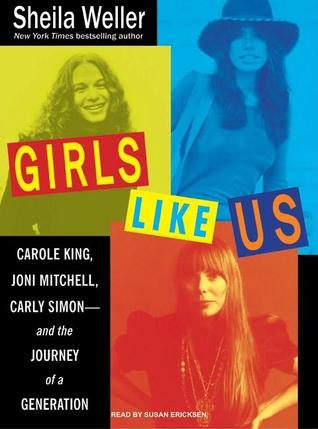
Girls Like Us: Carole King, Joni Mitchell, Carly Simon---and the Journey of a Generation15. Girls Like Us: Carole King, Joni Mitchell, Carly Simon — and the Journey of a Generation by Sheila Weller  

Sheila Weller is an amazing storyteller who has done her homework.  A lot of research has gone into this book which is about the lives of a generation of women as seen through the lives of 3 female singers of the era.  I knew much of the Carole King story having read her memoir and listened to her music.  I knew a lot less of Joni Mitchell and Carly Simon.  Weller fills her book with details of the lives of the three women but also the people who joined them on their journey.  I would recommend the book to anyone who grew up listening to Carole, Joni and Carly as well as anyone interested in the music of the era and the lives of the artists.

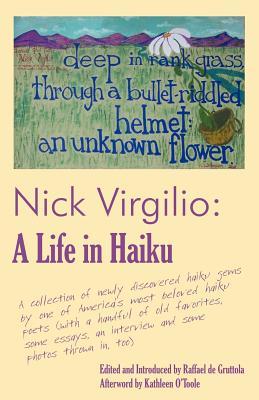
Nick Virgilio: A Life in Haiku14. Nick Virgilio: A Life in Haiku by Nicholas A. Virgilio  

I first read the haiku of Nick Virgilio in haiku magazines in the 1980s.  I also read his haiku in the The Haiku Anthology edited by Cor Van Den Heuvel.  This is the first collection of his haiku that I have read.  One of my favorite haiku by Virgilio is:

the sack of kittens
sinking in the icy creek
increases the cold

Farmers sometimes kill litters of baby kittens because there are too many cats on the farm.  In this haiku, we see the farmer standing by the creek watching the sack sink into the icy water.  He is not happy that he has to kill the kittens, but he knows it is for the best so they don't starve to death.  Yet he is uncomfortable and maybe even thinking of his own death.  It is winter and there is snow on the fields.  The farmer has some time on his hands.  The harvest is over and spring is still weeks away.  Watching the kittens die, the farmer feels a shiver through his body.

In the world of haiku, Nick Virgilio is known for the haiku he wrote about his brother who died in Vietnam.  This is one of my favorites:

deep in rank grass,
through a bullet- riddled helmet:
an unknown flower

Here the poet walking through a war-torn countryside comes upon a soldier's helmet and is surprised to see a flower popping through the holes in the helmet.  Even in death, there is life.  Just as the owner of the helmet is unknown to the poet so is the flower.  And yet that is okay.  We can not know everything.  No matter how violent life is, we can always find some beauty.

In one of the essays in the book, Virgilio compares himself to the Japanese haiku poet, Buson, in that like Buson he composes him poems.  For him it is not based simply on an experienced moment.  He would write and rewrite the haiku until he was satisfied.  The helmet poem above was inspired a photograph he saw in a newspaper in 1967.  The last line came to him during a conversation he was having with a friend.

In an interview published in the book, Virgilio discusses a haiku he created to communicate receiving the news of his brother's death.

telegram in hand,
   shadow of the marine
       darkens our screen door

In these eleven short words, Virgilio captures the essence of the moment.  The poet is focused on the small things:  the shadow and the screen door.  He may even be in denial.  He is staying at the edges of the truth.  And yet he knows the truth is there:  his brother is dead.  He doesn't want to face it head on.  

I highly recommend this book of haiku poetry by one of America's best haiku poets to all poets and lovers of poetry.

Yogi Berra: Eternal Yankee13. Yogi Berra: Eternal Yankee by Allen Barra  

I was inspired by Allen Barra's book on Willie Mays and Mickey Mantle to read this one on Yogi Berra.  As a St. Louis Cardinal fan, I never had much interest in the NY Yankees, but I found this biography of Yogi to be fascinating.  Yogi's career was coming to an end when I became interested in baseball as a child.  Unlike many athlete heroes, Yogi appears to have few personal flaws.  Growing up in an Italian neighborhood of St. Louis, he hoped to play for the Cardinals, but when he was offered only a $250 sign on bonus he refused because it was less than the $500 paid to his friend, Joe Garagiola.  Yogi was the inspiration for the cartoon character, Yogi Bear.  I recommend this book to baseball fans, Yankee fans and Yogi fans.

Sidetracked (Wallander #5)12. Sidetracked by Henning Mankell  

I last read a Henning Mankell novel back in 2011, but I felt like I was coming home when I read this novel.  I enjoy being in the company of Kurt Wallander.  He is a bit of a depressive, but he is tenacious.  This novel finds him on the trail of an axe murderer.  This is a great read that I would recommend to all who enjoy mysteries.


The Kizuna Coast (Rei Shimura Mystery, #11)11. The Kizuna Coast by Sujata Massey  

The Kizuna Coast is another excellent Rei Shimura mystery.  This one is set in Japan right after the earthquake and tsunami in 2011.  I was first introduced to the character of Rei in 2014 when I read The Flower Master.  I appreciated seeing the aftermath of tsunami through the eyes of a novelist.  Of the 4 Shimura mysteries that I have read, this is easily my favorite.  I highly recommend it to all readers of novels, not just mystery lovers.


Brush Back (V.I. Warshawski Novels)10. Brush Back by Sara Paretsky

This is my eleventh V.I. Warshawski novel and it has been a couple of years since I read my last one.  Reading the book was like visiting an old friend and catching up on what has happened to her in recent years.  At the age of fifty, Warshawski continues to stir the pot and get herself beaten up.  But in the end, she comes out on top, although, not always wiser. I enjoy the novels not so much for the plot as the voice and character of V.I. She is a great character. I highly recommend this book and the series to lovers of mysteries and strong women P.I.s.


Death of a Doll Maker (Sugawara Akitada #11)9. Death of a Doll Maker by I. J. Parker

I am addicted to the Sugawara Akitada historical mystery series set in 11th century Japan.  I have read 8 of the novels including 5 this year.  I.J. Parker is skilled at telling stories where Akitada not only solves mysteries but also has to cope with the challenges and pain of living.  The book is a great read, but I recommend reading early books in the series first.


A Fighting Chance8. A Fighting Chance by Elizabeth Warren

I knew very little about Elizabeth Warren prior to reading the book and I walked away impressed. Warren shares the story of her 10 year battle with big banks on the behalf of middle class working people and how she lost.  Warren is a law professor and bankruptcy expert turned activist and politician.  Mixed in with discussion of her fight with the banks is Warren's personal story of being born in Oklahoma and her struggle to obtain a college degree.  She tells the story of her marriage and divorce and re-marriage.  She talks of giving birth and raising her children and becoming a grandmother.  She also tells the story of her senate race to fill the seat of Ted Kennedy after he died.

I recommend the book to anyone who likes to read political memoirs or who is interested in bankruptcy and the banking industry and consumer protection.  I also recommend listening to the book rather than reading it so you can hear the passion and concern in her voice since she recorded the book herself.  

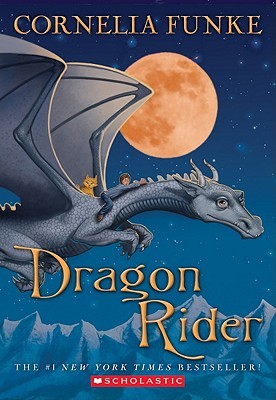
Dragon Rider7. Dragon Rider by Cornelia Funke  

I read this excellent book with my seven-year-old daughter.  I started reading it to her.  Then she wanted to read it to me.  Then we traded back and forth.  She would read two pages and then I would read two pages.  Excellent adventure story involving a silver dragon, a brownie, a boy and other characters.  Funke does a great job of weaving a story and drawing the reader in.  I would recommend this both for adults and children.


Ripper6. Ripper by Isabel Allende

Contrary to some negative reviews that I have read, I feel Ripper by Isabel Allende is a fantastic novel.  Allende tells the story in a circular manner which seems to bother some people but it is story telling at its finest.  The story keeps circling around the characters and slowly expands the world the story inhabits.  This style of storytelling is not normally seen in mystery novels.  I first discovered the style when I read the novels of John Irving who wrote one of my favorite novels, A Prayer for Owen Meany.  It took me several attempts before I actually read A Prayer... and the same may hold true for people who attempt to read Ripper.


This is the third novel that I have read in the last 2 years that was written in the circular storytelling style.  In 2014, I read Saving Fish From Drowning by Amy Tan and in 2013, See Now Then by Jamaica Kincaid.  All three books received negative criticism for repetition which means the reviewers did not understand the style of storytelling.  Circular storytelling, which can be very poetic in the right hands, builds the story through repetition and slowly draws the listener in.  Sometimes it is better to listen to circular storytelling than reading it on the page so I recommend that potential readers consider the audio version.  I wager you will like it better.

Life Itself5.  Life Itself by Roger Ebert 

I must confess that Roger Ebert was not my favorite movie critic.  I preferred Gene Siskel.  But this memoir has changed my opinion about Ebert.  Roger Ebert was raised in Urbana, Illinois in the 1940's and 50's.  I lived in Champaign-Urbana from 1975 -1982 so I was familiar with some of the things he talks about.  Even though Roger's mother wanted him to be a priest, his passion was journalism.  He did not set out to be a movie critic, but spent most of his life discussing movies in print and on television.

Late in life, cancer and 3 surgeries destroyed Ebert's ability to speak and eat.  He turned to writing his life story.  What amazed me is how much he remembers.  He says that he has always had a good memory, but not being able to engage in conversation with others opened up the flood gates and the memories poured through.

I found the book entertaining, funny with touching moments where Roger shares of himself.  I would recommend it to anyone who loves memoirs, journalism or the movies.  He does not tell his story in a straight forward fashion but skips around much as memory does — jumping back and forth in time.  I would have enjoyed having a conversation with Roger while sitting down to dinner.

Hard Choices4. Hard Choices by Hillary Clinton

Hard Choices is full of stories of Clinton's time as Secretary of State and the people she met.  I was fascinated and intrigued as I read it.  She tells stories of both failures of diplomacy and successes.  She provides insight into many of the key players on the international scene and some historical context to current events.

If you are interested in international politics, you should read this book with an open mind.  While you may not agree with Clinton's conclusions, you will have a better understanding of who Hillary Clinton is and the challenges the United States faces on the world stage.  
I also have walked away with the belief that people who run for President should have spent time as Secretary of State.  Presidents have less influence on the internal affairs of the country than they do on the international scene.  Congress has greater control and influence on the American society than any one President.  Congress makes the laws and determines the direction of the country.  Decisions made in Congress are with us for generations.  Presidents can twist arms, but in the end, their influence is short-lived.  Presidents can do more on the world stage than they can at home.  Unfortunately, most candidates for President have very little experience on the international stage and waste much of their time in office learning how the world works.  If Presidents spent time as secretary of state before running for President, they would have a greater opportunity to influence world events.

I would recommend this book to anyone interested in international politics or in understanding what makes Hillary Rodham Clinton tick.  I also would recommend that you listen to the audio version of the book.  While Clinton read the opening and closing chapters of the book, she did not read the entire book.  Kathleen Chalfant did an excellent job of reading most of the book. Though, I would have preferred to have Hillary's voice all the way through.

No Higher Honor: A Memoir of My Years in Washington3. No Higher Honor by Condoleezza Rice

After listening to the audio book by Hillary Clinton on her experience as Secretary of State, I decided to follow it with No Higher Honor by Condoleezza Rice, her predecessor.  The books are in many ways very similar both in the telling and in the stories being told.  

Rice tells a very powerful story about her 8 years of experience in the Bush Administration as the National Security Advisor and the Secretary of State.  She was introduced to George W. by his father whom she had served under during his administration.  Rice consistently defends the George W. and his decisions.  His administration was deeply influenced by the 9/11 attacks on New York and Washington, D.C.  She discusses the fear that permeated the administration in the months and years that followed the attacks. The way the Administration saw the world was colored by that fear.  While Rice admits making mistakes in her positions, she does not voice any negative feelings toward George W.  She is less positive about Dick Cheney and Don Rumsfeld with whom she experienced major disagreements, although one has to read between the lines to gain a sense of the conflict.

Rice grew up in the segregated Birmingham, Alabama.  She tells the story of how one of her kindergarten friends was killed during the 1963 church bombing in Birmingham.

One of my favorite anecdotes was during a trip to Rome for the funeral of the pope.  She was sitting between George W. and Bill Clinton.  She said Bill talked all the time and George did not talk.  The story, I believe, is very telling about the differences between the two men.

Rice did her own recording of the audio book so one hears the story in her voice.  I would highly recommend the book to anyone interested in politics, history and the international world.  The book offers more of the story than one finds in the newspapers and on television.  And I would also recommend that one reads it in conjunction with Hillary Clinton's book on her experiences.  Hillary opens her book with the letter she received from Condoleezza.  


2. The Making of The President 1960 by Theodore H. White

The Making of The President 1960 earned the author, Theodore H. White, a Pulitzer Prize in 1962.  In the  book, White, a journalist, follows the candidates from the moment they made the decision to enter the race for the Presidency until Kennedy was elected.

In the 1970’s I had read White’s The Making of the President 1968, the third of 4 books in the series.  I was impressed with book when I read so decided with being on the doorstep of the 1916 election that I would read the original book in the series.

The book is as relevant and important today as it was in 1960.  White has the reporter’s knack of capturing the detail that makes the story exciting even 55 years after the event.  Many of the issues that he identifies in the 1960 campaign are still relevant today.  He also has a strong sense of history and is able to put the events of the time in historical context.

White touches on the fact that the peaceful transfer of power from one person to the next is unusual in the annals of history.  White writes:

“Heroes and philosophers, brave men and vile, have since Rome and Athens tried to make this manner of transfer of power work effectively; no people have succeeded at it better, or over a longer period of time, than the Americans.”

The Democrats seeking the nomination of their party in 1960 included Senator Hubert Humphrey of Minnesota, Senator Stuart Symington of Missouri, Senator Lyndon B. Johnson of Texas, former Illinois governor Adlai Stevenson II and Senator John F. Kennedy of Massachusetts.  The Republicans seeking the nomination of their party in 1960 were Governor Nelson Rockefeller of New York and Vice-President Richard M. Nixon. 

White is excellent at summing up a situation in a very simple image.  After Humphrey had lost the primary in West Virginia which ended his campaign, White writes: “In the morning, when Humbert Humphrey woke, the Presidential image had evaporated. Outside the Ruffner Hotel his parked bus had overnight been given a ticket for illegal parking.”

Lyndon Johnson, like some politicians today, was seen as being too close to the workings of Washington.  Johnson’s weakness was that he believed that the Senate was America and that he was the Senate. In a very relevant passage even today, White writes: “Long service in Washington at the court of power decisions causes men to forget that power rises ultimately from beyond the Potomac.”

Here is one of White’s descriptions of Kennedy: “He had mastered politics on so many different levels that no other contemporary American could match him. He had nursed ward politics with his mother’s milk; heard it from his grandfathers, politicians both, in boyhood; seen it practiced from his father’s embassy in London at the supreme level of world events in 1939, as war and peace hung in the balance.”

White fills his book with telling details.  He writes: “At almost any moment of afternoon and evening on the road, soup is the favorite Kennedy dish — almost any kind of soup: chicken soup, tomato soup, bean soup and his favorite New England clam chowder.”

White reviews in detail the impact of the changing demographics on the politics of the time.  Between 1950 and 1960, the population of the country grew by 18%.  Forty-one million Americans were born during the period and 16 million died.  Two-thirds of the growth had occurred in the suburbs.

White also discusses immigration which statistically began being counted in 1819 as required by Congress.  White writes, “In 1820 America held 9,638,000 people, of whom almost 20 per cent were Negroes; and the rest are considered to have been the parent ‘colonial stock’ of America — an overwhelmingly British stock, spiced lightly with adventurers from all northern Europe.”

Over 40 million immigrants entered the country between 1820 and 1960.  The Irish came first.  Between 1847 and 1854, over one million Irish entered the country.  Almost 900 thousand Germans came between 1850 and 1857 and they kept coming in waves.  By 1960 people with German heritage had become the second largest component of the American population.  The Scandinavians arrived in the late 1800s.  In the early part of the 20th century, more than 3 million Italians arrived.  

White also writes about the issue of religion.  He reminds us that many of the early settlers came to escape the religious wars of Europe.  The memories of how they were punished in Europe for their religious beliefs led to the decision that government had no right to make inquiry into the faith of its citizens and that the state should not have any connection to religion.  People were free to worship as they pleased without guidance from the government.

I think every American would benefit from the reading and rereading of this book. White is a great storyteller who helps us understand how politics work and how Presidents are elected to serve the people.  


The Cider House Rules1. The Cider House Rules by John Irving  

This is another brilliant novel by Irving, one of American's finest novelists.  I saw the movie based on the novel about 15 years ago.  I remember little of the movie except for Michael Caine who played Dr. Larch.  Irving is a phenomenal storyteller who tells his stories in a circular fashion.  Each circle reveals more of the story.  Detail after detail is slowly revealed.

The story is about abandonment — about orphans and abortions and about unwanted children.  Dr. Larch has spent a lifetime doing what he calls: "God's work."  He delivers unwanted babies, raises them in the orphanage until he can find a home for them.  He also provides abortions to women who are early enough in their pregnancies.  At the heart of the story is Homer Wells for whom Dr. Larch could never find a home.  Larch teaches him how to deliver babies.  Homer ventures out into the world and his life becomes entangles with the lives of Candy and Wally.  This is a novel that everyone should read.

Thursday, December 31, 2015

Book Review: The Making of The President 1960

The Making of the President 1960The Making of the President 1960 by Theodore H. White
My rating: 5 of 5 stars

The Making of The President 1960 earned the author, Theodore H. White, a Pulitzer Prize in 1962. In the book, White, a journalist, follows the candidates from the moment they made the decision to enter the race for the Presidency until Kennedy was elected.

In the 1970’s I had White’s The Making of the President 1968, the third of 4 books in the series. I was impressed with book when I read so decided with being on the doorstep of the 1916 election that I would read the original book in the series.

The Making of the President 1960 is as relevant and important today as it was in 1960. White has the reporter’s knack of capturing the detail that makes the story exciting even 55 years after the event. Many of the issues that he identifies in the 1960 campaign are still relevant today. He also has a strong sense of history and is able to put the events of the time in historical context.

White touches on the fact that the peaceful transfer of power from one person to the next is unusual in the annals of history. White writes:

“Heroes and philosophers, brave men and vile, have since Rome and Athens tried to make this manner of transfer of power work effectively; no people have succeeded at it better, or over a longer period of time, than the Americans.”

The Democrats seeking the nomination of their party in 1960 included Senator Hubert Humphrey of Minnesota, Senator Stuart Symington of Missouri, Senator Lyndon B. Johnson of Texas, former Illinois governor Adlai Stevenson II and Senator John F. Kennedy of Massachusetts. The Republicans seeking the nomination of their party in 1960 were Governor Nelson Rockefeller of New York and Vice-President Richard M. Nixon.

White is excellent at summing up a situation in a very simple image. After Humphrey had lost the primary in West Virginia that ended his campaign, White writes: “In the morning, when Humbert Humphrey woke, the Presidential image had evaporated. Outside the Ruffner Hotel his parked bus had overnight been given a ticket for illegal parking.”

Lyndon Johnson, like some politicians today, was seen as being too close to the workings of Washington. Johnson’s weakness was that he believed that the Senate was America and that he was the Senate. In a very relevant passage, White writes: “Long service in Washington at the court of power decisions causes men to forget that power rises ultimately from beyond the Potomac.”

Here is one of White’s descriptions of Kennedy: “He had mastered politics on so many different levels that no other contemporary American could match him. He had nursed ward politics with his mother’s milk; heard it from his grandfathers, politicians both, in boyhood; seen it practiced from his father’s embassy in London at the supreme level of world events in 1939, as war and peace hung in the balance.”

White fills his book with telling details. He writes: “At almost any moment of afternoon and evening on the road, soup is the favorite Kennedy dish — almost any kind of soup: chicken soup, tomato soup, bean soup and his favorite New England clam chowder.”

White reviews in detail the impact of the changing demographics on the politics of the time. Between 1950 and 1960, the population of the country grew by 18%. Forty-one million Americans were born during the period and 16 million died. Two-thirds of the growth had occurred in the suburbs.

White also discusses immigration which statistically began being counted in 1819 as required by Congress. White writes, “in 1820 America held 9,638,000 people, of whom almost 20 per cent were Negroes; and the rest are considered to have been the parent ‘colonial stock’ of America — an overwhelmingly British stock, spiced lightly with adventurers from all northern Europe.”

Over 40 million immigrants entered the country between 1820 and 1960. The Irish came first. Between 1847 and 1854, over one million Irish entered the country. Almost 900 thousand Germans came between 1850 and 1857 and they kept coming in waves. By 1960 people with German heritage had become the second largest component of the American population. The Scandinavians arrived in the late 1800s. In the early part of the 20th century, more than 3 million Italians arrived.

White also writes about the issue of religion. He reminds us that many of the early settlers came to escape the religious wars of Europe. The memories of how they were punished in Europe for their religious beliefs led to the decision that government had no right to make inquiry into the faith of its citizens and that the state should not have any connection to religion. People were free to worship as they pleased without guidance from the government.

I think every American would benefit from the reading and rereading of this book as we enter another election year. White is a great storyteller who helps us understand how politics work and how Presidents are elected to serve the people.


View all my reviews

Monday, December 28, 2015

Paulo Coelho


I remember when I first started writing I would ask the question that many people who first find the creative path ask: Do I have talent? And I hoped that some wise teacher would say that I was a talented writer and that I should devote myself to writing. Now, having trod this path for years, I know that no one can affirm or deny my talent. It is what it is. We all have creative gifts. We can either put our talent to good use or squander it.  We can either walk the creative path or become lost in chaos of creation.

There is a deeper and more important question within the question. When we ask do we have talent, the hidden question is: Will I be rich, famous and successful? And the answer for many of us on the creative path is no. Most creative leaders will work in obscurity and receive only a pittance for their labors. If money and fame is your desire, there are easier paths to walk. To walk the creative path is do it because you love it. The choice is yours.

Monday, December 21, 2015

Georgia O'Keefe


How much do we miss because we don't take the time to see it? How many sunrises or sunsets have you spent time just enjoying the beauty? Or are you like me — running from place to place, not spending time enjoying the beauty of nature? I have lived through over 24,000 sunrises and 24,000 sunsets. I would be lucky if I saw 200 of them. I could probably count on one hand those I remember. How much we miss because we are busy elsewhere!!

How many birthdays have you missed? Yours? Those you love? Our birthdays are one of the important days of our lives.  It is the day we came into this world. Some of us don't like birthdays because we had a bad experience as a child. My wife tells the story about how her family forgot her birthday one year when she was a child.  They failed to celebrate her life.  For the past several years I have made the choice to take off work on my birthday? I take the entire week off, not just the day. 

How much have you missed in the lives of your children or grandchildren because you were too busy to stop and enjoy a few precious moments with them?  Life is about the memories we make with those we love.  For some of us we will wake up one day and realize that our children have grown up and have gone on living without us.  

Life is a gift that we need to celebrate and appreciate.  Take a few precious moments this evening and watch the sunset.  Wake up tomorrow and watch the sunrise.  Choose to slow down and enjoy the moments in your life.

Monday, December 14, 2015

Theodore Roethke


Many of us are afraid of silence. We have a need to fill the the air waves with noise — television, radio, music. And for those living in cities there are the sounds of cars, trucks, sirens, airplanes and neighbors fighting. We don't feel comfortable when the conversation dies and we are left with silence.  We rush to fill the void. We experience silence as emptiness. 

I enjoy external silence because it allows me to think. Silence allows me to explore the backroads of my mind. Silence releases my creativity. But I rarely experience internal silence. Even when I sleep my mind is filled with dreams.  My thoughts are always bubbling to the surface, brandishing their weapons. 

When I teach people to speak in public, I talk to them about the importance of silence — of learning the pregnant pause, of giving your audience the time to catch up with your words. Storytellers understand the power of silence. We must learn to appreciate silence, to enjoy its many flavors. Sometimes we can learn more from silence than the words spoken or written.

Can you hear the silence when you are painting? Do you listen to the silences between the words that you write? 

Monday, December 7, 2015

General Colin Powell


Some people look for the easy way, the next get rich scheme and the short-cuts to the top. I had a brother-in-law like that. He was always looking for the business opportunity that would make him rich. He fantasized about retiring to a beach in Cabo, Mexico. Yet, he was never willing to invest the time and hard work it takes to become successful.  He was always moving onto the next great idea that would make him rich. He died with his dream unfulfilled. Even on his death bed, he was still scheming how to make his first million.

Practicing any of the arts takes patience, hard work and persistence. Nothing happens overnight. Many people quit too soon. They become frustrated because what they produce does not match what is in their imagination. And this quitting begins early in life. I recently saw a four-year old girl who was working on a painting of the ocean become frustrated because the painting did not match what was in her mind. She burst into tears. Has this happened to you? Do you become so frustrated that you quit? Do you give up on your work?

If you want something bad enough, you have to prepare, work hard, and learn from your failures. As artists and writers we understand this because we sometimes labor for years or even a lifetime with little or no success. My words are simple: keep writing, keep painting, keep living.


Monday, November 30, 2015

Kahlil Gibran


Hope is an essential gift we have been given as human beings. Hope is the capacity for believing that tomorrow will be better. Without hope, we are wandering through a dark, desolate world. We are at the mercy of our fears and doubts. Hope allows us to see beyond the current trouble we are experiencing. In even our worst moments, we need to remember that life will get better. There is always light at the end of the tunnel, even when we can't see it.

As artists, writers and creative leaders, we need to believe that the next painting or the next poem will be our best. Hope keeps us writing, painting and acting in the face of self-doubt and failure. If we were to quit now, we would never know what was around the next corner or what opportunities lay ahead.

As creative leaders need hope because we live in a very negative, sometimes hostile world, that often does not understand or appreciate our creative work. I have been writing seriously for almost forty years and have yet to receive acceptance and recognition for the work I have produced. Another person might have quit many years ago, but I keep plugging away.

Do you have faith in your creative ideas? Your poems? Your stories? Your paintings? Your ability to become another person on stage? Do you have dark days when you want to quit and live a normal life? Hope keeps us going even when everything and everybody around us are telling us to give up — that we have no talent, no gift.

What keeps you going during those darkest of hours? Why do you believe in your ideas? Where does your hope come from? Don't give up. Keep dreaming. Keep hoping. Keep believing. In every winter you will find the flowers of spring.

Monday, November 23, 2015

Joye Moon


How do you begin your day? With a cup of coffee? A cold beer? With steak and eggs? Or a doughnut? Do you drag yourself out of bed wishing you could spend the day sleeping? Are you wide awake and full of energy?  Do you hit the snooze button again and again trying to steal a few more minutes of sleep? Do you sing in the shower and dance about the room?

While my wife and I are both early risers, we approach our mornings differently. She loves sound and light.  She turns on the TV so noise fills room.  She turns on the lights around the house chasing away the darkness.  I, on the other hand, prefer silence so I can give free rein to my thoughts.  Mornings are my creative time.  Ideas seem to spring out of nowhere.  I don't want to talk. I don't want any external noise disrupting my thoughts.  My thoughts are enough noise. We both are enthusiastic about the day, but approach it differently.

Some people get up in the morning and say: "Good morning, Lord. It is great to be alive!" They are full of energy and enthusiasm.  Other people get up and say: "O Lord, it's morning again." They start the morning in reverse and keep going backwards. Which person are you? Someone who appreciates each day she has been given? Or someone who finds no joy in living and finds fault with the world? 

How you begin your day can have a positive or negative impact on your creative work. Do you begin your day with meditation? Or prayer? Do you take a walk? Or lift weights? Do you eat a healthy breakfast or do you skip the most important meal of the day? 

Be thankful for every day you wake up. The alternative to waking up is being six feet under. Celebrate the day and give thanks for all you have been given. Every day is an enchanted gift — an opportunity to begin again.  Greet the morning with enthusiasm and hope.

Monday, November 16, 2015

Isaac Bashevis Singer


The world is in need of a lot of kindness today. Kindness must start one person at a time. I must first be kind to others before I can expect others to be kind to me. Am I kind to those around me? To family, friends and strangers on the street? How should I demonstrate my kindness? How do I show my caring? Can you be kind without loving the other person? What is the differences between love, caring and kindness? Or are they cut from the same cloth?

One of challenges we all face is accepting people who are different than ourselves. And I am not talking here about race, culture, religion or nationality. I'm talking about the little things that separate people. Is there someone in your life who talks too much or too little? Are there people who you perceive to be stuck-up or unfriendly? Do you dislike fat people or sloppy people? Is there someone in your life who is too organized or too thin? Do you think all poets are crazy and should get paying jobs like the rest of us? Do you not like the way someone combs his hair or the clothes he wears?

Are you gentle in your relationships with others or do you run over people like a Mack truck? Do you act like it is your way or the highway? When I read the life stories of artists and writers, I find some to be temperamental and self-centered as well as mean and cruel to those they love.  They abuse others. But my question is does it have to be this way. Can an artist or writer be kind and caring to the people in his life and still be a creative leader?  I think true strength comes in being gentle with others. 

As artists and writers, we often can be most abusive with ourselves. Our art never lives up to our expectations. The finished product is never as good as we saw it in our mind's eye. We should learn to accept the gifts that we have been given and not compare our work to that of other people. We are not them. We are each unique in the gifts that we have been given.  We need to be gentle with ourselves. 

Monday, November 9, 2015

Robert Persig


This is a lesson I learned many years ago when as a young man I set out to change the world.  I wanted to stop the war in Vietnam as well as end racism and poverty.  These were all lofty dreams, but ultimately unattainable.  I learned that to change anything, I must first change myself.  Change began at home and if I was lucky, I would be able to influence and impact a small part of the world around me.

Are you unhappy with your job? Begin by changing yourself — improve your skills, educate yourself. Are you unhappy with your marriage? Change yourself. No one is perfect. What are you doing that makes your spouse mad? Change it. Most married people set out to fix their spouse. You can't change your spouse. You must first change yourself. 

Are you dissatisfied with your creative work?  Do you need to improve your skills?  What can you do to become a better writer?  Artist?  Musician?  Do you need to increase the number of hours spend on producing creative work?  Do you need to overcome your fears and share your creative work with the world?

Another lesson I learned about change is that only you can change yourself. No one else can change you unless you are ready to change. Your parents cannot force you to change, though they will try.  Your boss cannot change you, though he may try.  Your spouse cannot change you, though she will try for years. Only you can change you. And you will only change when you are ready.  Other people can influence and inspire you, but only you can create the change that is needed within.


Once you master of the art of changing yourself, then maybe you can influence and inspire others to change.  Remember, though, that they will only change when they are ready. If you are unwilling to change yourself, forget about inspiring change in those around you.

What changes can you make in yourself today that will inspire and influence the people around you?  Are you ready to make the changes needed?  Are you willing to do the things it takes to make lasting change?  Only you can answer these questions.

A third lesson I've learned about change is that it requires commitment. People dream of changing their lives but usually they lack the deep commitment to do so. Change takes hard work and follow through. Nothing changes overnight.

Many in the American society expect instant change. Not happy with your body weight, take a pill or have surgery. Not happy with your wrinkles, have plastic surgery. Change takes commitment and patience. It is healthier to lose weight slowly rather than quickly.

Becoming a successful writer or artist doesn't happen overnight. It takes years of work and commitment.  Actors often are labeled an overnight success — a success which took ten or fifteen years. Harrison Ford, the actor, spent 15 years in Hollywood before he got the break in Star Wars that made him famous. Paulo Coehlo spent 15 years waiting for his best selling book, The Alchemist, to become a hit in the United States. Vincent Van Gogh sold only one painting in his lifetime and died broke. Creative expression is a lifetime commitment. Don't give up.

Monday, November 2, 2015

Wilma Rudolph


We all have dreams, things that we want to accomplish in our lives, but many of us give up too soon. We don't have the commitment to achieve what we dream of achieving. To be an artist in a world where you have to have a 9 - 5 job in order to pay the bills requires commitment. You have to get up earlier than everyone else or go to bed later than everyone else in your family. You have to steal minutes wherever you can to write, to draw, to paint, to dance. 

Sometimes we have to create in isolation, without contact with other creative souls. We have to force ourselves to write even when our body and mind is finding ways to procrastinate. Many of us don't have people in our lives encouraging us to create. In fact, we may have people telling us to get a real job. We have to be our own coach and cheerleader. We have to be willing to do what unsuccessful people are not willing to do? Have you the commitment to be a creative leader?

Discipline is one of the keys to being an artist or a writer. One needs to work every day. People often say: "I work when I am inspired." If you wait until you are inspired, you will be waiting a long time. If you work whether you are inspired or not, you will find that soon inspiration will become a constant companion. Work opens up the creative spirit and the inspiration flows. So my message is simple: work every day even if it is for only 15 minutes.

Success comes from work. Work when you are sad. Work when you are happy. Work when you don't feel like it. Work when you want to go to a movie. Our minds are very good at finding excuses for not working. "I have to do the dishes." "I have to wash the clothes." And the list goes on. Work takes discipline and will power. 

Since you have no boss but yourself, you have to hold yourself accountable. Schedule your hours when you are most creative and stick to your schedule. Maybe you write between 5 am and 6 am. Or if you have the luxury, schedule your work hours from 8 am to 5 pm with an hour off for lunch. Some writers write in the morning and do their research and marketing in the afternoon. You have to find the schedule that best fits your temperament.

Creative leaders sometimes struggle with discipline. They procrastinate. They know they should pick up the pen and write or pick up the paint brush and paint, but they find excuses. When you find yourself procrastinating, remember what you want. What is your dream? What is it you want to accomplish? Why are you here? Focus on your goals and you will have the discipline to do what you need to do.

We all have dreams and goals but many of us never achieve them because we have not mastered the art of self-discipline. I define self-discipline as sacrificing short-term pleasure for the achievement of long-term goals. If you want to be a novelist but you never seem to find the time to write, you will never write your novel. If you want to be a painter but spend your time partying with friends and not painting, you may never produce any great paintings. The arts require a lot of self-discipline. We need to be able to sacrifice the pleasure of the moment for the achievement of long-term success.

What are you willing to sacrifice for your creative work? What are you willing to give up? Life is never easy. There are many days when you will take one step forward and three backwards. Do you have the stubbornness to keep going even when you see very little light at the end of the tunnel?

The creative arts are not for the weak of will. The creative arts require commitment, persistence and self-discipline in the face of cold-hearted rejection. Do you have the self-discipline to stay focused when the world is screaming that you should quit and find a normal line of work? Do you have the strength to keep going when you have received 250 rejection letters? How long are you willing to wait for success? Two years? Five years? Ten? Twenty?


Monday, October 26, 2015

Mark Vonnegut


Writing for me is a spiritual exercise. I did not realize this until I read an essay several years ago in which Mark Vonnegut talks about his father, Kurt, one of my favorite authors. This quote opened for me the door into why I have spent 40 years writing without fame or fortune.

Since I rejected organized religion and experienced a spiritual crisis at age 18, writing became the spiritual road I walked. Writing gave my soul the courage and strength necessary to face the traumas of this world. I was called to be a preacher but I could not preach until I first cleansed my soul and made it strong through writing. 

The writing is what makes me whole, gives meaning to my life, and keeps me believing even when I feel there is nothing left to live for.  Writing is my spiritual path, my meditation and my gift of prayer.

What roads have you traveled?  What paths have you taken?  Have you questioned your faith or simply accepted the beliefs taught you as a child?  Is your art a spiritual path that you have wandered down?

Here are several of my spiritual poems.


Many do not understand my form of spirituality.  I do not fit into any mold or preconceived notion of what religion is or should be.  For some I am a sinner lost in the world.  Others ask why do you speak of God?  He does not exist?


For me, my salvation is in my ability to question — in my gift of doubt.  I walk the path of the doubting Thomas.  I shoulder the burden of uncertainty.  I live at the edge of chaos and thrive.


I ponder the question of why we are here — of what is the meaning of life.  I receive no answers, only more questions.  I choose to listen to the languages of God and wait for His Word.  I walk the path of no regret.


Monday, October 19, 2015

Paul Gauguin


As a writer, I have lived in a black and white world for years. The pages of books are black and white. The page I write on is black and white. I came to color only slowly when I took up the study of art about fifteen years ago. 

The complexity of color is hard to understand. There are shades of color within shades of color. Black and white is easier to comprehend.  Black and white makes life simpler. Color adds layers upon layers of mystery and depth.  

Autumn is here — my favorite season. A time of reflection. The colors of the leaves are shifting and changing. The greens that we have lived with for months are fading from the world. Now we see yellows, reds and browns. Soon winter will come and we will be back to black and white, waiting for spring to sprout its vibrant greens.

What is the color of your life? Light? Bright? Sparkling? Deep? Dim? Dark?  What is the color of your soul? Yellow? Red? Blue? Purple? Brown? What is the color of your heart? Love? Hate? Indifferent? Compassionate? Discouraged? Hopeful? How do you paint the world?  Gray?  Black and White? Turquoise? Lavender? Rose colored?

Monday, October 12, 2015

Isak Dinesen


In the last 25 years, the publishing world has sought to give us more and more memoirs — people sharing their stories of sorrow and pain. They have taken Dinesen's quote to heart. And there is a lot of truth here. We all tell our personal story — if not to others, at least to ourselves.  By sharing our stories we can begin to heal the pain and suffering we have experienced.

When my wife and I wrote our book on pet loss, we gave voice to the pain that pet lovers feel when their pet dies. We allowed people to tell their stories.  We heard the tears of people who felt they had lost a soul mate.  Some said the pain was worse than the death of a parent or a divorce.  Some were still crying ten to twelve years after the pet had died.  Sharing their stories helped some to bring closure and healing to a painful time in their lives.

One of the best salves for healing the pain and sorrow that we feel is writing. The process of putting our feelings, thoughts, and experiences down on paper will give us the opportunity to work through our pain and sorrow.


Unfortunately, some of us don’t feel we can write. We feel that writing is something for professionals with creative talents but not for us. Yet writing is one of the most powerful techniques we have for clarifying our feelings and working through our emotions. By opening ourselves up and expressing our pain and grief on paper, we will release the emotions that are suffocating and depressing us. Giving vent to our anger and pain through writing will help set us free.


What is your story? What sorrows darken your face? Have you put it in words? In pictures? In music? Healing comes with the sharing of our stories.

I want to share with you a process, that if you follow it, will help you share your story and begin to heal your wounds and help you to recover from your sorrow.

Twelve Guidelines for Telling Your Story 

  1. Write for fifteen minutes every day. Discipline yourself to write even on those days you don’t feel like writing. 
  2. Write in longhand with a pen or pencil. Do not use a computer. 
  3. Begin either with the phrase “I remember’' or “I feel.” Whenever you run out of things to say, begin again with the phrase “I remember” and keep writing. 
  4. Write without stopping for the full fifteen minutes. Keep your hand moving at all times. 
  5. Write without thinking. Give free rein to your emotions and feelings. 
  6. Feel free to say whatever you want. Don’t worry about what others will think. 
  7. Be as specific as possible in your writing. Put in descriptive detail. 
  8. Don’t try to be creative or cute. 
  9. Don’t worry about spelling or grammar or what your English teacher taught you. You are not writing for a grade. 
  10. It is okay to cry while you are writing. Keep writing through the tears. Don’t stop. 
  11. Keep writing as long as you need. If you wish, you can expand your writing time to thirty minutes or an hour.
  12. Initially, do not share your writing with others. They may not understand your expression of your pain or may be hurt by what you write.

Monday, October 5, 2015

Danny Kaye


We are in charge of our lives.  We make choices every day that lead us where we want to be.  Life is like a canvas and we are the artists of our lives.  We paint the person we want to be.  Or we paint the person we think we should be.  Or we paint the person we think others want us to be.    

Are you painting the life you want?  Have you chosen a large enough canvas?  Are you too stingy with the paint?  What color are you painting on the canvas of your life?  Blue?  Red?  Purple?  Are you painting flowers?  Or dirt?  Is the life you are painting happy?  Or sad?  Or anxious?

We tell our stories through what we paint on the canvas.  Others will know us by what we paint.  They will judge us by the colors we use or fail to use.  What stories are you telling?  Have you changed the facts to fit the story?  Or have you altered the story to fit the facts?  Are the pictures of your life filled with people?  Or animals?  Or is your life a landscape empty of people and animals?  Do you prefer the solitude of the mountains or the splashing of waves against the shore?

Are  you timid in how you approach life?  Or do you rush full speed ahead and ignore the red flags popping up every where?  Do you splash the paint on the canvas or do you make tiny delicate strokes with your brush?

Can you visualize your future?  Do you know what you want to paint on the canvas of your life?  Do you know what color you want your life to be?  Are you only painting the surfaces of your life?  Or are you exploring the depths of your soul?  If we look into your eyes, what will we see?  

Every day we pick up the paint brush and add a few strokes of paint to our self-portrait.  Is your self-portrait a true picture of who you are?  Or do you need to change the paint brushes that you are using?  Or do you need to use different colors that better reflect your character and inner beauty?  Are you painting the picture you want to paint?