Welcome!

Welcome! There are more than 900 Inspirational Quotes For Writers, Artists and Other Creative Leaders on this site.
Spend a few minutes exploring. And come back again and again for other inspirational quotes.

Wednesday, August 17, 2011

George Sand


"The ease (of writing) increases with age, and thus I do not allow myself to work at this more than two or three months of each year. . . . Indeed I only write two or three hours per day, and the interior work is done while I scribble away at my watercolors."


French Novelist
1804 - 1876


Some writers struggle to write after early success.  The second and third novel are difficult to write.  Other writers are prolific.  They adopt a pseudonym so they can publish more.  Some writers face writer's block and struggle to write.

Like Sand, I have found it easier to write the older I become.  When I was young, everything had to be perfect.  So I struggled to find the right word, the right metaphor.  Perfection is not my goal today.  I just want to get the story down on paper.  I can sit anywhere and I write — even in a noisy mall or a quiet art museum.

What about you?  Is writing easy?  Or do you struggle to put words on paper?  Do artists struggle to paint?  I have come to art later in life so I am not trying for the perfect painting.  I enjoy the process of creating a painting or a sculpture.  And I don't worry about others because I am not looking to sell the piece.  I am painting to relax my spirit — to make me feel good.

Tuesday, August 16, 2011

Cristina Marrero


"To question the world around us and all its complexities is not blasphemy, but simply using the mind God gave us for its intended purpose.  God is an artist.  Artists do not create to have someone just glance and say, "That is pretty."  Artists want viewers to look closer, deeper — to really see what they have created — not just glance."


Puerto Rican Writer
1989 - 


To question is the essence of being an artist.  We should never accept the world as it seems.  We should dig deeper and explore the layers truth woven in the fabrics of our existence.  And then we need to reveal what we found for the world to see.  Those who accept the faith of their fathers without question will have a fragile faith.  Those who question the status quo and challenge the accepted wisdom will eventually strengthen their faith.

Have you paid your dues?  Have you dug deep within your soul to discover the truth?  Or have you skated on the surface, accepting what everyone sees?  I challenge you to go deeper within yourself and find the essence of what you believe.  And then share the truth you find in your creative work.

Monday, August 15, 2011

Alexandre Hogue

Dust Bowl
(1933)

"I was raised on a ranch in the Dust Bowl and I was there when the dust storm hit . . . . To me, as an artist, it was beautiful in a terrifying way.  I painted it for that terrifying beauty."


Alexandre Hogue
American Painter
1898 - 1994


Erosion No. 2 Mother Earth Laid Bare
1936
Sometimes our subject matter chooses us.  The events of the times we live in impact and change our creative output.  The subjects we choose to paint or write about are found in the world around us.  Those who have experienced war as a civilian or soldier will bring that experience to their paintings and writings.  Those who experience the violent wrath of Mother Nature will be drawn to paint those images.  How much has your creative work been influenced by the times in which you live?  

My writing has been influenced and impacted by the fact that I lived through the turbulent 1960's from the protest marches to the hippies.  I experienced the death of God movement and the rise of Black Power.  I lived through the decade that saw the assassinations  of John, Bobby and Martin.  To some extent I am a child of the times and that is reflected in my art and whom I have become as a person.

What external forces have shaped your art and given it focus and meaning?  For some the first decade of the 21st century will define their art and who they become.  For some global warming and the extreme weather conditions will define their art.  To some extent, we are all products of our times.  

The Crucified Land
(1939)

Sunday, August 14, 2011

Luc de Clapiers

"Great thoughts come from the heart."


French Writer
1715 - 1747


Are you cultivating the power within your heart?  We spend a lot of time and money in  western culture educating the brain, but little educating the heart.  Yet, science is now discovering that the heart has its own intelligence separate from the brain.  We must train our minds to listen to our hearts.  The best artists, writers and storytellers understand that the heart is smart.  Have you learned how to listen to your heart?  What is your heart telling you to do?  Why haven't you done it?  Pick up the phone, dial in and listen to your heart.

Saturday, August 13, 2011

Theodore Hesburgh

"The  very essence of leadership is that you have to have a vision.  You can't blow an uncertain trumpet."


American Catholic Priest, University President
1917 - 


As a creative leader do you have a vision of what you want to achieve?  Some of you may be saying to yourself that you are not leaders.  You don't manage anyone.  You work by yourself in a studio or an office.  You wield a paint brush or a pen.  As artists and writers we are creative leaders.  Our ideas and thoughts open up new worlds for others.  Our creative ideas bring about change in the world.  So you need a vision.  You need to know where you are going and what it is that you are going to accomplish.

My vision for my life is very simple:  I choose to plant seeds of hope in the hearts of others.  I believe that in every aspect of our lives we have choices to make.  We choose our attitude even if we don't choose what happens to us.  I also believe that I cannot change someone else.  Whether they change or not is their choice.  All I can do is plant seeds of hope.  Some seeds find fertile soil and take root.  Other seeds land on hearts of stone and fail to grow.  Some may be inspired for a day, others for a month and some for a lifetime.  I simply am planting seeds.  

What is your vision for your life?  What is the legacy that you are going to leave behind?  How will you be remembered?  What lives will you touch?  What hearts will you heal?  What gifts will you give?

Friday, August 12, 2011

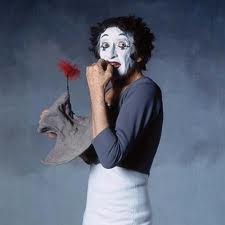
Marcel Marceau

"Do not the most moving moments of our lives find us all without words?"


French Actor and Mime
1923 - 2007


Words can not always communicate what we feel.  Sometimes silence is the best response to what happens.  Marcel Marceau was a master of silent communication.  He spoke volumes with movement and facial expressions.  I had the privilege of seeing Marceau perform live in concert in Canada in the late 1960's.  Words cannot describe the power of his performance.

As writers we live and breathe by the word.  In the beginning was the word and we felt whole.  But I have also learned that there is power in silence.  Too many words can confuse the communication.  We need to allow time for silence.  We need to enjoy the silence.  Painters understand silence.  They live in a world of color and shape.  They don't speak.  They breathe silence.

Take a few minutes today and enjoy the silence.  Turn off the TV, the I-Pod and the cell phone. Listen to the wind in the  trees.  Listen to your own breathing.  Listen to the silence.

Here is a video of Marcel Marceau performing.


Thursday, August 11, 2011

Elizabeth Bibesco

"It is never any good dwelling on goodbyes.  It is not the being together that it prolongs, it is the parting."


English Writer
1897 - 1945


Saying goodbye is difficult for some people.  They linger, wanting to stay longer in the company of their friends or family.  Saying hello is difficult for other people.  They are shy and afraid to meet new people.  Are there people in your life to whom you have difficulty saying goodbye?  

I have said goodbye to thousands of people over the years.  I say goodbye to the people who attend my seminars.  We know each other for two or three days.  We are almost like ships passing in the night.  We come together as strangers, share a few stories, laughs and tears before parting often never to see each other again.  So I have learned to say goodbye and to keep moving.

I have often said goodbye to my family because I have traveled so much.  It is much harder to separate from those you love than strangers you meet in the classroom, on an airplane or in a restaurant.  Saying hello to family is easier than saying goodbye.

Saying hello to strangers can be very difficult for me.  I was very shy growing up and still am when I am in a room of strangers.  If I am speaking, I have no problems approaching people who come into my  classroom and greeting them.  On an airplane, I have been known to strike up very enlightening conversations.  But if I attend a seminar as a participant, I usually don't approach the strangers.

Creative leaders must learn to say hello and goodbye if they are to be successful marketing their art.  And in today's world we have to market our products.  We have to attend book signings, art fairs, radio talk shows and if we are lucky TV talk shows.  We have to be good at saying hello and goodbye.

Marvin Gaye, the singer, had a difficult time performing in public.  He often cancelled his concerts because of his anxiety and fear of people.  He had difficulty saying hello.  How about you?  Do you meet people easily or are you filled with fear?


Wednesday, August 10, 2011

David McNally

"The circumstances of our lives have as much power as we choose to give them."


American Speaker/Author


The circumstances that we find ourselves in — being poor or rich, educated or high school dropout, being married or single, being published or not — only have power to influence how we feel if we choose to give them that power.  We did not have control over the fact that we were born into a family that was poor, but we do have a choice about how we will respond to our circumstances.  We have no control over how others respond to our painting or writing, but we do have a choice about how much influence the opinions of others have on us.

I had an opportunity to hire David McNally to speak several years ago.  I was impressed with his story about making a documentary film about Terry Fox, a young Canadian who ran 3/5 of the way across Canada and raised 24 million dollars for cancer.  McNally had no experience making a film but was inspired to tell Terry's story of purpose.

At the age of eighteen, Terry Fox was diagnosed with cancer and had his leg amputated.  Instead of wallowing in self-pity, he decided to find some purpose in what had happened to him.  His goal was to run across Canada and raise a million dollars for cancer research.  He made it 3/5 of the way before he became too sick and had to stop.  He died a short time later.  McNally movingly tells Terry's story in the film, The Power of Purpose.

The circumstances that we find ourselves in — being sick or healthy, employed or without a job, homeless or with a roof over our heads — only have the power to influence how we feel if we choose to give them that power.


Tuesday, August 9, 2011

Zig Ziglar

"You never know when one kind act, or one word of encouragement, can change a life forever."


American Speaker/Author
1926 -


Words are very powerful.  A few words here or there can change a life.  Who have been the encouragers in your life?  Maybe it was a parent, a teacher, a friend, a child or a preacher? What did they say to you?  How did they touch your life?  How did they change your life?  

Many motivational speakers have inspired me over the years.  Driving to Texas from Illinois in December of 1982 to start a new job, I discovered Zig Ziglar, the grandfather of motivational speaking,  on the radio.  I didn't know who he was or the impact he would eventually have on my life.  I have since met him and seen him on several occasions speak.  The last time I saw him speak was at the 2000 National Speakers Association annual convention in Washington, D.C.  Like many speakers that I enjoy, I have listened to him dozens of times on tape.  I, with his permission, actually tell some of his stories.

One of my favorite Ziglar stories is the story of the man who had an opportunity to visit heaven and hell before he died.  St. Peter asked the man where he wanted to go.  He told St. Peter to take him down to hell.  There he saw a beautiful banquet hall with the finest food and drink you could imagine.  When he looked at the people he saw that they were skin and bones and that they were cursing and swearing at each other.  He told St. Peter to take him up to heaven.  In heaven, he saw the same beautiful banquet hall filled with the finest food and drink.  When he looked at the people, he saw that they were healthy and robust and that they were laughing and singing.  The man asked St. Peter what was going on.  St. Peter responded, "Did you see the silverware."  Strapped to each arm was a four foot fork and a four foot knife.  Now, we all know we can't eat with such large silverware.  The people in hell were so busy getting everything for themselves that nobody got anything.  Up in heaven each person would feed the person across from him and that person would feed him back.  The message is very simple but powerful:  if you help other people get what they need and want you will get everything you need and want.

As creative leaders we have the opportunity to touch the lives of the people we meet through our books, paintings, songs, photographs and stories.  Whose life did you touch today?


Here is Zig Ziglar telling his famous primp the pump story.


Monday, August 8, 2011

William Holman Hunt

Self-portrait
(1867)
"Art is love."


English Painter
1827 - 1910


Do you love what you do?  If you can't answer yes to this question, then you need to find something else to do or learn to love what you do.  Failure to love what we do brings about despair and unhappiness.  Creative leaders love creativity and their chosen medium of expression.  Creative leaders have a deep, burning passion for their art, their writing or their dancing.

Life is too short to waste time doing something you don't enjoy.  Yes, we all have a need to make money and we may not make money from our chosen artistic endeavor, but we need to find a way to love the job that pays the bills.  We need to pay the bills so we can do what we love to do.  

Do you have an attitude of gratitude?  Do you say thank you every day for the gift of self-expression that you have been given?  Do you say thank you for being alive?  For breathing the air?  For family and friends?  For your health?  For the food on the table?  For the muse on your shoulder?  We have so much to be thankful for?

Isabella and the Pot of Basil
(1868)


Sunday, August 7, 2011

Sharon Olds


"Poems come from ordinary experiences and objects, I think.  Out of memory — a dress I lent my daughter on her way back to college; a newspaper photograph of war; a breast self-exam; the tooth fairy; Calvinist parents who beat up their children; a gesture of love; seeing oneself naked over age 50 in a set of bright hotel bathroom mirrors."


American Poet
1942 -


From where does your art come?  As Sharon Olds says, it often comes from the ordinary experiences and objects in our lives.  Poets often find the smallest moments from which to form their poems.  It may be a simple conversation between two people, or a flower laying on a gravestone, or meeting an old friend at the supermarket.  The common place and the everyday is what forms the basis of art.


Where does your art come from?  Is it rooted in reality?  The everyday?  Do you take the smallest of moments and build on them?  Painters capture moments in time?  A brief look at reality?  What holds your attention?  Not everyone paints the same subjects.  We choose different subjects.  Some people paint fields and others paint people.  What fascinates you about the world in which you live?  What demands that you paint it again and again?


Here is a poem by Sharon Olds.  


Grandmother Love Poem
by Sharon Olds


Late in her life, when we fell in love,
I'd take her out from the nursing home
for a chaser and two bourbons.  She'd crack
a joke sharp as a tin lid
hot from the teeth of the can-opener,
and cackle her crack-corn laugh.  Next to her
wit, she prided herself on her hair,
snowy and abundant.  She would lift it up
at the nape of the neck, there in the bar,
and under the white, under the salt-and-
pepper, she'd show me her true color,
the color it was when she was a bride:
like her sex in the smoky light she would show me
the pure black.

Saturday, August 6, 2011

Harley King

"May your heart be lighter today."


American Poet, Speaker
1949 -


One year ago tomorrow I wrote my first blog entry.  Today's entry is the last entry of that first year so this quote is my wish for those who have read my blog and stayed with me.  Life is challenging and difficult.  There are many events that can break our hearts and make us want to give up on life.  I don't know what is on your heart today as you read this — maybe it is a terminal diagnosis, a divorce, the death of a loved one or maybe something as simple as a spouse who said something that hurt you. My hope is that you do not let the negativity of the world around bring you down and that you will lighten up.  The world is not coming to an end despite all the doomsday prophets who forecast the coming of the last days.  The world will go on with us or without us.  So don't fret.  Don't worry about what you cannot change.  You are still above ground and there is still hope.  

Mask 15
Pen and Ink
(2008)
I have been teaching people about the importance of touching and hugging for over 20 years.  Experts say we need 8 - 12 hugs a day to be emotionally healthy.  Four hugs is minimum.  Have you received your quota for the day.  If not, go out and give someone a hug.  It can change your life one hug at a time.  And here is a blog hug from me. 


I also teach people about the importance of giving people compliments.  I teach the S-O-S technique of giving a compliment.  S = Sincere.  O = On-time.  S = Specific.  I challenge you to pay 10 different people compliments today.  About 5 years ago, I was in the hospital recovering from surgery.  My nurse was grouchy and grumpy.  I complimented her on her ring and she suddenly brightened up and said it was a gift from her husband.  She also shared that her husband had passed away five years earlier.  You don't know what is on the hearts of the people you meet, so give them a compliment and lighten their hearts.


Here is a poem that I wrote on my 62nd birthday.


A Visitor


Early this morning I opened
the front door to my home
to retrieve the daily newspaper
and found a bearded old man
asleep in a corner of the porch.
I shook him awake and
invited him in for coffee,
an omelet and buttered toast.
As he swallowed the food I had
prepared, he shared the story
of his life and I saw the years
slowly fall away until he was
young again.  In his blue eyes I saw
myself some thirty years earlier
when I too stood at a crossroads
and had decisions to make.
I gave him a thermos of coffee and
a few ham sandwiches before I bid
him farewell.  He shook my hand
and a tear rolled down my cheek.


— Harley King

Friday, August 5, 2011

Maria Shriver

"Poetry can startle you, awaken you, make you fall in love, take your breath away.  When those words sink in, you'll never look at your life or your journey the same way again."


American Journalist, Author
1955 - 


When you find the right poem, it can open up new worlds and change the way you look at life.  And so can a painting, a novel or even a play.  That is the power of art.  Planted within each story, painting or poem are the seeds of awareness that when they sprout in the heart of the reader or observer will change his or her life.

Unfortunately, in the American society, poets and poetry get the short end of the stick.  Fewer and fewer people read it while the number who claim to write it continues to grow.  I am amazed by people claim to write poetry but have never picked up a book and read any.  

One of Maria Shriver's favorite poets is Mary Oliver.  Maria's interview of Mary appears in the April 2011 edition of the Oprah Magazine.  If you haven't read it, you should.  Here is a poem by Mary Oliver that Shriver keeps on her desk. Very inspiring.


The Journey
by Mary Oliver

One day you finally knew
what you had to do, and began,
though the voices around you
kept shouting
their bad advice--
though the whole house
began to tremble
and you felt the old tug
at your ankles.
"Mend my life!"
each voice cried.
But you didn't stop.
You knew what you had to do,
though the wind pried
with its stiff fingers
at the very foundations,
though their melancholy
was terrible.
It was already late
enough, and a wild night,
and the road full of fallen
branches and stones.
But little by little,
as you left their voices behind,
the stars began to burn
through the sheets of clouds,
and there was a new voice
which you slowly
recognized as your own,
that kept you company
as you strode deeper and deeper
into the world,
determined to do
the only thing you could do--
determined to save
the only life you could save. 


Here is Maria Shriver reading The Journey in 2010.


Thursday, August 4, 2011

Tomas Karkalas

"The shadows define the light and have nothing in common with the darkness."


Lithuanian Artist
1955 - 


Without shadows, we can not define the light.  Without light, we can not understand the darkness.  Artists understand the importance of light and shadow in the creation of a painting or drawing.  Writers understand the importance of light and shadow in the telling of a story.  Without evil, we would never understand the power of good.  If we can't experience the good, we won't ever see the evil.  Some would say they are the opposite sides of the same coin.  One cannot exist without the other.  Creative leaders understand the importance of light and dark and the need to see both sides.  Celebrate the light.  Celebrate the shadows.  They are one.


Earth Remembers Everything

Wednesday, August 3, 2011

Georgia O'Keefe


"It is very hard work to turn out anything that looks like a good painting."


American Artist
1887 - 1986


What is quality?  Or beauty?  Or greatness?  Most of us make judgements about what art we like and what art we hate.  The younger generation rejects the elders.  And the elders look down their noses at the young.  What is popular today may be forgotten tomorrow.  What is rejected today may inspire others tomorrow.  Beauty is truly in the eye of the beholder, but often we don't act that way.  Each of us thinks we know what is good, what is great and what is best, but it is only an opinion.  How can one judge if a work of art is great?  What makes a work of art great?  The fact that it is still in museums 200 or 300 years after it was created?  


Let's turn this question around.  What makes a work of art a failure?  How do you know when something fails — when something is no good?  Do you destroy your work because you feel it is no good.  Do you paint over your paintings?  Do you burn your manuscripts?  (I don't throw away anything I create even if I feel it is no good.) Why do people criticize a work of art?  What does the criticism say about the critic?  Who makes the critic the authority?  Can we trust that the critic is correct?  Do critics make mistakes?  I believe critics often make mistakes.  History proves them wrong.  Have faith in your work.  Don't accept the criticism of others.  They are human and often make mistakes.


Enjoy some of O'Keefe's paintings and become inspired.


Tuesday, August 2, 2011

Naomi Shihab Nye

"I love the solitude of reading.  I love the deep dive into someone else's story, the delicious ache of a last page."


American Poet, Novelist
1952 - 


One of the great joys of life is reading novels.  From the first page to the last, I enter another world and explore the lives of people who I don't know.  From a very young age I have enjoyed reading novels.  And as Nye says, sometimes I don't want to close the book after I finished the last page.  I don't want the novel to be over.  

I believe we ought to applaud anyone who finishes a novel whether he publishes it or not.  Writing a novel is a lot of work.  I spent four years working on a novel that I have never finished.  John Cheever spent over twenty years writing his first novel.  Some novelists can turn out a book or more a year.  Piers Anthony, author of 36 novels in the Xanth series, works on three novels at the same time.  He is outlining one book, writing a second book, and rewriting a third book.  Are you working on a novel?  Please share your experience with others who read this blog.

If you are not a reader of novels, I would highly recommend it.  In the right hand column of this blog, you can find fourteen of my favorite novels.  Dive into one of these novels and experience the joy of entering another world.

Here is Naomi reading her found poem, One Boy Told Me.  Don't skip this.


Monday, August 1, 2011

Jerry Uelsmann

"I try to  begin working with no preconceived ideas."


American Photographer
1934 -


I have found that there are two ways that creative leaders work.  Some writers, artists, photographers plan their work.  Some writers will outline their entire book before starting to write.  Some artists will have planned their entire painting before painting the final work.  They will even do sketches of what they want to create.

Other creative leaders begin without any preconceived ideas.  They let the creative muse direct where they are going.  They start writing and let the story develop over time.  They start painting and wait to see what happens.

What are your working habits?  Do you plan everything in advance?  Or do you let the muse dictate where you are going?  Or do you do some combination of the two.

Here is a video of some of Uelsmann's surrealistic photography.


Sunday, July 31, 2011

Pearl Buck

"I have the habit of forgetting what I do not care to remember."


American Novelist
1892 - 1973


Memory makes a strange bedfellow.  Have you ever forgotten something you needed to remember?   Or have you remembered something you needed to forget?  Some people can remember the smallest of details.  I tend to forget the details, particularly of place and fashion.    Clothes rarely appear in my conscious mind let alone in my memory.  And if I have been insulted by word or deed, I usually forgive and forget.  My parents and my wife can not understand how I forgot so much of my childhood.  

And yet the strangest of details will find their way into my poems.  Details from somewhere in my past.  The last twenty years have seen an unusual growth in memoirs — both truthful and false.  Yet memory continues to haunt.  Remembering the wrong events can hold you hostage to your past.  What we remember impacts how we behave in the here and now.  Our memory defines who we believe we are.  What memories do you need to forget?  What memories do you need to hold onto?  What memories influence how you behave and help create the person who you have become?  What memories appear in your writing or your art?